
NTSB Confirms In-Flight Tail Failure In Palm Beach Learjet Crash Probe
Federal investigators confirmed Wednesday that the Learjet 60 that crashed in Palm Beach County, Florida, killing nine people suffered a catastrophic in-flight tail failure that left the crew unable to pull out of a high-speed nose dive.[1]
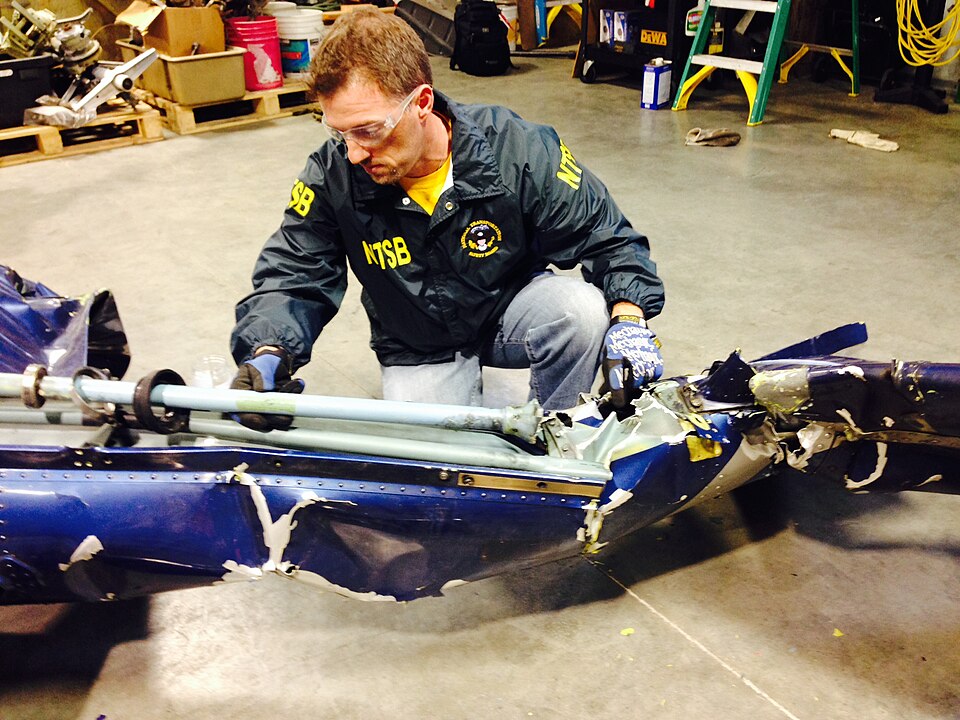
National Transportation Safety Board (NTSB) member Tom Chapman said parts of the jet's tail, including its elevator, were found broken into multiple pieces and scattered as far as roughly 3.8 miles from the main impact crater, confirming the aircraft began breaking apart before hitting the ground around 12:50 p.m. on Sunday, November 1, in a neighborhood near Military Trail and 10th Avenue North.[2] Chapman said the loss of an intact elevator would have made it impossible for the pilots to arrest the plunge, and investigators are now focused on why the tail failed as the jet flew through icing and severe turbulence.[3]
The twin-engine business jet, tail number N722BD, was flying privately from Austin-Bergstrom International Airport in Texas to North Eleuthera Airport in the Bahamas when it went down, narrowly missing homes and traffic before exploding into a fireball beside a busy roadway.[4] All nine people on board were killed: captain Jeff Gregory, 55, of Gilbertsville, Pennsylvania; co-pilot Nathalia Gadelha Filgueiras, 20, who learned to fly as a Boca Raton high school student; Austin couple Adam Robinson and Helen Sharp; their children Emma, 4, and Charlie, 2; and passengers Rachael Reed, Charmi Fehr, and Anita Maria Cetina.[2] Officials evacuated about 77 nearby mobile homes, closed roads in both directions and reported power outages after the impact carved a large crater in the pavement that has since filled with water amid torrential rains, complicating recovery of the cockpit voice recorder that investigators say would be "very important" to understanding the crew's final actions.[5]
Radio transmissions and radar data show the jet was cruising near 35,000 feet after a descent from 41,000 feet when the crew reported accumulating clear ice and moderate to severe turbulence as they approached a rapidly intensifying thunderstorm cell in a region already under a flood watch.[6] The pilots first told controllers they were "managing the ice" and requested a 2,000-foot climb, but minutes later declared "mayday" as the aircraft entered an overspeed condition and an increasingly steep dive, with descent rates of 8,000, 10,000, 20,000 and eventually more than 30,000 feet per minute, far beyond the Learjet 60's design limits.[7] In her final calls, Filgueiras reported the jet being thrown up and down more than 700 feet and pleaded for a better route through the weather, while air-traffic audio captured a man's voice, believed by friends to be Gregory's, reciting the Lord's Prayer as the aircraft fell.[8]
Early reporting on Sunday and into Monday centered on icing, turbulence and possible pilot response, with outside experts suggesting scenarios such as a high-altitude stall but stressing that no cause had been determined.[6] By Monday afternoon, Chapman disclosed "some indication that the aircraft was breaking up before impact," prompting searches beyond the crater, and by Tuesday he and CBS News were reporting that tail pieces, including the elevator, had been found miles from the crash site, confirming an in-flight structural failure as a central line of inquiry.[5] Follow-up coverage has since focused on how storm penetration, icing loads and extreme aerodynamic forces might have interacted with the Learjet's tail, rather than solely on whether the crew handled the weather correctly.[1]
Investigators are also scrutinizing radar tracks that show the crew steering around a larger thunderstorm cell but then flying toward a smaller, rapidly developing one, raising questions about weather avoidance decisions that retired airline captain and safety expert John Cox says will be key to understanding the chain of events leading up to the tail failure.[1] Former NTSB chair Robert Sumwalt has said the main atmospheric scenarios under review are icing and thunderstorm turbulence, and he noted that losing the horizontal stabilizer would leave a jet "virtually uncontrollable," a point Chapman effectively confirmed when he said the separated elevator made recovery impossible.[8] The NTSB has opened investigation ERA27MA026, identified the operator as Aurora Aviation doing business as Upper Jet, and plans to issue a preliminary factual report in about 30 days that will describe what is known without assigning blame or a probable cause.[9]
The Learjet 60 type entered service in the early 1990s and has not previously been associated with in-flight tail failures, though it was involved in a high-profile fatal overrun during a rejected takeoff in Columbia, South Carolina, in 2008 that the NTSB linked to tire maintenance, pilot actions and aircraft-system issues.[10] Chapman said Tuesday that investigators will review both the model's broader safety record and this specific airframe's maintenance and operational history, but added, "I don't believe we have any indication that there's a history of this type of accident with this model of aircraft," underscoring that the Palm Beach crash currently appears to be an unusual combination of severe weather, extreme flight loads and catastrophic tail failure rather than part of a known design pattern.[10]
Show source details & analysis (12 sources)
📊 Relevant Data
The NTSB opened investigation ERA27MA026 into the crash. Its case page identifies the operator as Aurora Aviation dba Upper Jet and the destination as North Eleuthera Airport (MYEH) in the Bahamas, and lists the location as Lake Worth Beach, Fla.
ERA27MA026 investigation page — National Transportation Safety Board
At a Nov. 3 briefing, NTSB board member Tom Chapman said investigators would review the Learjet 60's history and this aircraft's history. He said, "I don't believe we have any indication that there's a history of this type of accident with this model of aircraft."
NTSB to review Learjet 60 history during Florida crash investigation — Aerospace Global News
The Learjet 60 entered service in the early 1990s. Its best-known previous fatal accident was a September 2008 runway overrun during a rejected takeoff at Columbia Metropolitan Airport in South Carolina, which killed four people. The NTSB tied that crash to tire maintenance, pilot actions and aircraft-system factors.
NTSB to review Learjet 60 history during Florida crash investigation — Aerospace Global News
📌 Key Facts
- On Sunday, November 1, 2026, a private Learjet 60 with tail number N722BD flying from Austin-Bergstrom International Airport to the Bahamas crashed around 12:50 p.m. in Palm Beach County, Florida, nose-diving into a neighborhood near Military Trail and 10th Avenue North and killing all nine people aboard, according to U.S. Transportation Secretary Sean Duffy as reported by PBS News.
- In radio calls before the crash, the crew of Learjet 60 N722BD reported icing and moderate to severe turbulence, said they were "managing the ice," requested a 2,000‑foot climb from about 35,000 feet, then declared "Mayday" while describing an overspeed condition and increasingly extreme descent rates of 8,000, 10,000, 20,000 and eventually more than 30,000 feet per minute, far beyond the aircraft’s design limits, according to air-traffic-control audio cited by NPR.
- Flight‑tracking and weather data show the jet had descended from FL410 to around FL350 and had just entered or approached a rapidly intensifying thunderstorm cell in an area under heavy rain and a flood watch when the crew reported accumulating clear ice and turbulence throwing the aircraft up and down more than 700 feet, a scenario aviation safety experts say raises questions about a possible high‑altitude stall and storm avoidance decisions, according to PBS News.
- National Transportation Safety Board member Tom Chapman said evidence at the Greenacres-area crash site shows the Learjet began breaking up in flight, with parts of the tail — including the elevator — found broken into three pieces and scattered up to roughly 3.8 miles from the main impact crater, and he emphasized that loss of an intact elevator would have made it impossible for the crew to pull the jet out of its nose‑down dive, as detailed by CBS News.
- Chapman confirmed that the discovery of separated tail components miles from the main wreckage establishes an in‑flight structural failure as a key focus of the ongoing probe into the Palm Beach County Learjet crash, and he noted the FAA has sent a team to assist the National Transportation Safety Board's investigation.
- NTSB investigator‑in‑charge Timothy Monville said the agency faces major challenges recovering wreckage — especially the cockpit voice recorder — because the high-speed impact left a large crater in the roadway that has since filled with water amid torrential rains, and he expects several days of on‑scene work before a preliminary factual report is issued about 30 days after the November 1 crash, according to PBS News.
- All nine victims of the crash have been publicly identified as captain Jeff Gregory, 55, of Gilbertsville, Pennsylvania; co‑pilot Nathalia Gadelha Filgueiras, 20, who learned to fly as a Boca Raton high school student; and passengers Adam Robinson and Helen Sharp of Austin, their children Emma, 4, and Charlie, 2, plus Rachael Reed, Charmi Fehr, and Anita Maria Cetina, with friends and relatives sharing tributes described by CBS News.
- The crash prompted the evacuation of roughly 77 nearby mobile homes, road closures in both directions near the impact site, and temporary power outages, with displaced residents moved to a shelter while investigators secure and examine the multi‑mile debris field, according to local officials cited by PBS News.
- Dashcam video showing the jet plunging almost vertically and erupting into a fireball near passing vehicles was captured by West Palm Beach digital creator Aki Kuusisto and has been independently verified as authentic by multiple major outlets and a media forensics expert, countering viral social media claims that the footage was AI‑generated, as reported by PBS News.
- Investigators and outside safety experts, including former NTSB chair Robert Sumwalt and retired airline pilot John Cox, say they are examining how icing, turbulence and thunderstorm activity may have interacted with the Learjet 60’s performance and tail failure, stressing that no probable cause has yet been determined and that the NTSB will rely on radar, ATC audio, weather data and wreckage analysis even if the cockpit voice recorder is not recovered.
📰 Source Timeline (12)
Follow how coverage of this story developed over time
- NTSB member Tom Chapman said on November 4, 2026, that investigators are searching for the Learjet 60's cockpit voice recorder and that the recorder, if found intact, would be 'very important' to understanding the crew's actions in turbulence and icing.
- Chapman explained that torrential rains in Florida over the past week have filled the impact crater with water and that a nearby utility pole had to be removed, complicating wreckage recovery and possibly submerging additional components.
- The article states that the NTSB expects to publish a preliminary factual report about 30 days after the November 1, 2026 crash, describing what is known about the accident but not assigning cause.
- Retired airline pilot and safety expert John Cox is quoted questioning why the crew descended from FL410 to FL350 as they approached the storm system and noting that radar tracks show the pilots steering around a larger storm cell but then heading toward a rapidly developing smaller one.
- The co‑pilot's final radio calls are summarized as reporting the aircraft being thrown up and down more than 700 feet and requesting a better route through the area, with investigators still unsure why the crew did not deviate further around the thunderstorms.
- The NTSB reiterated that even if the cockpit voice recorder is not recovered, investigators can still reconstruct the sequence of events through other evidence, including radar, ATC audio, weather data and wreckage analysis.
- In its Tuesday, November 3, 2026 news wrap, PBS said investigators had found some parts of the crashed Learjet nearly four miles from the main impact site in Palm Beach County, Florida.
- The segment reinforces that debris from the aircraft was scattered over a multi-mile radius, consistent with an in‑flight breakup already being probed by NTSB.
- On Tuesday, November 3, 2026, NTSB board member Tom Chapman said investigators found parts of the Learjet 60's tail more than a mile from the main crash crater near Greenacres, Florida.
- Chapman said the aircraft's elevator was found broken into three pieces and confirmed that loss of an intact elevator would have made it impossible for the crew to pull the jet out of its nose dive.
- Chapman stated that the discovery of separated tail components confirms the aircraft began breaking apart before ground impact and is now a key focus of the investigation.
- The article reaffirms that in the minutes before the November 1 crash, co-pilot Nathalia Gadelha Filgueiras radioed that ice was accumulating and severe turbulence was throwing the jet up and down by more than 700 feet.
- The story newly identifies the captain as 55-year-old Jeff Gregory of Gilbertsville, Pennsylvania, and details his background as an experienced airline transport pilot and flight instructor.
- Friends and colleagues, including operations director Thomas Noetzel, have organized an online fundraiser for Gregory's family and described him publicly as a devout Christian and "devoted, conscientious" pilot.
- CBS reports NTSB member Tom Chapman said Tuesday, November 3, 2026, that pieces of the Learjet 60 were located up to 3.8 miles from the impact site, including part of the tail, reinforcing evidence of in-flight breakup.
- Chapman stated the elevator was found broken into three parts and emphasized that without an intact elevator the crew would not have been able to pull the aircraft out of its nose‑down dive.
- CBS identifies all nine victims by name and role, including passengers Adam Robinson and Helen Sharp of Austin; their children Emma, 4, and Charlie, 2; Rachael Reed, Charmi Fehr, and Anita Maria Cetina; captain Jeff Gregory, 55; and co‑pilot Nathalia Gadelha Filgueiras, 20.
- The article notes that as the jet plunged, air-traffic audio captured a man's voice reciting the Lord's Prayer in the background, which friends believe was captain Jeff Gregory.
- CBS adds biographical detail that Filgueiras received her pilot's license before her driver's license and had been profiled locally three years earlier as a Boca Raton high school senior.
- On Sunday, November 1, 2026, co-pilot Nathalia Filgueiras radioed that Learjet 60 N722BD was in an overspeed condition and descending at 10,000 to 20,000 feet per minute as it approached a rapidly intensifying thunderstorm cell en route from Austin, Texas, to the Bahamas.
- Newly highlighted air-traffic-control audio captures Filgueiras repeatedly declaring a mayday and reporting the extreme descent rates before the jet crashed in Palm Beach County, killing all nine onboard.
- Weather data cited in the CBS report indicates the aircraft had just entered a rapidly intensifying thunderstorm cell before the crew reported icing and significant turbulence.
- Former NTSB chair and CBS transportation safety analyst Robert Sumwalt said the two leading atmospheric scenarios under consideration are icing and thunderstorms/turbulence, and noted that a loss of the horizontal stabilizer would likely render the jet virtually uncontrollable.
- CBS reiterates that recovering the cockpit voice recorder from the roadway crater remains a priority for NTSB investigator-in-charge Timothy Monville to clarify events leading up to the crash.
- The article provides a full passenger list and biographical detail, including Austin couple Adam Robinson and Helen Sharp, their children Emma (4) and Charlie (2), and passengers Rachael Reed, Charmi Fehr, and Anita Maria Cetina, whose families released a joint tribute statement.
- Article confirms the Palm Beach County Learjet 60 crash occurred around 12:51 p.m. ET on Sunday, November 1, 2026, near Cresthaven, Florida, and that all aboard died, citing U.S. Transportation Secretary Sean Duffy.
- NTSB board member Tom Chapman said at a November 2, 2026, press conference that the aircraft experienced turbulence and encountered ice before the crash, while stressing that the cause remains under investigation.
- NTSB investigator-in-charge Timothy Monville said on November 2, 2026, that the agency has just begun documenting the incident, expects several days of on-scene work, and identified recovering major wreckage from the roadway crater as the biggest immediate obstacle.
- PolitiFact and PBS traced the viral crash video to its original source, West Palm Beach digital creator Aki Kuusisto, whose dashcam recorded the impact and who first posted the footage on Facebook.
- The piece documents that mainstream outlets including the Associated Press, CNN, CBS News and BBC have independently used the same crash footage, and that a widely cited AI-detection tool (Hive Moderation) did not flag the original dashcam video as AI-generated when tested by PolitiFact.
- Media forensics expert Darren Linvill of Clemson University's Media Forensics Hub characterized public denial of the authentic crash video as an example of the 'liar's dividend' and urged reliance on verified news outlets.
- The article notes that one X account spreading AI-claims about the crash video has been amplified by bot accounts tied to Russia-linked influence campaign Storm-1516.
- On Monday, November 2, 2026, NTSB board member Tom Chapman said evidence at the Greenacres crash site indicates the Learjet began breaking up before ground impact and that parts may be located some distance from the main crater.
- Chapman said investigators "have some indication that the aircraft was breaking up before impact," prompting searches for debris beyond the primary impact area.
- Palm Beach County Commissioner Joel G. Flores said roughly 77 mobile homes near the crash site were evacuated and that officials do not yet know when residents can return.
- Local officials said residents from the evacuated mobile homes have been relocated to a shelter while investigators secure and examine the debris field.
- Palm Beach County Mayor Sara Baxter publicly asked that the nine crash victims be kept in people's thoughts and prayers, underscoring the ongoing local impact.
- On Sunday, November 1, 2026, the Learjet 60’s pilot told air traffic control, "we're managing the ice, but it is moderate turbulence" before declaring "Mayday" and reporting descent rates of 10,000 and then 20,000 feet per minute.
- The last broadcast data showed the aircraft near 9,000 feet before it nosedived at more than 32,000 feet per minute, roughly 363 mph, into a Palm Beach County neighborhood near Greenacres.
- Former NTSB chair and CBS News transportation safety expert Robert Sumwalt said ice on the wings is potentially fatal because it adds weight and disrupts smooth airflow, severely degrading aerodynamic performance.
- CBS News confirmed through several sources that the 20‑year‑old co‑pilot was Nathalia Filgueiras, who had been featured in a 2023 profile by local CBS affiliate WPEC.
- The co-pilot killed in the crash has been identified by family to the New York Post as 20-year-old Nathalia Gadelha, who grew up in Palm Beach County and was an aspiring airline pilot.
- Gadelha earned her private pilot's license at age 17 in 2023 while attending West Boca Raton High School, accumulating about 88 flight hours through the Palm Beach County School District's Aviation Academy before later graduating from the American Flyers flight school.
- The article reiterates that air traffic control recordings captured the crew reporting light clear ice, moderate turbulence, and requesting a 2,000‑foot climb before the Learjet rapidly lost altitude on November 1, 2026.
- NPR reports the crash occurred Sunday, November 1, 2026, at 12:50 p.m. Central time in Palm Beach County, Florida, as the Bahamas-bound Learjet 60 nose-dived into a neighborhood near a busy roadway.
- Air traffic control recordings and flight-tracking data show the jet was at about 35,000 feet when pilots reported icing, turbulence and precipitation, requested a climb by 2,000 feet, then entered an increasingly steep dive reaching descent rates of 10,000, 20,000 and up to 30,000 feet per minute, exceeding design limits.
- Radio transmissions captured the pilot declaring an emergency and describing the situation, including: 'We're descending 8,000 – mayday, mayday - we're descending 10,000 feet per minute,' followed by 'We are in an overspeed condition descending 20,000 feet per minute' and 'We're going to crash into the ground.'
- Minutes before impact, the pilot reported accumulating clear ice and moderate turbulence with altitude excursions of about 700 feet, describing it as 'light, clear ice that is manageable and moderate turbulence.'
- NPR cites aviation safety expert Steve Arroyo saying icing and turbulence could have contributed to a high-altitude stall, while stressing that the National Transportation Safety Board will examine pilot response and other potential factors and that no cause has yet been determined.
- Florida Gov. Ron DeSantis, speaking at the scene, said there were no immediate reports of injuries or deaths on the ground and described the crash as 'cataclysmic,' saying it 'looked like a missile going down and left a big crater on the side of the road.'
- The article notes heavy rain and a flood watch in effect for the region on Sunday, November 1, which may be relevant to icing and turbulence conditions.
- U.S. Transportation Secretary Sean Duffy said on Sunday, November 1, 2026, that all nine people aboard the Learjet 60 that crashed in Palm Beach County at 12:50 p.m. were killed.
- Duffy said on X that the FAA is sending a team to support the National Transportation Safety Board's investigation into the cause of the crash.
- The article confirms the aircraft was a private Learjet 60 with tail number N722BD that had departed Austin-Bergstrom International Airport in Texas and was headed to the Bahamas.
- Video and eyewitness accounts describe the jet nose-diving into a neighborhood near Military Trail and 10th Avenue North, erupting into a fireball that narrowly missed homes and passing vehicles on the roadway.
- Local officials said roads in both directions near Military Trail and 10th Avenue North were closed following the crash, and a nearby business reported a power outage for about two hours.
- As of this report, authorities had not yet confirmed whether anyone on the ground was injured or killed or whether nearby homes were damaged.