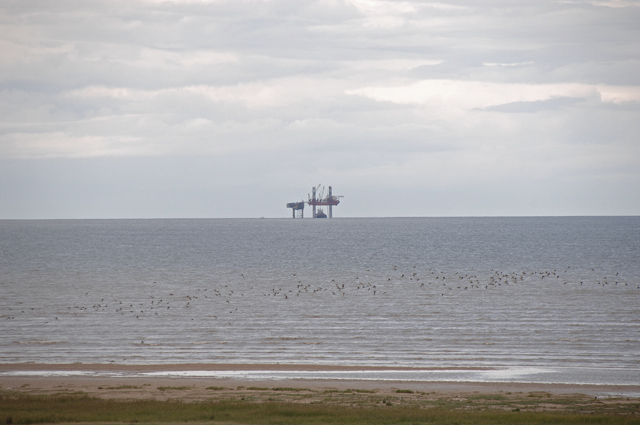
Iran War and Looming U.S. Naval Blockade Drive Oil Above $100, Threatening Further CPI Pressure
The Iran war and a looming U.S. naval blockade have pushed crude above $100 after a >7% spike, collapsed Strait of Hormuz traffic from roughly 129 to about 10 vessels per day, and lifted national gasoline to about $4.15/gal (up from $2.98 pre‑war), sending equity futures lower amid fears the blockade could widen escalation. Those energy shocks helped drive March CPI up 0.9% month‑over‑month (headline 3.3% year‑over‑year) with nearly three‑quarters of the increase from gasoline and core CPI at 2.6% year‑over‑year, prompting Fed officials to warn inflation progress has stalled and raising the risk of further CPI pressure if fuel prices remain high.
📌 Key Facts
- March headline CPI rose 0.9% month‑over‑month — the largest monthly increase in nearly four years — pushing annual headline inflation to 3.3% (up from 2.4% in February).
- The surge was driven overwhelmingly by gasoline: higher pump prices accounted for nearly three‑quarters of March's monthly CPI increase and represented the largest monthly jump in gas prices in about six decades.
- Core CPI was 2.6% year‑over‑year in March, with only a modest 0.2% month‑over‑month gain, indicating underlying (non‑energy) inflation has so far been more contained but is climbing.
- Average U.S. gasoline prices have risen by more than $1 per gallon since the U.S. and Israel launched attacks on Iran; AAA reported a national average of $4.15/gal as of the most recent update (up from $2.98 before the war).
- Crude oil prices jumped more than 7% on a recent trading day to above $100/barrel after President Trump's specific blockade order and public discussion of a looming U.S. naval blockade.
- Shipping through the Strait of Hormuz has collapsed from about 129 to roughly 10 vessels per day since the war began, a sharp supply disruption contributing to higher crude and gasoline prices.
- Financial markets reacted to the blockade and oil spike with declines in Dow, S&P 500 and Nasdaq futures ahead of the New York open, reflecting investor concern about growth and inflation risks.
- Policymakers and economists warned the shock could keep inflation elevated: Chicago Fed President Austan Goolsbee said inflation progress has “stalled out,” and analysts cautioned the blockade could escalate geopolitically (e.g., forcing decisions about seizing allied or Chinese‑flagged ships) and sustain further CPI pressure — even as economists note this episode differs from the 2021–22 spike because labor demand is weaker and there is no new large stimulus.
📊 Relevant Data
Black and Latino households pay 13-18% more on average for energy per square foot of housing compared to White households.
Households in majority African American census tracts pay an average of 5.1% of their income for energy, higher than other groups.
National study finds energy bills hit minority households the hardest — Binghamton University
In the US Navy, Black or African American service members comprise 18.4% of active-duty personnel, compared to 13.6% of the US population.
2025 USAF & USSF Almanac: DOD Personnel — Air & Space Forces Magazine
Women represent only 1% of all seafarers worldwide.
New data highlights lack of gender diversity in maritime — International Maritime Organization
Filipino seafarers lead the global workforce, with the Philippines supplying over 500,000 seafarers, representing a significant overrepresentation in the industry.
Surge in Global Demand for Filipino Seafarers Amid Growth — Maritime Fairtrade
📊 Analysis & Commentary (2)
"The WSJ editorial argues that March’s big CPI rise was mainly an Iran‑war driven oil shock and likely temporary, but cautions inflation remains above target and that policy (especially the Fed’s response) will determine whether the uptick becomes persistent."
"Velasco’s piece reads as a cautionary, big‑picture take linking the Iran‑war driven oil shock behind March’s CPI surge to real risk of stagflation and financial stress, urging calibrated monetary policy, targeted fiscal relief, and international steps to ease oil bottlenecks."
📰 Source Timeline (4)
Follow how coverage of this story developed over time
- Documents crude prices surging more than 7% Monday to above $100 as markets respond to Trump’s specific blockade order and timing.
- Shows fresh equity‑market reaction via Dow, S&P 500 and Nasdaq futures declines ahead of the New York open.
- Reports that Strait of Hormuz ship traffic has collapsed from about 129 to about 10 vessels per day since the war began, a clearer picture of supply disruption feeding gasoline prices.
- Highlights analyst concern that the blockade could widen escalation by forcing U.S. decisions about seizing allied or Chinese‑flagged ships.
- Links the new crude spike to existing U.S. gasoline prices already above $4 a gallon, implying more CPI pressure in coming months if the blockade persists.
- Confirms March CPI rose 0.9% month-over-month, the largest such increase in nearly four years, explicitly tying it to the largest monthly jump in gas prices in about six decades.
- Reiterates that headline CPI was 3.3% year-over-year in March, up from 2.4% in February, and that this is the first inflation read to fully capture Iran war effects.
- Clarifies that core CPI rose 2.6% year-over-year in March, with a modest 0.2% month-over-month gain, suggesting energy price spikes have not yet broadly spilled into other categories.
- Provides updated average national gasoline price of $4.15 per gallon as of Friday, up from $2.98 the day before the Iran war began, according to AAA.
- Highlights economists’ view that current conditions differ from the 2021–22 post‑pandemic inflation spike because the labor market and consumer demand are weaker and there are no new large stimulus checks.
- Confirms CPI rose 0.9% month‑over‑month from February to March, with higher gasoline prices accounting for nearly three‑quarters of that increase.
- Specifies that average gasoline prices have risen by more than $1 a gallon since the U.S. and Israel launched attacks on Iran, and that pump prices have remained high despite a tentative ceasefire.
- Reports March core inflation at 2.6%, highlighting that underlying inflation is also climbing, not just energy.
- Includes on‑the‑record comments from Chicago Fed President Austan Goolsbee that inflation progress has “stalled out” and is now “inching itself up the other way,” raising concern it could become entrenched.
- Notes March job growth of 178,000 after a prior month of cuts, with Goolsbee saying business uncertainty over the war is leading firms to "sit on our hands" rather than hire or fire aggressively.