Iran War Energy Shock Raises Risks for U.S. Hiring and Unemployment, Economists Say
The Iran war has sent Brent and U.S. crude above $100 a barrel and driven U.S. pump prices to roughly $4.02–$4.06 a gallon (diesel about $5.45), as shipping disruptions through the Strait of Hormuz, Houthi strikes and tanker attacks prompt an unprecedented 400‑million‑barrel IEA release, U.S. SPR taps, sanction waivers and a temporary Jones Act waiver. Economists say the energy shock — already squeezing household budgets, raising transportation costs and prompting company moves like Unilever’s hiring freeze amid weak February labor indicators — increases the risk of slower hiring and a modest rise in unemployment (Goldman Sachs projects about +0.2 percentage point by September) if prices stay elevated.
📌 Key Facts
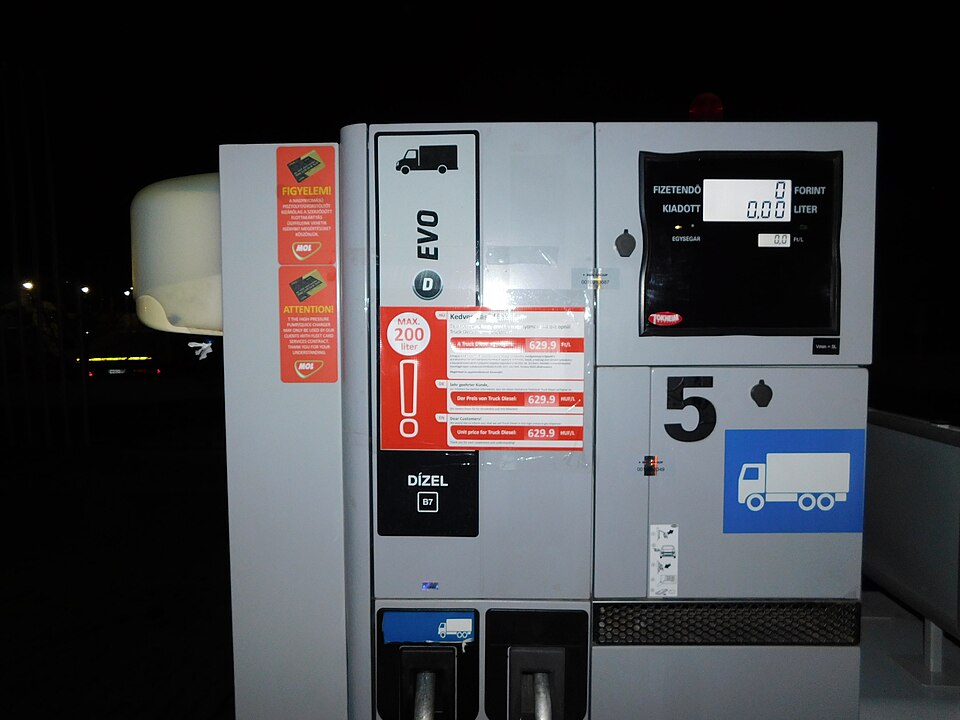
- U.S. national average gasoline prices have climbed past $4 per gallon for the first time since August 2022 (AAA: ~$4.02 on March 31) and continued rising into early April (AAA: ~$4.06; GasBuddy projected up to $4.10), while the national diesel average is about $5.45 per gallon — roughly $1–$1.7 higher than before the Iran war began.
- Global oil benchmarks surged above $100 per barrel (about $102 on Monday), up from roughly $67–70 before the Feb. 28 U.S.–Israel offensive against Iran, and analysts tie recent spikes to Iranian and Houthi attacks (including a Kuwaiti tanker/Al‑Salmi attack), halted tanker traffic through the Strait of Hormuz and strikes on Gulf energy facilities.
- The International Energy Agency and 32 member nations announced a coordinated 400 million‑barrel release from emergency stockpiles (the largest IEA drawdown), and the U.S. has tapped its Strategic Petroleum Reserve, eased some sanctions (Venezuela, temporarily Russia) and waived the Jones Act for 60 days — all seen by experts as incremental fixes against a much larger supply shock.
- IEA‑based and maritime data show the disruption is large: roughly 15 million barrels/day of crude and 5 million barrels/day of refined products normally transit the Strait of Hormuz (about 20% of global oil consumption) and are now effectively stranded, with another ~10 million barrels/day offline in Gulf producers; Lloyd’s List data indicate many remaining transits are Iran‑linked 'shadow fleet' vessels.
- Higher fuel costs are already hitting households and businesses: analysts estimate higher gas prices are cutting real household incomes by roughly $15 billion per month, gas spending is approaching about 3% of median household income (with warnings that 4–5% historically triggers sharp discretionary cuts), and firms and shippers are adding fuel surcharges — the U.S. Postal Service has sought a temporary 8% fuel charge.
- Consumer and labor data give a mixed near‑term picture: retail sales rose 0.6% in February (not yet reflecting war‑era price effects), ADP reported +62,000 private jobs in March, but employers shed 92,000 jobs in February and the JOLTS hiring rate fell to its lowest since 2020 — economists warn the March numbers are 'too early' to show Iran‑war effects and say rising oil could weigh on hiring.
- Firms and economists are already responding defensively: some companies (e.g., Unilever) announced temporary hiring freezes citing Middle East risks, Goldman Sachs projects unemployment could rise about 0.2 percentage points to ~4.6% by September if oil stays high, and the Conference Board estimated oil would need to reach roughly $140/barrel to push the U.S. into a recession that meaningfully harms the labor market.
- The spike has become a political flashpoint: polls show large majorities of Americans expect higher prices from the Iran war (CBS: 90% short‑term; Reuters/Ipsos: 87%), political parties are trading blame (Morning Consult: 48% blame President Trump in one poll), the DNC/DCCC have launched gas‑price messaging, and White House officials have framed the spike as 'short‑term' tied to 'Operation Epic Fury' while touting policy steps to boost supply.
📊 Relevant Data
In 2025, Hispanic or Latino workers comprised 26.3% of the leisure and hospitality industry workforce, compared to approximately 19% of the U.S. population, while Black or African American workers made up 12.5% (similar to their 13.6% population share), indicating overrepresentation of Hispanics in a sector projected to face hiring reductions due to higher energy costs from the Iran war.
Employed people by detailed industry, sex, race, and Hispanic or Latino ethnicity — U.S. Bureau of Labor Statistics
Oil price uncertainty increases the overall U.S. unemployment rate by 13 to 35 basis points, but the effect on Black and Hispanic unemployment rates is about twice as large, based on analysis of monthly data from January 1989 to August 2022.
Racial and ethnic disparities in unemployment and oil price uncertainty — Energy Economics
76% of Black households with vehicles experience transportation cost burdens (spending more than 10% of income on transportation), compared to 60% of White households, with Black households facing higher overall vehicle ownership costs even when controlling for income and location.
Black Households Are More Burdened by Vehicle Ownership than White Households — Transportation Research Record
📊 Analysis & Commentary (1)
"An opinion arguing that the recent Iran‑war driven spike in U.S. gasoline prices (as reported by AAA) highlights why more people should have chosen electric vehicles, while calling for policy and infrastructure actions to make EVs accessible and warning that short‑term fixes won't solve the underlying exposure to volatile oil markets."
📰 Source Timeline (19)
Follow how coverage of this story developed over time
- Unilever has imposed a three‑month, company‑wide hiring freeze, with an internal memo citing "macroeconomic and geopolitical realities, especially in the Middle East conflict," as the reason.
- U.S. employers shed 92,000 jobs in February, and the February JOLTS hiring rate fell to its lowest level since 2020, signaling a pre‑war slowdown in labor demand.
- Economists surveyed by FactSet expect about 60,000 jobs added in March, with Heather Long of Navy Federal Credit Union saying the report will be "too early" to show Iran‑war effects and gains driven mostly by health care.
- Conference Board economist Yelena Shulyatyeva estimates oil would need to reach roughly $140 a barrel (from about $102 now) to push the U.S. into a recession that meaningfully harms the labor market.
- Goldman Sachs analysts project the unemployment rate could rise by 0.2 percentage points to 4.6% by the end of September due to higher oil prices, with arts, entertainment, accommodation and food services most likely to scale back hiring.
- Census Bureau reports U.S. retail sales rose 0.6% in February 2026, reversing a January slump, with core control sales up 0.5% nominal (0.2% after inflation).
- ADP says private employment increased by 62,000 jobs in March 2026, the second straight month of solid job creation, and reports that wage growth remains 'solid' despite sluggish overall hiring.
- The ISM manufacturing index rose to 52.7 in March 2026, marking a third consecutive month of expanding U.S. manufacturing activity.
- Economists quoted say pay growth and a still‑tight labor market have kept consumer demand afloat, but warn that March’s run‑up in gasoline prices, a 5.1% monthly drop in the S&P 500 and smaller‑than‑expected tax refunds will pressure discretionary spending in coming months.
- Confirms that 32 International Energy Agency member nations have jointly begun releasing 400 million barrels of emergency oil reserves, the largest coordinated drawdown in IEA history.
- Details that President Trump is simultaneously tapping the U.S. Strategic Petroleum Reserve, lifting sanctions on Russian and Iranian crude, and temporarily waiving the Jones Act for coastal oil shipments in an effort to increase supply.
- Provides IEA-based quantification that roughly 15 million barrels/day of crude and 5 million barrels/day of refined products (about 20% of global oil consumption) normally pass through the Strait of Hormuz and are now effectively stranded, with an additional ~10 million barrels/day offline in Gulf producers that have halted output because storage is full.
- Includes expert commentary from Texas A&M professor Mark Barteau and Rice University’s Baker Institute fellow Jim Krane arguing these measures are only "incremental" patches (1–2 million barrels/day each) against a roughly 20 million barrel/day disruption and questioning how long emergency releases and waivers can be sustained.
- Commerce Department reports U.S. retail sales rose 0.6% in February after a revised 0.1% decline in January, with gains led by autos, clothing, online retail, and health/personal care stores.
- Economists warn that the Iran war’s impact on gasoline and diesel prices was not yet reflected in the February retail report and could start cutting real consumer spending as early as March.
- Average national gasoline prices reached $4.06 per gallon on Wednesday, about $1 higher than before the war, while Brent crude is up more than 45% since the conflict began and higher gas prices are estimated to cut real household incomes by roughly $15 billion per month.
- Analysts note gas spending is approaching about 3% of median household income, with warnings that at 4–5% consumers historically start sharply trimming discretionary purchases such as travel and recreation.
- AAA now pegs the national average gasoline price at $4.06 per gallon, after crossing $4 the prior day, a 36% jump since the Iran war started.
- President Trump told CBS News that gas prices will fall 'when we leave, when it's over' and plans a primetime address Wednesday to 'provide an important update on Iran.'
- White House press secretary Karoline Leavitt said in an email that 'when Operation Epic Fury is complete, gas prices will plummet back to the multi-year lows' seen pre-war, framing price pain as 'short-term disruptions.'
- Lloyd's List Intelligence analysis finds most ships still transiting the effectively closed Strait of Hormuz are linked to Iran, underscoring the supply squeeze.
- GasBuddy analyst Patrick De Haan projects the national average could reach $4.10 per gallon this week and notes several Midwestern states, including Michigan, Indiana and Ohio, may see additional jumps.
- Oil prices dropped back below $100 per barrel after Trump publicly suggested he could end U.S. Iran war operations in “two to three weeks,” signaling markets are trading on his war timeline.
- Despite the price dip, experts quoted warn that leaving the Strait of Hormuz under what amounts to Iranian control could bake in longer-term economic pain for energy and shipping.
- Lloyd’s List Intelligence data shows that 71% of ships transiting the Strait of Hormuz since March 1 are tied to Iran, and that shadow-fleet vessels comprise 88% of recent transits, underscoring how Iran is keeping its oil moving while constraining rivals.
- Jamie Dimon, JPMorgan Chase chairman and CEO, told Axios that Iran has been a malign actor for 45 years and framed the current Iran war as overdue despite 'short-term risks' for the economy.
- Dimon specifically cited Iran’s grip on the Strait of Hormuz, funding of Hamas, Hezbollah and the Houthis, and alleged terrorist cells in the U.S. as reasons the West should have acted sooner.
- He said Iran 'never gave up on nuclear' and highlighted its nearly 3,000‑mile‑range ballistic missiles as part of the threat.
- Dimon acknowledged the war brings uncertainty and higher oil prices but argued that if the U.S. and allies can genuinely neutralize Tehran’s threat, the long‑term benefits will outweigh current market turmoil, while admitting that outcome is far from certain.
- Reports that senior Trump aides, including Chief of Staff Susie Wiles and Deputy Chief of Staff James Blair, are regularly briefing the president on worrying internal and public polling about the economy and his standing, and are seeking new strategies to avoid GOP midterm losses.
- Internal acknowledgment from Republican officials that House losses are likely if economic and polling trends do not change, though they still expect to hold the Senate.
- Precise CBS polling figures: Trump’s approval among independents at 31% (69% disapprove); overall approval about 40% with 60% disapproval; roughly one‑third of Americans now expect a recession within a year; 67% say they are unwilling to pay more at the pump during the Iran conflict.
- On‑record White House spin tying the gas spike to “short‑term disruptions” from Operation Epic Fury and touting tax cuts, deregulation, housing orders, TrumpRx.gov, and not taxing tips/overtime as mitigation, while promising gas will "plummet" once the operation is complete.
- Attribution in this piece that both Trump’s tariffs and U.S. military action against Iran are central drivers of recent economic angst and gas price spikes among independents.
- AAA data show the national average price of regular gasoline is now $4.02 per gallon, the first time the U.S. average has topped $4 since 2022.
- Both Brent crude and benchmark U.S. crude are now above $100 per barrel, up from roughly $70 before the joint U.S.–Israel war against Iran began on Feb. 28.
- U.S. diesel prices have risen to an average of $5.45 per gallon from about $3.76 before the war, and the U.S. Postal Service is seeking a temporary 8% surcharge on some products to offset fuel costs.
- Analysts explicitly link the spike to halted tanker traffic through the Strait of Hormuz and strikes on oil and gas facilities by Iran, Israel, and the U.S.
- DCCC Chair Rep. Suzan DelBene publicly labels $4‑a‑gallon gas caused by the Iran war as ‘another broken promise’ from President Trump and says House Democrats will center gas prices in their affordability messaging for 2026 midterms.
- The Democratic National Committee sent a ‘BREAKING: National Gas Prices Skyrocket to $4 Per Gallon’ email blast and the DCCC has launched digital ads showing rising pump prices with the message ‘D.C. Republicans Did That!,’ with more gas‑price ads planned.
- The White House, via press secretary Karoline Leavitt, argues the price spike is temporary and ties relief to completion of ‘Operation Epic Fury,’ saying gas will return to ‘multiyear lows’ and touting Trump’s commitment to ‘American energy dominance.’
- Fox frames the political environment as hostile to Republicans: persistent inflation, an unpopular Iran war, and Trump’s underwater approval, while noting Democrats’ recent electoral over‑performance on affordability themes since Trump returned to office.
- NPR pegs crude oil at about $102 per barrel on Monday, compared with about $67 before the Iran war began.
- Article links the latest move above $4 directly to an overnight Iranian drone attack that set a massive Kuwaiti oil tanker ablaze off Dubai and other reported drone strikes in the UAE and Saudi Arabia.
- It notes that drivers are paying about $1 more per gallon than at the end of February, when the U.S. and Israel launched their offensive against Iran.
- Anonymized driver data from Allstate’s Arity unit show U.S. drivers logged more miles in mid‑March than a month earlier, with higher‑income areas adding miles faster than lower‑income communities.
- Bank of America Institute data cited showing Gen Z and millennial households devote a larger share of their discretionary budgets to gasoline, making them especially vulnerable to price spikes.
- On‑the‑ground anecdotes from Alabama and Georgia illustrate that some Americans are cutting personal trips but have little flexibility on work‑related driving, and that EV owners are partly insulated from higher fuel costs.
- CBS pegs the milestone as the first time since August 2022 that the U.S. national average gasoline price has hit $4 per gallon.
- The segment explicitly links the $4 average to the Iran war being in its fifth week and focuses on how consumers are feeling the economic pinch.
- Adds qualitative analysis from CBS business analyst Jill Schlesinger on consumer sentiment and pressure from higher fuel costs, though detailed quotes are not in the text excerpt.
- Reaffirms that the national average gasoline price has crossed the $4‑a‑gallon mark and ties the latest move explicitly to the immediate aftermath of the Kuwaiti VLCC Al‑Salmi drone attack off Dubai.
- Adds Trump’s new social‑media demand that U.S. allies ‘go to the Strait, and just TAKE IT’ and a renewed public threat to strike Iranian civilian energy and water infrastructure if diplomacy fails, giving fresh context to prior sanction‑easing and Jones Act waivers as the conflict escalates.
- Introduces CENTCOM’s description of ‘progress’ in reducing Iran’s ability to project power beyond its borders after meetings between Adm. Brad Cooper and IDF Lt. Gen. Eyal Zamir, offering a Pentagon framing of the military campaign that is driving the fuel spike.
- AAA now pegs the national average for regular gasoline at $4.018 per gallon, slightly refining earlier $4.02 figures.
- Article breaks out updated national averages for mid-grade ($4.541), premium ($4.904), and diesel ($5.454) fuel.
- State differentials are specified: California’s average regular price is $5.887 per gallon, while Oklahoma is at $3.272.
- Morning Consult polling breaks down blame attribution for the gas price surge: 48% blame President Trump and his administration, 16% blame oil and gas companies, 13% global market forces, and 11% former President Biden.
- Reuters/Ipsos polling shows 87% of Americans expect gas prices to increase as the Iran war continues, and 55% say pump prices have at least somewhat hit their household budget.
- Historical context is updated: comparison to 2022 when gas last averaged $4, and the record $5.03 national average in June 2022 after Russia’s Ukraine invasion.
- On-the-ground reporting from U.S. drivers describing how $4‑a‑gallon gas is changing daily routines, including cutting discretionary trips, carpooling more, and delaying nonessential purchases.
- Specific examples of regional price variation, likely highlighting stations and metro areas where prices are well above the national $4 mark and approaching prior record territory.
- Anecdotal evidence from small businesses (e.g., delivery services, tradespeople) about fuel surcharges, route changes, or passing costs to customers that go beyond the macro view in earlier coverage.
- Specifies the exact current national average price for regular gasoline at $4.02 per gallon, noting it is over $1 higher than before the Iran war began and the highest level since 2022.
- Clarifies that the national diesel average is $5.45 per gallon, up from about $3.76 before the war, slightly refining prior diesel figures.
- Reports that the International Energy Agency has pledged to release 400 million barrels of oil from emergency stockpiles of member nations, including U.S. reserves.
- Details that the Trump administration has eased sanctions to free up some oil from Venezuela and, temporarily, Russia, and has waived Jones Act maritime shipping requirements for 60 days.
- Notes that the U.S. Postal Service is seeking a temporary 8% added fuel charge on some of its popular products, including Priority Mail, as a direct response to higher fuel costs.
- Provides additional context that refineries buy crude in advance and that seasonal shifts to more expensive summer fuel blends and increased driving demand are also contributing to the price climb.
- AAA reports the national average gasoline price hit $4.018 per gallon on Monday, up from $3.990 Sunday, marking the first time above $4 since August 2022.
- AAA diesel average also rose to $5.454 per gallon from $5.416 the prior day.
- Gasoline prices have jumped more than $1 per gallon over the last month since U.S. and Israeli attacks on Iran began on February 28.
- GasBuddy analyst Patrick De Haan notes gasoline has only been above $4 for 157 days since 2009, all in 2022, underscoring the rarity of this level.
- A CBS News poll of 3,335 U.S. adults (March 17–20) found 90% expect the Iran war to raise oil and gas prices in the short term, 58% expect long-term increases, and 85% already see higher local prices.
- The article details Trump administration moves to tame prices — strategic reserve releases and regulatory relaxation — with analysts saying these are insufficient to close the supply gap.
- The piece ties rising diesel, heavily used in farming, construction and freight, to likely pass-through of higher transportation costs to consumers, citing economist Diane Swonk of KPMG.
- Updates the national average gasoline price to $3.98 per gallon from the prior $3.98 figure that may have been based on slightly earlier AAA data, specifying a move from $3.976.
- Attributes part of the latest uptick explicitly to the Houthi missile and drone attack on Israel and fears the group will further disrupt Red Sea shipping, not just Hormuz closures.
- Quotes Rep. Jim Himes arguing that Iran 'has the reins' because 'gasoline prices are up more than $1 a gallon,' tying price increases directly to perceived Iranian leverage.
- Highlights American Petroleum Institute President Mike Sommers crediting U.S. production of over 13 million barrels per day with preventing an even steeper price spike.