
Supreme Court Sets December 2 Arguments On AR-15-Style Rifle Bans
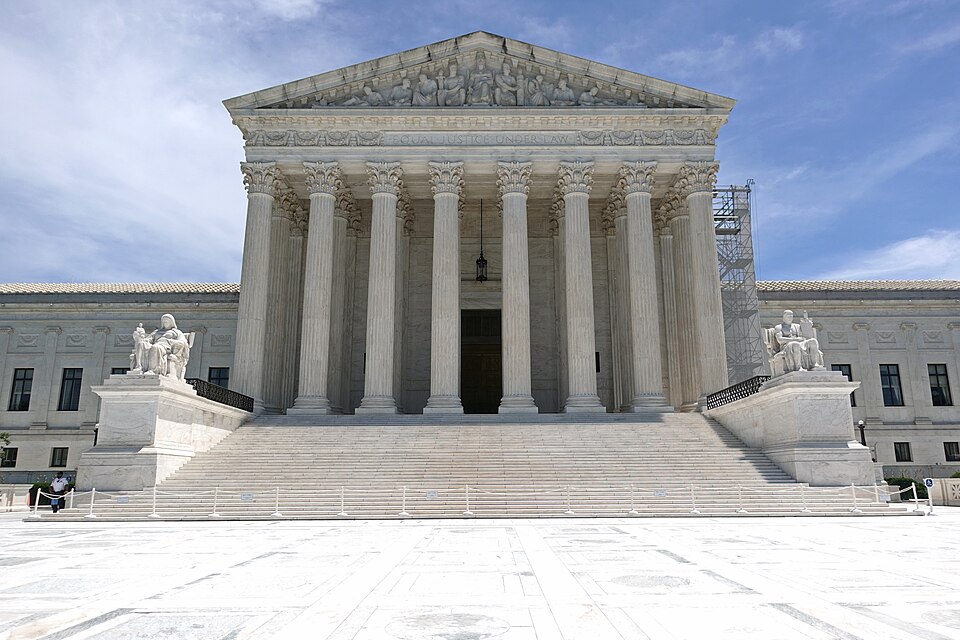
The Supreme Court has set oral arguments for Wednesday, December 2, in Washington, DC, in two closely watched cases that will test whether states and localities may ban AR-15-style semiautomatic rifles under the Second Amendment.[1]
The consolidated cases challenge long-running laws in Connecticut and Cook County, Illinois, with the Court poised to decide whether AR-15-style weapons are protected "arms" that Americans have a constitutional right to keep and bear, or unusually dangerous weapons that governments may prohibit.[1] The challengers, backed by gun-rights groups, lean heavily on the Court's 2022 Bruen decision, which reshaped gun jurisprudence by requiring modern gun regulations to align with the nation's historical tradition of firearm regulation.[1] State and local officials defending the bans argue that history supports limits on particularly dangerous weapons, and warn that a ruling against them could invalidate similar assault-style rifle bans in nearly a dozen other states and Washington, DC.
Connecticut's law, one of the statutes now before the justices, was enacted after the 2012 mass shooting at Sandy Hook Elementary School, where a gunman used an AR-15-style rifle to kill 20 children and six educators, spurring the state to restrict a broad category of semiautomatic firearms.[1] The other case involves a Cook County ban that dates back to the 1990s, part of an early wave of local efforts to restrict assault-style weapons amid concerns about urban gun violence.[1] Lower courts had largely upheld such bans under earlier Supreme Court guidance that allowed more balancing of public-safety concerns, but those rulings came under fresh scrutiny after Bruen tightened the legal test and prompted new challenges from gun-rights advocates.
Gun-control supporters say AR-15-style rifles and similar semiautomatic weapons have been used in many of the deadliest mass shootings and argue that they pose unique risks because they can accept large-capacity magazines and fire rapidly. They contend that under historical analogues, governments have long regulated or restricted particularly dangerous weapons, from Bowie knives in the 19th century to machine guns in the 20th, and that assault-style rifle bans fit within that tradition. Opponents counter that AR-15-style rifles are now among the most popular firearms in the country, used lawfully by millions of Americans for sport and self-defense, and so qualify as weapons "in common use" that the Second Amendment protects from categorical bans.
The Court's eventual ruling, expected later in 2027, is likely to clarify how far Bruen's history-and-tradition test reaches and whether legislatures retain room to treat semiautomatic rifles differently from handguns. A broad decision striking down the Connecticut and Cook County laws could quickly be used to attack similar bans in states such as California, New York and New Jersey, while a ruling upholding them would signal that at least some modern assault-style weapon restrictions are compatible with the Court's new Second Amendment framework.
Show source details & analysis (1 source)
📌 Key Facts
- The Supreme Court will hear oral arguments on Wednesday, December 2, 2026, in two cases challenging AR-15-style rifle bans.
- One case involves Connecticut’s assault-style semiautomatic rifle ban enacted after the 2012 Sandy Hook Elementary School shooting; the other challenges a Cook County, Illinois ban dating to the 1990s.
- Challengers rely on the Court’s 2022 Bruen decision, while state and local officials argue historically rooted limits on unusually dangerous weapons support such bans.
- Nearly a dozen U.S. states and Washington, D.C. have similar AR-15-style rifle bans that could be affected by the Court’s decision.
📰 Source Timeline (1)
Follow how coverage of this story developed over time