
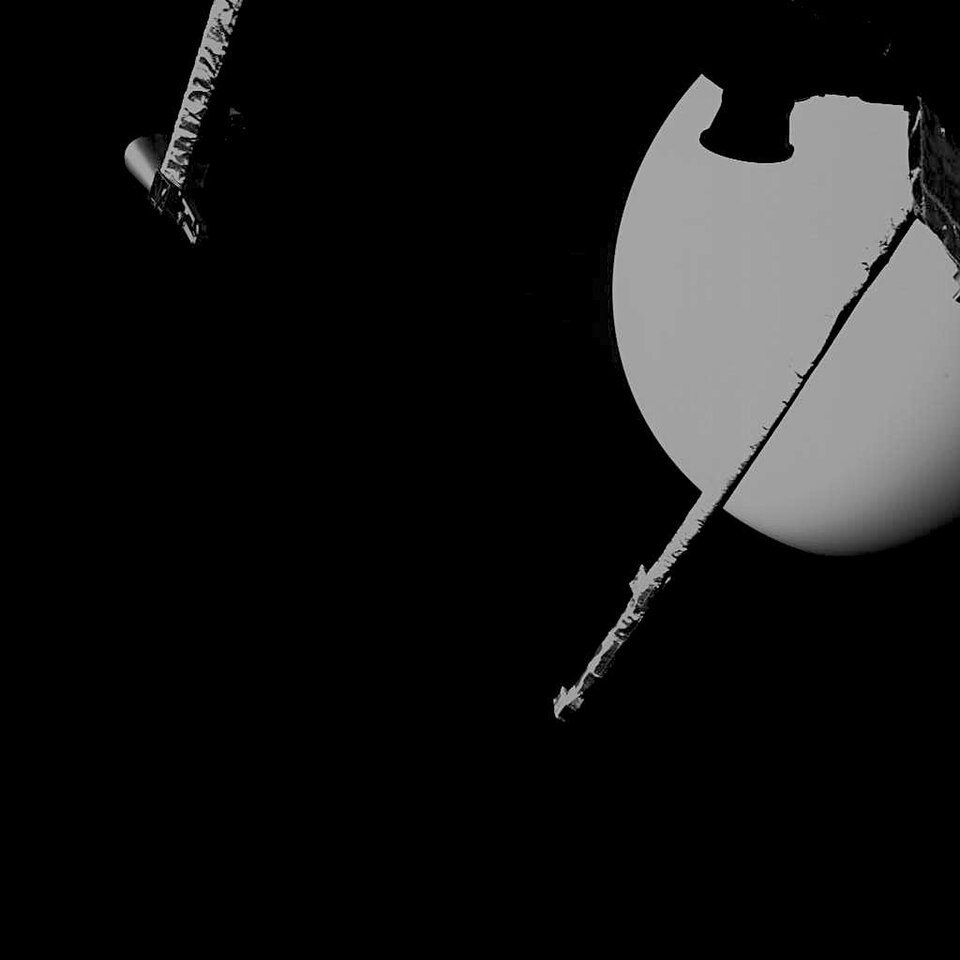
ESA-Japan BepiColombo Mission Enters Orbit Around Mercury
The joint European-Japanese BepiColombo spacecraft entered orbit around Mercury on Saturday, November 21, 2026, concluding an eight-year, multibillion-dollar journey to study the solar system's innermost planet.[1]
Operated by the European Space Agency (ESA) and the Japan Aerospace Exploration Agency (JAXA), the roughly $2 billion (1.7 billion euro) mission will begin full science operations after the spacecraft splits into two orbiters next month to map Mercury's surface, probe its interior, and analyze its magnetic field for at least one Earth year.[1]
Launched in 2018, BepiColombo has spent the past eight years spiraling inward toward the Sun using a complex sequence of gravity-assist flybys: once past Earth, twice past Venus, and six times past Mercury itself, covering more than 6 billion miles (10 billion kilometers).[1] The path allowed controllers to gradually match Mercury's orbit while saving fuel, a necessity for reaching a small, fast-moving world so deep in the Sun's gravity well.
The mission consists of two main orbiters: ESA's Mercury Planetary Orbiter, designed to study the planet's geology, surface chemistry, and tenuous atmosphere, and JAXA's Mercury Magnetospheric Orbiter, which will focus on how the planet's magnetic field interacts with the intense solar wind.[1] Once they separate in Mercury orbit, scientists expect a coordinated dataset that could clarify how such a small, dense planet formed and why it retains a magnetic field unlike any other rocky world besides Earth.
BepiColombo is only the third mission ever to orbit Mercury, following NASA's MESSENGER spacecraft, which ended in 2015, and the earlier Mariner 10 flybys in the 1970s.[1] Researchers hope the new measurements will refine maps of unexplained polar ice deposits, test theories about Mercury's oversized iron core, and improve understanding of space weather near the Sun, with potential benefits for safeguarding satellites and power grids back on Earth.
Show source details & analysis (1 source)
📌 Key Facts
- On Saturday, November 21, 2026, the BepiColombo spacecraft entered orbit around Mercury after an eight-year journey.
- The mission is a joint effort between the European Space Agency and the Japan Aerospace Exploration Agency, with a total cost of about $2 billion (1.7 billion euros).
- BepiColombo will separate into two orbiters next month to study Mercury's interior, magnetic field and surface for at least one Earth year.
- The cruise to Mercury involved flybys of Earth (once), Venus (twice) and Mercury (six times), covering more than 6 billion miles (10 billion kilometers).
📰 Source Timeline (1)
Follow how coverage of this story developed over time