
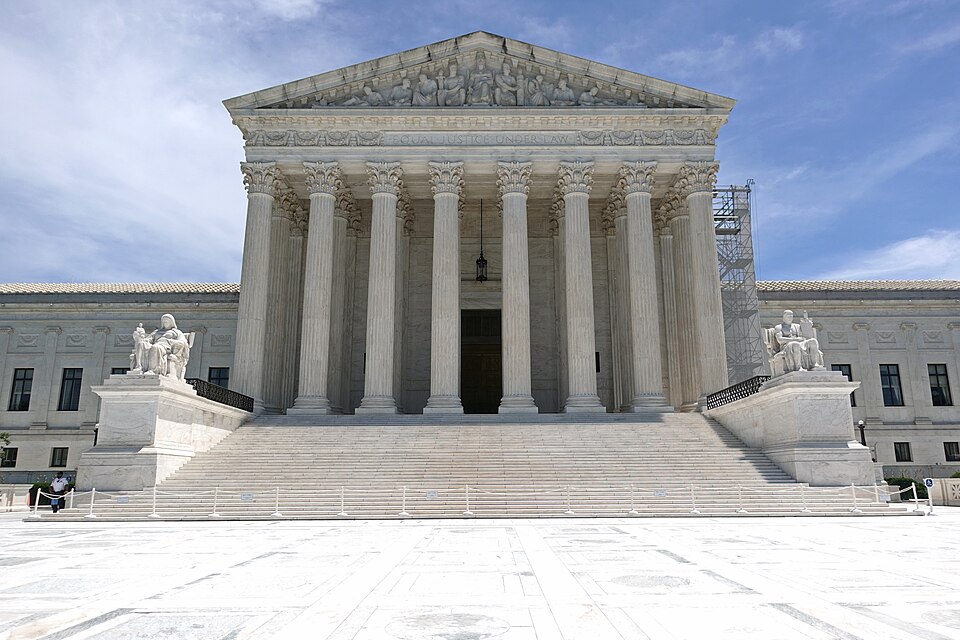
Supreme Court Lets Maryland Sensitive-Place Gun Restrictions Stand
The Supreme Court on Monday declined to hear a challenge to Maryland's sweeping restrictions on carrying guns in so-called sensitive places, leaving in place a lower court ruling that upheld the law and giving states fresh leeway to limit where firearms may be carried.[1]
By denying review, the justices let stand a decision from the 4th U.S. Circuit Court of Appeals that approved 10 categories of gun-free zones, including schools, parks, museums, casinos, public transit, public demonstrations, daycare centers, medical facilities, government buildings, and various entertainment venues.[1] Maryland Attorney General Anthony Brown, whose office defended the law, said the ruling was consistent with a long American tradition of keeping guns out of crowded or confined spaces, while gun-rights groups warned that the Court's refusal to step in would encourage states to push the limits of such bans.[1]
Maryland's law was enacted as part of a broader wave of state legislation that followed the Supreme Court's 2022 decision in New York State Rifle & Pistol Association v. Bruen, which struck down New York's strict carry-permit rules but also reaffirmed that governments may bar firearms in sensitive places.[1] The Bruen ruling instructed lower courts to assess gun regulations against the nation's historical tradition of firearm regulation, triggering a flood of lawsuits that challenged new and existing restrictions and left judges to hash out where exactly people could be barred from bringing guns.
In Maryland, gun-rights advocates sued after lawmakers designated a wide range of locations as off-limits for carrying firearms, arguing that the state had stretched the sensitive-place concept so far that it effectively gutted the right to carry in public.[1] A federal district judge initially blocked parts of the law, but the 4th Circuit ultimately upheld all 10 challenged location-based rules, finding historical support for excluding guns from many types of public gatherings and government-related spaces under the Bruen test.[1]
The plaintiffs urged the Supreme Court to take the case to clarify how far states can go in labeling places as sensitive, saying lower courts are deeply split on whether modern bans on guns on public transit, in parks, or at protests fit within historical patterns.[1] By turning them away, the justices left that uncertainty in place and signaled, at least for now, a willingness to let states and appeals courts continue drawing their own lines on where guns can and cannot be carried.
Show source details & analysis (1 source)
📌 Key Facts
- On November 16, 2026, the Supreme Court denied certiorari in a challenge to Maryland’s sensitive-place gun laws.
- Maryland law bars firearms in locations including schools, parks, museums, casinos, public transit, public demonstrations, daycare and medical facilities, government buildings, and various entertainment venues.
- The 4th Circuit upheld all 10 challenged location-based restrictions, applying the 2022 Bruen historical-tradition test for Second Amendment cases.
- Maryland Attorney General Anthony Brown defended the laws as consistent with a longstanding American tradition of banning guns in certain confined or crowded places.
- Gun-rights plaintiffs argued the Court’s intervention was needed to clarify how far states can go in designating sensitive places after Bruen.
📰 Source Timeline (1)
Follow how coverage of this story developed over time