
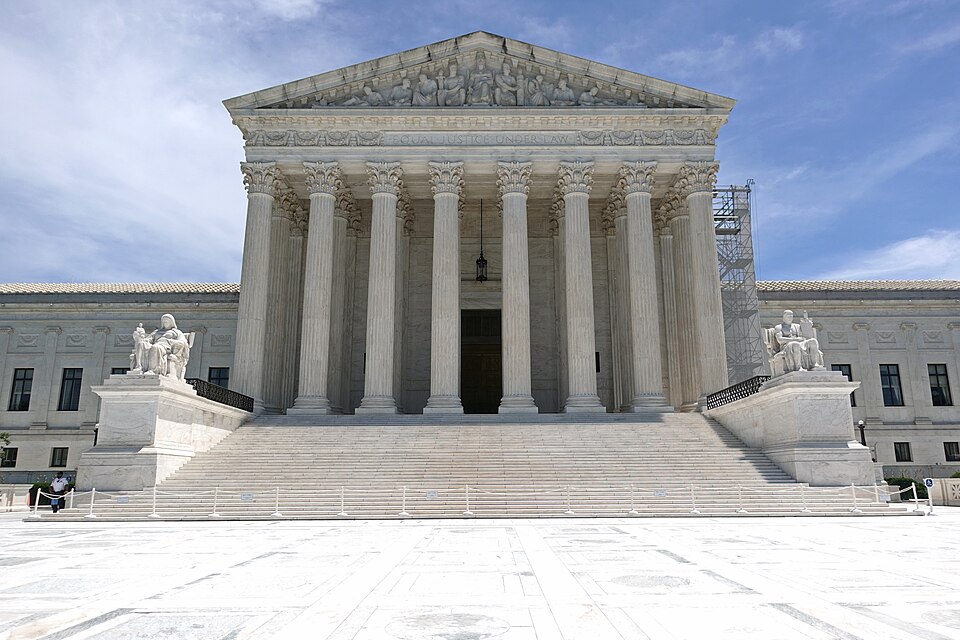
Supreme Court Keeps Block On Trump Policy Limiting Transgender Inmate Care
The Supreme Court on Wednesday, October 21, 2026, refused the Trump administration's emergency bid to immediately enforce a new federal prison policy that would sharply limit gender-affirming medical care and social accommodations for transgender inmates nationwide.[1]
In a brief unsigned order, the justices left in place U.S. District Judge Royce Lamberth's injunction requiring the Bureau of Prisons to continue providing hormone therapy, surgeries already approved, and social-transition measures such as makeup and wigs to a certified class of inmates while the underlying lawsuit, Kingdom v. Trump, proceeds.[1] The Court noted that Justices Clarence Thomas and Samuel Alito would have granted the administration's request, but a majority rejected it, meaning the Trump-era policy remains blocked as the case moves forward in lower courts.[2]
Judge Lamberth, a Reagan appointee on the federal bench in Washington, had previously ordered that gender-affirming treatments continue, finding that sharply curtailing hormones, surgeries and social accommodations posed "severe risks" of depression, anxiety and suicidal thoughts for prisoners diagnosed with gender dysphoria.[2] The lawsuit, brought on behalf of roughly 1,000 federal inmates with that diagnosis, argues that the Eighth Amendment's ban on cruel and unusual punishment requires prisons to provide medically necessary treatment for gender dysphoria, just as they must for other serious conditions.[1]
The policy at issue flows from a Trump executive order directing that federal funds not be spent "for the purpose of conforming an inmate's appearance to that of the opposite sex," language the Bureau of Prisons used this year to revise its medical rules.[2] Under the new approach, the government planned to halt gender-affirming surgeries, taper existing hormone regimens, and end access to items like makeup and wigs, while continuing mental health services.[2] Court records show that about 600 inmates were receiving hormone therapy in 2025 and that the government has not identified specific security problems tied to that care in the roughly 30 years since the prison system began treating gender dysphoria in 1992.[2]
In its emergency filing, the Trump administration argued that allowing gender-affirming care to continue raised safety and "fairness" concerns, claiming such treatment and accommodations could fuel resentment and discipline problems among other prisoners, and insisting that prison officials need flexibility to set uniform standards.[1] Lawyers for the Kingdom plaintiffs, represented by the ACLU, countered that the government's decades of experience providing hormones and related care undercut any sudden claim of security risk, and they stressed that more than 2,000 people in federal custody identify as transgender, with about 800 members of the class prescribed hormone therapy.[1]
Outside the courtroom, the clash has become a proxy for a broader policy fight over how far public institutions must go to accommodate transgender people. In City Journal, a conservative-leaning publication, one commentator argues that the rise in transgender-related diagnoses has serious implications for settings like prisons and that broad access to hormones, surgeries and social-transition measures should not be treated as a settled, untouchable policy choice.[3] That author contends that courts which block administrative limits on gender-affirming care overstep by tying the hands of agencies that must weigh medical questions alongside order, security and resource constraints, and defends rules like the Trump policy as a legitimate attempt to recalibrate that balance.[3] Supporters of the injunction, including the ACLU and medical groups cited in the litigation, view the same facts very differently, saying decades of relatively uneventful treatment and the documented mental-health risks of withdrawal show that gender-affirming care in prison is essential healthcare, not a discretionary privilege.
Show source details & analysis (3 sources)
📌 Key Facts
- On Wednesday, October 21, 2026, the Supreme Court issued a brief order denying the Trump administration's emergency request to stay U.S. District Judge Royce Lamberth's injunction blocking the Bureau of Prisons policy; the application was presented to the Chief Justice, referred to the full Court, and denied Supreme Court.
- The Court’s order noted that Justices Clarence Thomas and Samuel Alito would have allowed the policy to take effect while litigation continues Supreme Court.
- The underlying lawsuit, Kingdom v. Trump, represents about 1,000 Bureau of Prisons inmates diagnosed with gender dysphoria; the ACLU estimates more than 2,000 people in BOP custody identify as transgender and roughly 800 of the Kingdom class have been prescribed hormone therapy Kingdom v. Trump.
- The Trump administration's revised Bureau of Prisons medical policy would halt gender-affirming surgeries, taper off hormone therapy, and end social accommodations such as makeup and wigs while continuing mental health services BOP policy.
- The policy language traces to a Trump executive order directing that federal funds not be spent "for the purpose of conforming an inmate's appearance to that of the opposite sex" Trump executive order.
- Judge Royce Lamberth previously ordered that gender-affirming treatments continue, citing severe risks from untreated gender dysphoria including depression, anxiety and suicidal thoughts Judge Royce Lamberth.
- The Trump administration argued its emergency stay was needed over claimed security risks and "fairness" concerns that gender-affirming care could breed resentment, but court records say about 600 inmates were receiving hormone therapy in 2025 and the government has not identified specific security problems linked to such therapy over the roughly 30 years it has been provided court records.
- The Bureau of Prisons has treated people with gender dysphoria since at least 1992 and stopped publishing transgender inmate data after the Trump administration took office in 2025, now recording only male or female Bureau of Prisons.
📊 Analysis & Commentary (1)
"This City Journal opinion is commenting on the recent ruling and debate over the Bureau of Prisons' policy limiting gender‑affirming care (the 'Supreme Court Keeps Block On Trump Policy Limiting Transgender Inmate Care' story); the author argues that rising transgender‑related diagnoses create real institutional challenges and supports administrative limits on treatments in settings like prisons, criticizing courts that block such policies while reporting and quoting the pro‑care medical and civil‑rights positions as opposing views."
📰 Source Timeline (3)
Follow how coverage of this story developed over time
- On Wednesday, October 21, 2026, the Supreme Court issued a brief order refusing to let the Trump administration immediately enforce its revised Bureau of Prisons medical policy for transgender inmates.
- The Court’s order noted that Justices Clarence Thomas and Samuel Alito would have allowed the policy to take effect while litigation continues.
- The article specifies the policy language came from a Trump executive order directing that federal funds not be spent "for the purpose of conforming an inmate's appearance to that of the opposite sex."
- It details that the new BOP policy would halt gender-affirming surgeries, taper off hormone therapy, and end social accommodations such as makeup and wigs, while continuing mental health services.
- Judge Royce Lamberth, a Reagan appointee, previously ordered that treatments continue, citing severe risks from untreated gender dysphoria, including depression, anxiety and suicidal thoughts.
- Court records cited in the article say about 600 inmates were receiving hormone therapy in 2025 and that the government has not identified specific security problems linked to such therapy over the 30 years it has been provided.
- On Wednesday, October 21, 2026, the Supreme Court issued a brief order denying the Trump administration's emergency request to stay U.S. District Judge Royce Lamberth's injunction blocking the Bureau of Prisons policy.
- The order notes that the application for stay was presented to the Chief Justice, referred to the full Court, and denied, with Justices Clarence Thomas and Samuel Alito indicating they would have granted the stay.
- The article identifies the underlying case as Kingdom v. Trump and says it represents about 1,000 BOP inmates with a gender dysphoria diagnosis.
- ACLU attorney Li Nowlin-Sohl estimates that more than 2,000 people in BOP custody identify as transgender and that roughly 800 of the Kingdom class members have been prescribed hormone therapy, many also receiving social transition accommodations.
- The piece details the Trump administration's emergency stay arguments, including claimed security risks and "fairness" concerns that gender-affirming care would breed resentment among other inmates.
- The article notes BOP has treated people with gender dysphoria since at least 1992 and that the agency stopped publishing transgender inmate data after Trump took office in 2025, now recording only male or female.