
Trump Creates NIH Women's Health Division And White House Task Force
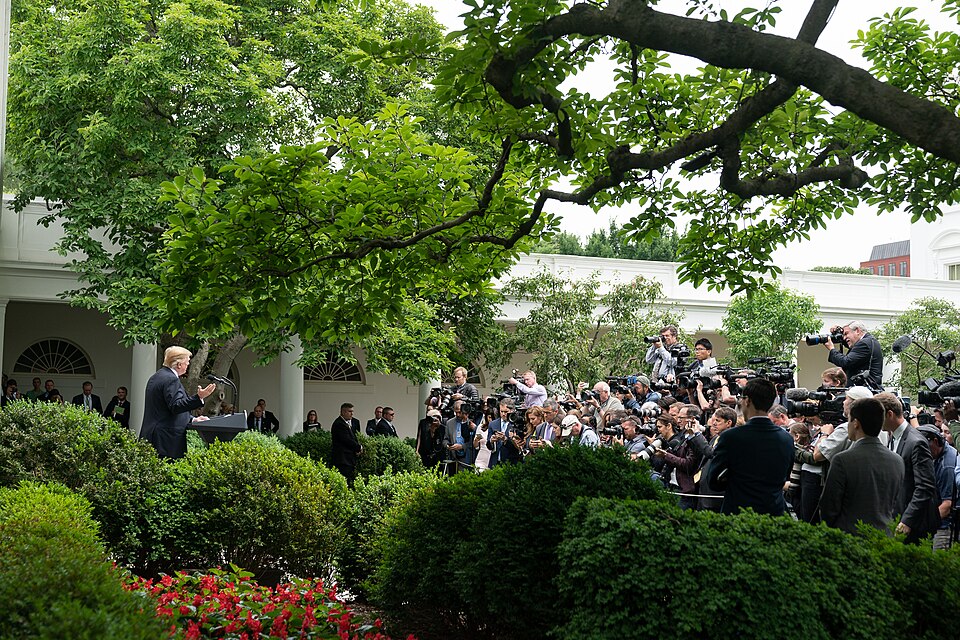
President Donald Trump on Monday, October 19, created a new Division of Women's Health at the National Institutes of Health and a White House Women's Health Task Force by executive order during a Rose Garden ceremony in Washington.[1]
The order directs federal agencies to bolster research and diagnostic tools focused on maternal health, mental health, endometriosis, Alzheimer's disease, osteoporosis, heart disease and stroke, but it does not set any new funding levels to pay for those efforts.[1] White House chief of staff Susie Wiles, who recently completed treatment for breast cancer, will co-chair the task force with Health and Human Services Secretary Robert F. Kennedy Jr., and the panel was scheduled to hold its first meeting later that same day.[1] First lady Melania Trump, speaking at the event, declared, "Beginning today we will change the reality of women's health," casting the initiative as this generation's drive to find cures for diseases that disproportionately affect women.[1]
The move adds a new bureaucratic layer onto an area where NIH already has an Office of Research on Women's Health, created in 1990 under President George H.W. Bush; officials say the new Division of Women's Health will collaborate with, rather than replace, that office.[2] Trump told attendees he was surprised such a division did not already exist, recalling that he asked the first lady, "Are you sure they don't have that?" and quipping, "Who the hell wouldn't have a women's health division?"[1] The executive order steers agencies to coordinate research priorities and improve diagnostic technology, but it stops short of promising new money, leaving implementation dependent on existing budgets or future appropriations from Congress.[1]
The New York Times notes that the administration moved in April 2025 to cut funding for the longstanding Women's Health Initiative, a large federal research program on chronic disease in older women, a step critics now cite as evidence that the new announcement may be more about optics than sustained investment.[2] Women's groups and patient advocates interviewed by the Times questioned how much difference the executive order can make without Congress approving additional money, arguing that naming more priorities inside NIH will not by itself expand clinical trials, community programs or access to care.[2]
Political timing looms over the rollout. PBS points out that the Rose Garden ceremony came just weeks before the November 3, 2026 midterm elections, as AP-NORC polling showed Trump's support among independent women dropping from about four in ten near the 2024 election to roughly one in four by early 2026.[1] Politico's Will Steakin, Adam Wren and Dasha Burns argue the initiative is best understood as a pre-midterm public relations push aimed at shoring up support among women, using the first lady's expanded second-term portfolio and Wiles's personal cancer experience to craft favorable "mom" messaging rather than to launch a major new research program.[3]
Commentary has also pushed back on claims from some political opponents that the new women's-health structures somehow discriminate against men. Writer Steve Stewart-Williams contends that creating a dedicated NIH division and task force is a corrective response to decades of underinvestment in women's health research, not "reverse discrimination," and that targeted programs to close documented gaps are equity tools rather than unfair favoritism.[4] At the same time, he echoes other critics in warning that symbolic executive actions will mean little without sustained funding and structural follow-through, arguing that the risk is less bias against men than raising expectations among women without delivering concrete changes in care or outcomes.[4]
Show source details & analysis (3 sources)
📌 Key Facts
- On Monday, October 19, 2026, President Donald Trump held a Rose Garden ceremony where he signed an executive order creating an NIH Division of Women's Health and a White House Women's Health Task Force, with the panel scheduled to hold its first meeting that same day (Rose Garden ceremony).
- First lady Melania Trump used the Rose Garden appearance to frame the initiative as this generation's fight to discover cures — saying, “Beginning today we will change the reality of women's health” (Melania Trump).
- White House chief of staff Susie Wiles, who recently completed treatment for breast cancer, will co‑lead the new task force alongside Health and Human Services Secretary Robert F. Kennedy Jr. (Susie Wiles).
- The executive order directs the task force to target maternal health, mental health, endometriosis, Alzheimer's disease, osteoporosis, heart disease and stroke as key priorities (executive order).
- The order instructs agencies to bolster research and diagnostic technology for women's health but does not set specific funding goals (the order).
- The New York Times notes that the NIH already has an Office of Research on Women's Health, created in 1990, and says the new Division of Women's Health is described by officials as collaborating with — not replacing — that office (Office of Research on Women's Health).
- The Times also reports the Trump administration moved in April 2025 to slash funding for the long‑running Women's Health Initiative, a contrast observers cited after the new announcement (Women's Health Initiative).
- Women's groups and patient advocates quoted by The New York Times questioned the potential impact of the executive order without new funding from Congress (women's groups and patient advocates).
- PBS situates the rollout politically, noting it comes weeks before the November 3, 2026 midterm elections and after AP‑NORC polling showing Mr. Trump's support among independent women fell from about 4 in 10 around the 2024 election to roughly a quarter in early 2026 (AP‑NORC polling).
📊 Analysis & Commentary (2)
"The Politico Playbook item criticizes the Trump White House’s new NIH women’s‑health division and task force as a largely symbolic, midterm‑timed PR play — heavy on optics (Melania, Susie Wiles) and rhetoric but short on funding and substantive policy change."
"Although the article text was corrupted, the title and context indicate a commentary responding to the Trump administration's creation of an NIH Division of Women's Health and White House task force — the author argues such targeted measures correct historical neglect of women's health (not 'discriminate against men'), while warning that symbolic announcements are insufficient without real funding and structural change."
📰 Source Timeline (3)
Follow how coverage of this story developed over time
- On Monday, October 19, 2026, Melania Trump made a Rose Garden appearance to announce the women's health initiative created by President Trump's executive order.
- The New York Times notes that NIH already has an Office of Research on Women's Health, created in 1990 under President George H.W. Bush, and says officials describe the new Division of Women's Health as collaborating with, not replacing, that office.
- The article reports that the Trump administration previously moved in April 2025 to slash funding for the long‑running Women's Health Initiative research program, providing contrast with the new announcement.
- Women's groups and patient advocates quoted in the piece question the impact of the executive order absent new funding from Congress.
- On Monday, October 19, 2026, President Donald Trump held a Rose Garden ceremony where he signed the executive order creating the NIH women's health division and the White House Women's Health Task Force, with the panel scheduled to hold its first meeting that same day.
- The article reports extended on-camera remarks from first lady Melania Trump, who said, "Beginning today we will change the reality of women's health," and framed the initiative as this generation's fight to discover cures for diseases affecting women.
- The piece specifies that White House chief of staff Susie Wiles, who recently completed treatment for breast cancer, will co-lead the new task force alongside Health and Human Services Secretary Robert F. Kennedy Jr.
- Trump expressed surprise that NIH lacked a dedicated women's health division, recounting that he asked the first lady, "Are you sure they don't have that?" and adding, "Who the hell wouldn't have a women's health division?"
- The executive order explicitly calls for targeting maternal health, mental health, endometriosis, Alzheimer's disease, osteoporosis, heart disease and stroke as part of the task force's focus.
- The article notes that the order does not include specific funding goals, even as it directs agencies to bolster research and diagnostic technology for women's health.
- The report situates the initiative within Melania Trump's broader second-term portfolio, noting her prior focus on foster care systems and technology/AI access in education.
- The piece adds political context, reporting that AP-NORC polling shows Trump's support among independent women fell from about 4 in 10 in the 2024 election period to around a quarter in early 2026, and that the rollout comes weeks before the November 3, 2026 midterm elections.