
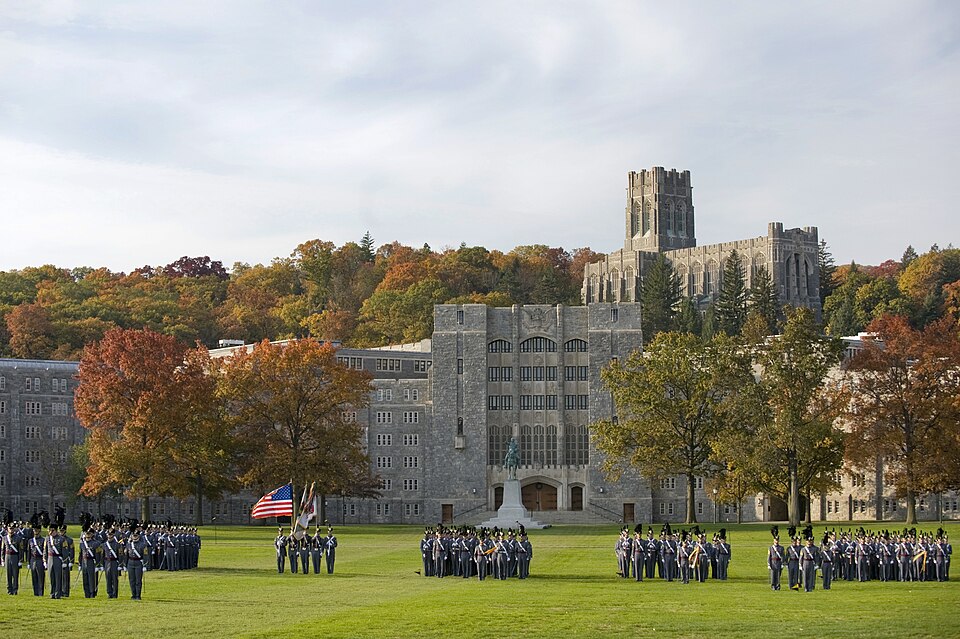
Hegseth Ends Civilian Tenure At U.S. Military Service Academies
Hegseth announced in a State of the Force speech at Quantico on Wednesday, September 30, 2026, that the U.S. service academies will end civilian professor tenure.[1]
He said the change is meant to make academy education "laser-focused on lethality and readiness." NPR
CBS reported Hegseth directed the military academies to stop granting tenure to civilian professors.[2] NPR said the directive came in his State of the Force address at Quantico, where he attacked "ideological clowns" and criticized elite academic institutions as anti-American.[1] He also named five colleges that will pilot enhanced Pentagon relationships to produce officer candidates and pledged to elevate chaplains.[1] He described religious faith as "the most essential component of our republic." NPR
CBS's coverage centered on the administrative order to end tenure at institutions such as West Point and the Naval Academy.[2] NPR placed that order inside a broader speech that framed the changes as part of a culture-war effort Hegseth says has transformed the U.S. military.[1]
The mainstream summary frames Hegseth's directive primarily as a response to ideological issues within academia, but it does not delve into the broader argument that academia's left-wing skew necessitates such drastic measures. Aporia Magazine argues that tenure protects ideological conformity, suggesting that ending it is essential for restoring balance and focusing on mission-critical training. This perspective highlights a justification for Hegseth's actions that the mainstream coverage does not fully explore, presenting them as a necessary intervention rather than merely a cultural critique.
Additionally, while the summary mentions Hegseth's remarks about making education 'laser-focused on lethality and readiness,' it does not address the implications of these changes on the ideological landscape of military education. The analysis suggests that Hegseth's framing of the situation as a culture war reflects a broader agenda to reshape military training in alignment with specific political ideologies, a nuance that is absent from the mainstream account. This omission may lead readers to underestimate the potential impact of these changes on the future of military education and the ideological diversity within it.
Show source details & analysis (2 sources)
📌 Key Facts
- On Wednesday, September 30, 2026, in his State of the Force speech at Quantico, Hegseth announced the end of civilian tenure at the U.S. military service academies and framed the move as part of making military education “laser‑focused on lethality and readiness” (State of the Force speech at Quantico).
- The address paired the tenure decision with cultural rhetoric attacking “ideological clowns” and criticizing elite academic institutions as anti‑American, according to NPR (ideological clowns).
- Hegseth named five new colleges that will pilot enhanced relationships with the Pentagon to produce officer candidates, as part of the changes discussed in the speech (five new colleges).
- In the same address, Hegseth pledged to elevate chaplains and described religious faith as “the most essential component of our republic,” signaling a possible shift in how non‑uniformed educational and spiritual roles are weighted inside the academies (chaplains).
- NPR reported these developments in a piece headlined “Leaning into culture war flashpoints, Hegseth says he has transformed U.S. military” on Wednesday, September 30, 2026, providing the main coverage of the announcement and its context (Leaning into culture war flashpoints, Hegseth says he has transformed U.S. military).
📊 Analysis & Commentary (1)
"This roundup/commentary collects and amplifies examples to argue that academia is 'massively' left‑wing and that steps like ending civilian professor tenure at service academies are justified responses — the author endorses the critique and assembles evidence to support reform, rather than neutrally reporting others' claims."
📰 Source Timeline (2)
Follow how coverage of this story developed over time
- NPR reports on September 30, 2026, that in his State of the Force speech at Quantico, Hegseth framed the end of civilian tenure at the service academies as part of a broader effort to ensure military education is 'laser-focused on lethality and readiness.'
- The address added new context by pairing the tenure decision with cultural rhetoric attacking 'ideological clowns' and elite academic institutions as anti‑American, while at the same time naming five new colleges that will pilot enhanced relationships with the Pentagon to produce officer candidates.
- Hegseth pledged in the same speech to elevate chaplains and described religious faith as 'the most essential component of our republic,' signaling a shift in how non‑uniformed educational and spiritual roles may be weighted inside the academies.