
Trump's Board Of Peace Gaza Plan Raises Transparency Questions Over $18 Billion In Pledges
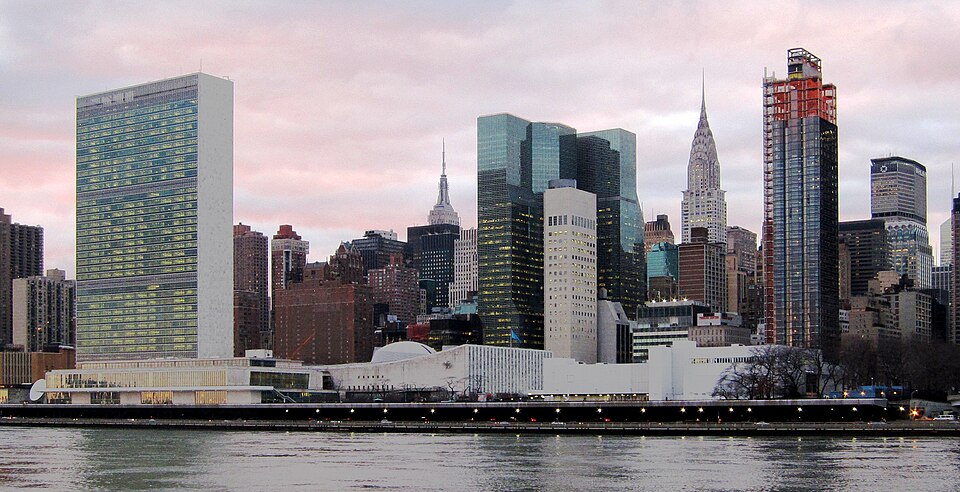
On Wednesday, Sept. 23, 2026, Board of Peace envoys Steve Witkoff and Jared Kushner met donors at a New York hotel near the U.N. to promote a $2.45 billion, six-month Gaza recovery plan.[1]
The Board has no public budget, staffing information or detailed records showing how much of an initially pledged $18 billion has been received, where the money is held, or which projects have been funded.[1] President Donald Trump told the U.N. that the board had contributed "billions and billions of dollars to relief" and the board's charter names him "chairman for life." MS NOW Board officials counter that they have only "called on" about $280 million so far and say most pledged funds remain undrawn to avoid money "sitting in a bank account" before projects begin.[1]
PBS reported the board presented a $2.45 billion blueprint intended to begin Gaza reconstruction over six months.[2] The roadmap lists 66 proposed projects and lets governments pick which ones to finance, a change officials say adds flexibility and responds to criticism that the board could become a Trump-linked slush fund.[1] The board recently began using offices in the former Washington headquarters of the U.S. Institute of Peace, which was gutted and renamed for Trump in 2025.[1] Officials say cooperation with U.N. agencies in Gaza has been streamlined, but critics say many projects would normally be run by U.N. bodies and other multilateral organizations.[1] The plan is stalled because Israel continues strikes in Gaza, Prime Minister Benjamin Netanyahu rejects a U.S.-backed Hamas disarmament plan announced in late July, and security conditions hamper aid deliveries.[1]
The mainstream summary frames the Board of Peace's $18 billion pledge as a significant commitment to Gaza recovery, yet it overlooks critical skepticism regarding the actual availability and oversight of these funds. Matthew Yglesias argues that such large donor pledges often serve more as public relations tools than as immediate financial resources, emphasizing that announcing a figure does not equate to having the funds under independent control. He points out that private, donor-led initiatives like the Board of Peace lack the transparency and accountability that public entities typically provide, raising concerns that these efforts may devolve into mechanisms for influence rather than genuine humanitarian assistance.
Moreover, while the summary mentions the board's lack of a public budget and detailed records, it does not delve into the implications of this absence. Yglesias stresses the need for concrete disclosures about who has contributed, where the funds are held, and the governance rules that apply. Without such transparency, he warns, the initiative risks becoming unaccountable, potentially undermining its stated goals of effective relief and reconstruction. This critical perspective highlights the need for scrutiny beyond the surface-level commitments presented by the board officials.
Show source details & analysis (2 sources)
📌 Key Facts
- On Wednesday, September 23, 2026, Board of Peace envoys Steve Witkoff and Jared Kushner held a donor meeting in a New York hotel near the U.N. to promote a $2.45 billion, six‑month Gaza recovery program and recruit additional members (Board of Peace envoys).
- The Board of Peace has no public budget, staffing information, or detailed public records showing how much of the initially pledged $18 billion has been received, where the funds are held, or which specific relief projects have been funded (Board of Peace).
- In his September 23, 2026 U.N. General Assembly speech, Trump said the Board of Peace had contributed “billions and billions of dollars to relief” and noted the board’s charter, adopted in January 2026, names him “chairman for life” (U.N. General Assembly speech).
- Board of Peace officials say they have only “called on” about $280 million so far from donors and argue that not drawing down most of the $18 billion in pledges is deliberate to avoid money “sitting in a bank account” before projects can be delivered (Board of Peace officials).
- The Board of Peace recently began using offices in the former Washington headquarters of the U.S. Institute of Peace, a building that was gutted and renamed for Trump in 2025 (former Washington headquarters of the U.S. Institute of Peace).
- The Gaza recovery roadmap presented on September 23, 2026 details 66 proposed projects and allows governments to cherry‑pick which projects to finance, a change officials framed as added flexibility and a response to criticism that the board could become a Trump‑linked slush fund (Gaza recovery roadmap).
- Board officials say their cooperation with U.N. agencies in Gaza has been “streamlined,” even as critics note many proposed projects would ordinarily be implemented by U.N. bodies and other multilateral organizations (cooperation with U.N. agencies).
- The board’s plan remains stalled because of the ongoing Israel–Hamas stalemate: Israel continues strikes in Gaza, Prime Minister Benjamin Netanyahu rejects the U.S.-backed Hamas disarmament plan announced in late July, and security conditions hamper aid deliveries (Israel–Hamas stalemate).
📊 Analysis & Commentary (1)
"A critical take on the Board of Peace Gaza plan: the author argues that headline donor pledges and wealthy-led reconstruction efforts are often performative and lack real accountability — demanding evidence (actual funds, public budgets, governance rules) before accepting claims that 'billions' have been delivered."
📰 Source Timeline (2)
Follow how coverage of this story developed over time
- On Wednesday, September 23, 2026, Board of Peace envoys Steve Witkoff and Jared Kushner held a donor meeting in a New York hotel near the U.N. to promote the $2.45 billion, six‑month Gaza recovery program and recruit additional members.
- The Board of Peace has no public budget, staffing information, or detailed public records on how much of the initially pledged $18 billion has been received, where the money is held, or what specific relief projects have been funded to date.
- Trump, in his September 23, 2026 U.N. General Assembly speech, claimed the Board of Peace had contributed “billions and billions of dollars to relief” and noted that its charter, adopted in January 2026, names him “chairman for life.”
- Board of Peace officials said they have only “called on” about $280 million so far from donors and argued that not drawing down most of the $18 billion in pledges is deliberate to avoid money “sitting in a bank account” before projects can be delivered.
- The Board of Peace recently began using offices in the former Washington headquarters of the U.S. Institute of Peace, which was gutted and renamed for Trump in 2025.
- The Gaza recovery roadmap presented Wednesday details 66 proposed projects and allows governments to cherry‑pick which projects to finance, a change officials framed as added flexibility and a response to criticism that the board could become a Trump‑linked slush fund.
- Board officials say their cooperation with U.N. agencies in Gaza has been “streamlined,” even as critics note many proposed projects would ordinarily be implemented by U.N. bodies and other multilateral organizations.
- The article underscores that the board’s plan remains stalled because of the ongoing Israel–Hamas stalemate: Israel continues strikes in Gaza, Prime Minister Benjamin Netanyahu rejects the U.S.-backed Hamas disarmament plan announced in late July, and security conditions hamper aid deliveries.