
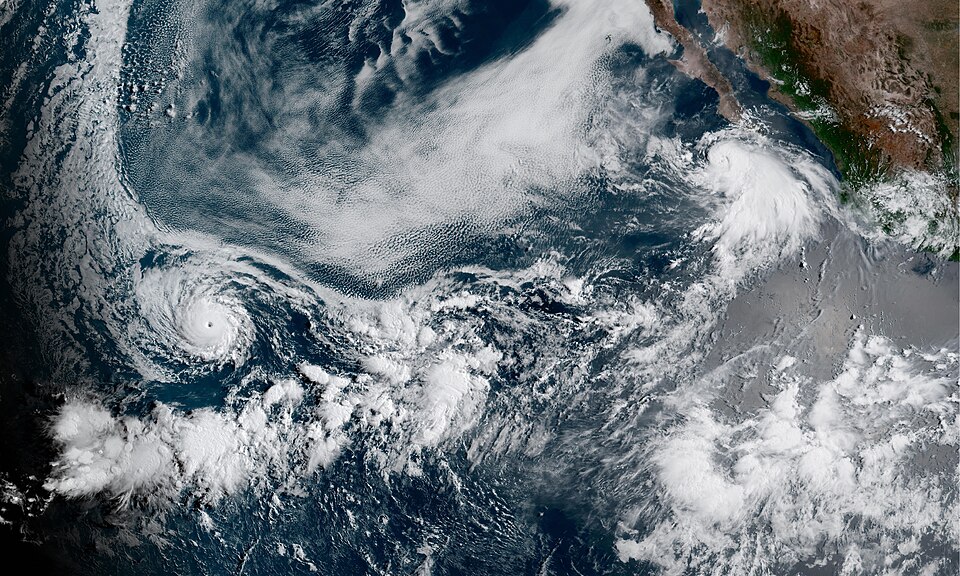
Hurricane Nolo Near Hawaii Spurs Emergency Measures And Severe Flood Threat
On Saturday, September 26, 2026, rain began falling on Hawaii as Hurricane Nolo churned south of the Big Island with sustained winds near 90 mph about 160 miles south, and officials warned of life-threatening flooding.[1]
Gov. Josh Green issued an emergency proclamation, activated more than 230 Hawaii National Guard members, closed schools and urged residents to shelter in safe locations.[2] President Donald Trump approved a federal emergency declaration to let FEMA coordinate assistance, and Hawaii County opened shelters and made sand available for sandbags as crews prepared for possible outages.[1]
On Friday morning, September 25, 2026, the National Hurricane Center said Nolo had maximum sustained winds near 85 mph and was moving about 5 mph toward Hawaii.[3] Forecasters warned the storm could rapidly strengthen to peak winds near 140 mph, making it a Category 4 hurricane, and that Nolo's motion had been erratic, including an abrupt right-hand turn earlier in the week.[3]
Early forecasts projected 15 to 30 inches of rain across wide areas of the Big Island, with localized amounts approaching 3 feet and warnings of catastrophic, life-threatening flooding and mudslides.[3] By Friday, updated forecasts cut expected totals to about 10 to 15 inches with a maximum near 25 inches, but officials said the flood and mudslide threat remained acute, especially in southeastern areas still saturated after August's Hurricane Lala.[2]
Forecasters did not expect Nolo's center to make direct landfall; they projected it would slow, turn west and accelerate over the weekend.[3] Maui was under a tropical-storm watch and could receive up to about 15 inches of rain as the storm's outer bands spread across the islands.[3]
Show source details & analysis (5 sources)
📌 Key Facts
- As of Friday morning, September 25, 2026, Hurricane Nolo had maximum sustained winds near 85 mph and was moving about 5 mph toward Hawaii.
- The National Hurricane Center forecast Nolo could strengthen over the next 72 hours to peak winds around 140 mph, making it a Category 4 hurricane.
- Updated forecasts on Friday, September 25, 2026 reduced expected rainfall on the Big Island to 10–15 inches (maximum about 25 inches), down from earlier projections of 15–30 inches with localized amounts near 3 feet, while officials warned of potentially life‑threatening, catastrophic flooding and mudslides (PBS News).
- The heaviest rain was expected over the Big Island’s eastern and southern areas (the same southeastern region still saturated from August’s Hurricane Lala); Maui was under a tropical storm watch and could see up to about 15 inches, raising acute flood and mudslide concerns.
- Nolo’s motion had been erratic — including an abrupt right‑hand turn earlier in the week that steered it north toward the Big Island — and forecasts showed it slowing, turning west and accelerating over the weekend without an expected direct landfall.
- Gov. Josh Green issued an emergency proclamation and activated more than 230 Hawaii National Guard members, closed schools and urged residents to complete preparations and shelter in safe locations, and the president approved a federal emergency declaration authorizing FEMA to coordinate assistance.
- Hawaii County opened shelters, made sand for sandbags publicly available and urged residents in flood‑prone areas to move to safer locations, while Hawaiian Electric recalled crews from Kauai to Oahu, Maui and the Big Island to prepare for possible outages.
- By Saturday, September 26, 2026 rain began falling as Nolo churned south of the Big Island with sustained winds near 90 mph about 160 miles south of Hawaii’s southernmost point, and forecasters warned parts of the Big Island could receive up to 20 inches of rain even though a direct landfall was not expected.
📰 Source Timeline (5)
Follow how coverage of this story developed over time
- On Saturday, September 26, 2026, rain began falling on Hawaii as Hurricane Nolo slowly churned south of the Big Island with sustained winds of 90 mph about 160 miles south of Hawaii's southernmost point.
- Forecasters now expect parts of the Big Island to receive up to 20 inches of rain, with heavy rainfall also forecast on other islands, and warn of potential life-threatening flooding and mudslides even though direct landfall by the storm center is not expected.
- President Donald Trump approved an emergency declaration for Hawaii on Friday, authorizing FEMA to coordinate assistance and provide funding support, and Hawaii's governor issued an emergency proclamation activating hundreds of Hawaii National Guard members.
- Hawaii County authorities urged residents in flood-prone areas on the Big Island to consider moving to shelters or other safer locations as Nolo's northern edge approaches.
- Hawaiian Electric said crews that had been helping restore power on Kauai after Hurricane Lowell have returned to Oahu, Maui and the Big Island to prepare for possible outages from Nolo.
- The article notes that residents are still recovering from August's Hurricane Lala, which produced heavy rain and winds strong enough to sweep about 100 homes off their foundations on the Big Island.
- On Friday, September 25, 2026, CBS reported authorities on Hawaii's Big Island were warning residents to find safe shelter ahead of Hurricane Nolo's arrival.
- The CBS segment emphasized that officials are warning of possible life-threatening flooding in some areas of the Big Island.
- CBS highlighted that Nolo is arriving just over a month after Hurricane Lala caused devastation in Hawaii, underscoring residents' limited recovery time between major storms.
- On Friday morning, September 25, 2026, Hurricane Nolo was about 185 miles south of Hawaii's Big Island, moving northeast with tropical-storm conditions expected to reach land that evening before the storm turns west on Saturday.
- Updated forecasts on September 25 reduced expected rainfall on the Big Island to 10-15 inches with a maximum of 25 inches, down from earlier projections of 15-30 inches with a 35-inch maximum, while still warning of potentially life-threatening and catastrophic flooding.
- The National Hurricane Center said Nolo had maximum sustained winds of 85 mph on Friday morning and is expected to strengthen to a major hurricane on Saturday, with wind gusts on land potentially reaching 50 mph.
- Hawaii Gov. Josh Green issued an emergency proclamation and activated more than 230 Hawaii National Guard members as of Friday, September 25, while Hawaii officials closed schools and urged residents to complete preparations and shelter in safe locations.
- Hawaii County officials on the Big Island began opening shelters and urged residents in flood-prone areas to consider moving there or to other safe locations; sand for sandbags was made publicly available at several sites.
- Hawaiian Electric said crews assisting power restoration in Kauai after Hurricane Lowell would return to Oahu, Maui, and the Big Island to prepare for Nolo's impacts.
- Forecasters highlighted that Nolo’s heaviest rain is likely over the same southeastern region of the Big Island saturated by August’s Hurricane Lala, raising additional flood and mudslide concerns.
- The National Hurricane Center said some of Hurricane Polo’s moisture could reach the U.S. Four Corners region by Monday, potentially causing scattered flash flooding in parts of Arizona and New Mexico.
- As of Friday morning, September 25, 2026, Nolo is a hurricane with maximum sustained winds near 85 mph moving at about 5 mph over the Pacific toward Hawaii.
- The National Hurricane Center forecasts Nolo could strengthen over the next 72 hours to peak winds around 140 mph, making it a Category 4 hurricane.
- Forecast rainfall totals from Nolo are now 15 to 30 inches over wide areas of Hawaii, with localized amounts approaching 3 feet and the NHC warning of "catastrophic life-threatening flooding and mudslides," especially in steep terrain.
- The heaviest rain is expected on the Big Island's eastern and southern areas, while Maui, under a tropical storm watch, could see up to 15 inches of rain.
- Nolo's motion has become erratic, including an abrupt right-hand turn earlier in the week that redirected the storm north toward the Big Island; the current forecast track has it slowing, then turning west and accelerating over the weekend without making landfall.
- The article notes that the 2026 Pacific season has already produced three Category 5 hurricanes (Genevieve, Lowell and Polo) and links Nolo's rapid regeneration and intensification to warm waters associated with a strong El Niño.