
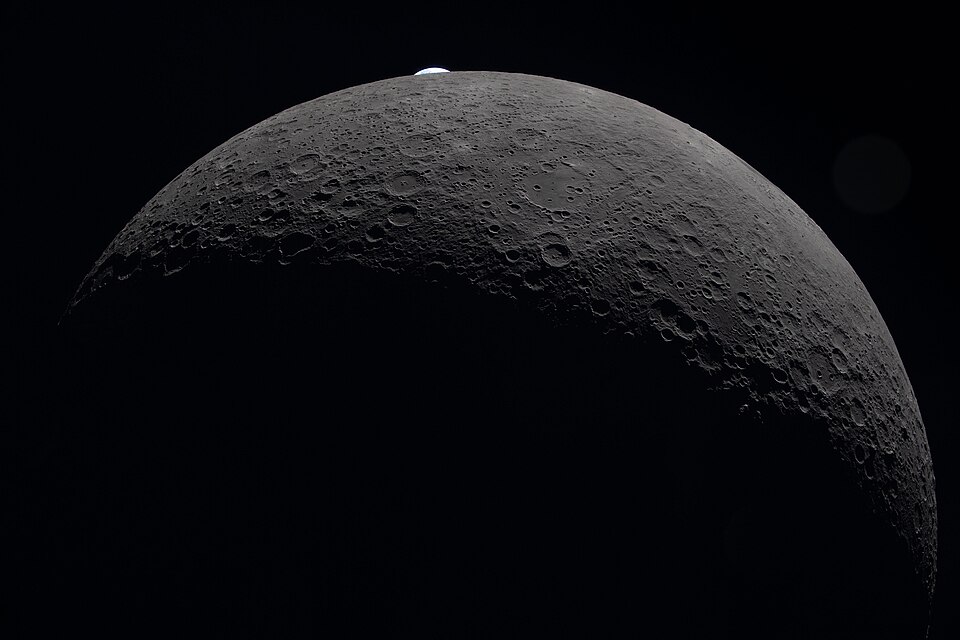
NASA Finds Rare New Moon Crater, Refines Risks For Planned Base
NASA announced Wednesday that a spacecraft has discovered a rare new crater on the Moon's near side, refining impact-risk estimates for a planned lunar base.[1]
The feature, named for former Lunar and Planetary Institute director Thomas McGetchin, measures about 728 feet across and is as deep as 141 feet.[1] Scientists say the crater formed between April 11 and May 22, 2024, when a fragment roughly the size of a three- to six-story building struck the surface.[1]
Researchers estimate impacts this large occur roughly once every 132 years.[1] They found ejecta from the McGetchin impact churned the lunar surface for more than 66 miles, and that redistribution of material is being used to update risk models for NASA's planned Moon base.[1]
NASA says the new measurements and maps will help refine hazard assessments and landing-site planning for future crewed missions and habitat placement on the Moon.[1]
Show source details & analysis (1 source)
📌 Key Facts
- Crater formed on the Moon's near side between April 11 and May 22, 2024, from an asteroid or comet fragment the size of a three- to six-story building.
- The new crater, named for former Lunar and Planetary Institute director Thomas McGetchin, measures about 728 feet across and up to 141 feet deep.
- Researchers estimate such large impacts occur roughly once every 132 years and say ejecta from this event churned the surface for over 66 miles, informing risk calculations for NASA’s planned Moon base.
📰 Source Timeline (1)
Follow how coverage of this story developed over time