
Iran Drone Shootdowns Add To $38 Billion War Cost And Rising U.S. Aircraft Losses
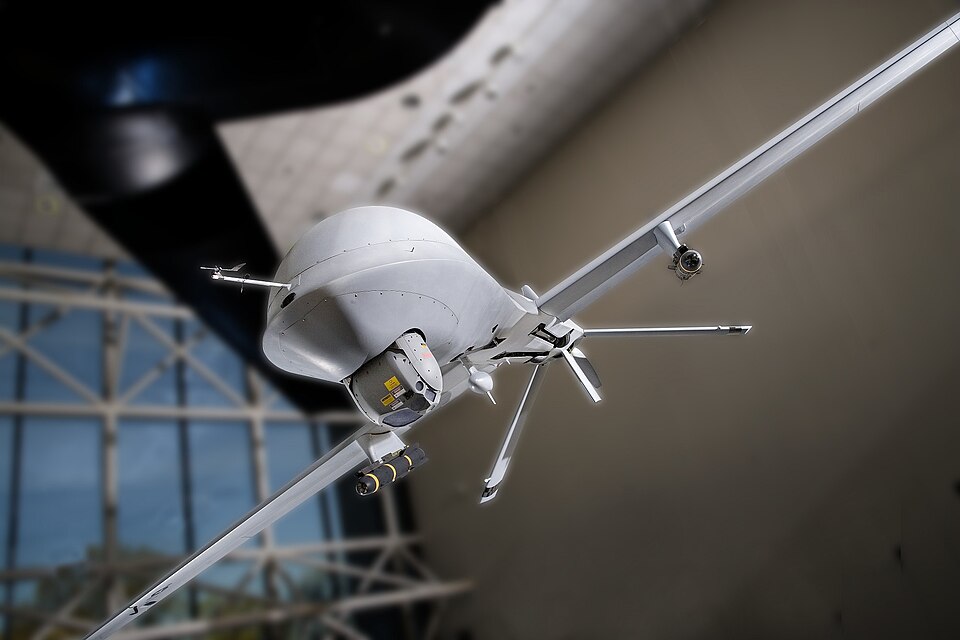
Iranian forces have shot down at least two American MQ-1 unmanned aircraft in recent days, U.S. officials said Thursday, adding fresh operational losses to the conflict with Iran.[1]
Officials did not specify where the MQ-1s were downed or which MQ-1 variants were involved, and U.S. Central Command declined to comment on the incidents.[1] If the aircraft were older Air Force Predators, the two losses would total roughly $8 million; Army Gray Eagles can cost tens of millions each depending on the variant.[1] Reporting this week also cited a Congressional Budget Office tally that at least 24 MQ-9 Reapers have been lost, about $720 million in replacements, and that one MQ-4C Triton was destroyed, about $150 million.[1]
On Tuesday, September 15, 2026, the Congressional Budget Office released a 19-page analysis estimating the Iran war has cost the U.S. roughly $38 billion through August 1, 2026.[2] CBO projects the war will keep costing about $2-3 billion per month and warns rebuilding depleted munitions stockpiles could take five years or more.[2] The office also broke out about $21.7 billion needed to replace expended munitions through August 1, including roughly $13.1 billion for missile-defense interceptors and $7.3 billion for land-attack cruise missiles.[3] The report says the Defense Department did not respond to CBO information requests, and a Pentagon inspector general warned of "strategic inventory shortfalls" in U.S. stockpiles.[4]
Coverage earlier this week focused on the rising fiscal toll and inventory risks laid out in the CBO analysis.[2] CBS's Sept. 17 reporting on the MQ-1 shootdowns shifted attention to immediate operational losses and accelerating aircraft attrition.[1]
The new shootdowns add a discrete equipment and replacement cost to a conflict already straining munitions and budgets while CBO warns war-related energy shocks have raised inflation and could keep it higher into early 2027.[4] Those losses come as the White House and Congress haggle over supplemental Pentagon funding, including an administration request earlier this year that sought tens of billions for Iran-war needs.[3]
Show source details & analysis (8 sources)
📌 Key Facts
- On Tuesday, September 15, 2026, the Congressional Budget Office released a 19‑page analysis estimating the Iran war has cost the U.S. roughly $38 billion through August 1, 2026.
- The CBO projects the war will continue to cost about $2–3 billion per month (CBO said July 2026 alone cost roughly $3 billion) and warns rebuilding depleted U.S. munitions stockpiles could take five years or more.
- The CBO analysis attributes a 2.3 percentage‑point rise in Q2 2026 inflation (to 5.3%) in part to higher energy costs tied to the Iran war and projects war‑related energy shocks could keep inflation about 0.5 percentage points higher into Q1 2027, raising federal interest payments.
- CBO estimates about $21.7 billion is needed to replace munitions expended through August 1 — roughly $7.3 billion for land‑attack cruise missiles, $13.1 billion for missile‑defense interceptors and $1.2 billion for other munitions — and about $1.9 billion to replace equipment lost (including a THAAD radar worth roughly $500 million), rising to as much as $3.3 billion if the Pentagon seeks newer replacement aircraft (CBS News).
- The report notes the Defense Department did not respond to CBO information requests, forcing CBO to rely on government databases and public reports, and a Pentagon inspector general report released Monday, September 14, 2026, warned of “strategic inventory shortfalls” in U.S. stockpiles.
- U.S. officials said on Thursday, September 17, 2026, that Iranian forces have recently shot down at least two American MQ‑1 unmanned aircraft; U.S. Central Command declined to comment on those incidents.
- A CBO tally cited in reporting shows at least 24 MQ‑9 Reaper drones have been lost since the war began (about $720 million) and that an MQ‑4C Triton was destroyed (about $150 million), with additional MQ‑1 Predator or Army Gray Eagle losses adding millions more to aircraft costs.
- The reporting ties this analysis to funding debates: the White House’s June supplemental funding request sought $87.6 billion total (about $67 billion for Pentagon Iran‑war needs), while CBO says roughly $42.3 billion of that was directly related to the conflict — roughly 10% higher than CBO’s own cost estimate.
📰 Source Timeline (8)
Follow how coverage of this story developed over time
- CBS News aired a video segment at 5:32 p.m. Central on Thursday, Sept. 17, 2026, reporting that U.S. officials say Iran has recently downed at least two American drones.
- The segment, reported by CBS correspondent James Laporta, reiterates that the downings occurred 'in recent days' but does not specify exact locations or drone variants involved.
- CBS reported on Thursday, Sept. 17, 2026, that Iranian forces downed at least two American MQ-1 unmanned aircraft 'in recent days,' according to U.S. officials.
- The new CBS video segment confirms that these recently downed aircraft were MQ-1 platforms, consistent with earlier text reporting but framed as at least two losses in the last several days.
- CBS identifies reporter James LaPorta as the correspondent relaying U.S. officials' confirmation of the latest shootdowns.
- U.S. officials said on Thursday, September 17, 2026, that Iranian forces have brought down at least two American MQ-1 unmanned aircraft in recent days.
- It remains unclear where in the region the MQ-1s were downed or which MQ-1 variant was involved, but both Air Force Predators and Army Gray Eagles are capable of surveillance and Hellfire missile strikes.
- If the downed aircraft were older Air Force MQ-1 Predators, the loss of two would total roughly $8 million; Gray Eagles can cost tens of millions each depending on variant.
- A new Congressional Budget Office report released this week found that at least 24 MQ-9 Reaper drones have been lost since the U.S. began its war with Iran, representing about $720 million in losses.
- The same CBO report said an MQ-4C Triton was destroyed during the conflict, a loss valued at about $150 million.
- U.S. Central Command, which oversees operations against Iran, declined to comment on the latest MQ-1 shootdowns.
- The PBS article reiterates that the Congressional Budget Office pegs Department of Defense spending on the Iran war at more than $38 billion through August 1, 2026, and projects ongoing costs of up to $3 billion per month depending on conflict intensity.
- CBO newly estimates the war will keep U.S. inflation roughly 0.5 percentage points higher than previously forecast into the first quarter of 2027, largely due to reduced oil and gas shipments through the Strait of Hormuz and Red Sea disruptions.
- The CBO report was produced at the request of Rep. Brendan Boyle, the top Democrat on the House Budget Committee, and he issued a statement criticizing the war's fiscal impact and tying it to Republicans' domestic spending stance.
- The article notes that the White House's June supplemental request sought $87.6 billion, including about $42.3 billion CBO deems directly related to the Iran conflict, which CBO says is roughly 10% higher than its own cost estimate.
- PBS reports that the Defense Department declined to provide information to CBO for this analysis, which CBO describes as a break from past practice and a factor contributing to uncertainty in its estimates.
- A Pentagon inspector general report released Monday, September 14, 2026, is cited as finding that the war has produced "strategic inventory shortfalls" in U.S. military stockpiles.
- On Tuesday, September 15, 2026, the Congressional Budget Office report estimated that if the Iran war continues at relatively low intensity, it will cost roughly $2–3 billion per month going forward, with July 2026 alone costing about $3 billion.
- The CBO now estimates the war from February 28 through August 1, 2026 has directly cost the U.S. about $38 billion, and breaks out an estimated $21.7 billion needed to replace munitions expended through August 1: $7.3 billion for land-attack cruise missiles, $13.1 billion for missile-defense interceptors, and $1.2 billion for other munitions.
- The report highlights that extensive use of interceptor missiles has created a "reduced inventory of interceptors for several years" and warns this shortfall would be especially problematic in a potential conflict with an adversary such as China that possesses large ballistic and cruise missile arsenals, including in a Taiwan scenario.
- CBO estimates it will cost about $1.9 billion to replace equipment lost in the conflict through August 1, including a THAAD air-defense radar worth roughly $500 million, and says the total could rise to as much as $3.3 billion if the Pentagon seeks supplemental funds to replace lost aircraft with newer models.
- The CBO notes that the Defense Department did not respond to its information requests, and its analysis relies on other government data; the article contrasts CBO and inspector general warnings about inventory shortfalls with recent public statements by President Trump and Admiral Brad Cooper downplaying any concerns about depleted munitions.
- The CBS report ties the CBO analysis to the administration's June 2026 $87.6 billion supplemental funding request, including $67 billion for Pentagon Iran-war needs, and to ongoing Republican efforts to authorize up to $73 billion via reconciliation that have stalled in the Senate.
- On Tuesday, September 15, 2026, the Congressional Budget Office released a 19-page analysis estimating the Iran war cost the U.S. roughly $38 billion through August 1, 2026.
- CBO projected the war will continue to cost about $2 billion to $3 billion per month and said rebuilding depleted U.S. munitions stockpiles could take at least five years.
- The office noted its analysis was constrained because the Defense Department did not respond to CBO requests for information and therefore relied on government databases and public reports.
- CBO specified that its estimate covers replacing expended munitions and equipment lost in battle, increased flying hours, other operations, and increased fuel costs.
- The analysis did not include potential future costs to repair ships, aircraft, other equipment, or damaged military bases.
- CBO said its estimate was roughly in line with Defense Secretary Pete Hegseth’s late-July congressional testimony putting the war cost at $37.5 billion.
- The report was requested by several top Democrats, including Rep. Brendan Boyle, the ranking Democrat on the House Budget Committee, who publicly criticized the war’s fiscal impact in a statement responding to the analysis.
- On Tuesday, September 15, 2026, the Congressional Budget Office released a separate report estimating the Iran war has cost $38 billion so far, compared with the inspector general’s $33.4 billion figure through June 30.
- CBO projects ongoing costs of $2–3 billion per month starting August 1, driven largely by munitions expenditures, with potential increases if hostilities intensify.
- The CBO analysis attributes a 2.3 percentage-point rise in Q2 2026 inflation, to 5.3%, to higher energy costs tied in part to the Iran war.
- The report forecasts that war-related energy shocks will contribute to a 0.5 percentage-point increase in interest rates in Q1 2027, raising federal interest payments and some mandatory spending.
- CBO emphasizes that rebuilding depleted munitions stockpiles could take five years or more, underscoring the long-term budgetary impact of current usage rates.
- The report notes Brent crude is currently above $103 per barrel but projects a decline to $84 by end-2026 and $76 by end-2027 in its baseline, while acknowledging refining-cost increases keeping fuel prices elevated.