
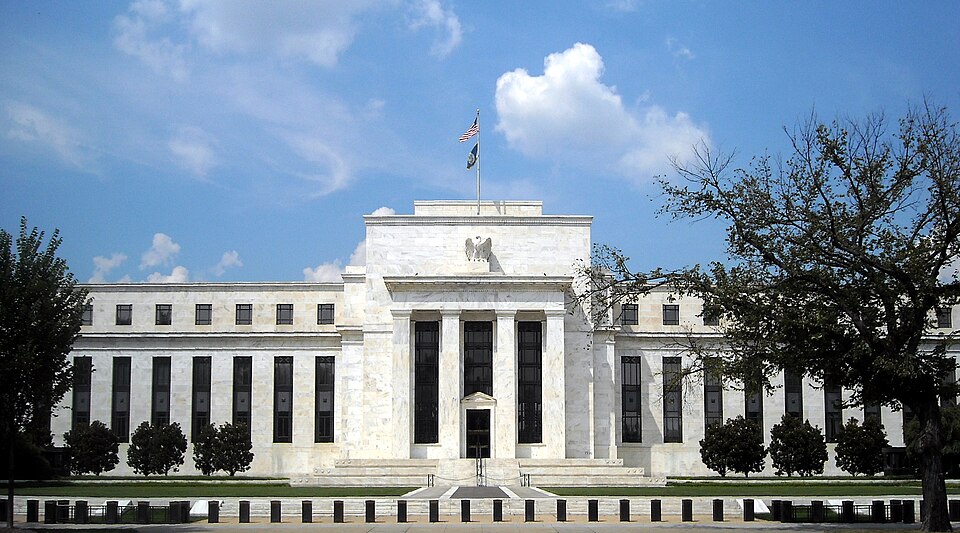
Fed Enacts First Rate Hike In Three Years As Inflation Persists
The Federal Reserve raised its benchmark federal funds rate 0.25 percentage point to a 3.75%-4.00% target range on Wednesday, September 16, 2026, marking its first increase in more than three years.[1]
The Federal Open Market Committee voted unanimously for the quarter-point increase and moved the rate to its highest level since December 2025.[2] Fed Chair Kevin Warsh told reporters, "inflation is too high and has been for too long." Christian Science Monitor The Fed said the action will support a timelier return to its 2 percent inflation goal.[1]
In August 2026, headline consumer prices were 3.4% higher year-over-year and rose 0.4% from July, with more than one-third of that monthly increase coming from gasoline.[3] Since April, prices have been rising faster than average wages, cutting workers' real purchasing power and helping cement expectations that policymakers would act.[3] Officials and later coverage also pointed to the Iran war, which pushed crude above $100 per barrel and sent gasoline and diesel to record highs, as a key driver of the recent price surge.[4]
Early reporting framed the anticipated decision mainly around persistent inflation and stronger-than-expected consumer spending, citing August retail sales and the recent jump in CPI.[3] Later coverage shifted to highlight the Iran war's role in spiking energy costs and the political pressure from President Trump and his team to keep rates lower.[4]
Markets tightened after the announcement: the S&P 500 fell about 0.4% and the Dow dropped roughly 631 points, while the 10-year Treasury yield climbed above 5% and the two-year rose to about 4.74%.[5] The Fed's median projection now pegs the year-end federal funds rate at 4.1%, and traders assign roughly a 38% probability of another hike to 4.25%-4.50% by year-end.[5] The average 30-year fixed mortgage rate stood near 7.43% in mid-September, keeping borrowing costs high for homebuyers.[6]
The mainstream summary attributes rising fuel prices primarily to global factors, such as the Iran war, while downplaying the role of local policies. However, The Wall Street Journal argues that California's high diesel prices, currently at $8.35 per gallon, are significantly influenced by state-level regulations and taxes, which exacerbate costs beyond those driven by global supply shocks. The editorial highlights that California's climate policies, specifically the Low-Carbon Fuel Standard, have disproportionately increased diesel prices compared to gasoline, suggesting a more complex interplay between local policy decisions and broader economic factors than the mainstream account acknowledges.
Furthermore, while the mainstream coverage mentions inflation and consumer spending as key drivers for the Fed's decision, it does not address how political pressures from figures like President Trump may have influenced the Fed's approach to interest rates. The Wall Street Journal's critique of California's policies serves as a reminder that local governance can significantly impact economic conditions, an angle that the mainstream summary does not explore in depth, potentially oversimplifying the causes of inflation and the Fed's response.
Show source details & analysis (11 sources)
📌 Key Facts
- On Wednesday, September 16, 2026, the Federal Reserve raised the federal funds rate by 0.25 percentage point to a 3.75%–4.00% target range, the Fed's first increase in more than three years (federal funds rate).
- Fed Chair Kevin Warsh, at his post‑decision press conference, said “inflation is too high and has been for too long,” noting inflation had run above target for more than five years and that he shifted from a previously neutral stance after August remarks about wanting inflation to come down “at sufficient speed” (Kevin Warsh).
- August 2026 headline consumer prices were 3.4% higher year‑over‑year and rose 0.4% from July to August (with more than one‑third of that monthly increase coming from gasoline), a data point policymakers cited in deciding to act (headline consumer prices).
- AAA data showed U.S. diesel hit record highs above $6 per gallon (about $6.31 on Sept. 16 and roughly $6.40 on Sept. 17) and regular gasoline was about $4.37–$4.44 per gallon, with the Iran war cited as a major driver of higher oil and fuel prices (AAA data).
- U.S. stock indexes slipped after the announcement — the S&P 500 fell about 0.4%, the Dow Jones Industrial Average dropped roughly 631 points (about 1.2%), and the Nasdaq was nearly unchanged — after an initial pop that faded during Chair Warsh’s press conference (S&P 500).
- Market interest rates tightened: the 10‑year U.S. Treasury yield climbed above 5% and the two‑year rose to about 4.74%, while the average 30‑year fixed mortgage rate stood near 7.43% in mid‑September 2026 (30-year fixed mortgage rate).
- The Fed’s Summary of Economic Projections showed the median official now expects the federal funds rate to end 2026 at 4.1% (up from a 3.8% median three months earlier), and CME Group pricing put about a 38% probability of another hike to a 4.25%–4.50% range by year‑end 2026 (Summary of Economic Projections).
- Despite lobbying by President Donald Trump and the White House urging lower rates, and a near‑unanimous Duke University survey of former Fed officials saying a hike was necessary, the Federal Open Market Committee voted unanimously to raise rates — a decision framed as a test of the Fed’s credibility and independence (President Donald Trump).
📊 Analysis & Commentary (1)
"The WSJ editorial acknowledges global energy shocks (Iran war, strikes, export curbs) have raised fuel prices but argues California’s climate rules and taxes — especially the Low‑Carbon Fuel Standard and its compliance/credit costs — are a major, under‑acknowledged reason diesel in California is far more expensive than the national average, and the author criticizes politicians for hiding that reality."
📰 Source Timeline (11)
Follow how coverage of this story developed over time
- Article specifies that between Kevin Warsh’s January 2026 nomination and this week’s meeting, inflation accelerated sharply due to the Iran war’s impact on global oil prices, with CPI peaking at 4.2% year-over-year in May 2026 before easing to 3.4% in August.
- Warsh explicitly linked the unanimous Wednesday, September 16, 2026 rate hike to the Iran conflict’s disruption of Persian Gulf oil flows and escalating fighting between Saudi Arabia and Iran-backed Houthis around another key waterway, helping push crude above $100 per barrel.
- The piece adds concrete fuel-price figures: U.S. diesel reached a record $6.40 per gallon on Thursday, September 17, 2026, up 73% from a year earlier, while gasoline hit $4.44 per gallon, 38% higher year-over-year, according to AAA.
- Warsh is quoted emphasizing that the Fed will take a more "timelier" approach to curbing inflation and that the bar for easing is now higher, reinforcing market expectations of "higher for longer" interest rates.
- The article details the communications gap between the Fed’s Summary of Economic Projections, which showed only one additional hike in 2026 and none in 2027, and Warsh’s hawkish press-conference tone, which analysts said opened the door to more hikes if inflation does not clearly move back to target.
- On Wednesday, September 16, 2026, the Federal Reserve's first interest-rate hike in three years was covered on CBS's evening newscast as a sign of concern about rising prices.
- The CBS segment reported that the cost of diesel fuel hit a new record on Wednesday, September 16, 2026, marking the eighth consecutive day of record diesel prices.
- On Wednesday, September 16, 2026, U.S. stock indexes slipped after the Fed's rate hike: the S&P 500 fell 0.4%, the Dow Jones Industrial Average dropped 631 points (1.2%), and the Nasdaq composite was nearly unchanged.
- The article reports immediate post-meeting market dynamics: stocks initially rose but weakened during Chair Kevin Warsh's press conference as he repeatedly emphasized that inflation remains too high and the economy appears to be strengthening.
- The Fed's Summary of Economic Projections shows the median official now expects the federal funds rate to end 2026 at 4.1%, up from a 3.8% median projection three months earlier.
- CME Group data cited in the article show traders pricing about a 38% probability that the Fed will raise the federal funds rate further to a 4.25%-4.50% range by year-end 2026.
- Following the announcement, the two-year U.S. Treasury yield rose to 4.74% from 4.67% the prior day, reflecting higher expectations for short-term rates.
- Chair Warsh said, "Our decision comes at a time when the American economy appears to be strengthening," pointing to solid hiring, corporate profits and business investment, and stated, "The plain fact is that inflation is too high and has been for too long" and that "Today's action starts to show we're serious about this."
- The article notes that President Donald Trump has been lobbying for interest rates to move lower, not higher, underscoring political pressure surrounding the decision.
- The piece highlights that bank stocks were among the session's sharper losers as investors weighed the impact of slower growth and a narrower spread between short- and long-term rates on lending profitability.
- Confirms the specific size and level of the move as an increase in the benchmark rate from 3.75% to 4.00%, framed as the first hike in three years, with the decision taken by the 12-member Federal Open Market Committee on Wednesday, September 16, 2026.
- Adds detailed on-the-record comments from Fed Chair Kevin Warsh at his post‑decision press conference, including his statement that 'for more than 5 years inflation has been running above target' and 'the plain fact is that inflation is too high and has been for too long.'
- Provides additional context that Warsh had 'previously signaled a neutral stance' but shifted after August remarks about wanting inflation to come down 'at sufficient speed,' highlighting the change in his posture.
- Links the rate hike explicitly to war-related spikes in energy and food prices from the Iran war, including diesel prices exceeding $6 per gallon and their political impact on Republicans’ midterm prospects.
- Notes that the decision is being seen as a test of the Fed's credibility and independence after President Trump’s campaign to oust Jerome Powell and his repeated public pressure for lower rates.
- Reiterates that the 10-year U.S. Treasury yield has risen to its highest level since 2007, underscoring that market rates were already tightening even before the FOMC action.
- CBS News reported that on Wednesday, September 16, 2026, the Federal Reserve voted unanimously to raise interest rates by 0.25 percentage point.
- The CBS segment noted this was the first Fed rate hike since July 2023, emphasizing the length of the prior pause.
- The report identified Jim Baird, CFO for Plante Moran Financial Advisors, as providing on-air analysis of the decision and its implications.
- On Wednesday, September 16, 2026, the Federal Reserve raised interest rates by 0.25 percentage point, marking its first increase in three years.
- The article reports that President Donald Trump and his White House team mounted a lobbying campaign urging Fed Chair Kevin Warsh not to raise rates.
- A Duke University survey of former Fed officials published earlier in the week found a near-unanimous view that a rate hike was necessary, which the article cites as support for Warsh's decision.
- The piece characterizes this as Fed Chair Kevin Warsh's most consequential decision to date, coming about four months after his appointment by Trump.
- On Wednesday, September 16, 2026, the Federal Reserve raised the federal funds rate by 0.25 percentage point to a target range of 3.75%-4%, its highest level since December 2025.
- The article explicitly links the Fed's 'about-face' from expected 2026 rate cuts to the Iran war, saying the conflict has driven up global energy prices and U.S. inflation.
- Consumer inflation as measured by the Consumer Price Index rose 3.4% year over year in August 2026, above the Fed's 2% target, a statistic the Fed cites in its statement.
- The Fed's official statement on September 16 says, 'Inflation remains elevated. Today's policy action will support a timelier return to the Committee's 2 percent goal.'
- AAA data in the piece put the average U.S. diesel price at a record $6.31 per gallon on September 16, 2026, up 71% from a year earlier, and regular gasoline at $4.37 per gallon, higher than a month ago and before the Iran war.
- The CBS News explainer, published early afternoon Wednesday, September 16, 2026, reiterates that the Federal Reserve raised the federal funds target range by 25 basis points to 3.75%-4.00%, its first hike since 2023.
- The article notes that the average 30-year fixed mortgage rate stood at 7.43% in mid-September 2026, about one percentage point higher than just a few months earlier.
- It explains that the hike was widely expected and likely already partly priced into mortgage rates, emphasizing that fixed mortgage rates track the 10-year Treasury yield more closely than the fed funds rate.
- The piece stresses that future mortgage-rate moves will depend heavily on how investors interpret the Fed's guidance on additional hikes and on upcoming inflation and employment data, rather than on this single quarter-point move.
- On Wednesday, September 16, 2026, the Commerce Department reported that U.S. retail sales rose 1.2% in August from July, beating the 0.7% increase economists surveyed by FactSet had expected.
- The July retail sales figure was revised to a 0.5% decline, and the article notes that drop was unusual given strong consumer spending earlier in the summer tied to the World Cup and Amazon Prime Day.
- Retail sales excluding gas stations rose 1.1% in August, and the so‑called control group used in GDP calculations (excluding food services, autos, building materials and gas) climbed 1.4% month over month.
- Economists attribute part of August’s strength to a rebound in nonstore sales after "seasonal noise" around the timing of Amazon Prime Day and to higher gasoline prices boosting reported gas station sales.
- The article cites AAA data that the average price of regular gasoline reached $4.37 per gallon on Wednesday, September 16, 2026, about 47% above pre‑war levels, while diesel prices are up 68%.
- The piece reiterates that August consumer prices were 3.4% higher than a year earlier and 0.4% above July, quadruple the prior month’s 0.1% gain, framing how the spending data interacts with inflation as the Fed meets.
- On Wednesday, September 16, 2026, investors widely expect the Fed to raise its benchmark rate by 0.25 percentage point to a 3.75%-4% range, the first hike in more than three years.
- Fed Chair Kevin Warsh, in an August Jackson Hole speech, said responsibility for 65 months of elevated inflation rests with the central bank and warned that unless underlying inflation moves clearly toward target, "we have work to do," reinforcing expectations of a hike.
- August 2026 headline inflation was 3.4% year-over-year, with prices rising 0.4% from July to August; more than one-third of the monthly increase came from gasoline.
- Since April 2026, prices have been rising faster than average wages, reducing workers' real purchasing power.
- The yield on 10-year U.S. Treasurys has climbed above 5% as bond investors demand higher returns amid persistent inflation and heavy borrowing demand.
- The price of diesel fuel has reached a record high above $6 per gallon, with the Iran war cited as pushing up oil, gasoline and diesel prices.