
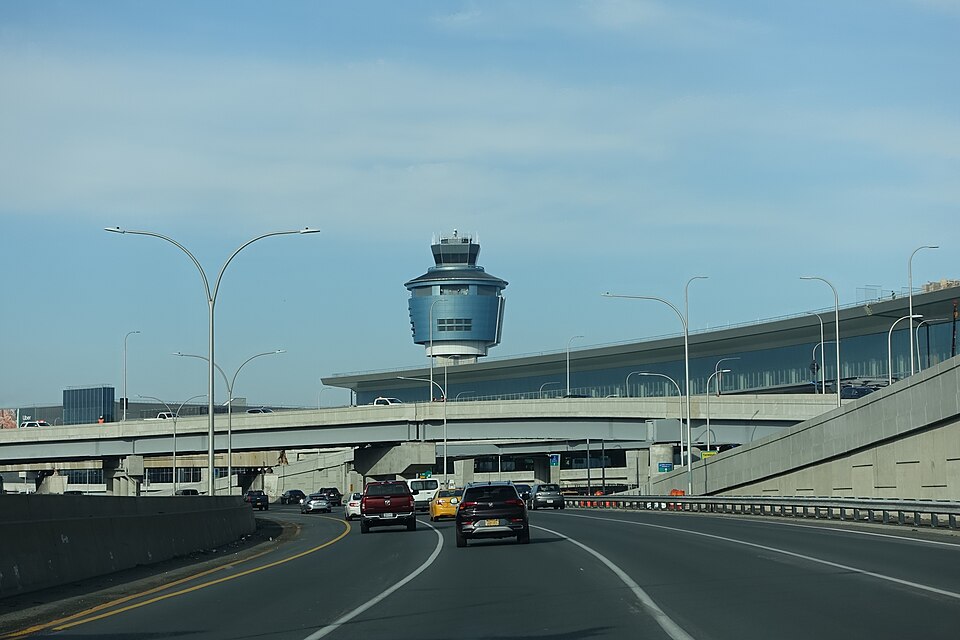
FAA Moves To Fire LaGuardia Controllers Who Left Before Fatal Crash
The Federal Aviation Administration on Thursday moved to fire two LaGuardia air traffic controllers accused of leaving work early the night an Air Canada Express plane collided with a fire truck, killing both pilots.[1]
The agency says the controllers falsified timecards in apparent "early shoves" and has proposed termination for alleged timecard fraud.[1] Two other controllers were in the tower when the crash occurred, and the National Transportation Safety Board says staffing with two controllers on the midnight shift at LaGuardia is common practice.[1]
On March 22, 2026, just before midnight, an Air Canada Express flight arriving at LaGuardia struck the runway fire truck, killing the pilot and copilot and injuring dozens.[1] The NTSB opened an immediate investigation and found conflicting details in tower logs about who handled ground control that night, prompting the FAA to review timecard and staffing practices.[1]
Transportation Secretary Sean Duffy condemned the alleged fraud and said he supported the FAA's move, while the controllers' union said it was in talks with agency leadership over the proposed firings.[1] Critics on social media and some lawmakers have tied the incident to chronic understaffing at the FAA and urged faster hiring and training to prevent future incidents.
The mainstream summary does not mention the significant staffing shortfall the FAA is facing, which is critical context for understanding the incident. As of September 2026, the FAA had 10,892 certified professional controllers deployed against a target of 12,563, resulting in a national deficit of 1,671 controllers. This chronic understaffing has been linked to increased pressure on existing staff, as highlighted by social media commentators who argue that the focus should be on systemic issues rather than solely blaming individual controllers for the tragic incident. For instance, @AdamKinzinger points out that the FAA is about 3,000 controllers short and advocates for systemic reform instead of scapegoating individuals after the loss of two pilots.
Furthermore, the FAA's own workforce plan anticipates significant attrition, projecting a loss of over 5,300 controllers in the next three years while planning to hire only 2,200 new controllers in FY2026. This stark imbalance suggests that the agency's hiring and training efforts may not be sufficient to address the ongoing crisis, a point that the mainstream coverage does not adequately emphasize. The lack of acknowledgment regarding the FAA's staffing challenges raises questions about the broader implications for air traffic safety and operational effectiveness in the face of such staffing deficits.[2][3]
Show source details & analysis (1 source)
📊 Relevant Data
As of September 2026, the FAA had 10,892 certified professional controllers deployed against a staffing target of 12,563, for a national deficit of 1,671.
Air Traffic Controller Staffing Dashboard — 123atc.com
The FAA's 2026-2028 Controller Workforce Plan projects hiring 2,200 new controllers in FY2026, 2,300 in FY2027, and 2,400 in FY2028, while projecting total losses of 5,307 controllers over three years due to attrition.
Air Traffic Controller Workforce Plan 2026-2028 — Federal Aviation Administration
📌 Key Facts
- On March 22, 2026, just before midnight, an Air Canada Express flight arriving at LaGuardia collided with a fire truck on the runway, killing the pilot and copilot and injuring dozens.
- A government source said two LaGuardia air traffic controllers left work early that night, and the FAA is now trying to fire them for alleged timecard fraud.
- Two other controllers were working in the tower during the crash, and the NTSB says having two controllers on the midnight shift is common practice.
- Transportation Secretary Sean Duffy issued a statement condemning fraud by controllers and supporting FAA action, while the controllers union is in talks with agency leadership.
📰 Source Timeline (1)
Follow how coverage of this story developed over time