
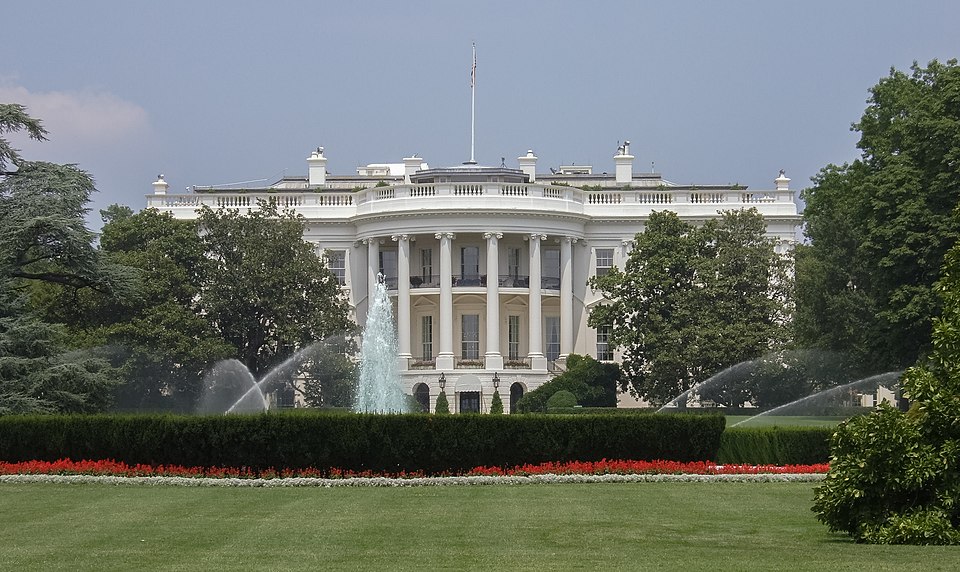
NTSB Links White House Construction To Marine One Near-Miss Over D.C.
The National Transportation Safety Board released a preliminary report Thursday, August 27, 2026, saying White House construction likely contributed to a near-miss between Marine One and a commercial jet over Washington.[1]
Construction of a new White House ballroom temporarily moved Marine One's departure point from the South Lawn to the Ellipse.[1] Technicians found inadequate line-of-sight for radio communications between the Ellipse and the airport tower, and garbled transmissions kept the controller from hearing the helicopter's departure warnings.[1] An Envoy Air jet bound for Pensacola was cleared to depart as Marine One was preparing for takeoff, and the two aircraft passed within less than a mile of each other.[1] The NTSB described its findings as preliminary and said the investigation remains ongoing.[1]
On July 31, 2025, the White House announced plans for a new State Ballroom to replace and expand the East Wing. Work began in September 2025 with site preparation, and full East Wing demolition started on October 20, 2025. Construction remained underway into August 2026.
Social media users shared ATC audio of the garbled transmissions and flagged the tight one-minute sequencing between the departures. Some posts also said the Federal Aviation Administration moved an antenna and updated procedures in response, and officials say the NTSB inquiry will continue.
The mainstream summary does not mention the alarming frequency of near-collision warnings involving helicopters at Reagan National Airport, with airline pilots receiving over 100 such warnings in the decade leading up to early 2025. This context underscores the heightened risks associated with the recent near-miss, suggesting that the incident is part of a broader pattern of aviation safety concerns in the area. Furthermore, while the NTSB report attributes the communication breakdown primarily to construction-related issues, social media users highlight the extremely tight one-minute interval between the departures of Marine One and the Envoy Air jet, raising questions about air traffic control's sequencing and the adequacy of the response from the FAA, which has already relocated an antenna and updated procedures following the incident. These details suggest a more complex interplay of factors than the mainstream summary implies, pointing to systemic issues in air traffic management and infrastructure adjustments that may have contributed to the near-miss.
Show source details & analysis (1 source)
📊 Relevant Data
Airline pilots near Reagan National Airport received more than 100 cockpit collision-avoidance warnings involving helicopters over the decade prior to early 2025.
Pilots near DCA got 100 helicopter collision warnings in past 10 years — The Washington Post
Since 1987, the FAA’s Near Midair Collision database recorded 30 reports at Reagan National Airport, with military aircraft involved in at least 17 of them.
Most Of Reagan National's 30 Close Calls Since 1987 Involved Military Aircraft — Simple Flying
📌 Key Facts
- On August 27, 2026, the NTSB released a preliminary report on a Marine One close call with a commercial jet over Washington earlier in August.
- Because of construction of a new White House ballroom, Marine One’s departure point was temporarily shifted from the South Lawn to the Ellipse.
- Technicians found inadequate line-of-sight for radio communications between the Ellipse and the airport tower during the construction period, and garbled transmissions led the controller to miss the helicopter’s departure warnings.
- An Envoy Air jet to Pensacola was allowed to depart just as Marine One was preparing for takeoff, and the two aircraft passed within less than a mile of each other.
- The NTSB described these findings as preliminary, and the investigation into the incident remains ongoing.
📰 Source Timeline (1)
Follow how coverage of this story developed over time