
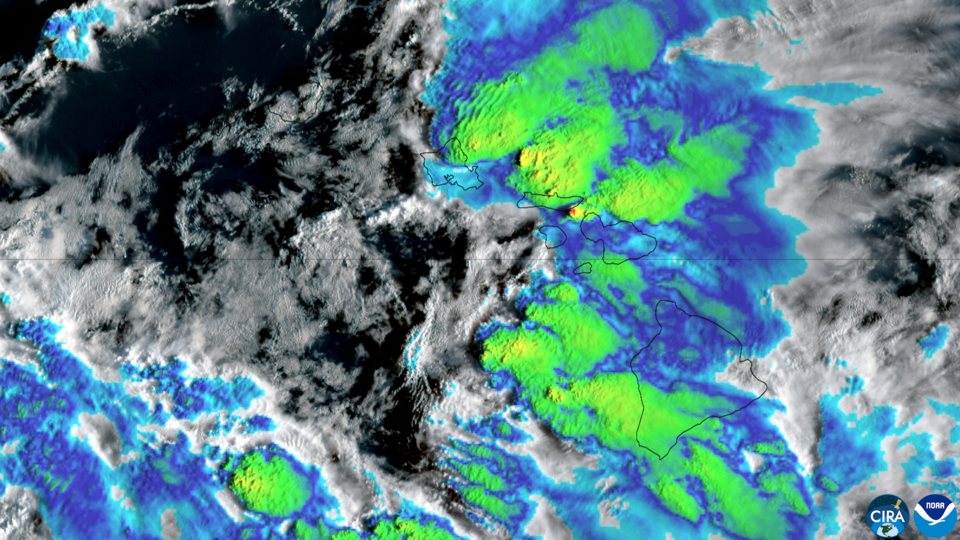
Tropical Storm Moke Dumps Heavy Rain On Hurricane-Damaged Hawaii
Tropical Storm Moke dumped heavy rain on Hawaii's Big Island on Sunday, August 23, 2026, threatening life-threatening flooding and mudslides in areas still recovering from Hurricane Lala.[1]
The National Hurricane Center said Moke's center was about 310 miles south of Hilo on Sunday morning with top sustained winds near 45 mph.[1] Forecasters warned Moke could drop up to 10 inches across the Big Island, with isolated totals reaching 15 inches and up to 6 inches on eastern Maui.[1] The NHC warned the rain could trigger life-threatening flooding and mudslides on windward and southeast slopes, particularly where soils are saturated.[2] More than 6,700 customers, mostly on the Big Island, remained without power as crews worked to restore service.[1] State officials activated a joint information center to coordinate updates.[3]
Hurricane Lala passed about 30 miles off the Big Island the prior week and brought gusts over 80 mph.[3] It dumped more than 30 inches of rain in some areas and produced a reported 48 inches at Kapalua, leaving soils saturated across parts of the islands.[3] Lala also destroyed roads and bridges, lifted homes off foundations, left thousands without power, and was tied to at least one fatality.[2]
Initial coverage on Saturday projected 5 to 10 inches for much of the Big Island, but forecasters published a revised outlook by Sunday that centered around 10 inches islandwide with the same isolated 15-inch threat on windward slopes.[3][1]
Separately, forecasters noted Tropical Storm Iselle formed in the eastern Pacific and could send strong swells to Baja California while Moke affects Hawaii.[1]
Show source details & analysis (4 sources)
📌 Key Facts
- As of Saturday, August 22, 2026, Tropical Storm Moke had maximum sustained winds of 50 mph and was expected to strengthen through the day.
- By Sunday morning, August 23, 2026, the National Hurricane Center placed Tropical Storm Moke's center about 310 miles south of Hilo with top sustained winds near 45 mph and said it was impacting the Big Island and would bring rain through Monday.
- The National Hurricane Center forecast 5–10 inches of rain across the Big Island (with isolated totals up to 15 inches) and roughly 1–6 inches in parts of eastern Maui, with the highest totals expected on windward and southeast slopes.
- The NHC warned the rainfall could cause life‑threatening flooding and mudslides on windward and southeast sides of the Big Island, especially in steep terrain and areas still saturated from Hurricane Lala.
- Hurricane Lala — which passed the prior week without making landfall — brought gusts over 80 mph, dropped more than 30 inches of rain in some places (including 48 inches at Kapalua in Maui County), destroyed roads and bridges, lifted homes off foundations, and left soils saturated ahead of Moke.
- Thousands remained without power after Lala — reports cited more than 8,000 customers still without electricity as of Saturday morning and more than 6,700 on Sunday — and Hawaiian Electric does not expect full restoration until September 8, 2026; at least one person died in flooding tied to Lala.
- Hawaii officials activated a joint information center on Saturday, August 22, 2026, Gov. Josh Green signed a request that day asking the White House to declare an emergency, and leaders (including Mayor Kimo Alameda) held a pre‑storm news conference on Sunday, August 23, 2026, urging residents to restock food and medicine and prepare for outages and hazardous roads.
- Separately, Tropical Storm Iselle formed in the eastern Pacific on Sunday, August 23, 2026, with 45 mph winds and was forecast to generate strong swells along Baja California.
📰 Source Timeline (4)
Follow how coverage of this story developed over time
- As of Sunday morning, August 23, 2026, the National Hurricane Center located Tropical Storm Moke's center about 310 miles south of Hilo with top sustained winds near 45 mph.
- Forecasters now expect Moke to produce up to 10 inches of total rain across Hawaii's Big Island, with as much as 15 inches in isolated areas on windward and southeast slopes, and up to 6 inches in eastern Maui.
- The article reports that more than 6,700 customers, mostly on the Big Island, remained without electricity on Sunday following Hurricane Lala.
- Hawaii Gov. Josh Green and other officials held a pre-storm news conference ahead of Moke, urging residents to restock food, medicine and other essentials.
- The piece notes that Tropical Storm Iselle also formed Sunday in the eastern Pacific, well offshore of Mexico's southwest coast, with 45 mph winds and a forecast to generate strong swells along Baja California.
- An NHC advisory issued late Saturday night, August 22, 2026, local time said Tropical Storm Moke was impacting the Big Island and would bring rain to other Hawaiian islands through Monday.
- The NHC reiterated that up to 15 inches of rain could fall on the Big Island and forecast 3 to 6 inches for eastern Maui, warning of life‑threatening flooding and mudslides on windward and southeast slopes, especially in areas recently affected by Hurricane Lala.
- Hurricane Lala, which passed the prior week without making landfall, dropped more than 30 inches of rain in some parts of Hawaii, triggering floods and mudslides that destroyed roads and bridges and lifted homes off their foundations.
- More than 8,000 customers were still without power as of Saturday morning, August 22, 2026, and Hawaiian Electric does not expect full restoration of electricity until September 8, 2026.
- At least one person, a 90‑year‑old woman, died in flooding caused by Hurricane Lala, according to Hawaii Public Radio.
- On Saturday, August 22, 2026, Gov. Josh Green signed a request asking the White House to declare an emergency in the wake of Hurricane Lala.
- On Sunday, August 23, 2026, Hawaii County Mayor Kimo Alameda urged residents on social media to prepare for Tropical Storm Moke by anticipating power and communications interruptions and hazardous road conditions.
- As of midday Saturday, August 22, 2026, Tropical Storm Moke had maximum sustained winds of 50 mph and was expected to strengthen through the day.
- The National Hurricane Center forecast 5-10 inches of rain on Hawaii's Big Island, with isolated totals up to 15 inches, and 1-2 inches on eastern Maui with localized amounts up to 4 inches.
- The National Hurricane Center warned that the rainfall may produce life-threatening flooding and mudslides on the windward and southeast sides of the Big Island, especially in steep terrain and areas recently affected by Hurricane Lala.
- Hawaii activated its joint information center on Saturday, August 22, 2026, to coordinate public updates from the Hawaii Emergency Management Agency for Tropical Storm Moke, days after deactivating it for Hurricane Lala.
- The article notes that Hurricane Lala’s eye passed about 30 miles off the Big Island the prior weekend, bringing gusts over 80 mph and more than 3 feet of rain in some locations, including 48 inches at Kapalua in Maui County, leaving soils saturated ahead of Moke.
- Meteorological context is added that the active Central Pacific hurricane conditions are being driven by El Niño-related warm waters and reduced vertical wind shear, favoring more and stronger tropical cyclones in the region.