
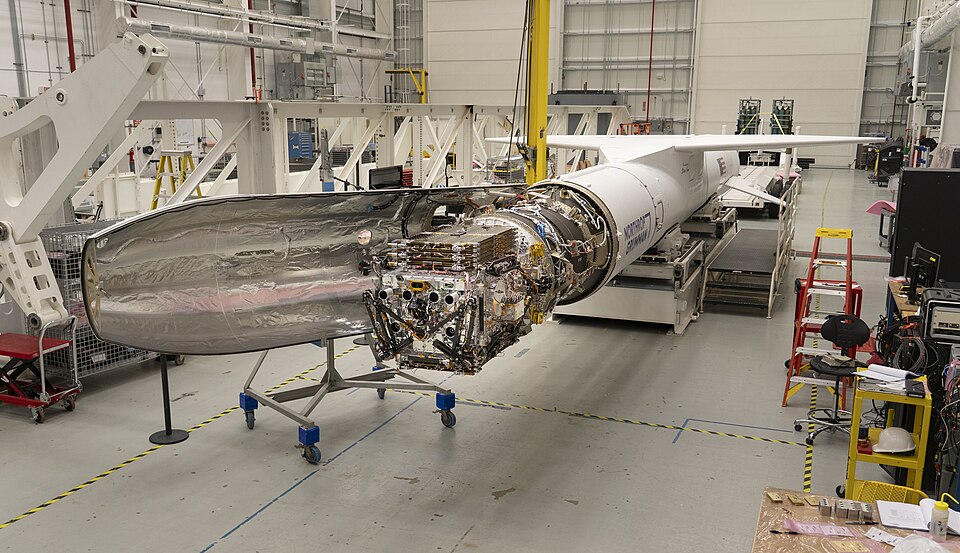
NASA Cancels Swift Rescue Mission, Telescope To Reenter This Year
NASA and Katalyst Space Technologies said on Wednesday, August 19, 2026, they will not attempt to capture the Swift telescope, leaving it to reenter Earth's atmosphere later in 2026.[1]
NASA disclosed it paid Katalyst $30 million for the attempted orbital boost, and officials said Link's ongoing attitude-control and pointing problems prevented a capture.[2] Swift was orbiting about 216 miles up the week before Aug. 19 and was losing roughly 5 miles of altitude per month, with NASA projecting it will reach about 186 miles by October 2026.[2] NASA Administrator Jared Isaacman said, "This is not the outcome we were working toward, but it does not change why this mission was worth attempting." CBS News
Swift was launched in 2004 for what was planned as a two-year mission and has remained in orbit serving astronomy missions since then.[2] Scientists turned off Swift's instruments earlier in 2026 to reduce drag and slow its descent.[2] Katalyst CEO Ghonhee Lee said Link was assembled in under a year on an aggressive timeline and called the effort "high-risk, high-reward." CBS News
NASA had said that if the Link boost succeeded, the Hubble Space Telescope would have been next in line for a similar service, and that option is now unclear.[2] CBS aired a dedicated segment on Aug. 20 reiterating the call-off and saying Swift is expected to plunge and burn up later in 2026.[1] Axios also reported the mission's cancellation on Aug. 19.[3]
Show source details & analysis (3 sources)
📌 Key Facts
- On Wednesday, August 19, 2026, NASA and Katalyst Space Technologies said Katalyst's Link spacecraft will not attempt to capture Swift or boost it to a higher orbit because of ongoing attitude-control and pointing problems (Katalyst's Link spacecraft).
- NASA disclosed it paid Katalyst $30 million for the attempted rescue mission to raise Swift into a safer, longer-lasting orbit ( $30 million ).
- As of the week before August 19, 2026, Swift was at about 216 miles altitude, currently losing roughly 5 miles of altitude per month and projected to reach about 186 miles in October 2026 (216 miles altitude).
- Swift's science instruments were turned off earlier in 2026 to slow its descent; the observatory has been in orbit since its 2004 launch after what was originally a two-year mission (2004 launch).
- NASA Administrator Jared Isaacman issued a statement saying, "This is not the outcome we were working toward, but it does not change why this mission was worth attempting" (Jared Isaacman).
- Katalyst CEO Ghonhee Lee said the Link mission was assembled in under a year on an aggressive timeline, called it a "high-risk, high-reward" effort and said the company has already learned "a tremendous amount" (Ghonhee Lee).
- NASA indicated the Hubble Space Telescope had been next in line for a similar orbital-boost attempt if the Swift boost succeeded, and it is now unclear whether Hubble will still receive such a rescue (Hubble Space Telescope).
- On Thursday, August 20, 2026, CBS ran a dedicated segment reiterating that NASA called off the planned Swift-boost mission and stating the telescope is expected to plunge into Earth's atmosphere and burn up later in 2026, with on-air context from CBS News space consultant Bill Harwood (CBS).
📰 Source Timeline (3)
Follow how coverage of this story developed over time
- CBS ran a dedicated segment on August 20, 2026, reiterating that NASA has called off the planned mission to boost the Swift telescope's orbit.
- The segment states that Swift is expected to plunge into Earth's atmosphere and burn up later in 2026, and includes on-air context from CBS News space consultant Bill Harwood.
- The article is a short video writeup that does not provide additional technical or scheduling details beyond previously reported altitude, decay rate and cancellation rationale.
- On Wednesday, August 19, 2026, NASA and Katalyst Space Technologies said Katalyst's Link spacecraft will not attempt to capture Swift or boost it to a higher orbit because of ongoing attitude-control and pointing problems.
- NASA disclosed it paid Katalyst $30 million for the attempted rescue mission to raise Swift into a safer, longer-lasting orbit.
- The article specifies Swift was at about 216 miles altitude as of the week before August 19 and is projected to reach 186 miles in October 2026, with the observatory currently losing roughly 5 miles of altitude per month.
- NASA Administrator Jared Isaacman issued a statement saying, "This is not the outcome we were working toward, but it does not change why this mission was worth attempting."
- Katalyst CEO Ghonhee Lee said the Link mission was assembled in under a year on an aggressive timeline and called it a "high-risk, high-reward" effort from which the company has already learned "a tremendous amount."
- NASA indicated the Hubble Space Telescope had been next in line for a similar orbital-boost attempt if the Swift-boost mission succeeded, and it is now unclear whether Hubble will still receive such a rescue.
- The report reiterates that Swift's science instruments were turned off earlier in 2026 to slow its descent and notes the telescope has been in orbit since its 2004 launch for what was originally a two-year mission.