
Israel's Abu al-Duhur Strike Disputed As Syria Denies Turkish Buildup Plans
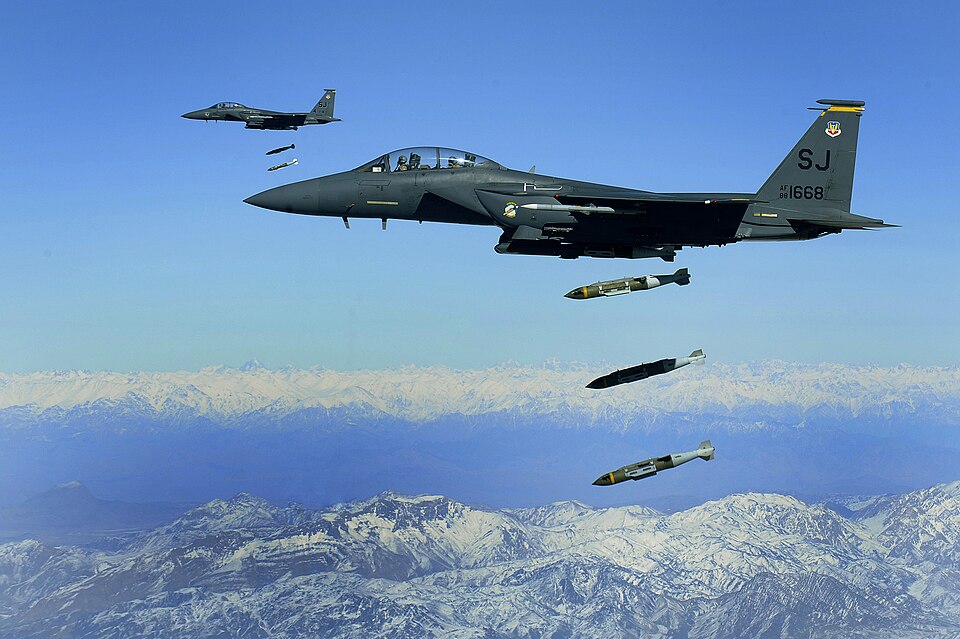
Israel struck the Abu al-Duhur airbase in northwest Syria early Tuesday, August 18, 2026, dropping at least eight bombs on runways and hangars and damaging recently rebuilt runways with no reported casualties.[1]
Roughly 20 hours later, Israel's prime minister's office publicly claimed responsibility on X and said Syria was "on the verge of breaching" an agreement by permitting Turkish troops near Aleppo.[1] U.S. and Israeli officials told the White House in advance that the strike was meant to deter a shipment of sophisticated weapons and prevent a broader Turkish buildup at Abu al-Duhur.[1] U.S. Ambassador to Turkey and Syria envoy Tom Barrack confirmed the strike on X and called it an "unnecessary escalation." CBS News
Syrian Foreign Minister Asaad al-Shibani told Axios that Syria had informed Israel it was not working with Turkey to amass a military presence at Abu al-Duhur and that the site was largely empty and being rehabilitated for Syrian Air Force use.[2] He acknowledged Turkish officers had visited days earlier but described those visits as training and expertise exchanges, not a planned permanent deployment.[2] Syrian state TV called the strikes "Israeli aggression," and Turkey's foreign ministry condemned the attack and urged the international community to act against what it called escalating Israeli aggression.[3]
Initial U.S. and Israeli accounts framed the attack as a preemptive deterrent to a possible Turkish deployment, but Axios's later reporting — notably its interview with Syria's foreign minister — directly challenged that justification.[2] President Trump said he had been briefed on the strike but declined to criticize it or say whether the briefing came before or after the attack.[2]
Show source details & analysis (4 sources)
📌 Key Facts
- The strike on the Abu al-Duhur Airbase occurred early Tuesday, August 18, 2026, when at least eight bombs hit runways and several hangars—damaging recently rebuilt runways but causing no casualties (Abu al-Duhur Airbase).
- Roughly 20 hours after the attack, the Prime Minister's Office publicly claimed responsibility on X, saying Syria was "on the verge of breaching" an agreement by permitting Turkish troops to deploy near Aleppo and warning Israel would not tolerate such a presence (Prime Minister's Office).
- U.S. and Israeli officials say Israel notified the White House in advance and framed the strike as intended to deter Turkey from sending a shipment of sophisticated weapons systems and to prevent a broader Turkish military buildup at the site (White House).
- U.S. Ambassador to Turkey and Syria envoy Tom Barrack posted on X confirming the Israeli airstrikes, called them an "unnecessary escalation," and said the U.S. has hosted and will continue to host discussions to encourage diplomacy between Israel and Syria (Tom Barrack).
- Syrian Foreign Minister Asaad al-Shibani told Axios that Syria had informed Israel it was not working with Turkey to amass a military presence at Abu al-Duhur, that the base was largely empty and being rehabilitated for Syrian Air Force use, and that recent Turkish officers' visits were training exchanges rather than a planned permanent deployment (Syrian Foreign Minister Asaad al-Shibani).
- Syria condemned the strikes as "Israeli aggression" and an "unjustified provocation," while the Turkish Foreign Ministry also condemned the attack and urged the international community to act against what it called Israel's escalating aggression and disregard for international law (Turkish Foreign Ministry).
- A Turkish official denied Israel's justification, saying there was no Turkish presence at the airbase and accusing Israel of inventing pretexts to bomb neighboring countries (Turkish official).
- For broader context, NPR reports that since Bashar Assad's fall in December 2024, Israel has carried out hundreds of strikes around Syria to destroy Syrian army assets and has seized control of a U.N.-patrolled buffer zone in southern Syria (hundreds of strikes).
- President Trump told Axios he had been briefed on the Israeli strike but declined to criticize it or say whether the briefing occurred before or after the attack, saying, "I can't talk about it" (President Trump).
📰 Source Timeline (4)
Follow how coverage of this story developed over time
- Syrian Foreign Minister Asaad Al-Shaibani told Axios in written responses published Wednesday, August 19, 2026, that Syria informed Israel before the strike that it was not working with Turkey to amass a military presence at Abu al-Duhur airbase.
- Al-Shaibani said the work at Abu al-Duhur was limited to rehabilitating the airfield and facilities for use by the Syrian Air Force, and that the base was largely empty, not yet fully rehabilitated or operational when Israel struck early Tuesday, August 18, 2026.
- He acknowledged that Turkish officers had visited the base several days before the strike but framed this as part of broader training and expertise-exchange cooperation with multiple countries, not a planned permanent Turkish deployment.
- Al-Shaibani said Syria and Israel were in contact in the days leading up to the strike and that Syrian officials described the construction and stressed the base would remain under Syrian sovereignty with no permanent Turkish presence.
- President Trump told Axios in a phone call Wednesday, August 19, 2026, that he had been briefed on the Israeli strike but declined to criticize it or say whether the briefing came before or after the attack, stating, "I can't talk about it."
- In a new video on X cited by Axios, Prime Minister Benjamin Netanyahu said Israel warned Syria ahead of the strike not to allow a Turkish presence at the base and asserted, "Our message was very clear: Don't. I guess they didn't quite understand the message."
- Al-Shaibani argued that linking the strike to a Turkish military presence "is not supported by the situation on the ground" and called the bombing unjustified under those circumstances, asserting Syria’s sovereign right to military cooperation with Turkey and others.
- NPR reports that early Tuesday, August 18, 2026, Israel struck Abu Duhur air base in northwest Syria and publicly said the aim was to prevent Turkish troops from deploying there.
- Syrian state TV said eight strikes hit the Abu Duhur runway in Idlib province, causing damage but no casualties.
- Syrian Foreign Minister Asaad al-Shibani condemned the strikes as "Israeli aggression" and an "unjustified provocation" and "direct threat to regional and global stability."
- The Turkish Foreign Ministry issued a statement condemning the attack and urged the international community to act against what it called Israel's escalating aggression and disregard for international law.
- NPR reiterates that Turkey has close ties with Syria's post-Assad government, has been rehabilitating the Abu Duhur base, and is described as a main backer of Syria's government.
- The Syrian Observatory for Human Rights said foreign fighters previously stayed at Abu Duhur air base but were recently asked to leave, and that Turkey has been rehabilitating the previously out-of-service base.
- U.S. Ambassador to Turkey and Syria envoy Tom Barrack posted on X that Washington is deeply concerned that the confirmed Israeli airstrikes are an "unnecessary escalation" and said Syria's interim government has favored de-escalation with Israel.
- Barrack said the U.S. has hosted and will continue to host discussions to encourage diplomacy between Israel and Syria.
- NPR adds broader context that since Bashar Assad's fall in December 2024, Israel has carried out hundreds of strikes around Syria to destroy Syrian army assets and has seized control of a U.N.-patrolled buffer zone in southern Syria.
- The article specifies that the strike on Abu al-Duhur Airbase occurred early in the morning local time on Tuesday, August 18, 2026, with at least eight bombs hitting runways and several hangars and damaging recently rebuilt runways, with no casualties.
- It reports that U.S. Ambassador to Turkey Tom Barrack, who is also the U.S. envoy for Syria, publicly revealed on X that Israel conducted the Abu al-Duhur strike, breaking Israel's initial gag order.
- Roughly 20 hours after the strike, the Israeli prime minister's office publicly claimed responsibility on X, saying Syria was "on the verge of breaching" an agreement by permitting Turkish troops to deploy at an airbase near Aleppo and warning Israel would not tolerate such threats.
- Israeli officials told the White House in advance that the strike was intended to deter Turkey from sending a shipment of sophisticated weapons systems and prevent a broader Turkish military buildup at the site, according to U.S. and Israeli officials.
- A Turkish official denied Israel's justification, saying there was no Turkish presence at the airbase and accusing Israel of inventing pretexts to bomb neighboring countries.
- The article adds that some senior U.S. officials believe the strike may be partly motivated by Israel's October elections and that U.S. officials assess Syria has not taken hostile steps toward Israel while seeking a new security agreement.