
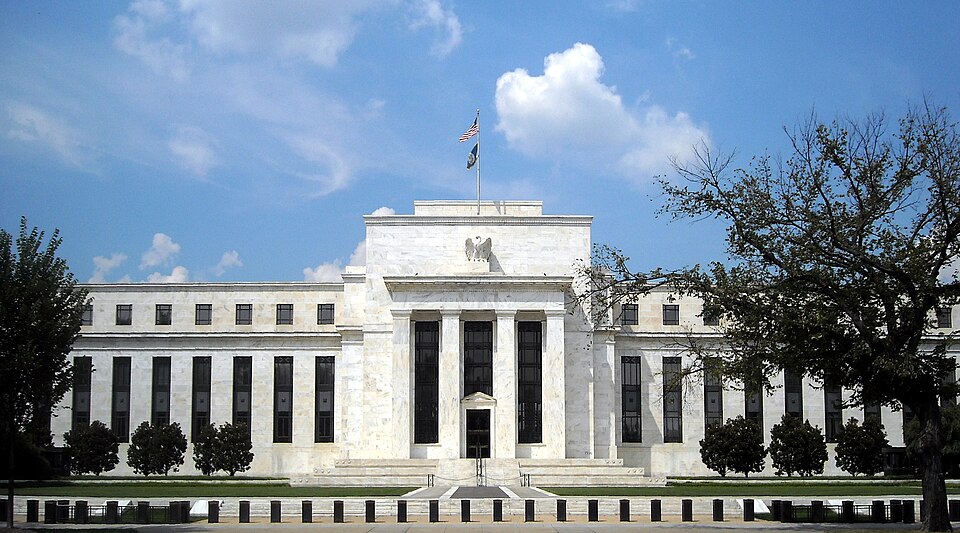
Fed Holds Rates Steady As Q2 GDP Slows And Savings Hit Three-Year Low
The Federal Reserve voted to keep the federal funds rate at a 3.5%-3.75% target range on Wednesday, July 29, 2026, opting to hold policy steady amid persistent inflation concerns.[1]
Three regional Federal Reserve presidents dissented at the meeting, urging an increase in rates.[2] The Fed said it kept rates steady despite ongoing inflation worries and elevated oil prices.[3]
The Commerce Department reported real GDP grew at a 1.5% annual rate in April-June, down from 2.1% in the first quarter, while consumer spending rose at a 3.2% annual rate.[2] The personal savings rate fell to 2.7% in June, the lowest in three years, suggesting households are drawing down savings or borrowing to sustain spending.[4] Imports surged at an 11.5% annual rate, including a jump in chips and other AI-related products, subtracting about 1.5 percentage points from headline GDP.[2] Business investment excluding housing rose at an 8.4% annual rate, largely driven by AI-related spending, and the Commerce Department's PCE price index was up 3.7% year-over-year in June.[2]
Initial coverage emphasized the Fed's decision to pause and its caution on inflation.[3] By Thursday, NPR and PBS foregrounded the weak 1.5% GDP print and the three-year low in savings, reframing the outlook as more fragile.[4]
Show source details & analysis (4 sources)
📌 Key Facts
- On Wednesday, July 29, 2026, the Federal Reserve voted to keep the federal funds rate at a 3.5%–3.75% target range, holding policy steady despite ongoing inflation concerns and elevated oil prices (3.5%–3.75% target range).
- At the July 29, 2026 FOMC meeting, three regional Fed presidents dissented, favoring a rate increase (three regional Fed presidents).
- On Thursday, July 30, 2026, the Commerce Department reported real U.S. GDP grew at a 1.5% annual rate in April–June 2026, down from 2.1% in Q1 (real U.S. GDP grew at a 1.5% annual rate).
- The Commerce Department said consumer spending rose sharply in Q2 2026, reported as a 3.2% annual rate (up from 0.5% in Q1) (consumer spending grew at a 3.2% annual rate).
- The U.S. personal savings rate fell to 2.7% in June 2026, the lowest level in three years, indicating households are drawing down savings or borrowing to sustain spending (personal savings rate).
- Imports jumped at an 11.5% annual rate in Q2 2026 — including a surge in shipments of chips and other AI‑related products — subtracting about 1.5 percentage points from headline GDP growth (imports increased at an 11.5% annual rate).
- Business investment excluding housing rose at an 8.4% annual rate in Q2 2026 (down from 10.6% in Q1), largely reflecting a surge in artificial‑intelligence‑related investment (Business investment excluding housing rose at an 8.4% annual rate).
- The Commerce Department’s PCE price index rose 3.7% year‑over‑year in June 2026 (down from 4.1% in May), core PCE increased 3.3% year‑over‑year, and overall prices fell 0.1% month‑to‑month largely because energy prices dropped 9.2% (PCE price index rose 3.7% year‑over‑year).
- A measure of underlying economic strength that strips out government spending and trade grew at a 3.9% annual rate in Q2 2026, up from 1.7% in Q1 (measure of underlying economic strength).
📰 Source Timeline (4)
Follow how coverage of this story developed over time
- On Thursday, July 30, 2026, the Commerce Department reported that U.S. gross domestic product grew at a 1.5% annual rate in April–June 2026, down from 2.1% in Q1.
- Consumer spending grew at a 2.1% annual rate in the second quarter of 2026, continuing to drive GDP despite slower overall growth.
- A separate Commerce Department report shows prices in June 2026 were 3.7% higher than a year earlier.
- The U.S. personal savings rate fell to 2.7% in June 2026, the lowest level in three years, indicating households are drawing down savings or borrowing to sustain spending.
- The article attributes much of the Q2 slowdown to a decline in government spending and a jump in imports, which subtract from the GDP tally.
- Economist Mark Zandi of Moody's Analytics said recent tariff changes are causing quarter‑to‑quarter volatility in trade’s contribution to GDP but are roughly a wash over time.
- On Thursday, July 30, 2026, the Commerce Department reported that real U.S. GDP grew at a 1.5% annual rate in Q2 2026, down from 2.1% in Q1, and that consumer spending grew at a 3.2% annual rate, up sharply from 0.5% in Q1.
- The article reports that a measure of underlying economic strength that strips out government spending and trade grew at a 3.9% annual rate in Q2 2026, up from 1.7% in Q1.
- Business investment excluding housing rose at an 8.4% annual rate in Q2 2026, down from 10.6% in Q1 but still strong, largely reflecting a surge in artificial-intelligence-related investment.
- Imports increased at an 11.5% annual rate in Q2 2026, including a surge in shipments of chips and other AI-related products, subtracting 1.5 percentage points from headline GDP growth.
- The Commerce Department’s PCE price index rose 3.7% year-over-year in June 2026, down from 4.1% in May, while core PCE increased 3.3% year-over-year; overall prices fell 0.1% from May to June on a 9.2% drop in energy prices.
- The article notes that the PCE measure has remained above the Fed’s 2% inflation target for more than five years and that three regional Fed presidents dissented at the July 29, 2026 FOMC meeting, favoring a rate increase.
- On Wednesday, July 29, 2026, the Federal Reserve voted to keep the federal funds rate at a 3.5%–3.75% target range.
- CBS reports the policy decision was not unanimous, indicating at least one dissenting vote on the Federal Open Market Committee.
- The segment underscores that the Fed held rates steady despite ongoing concerns about inflation and elevated oil prices.