
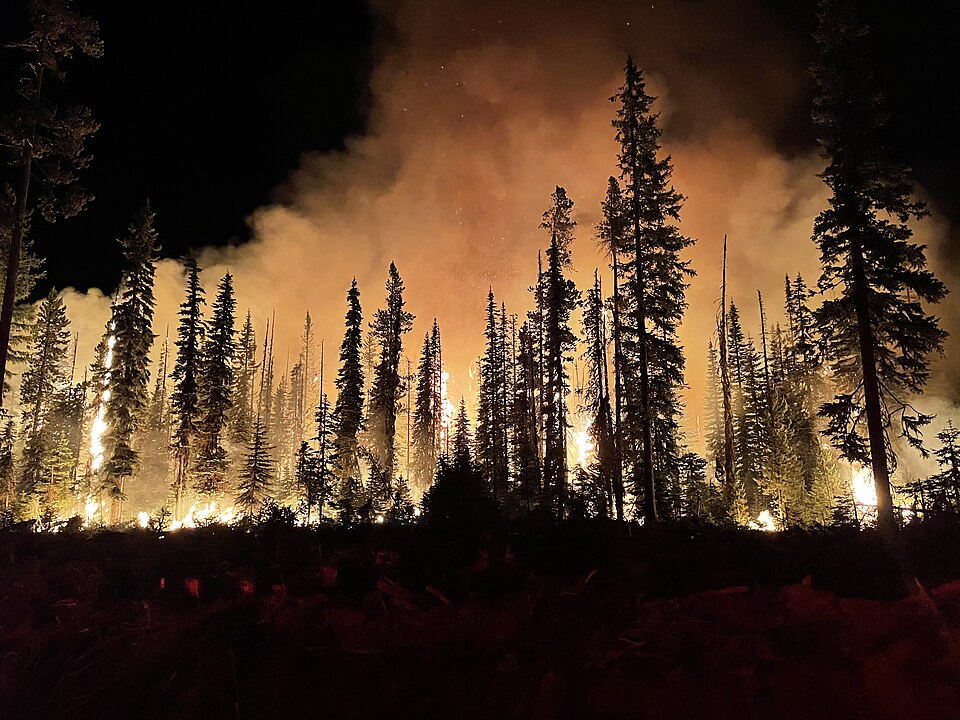
Wildfire Smoke From Canada And Minnesota Keeps Air Hazardous For Millions In U.S.
Dense wildfire smoke from Canadian and northern Minnesota fires kept air quality at unhealthy to hazardous levels for millions across the U.S. Midwest and East on Thursday and Friday, July 16-17, 2026.[1]
Major cities including Chicago, Detroit, Minneapolis, Philadelphia and New York City reported air ranging from unhealthy to hazardous, disrupting outdoor activities and prompting health warnings.[2] At least 21 states were dealing with air-quality emergencies as smoke and ash settled over towns and cities.[3] New York City moved school, park and agency activities indoors, opened cooling centers and distributed tens of thousands of masks at transit hubs.[4]
On Tuesday, July 14, the U.S. Forest Service closed the Boundary Waters Canoe Area Wilderness in far northeastern Minnesota after 17 lightning-caused fires spread through the 1.1 million-acre area.[5] Rangers estimated between 6,000 and 10,000 people were inside when the closure took effect and were evacuated by canoe and boat, sometimes after hours-long paddles and portages.[5] Canada had recorded around 3,500 fires that burned roughly 2.3 million acres so far in 2026, and more than 800 wildfires were actively burning in mid-July, feeding the smoke plume into the United States.[6][2] Meteorologists said a persistent heat dome trapped smoke near the ground, compounding the extreme-heat and air-quality risks across the region.[7]
Early coverage centered on hazardous air alerts and visible smoke in city skies, but later reporting has stressed longer-term health risks from repeated smoke exposure, including higher risks of heart attacks, stroke, respiratory illness and pregnancy complications.[2] Scientists and officials warned smoke intrusions could recur for weeks to months until the Canadian and northern Minnesota fires are extinguished by winter snows.[4]
Officials urged people, especially those with chronic conditions, to stay indoors and use cooling centers or masks if they must go outside.[4] Forecasters said the hottest air should ease by the weekend, but smoke could linger longer closer to the fires.[7]
The mainstream summary emphasizes the immediate health risks posed by the wildfire smoke but does not address the underlying policy failures contributing to the recurring nature of these smoke events. Shawn Regan and Sean Speer argue that the smoke problem is not solely a consequence of climate change but is significantly influenced by inadequate land management and regulatory policies that prevent effective forest management practices such as prescribed burns and thinning. They contend that the media's framing of these events as uncontrollable disasters leads to misguided responses that fail to address the root causes of the problem, which could be mitigated with better long-term strategies for fuel management and community resilience.[8]
Additionally, while the summary mentions immediate actions taken by cities to protect residents, it overlooks calls for broader federal legislative action to address the public health and economic impacts of wildfire smoke. Critics argue that a piecemeal approach is insufficient and that coordinated federal efforts are necessary to enhance preparedness and resilience against future smoke incursions. This perspective highlights a gap in the mainstream narrative, which tends to focus on localized responses rather than advocating for comprehensive policy changes at the national level.[9]
Show source details & analysis (10 sources)
📌 Key Facts
- On Tuesday, July 14, 2026, the U.S. Forest Service closed the Boundary Waters Canoe Area Wilderness in far northeastern Minnesota after 17 lightning-caused fires spread through the 1.1 million-acre area; the closure and firefighting details were reported by Boundary Waters Canoe Area Wilderness.
- Rangers estimated between 6,000 and 10,000 people were inside the Boundary Waters when the closure took effect and were evacuated by canoe and boat, sometimes requiring hours-long paddles and portages, according to PBS News (6,000 and 10,000 people).
- The Canadian Wildland Fire Information System reported more than 800 wildfires actively burning in Canada as of mid-July 2026, feeding a smoke plume that reached the U.S. Midwest and East, per NPR (Canadian Wildland Fire Information System).
- Canada has recorded around 3,500 fires that burned about 2.3 million acres so far in 2026, data cited by CBS News showing the scale of the national season contributing to cross-border smoke impacts (3,500 fires).
- Dense smoke pushed hazardous air into major Midwest and East Coast population centers on July 16–17, 2026, with cities including Chicago, Detroit, Minneapolis, Toronto, Philadelphia and New York City reporting air from unhealthy to hazardous and prompting stay-indoors and health warnings (New York City).
- Meteorologists said a persistent heat dome / high-pressure system was trapping smoke near the surface, compounding extreme-heat and air-quality risks; forecasters expected the hottest air to ease by the weekend but warned smoke could linger longer near the fires (heat dome).
- Public-health experts cautioned that wildfire smoke exposure raises risks of heart attack, stroke, respiratory illness, pregnancy complications and possible developmental effects in children, and that harmful smoke can be present even when the sky does not look smoky — warnings highlighted by Dr. David Eisenman (Dr. David Eisenman).
- Local and state actions included moving New York City school, park and agency activities indoors, opening cooling centers and distributing tens of thousands of masks at transit hubs; nationwide, at least 21 states faced air-quality emergencies amid the smoke on July 16–17, 2026 (tens of thousands of masks).
- Scientists and officials warned the U.S. could see recurring smoke intrusions for weeks to months until Canadian and northern Minnesota fires are extinguished by winter snows, and that relief from the poor air quality was still several days away as of mid-July 2026 (experts).
📊 Analysis & Commentary (3)
"A City Journal opinion argues that the wave of hazardous wildfire smoke reported across much of the U.S. is driven as much by failed land‑management and policy choices as by climate, and calls for a shift from crisis rhetoric and emergency measures to large‑scale fuel treatments, prescribed burns, and investments in community resilience — a critique of mainstream coverage that emphasizes uncontrollable climate causes."
"Based on the article title and source (City Journal) — though the submitted article text was corrupted and unreadable — this appears to be an opinion piece commenting on the widespread wildfire‑smoke episode reported in 'Wildfire Smoke From Canada And Minnesota Keeps Air Hazardous For Millions In U.S.', likely arguing the smoke is a national public‑health crisis that exposes failures in preparedness, forest/land management, and cross‑border coordination and calling for stronger policy responses. (Assessment is based on metadata/title; full‑text analysis is low confidence due to corrupted input.)"
"This Fox News opinion piece comments on reporting about hazardous wildfire smoke from Canada and Minnesota and argues that Congress must act — funding preparedness, coordinating with Canada, and implementing both short‑ and long‑term policies — because the recurring smoke is a national public‑health and economic emergency rather than a mere local problem."
📰 Source Timeline (10)
Follow how coverage of this story developed over time
- On Friday, July 17, 2026, heavy wildfire smoke again darkened skies from the Great Lakes to parts of the East Coast, with air quality reaching unhealthy to hazardous levels in multiple U.S. cities.
- Meteorologists on July 17 issued air quality warnings for Detroit, Chicago and Washington, D.C., noting a lingering high-pressure system trapping smoke near the ground.
- At about sunrise on Friday, July 17, 2026, air-quality monitor IQAir ranked Washington, D.C., as having the third-worst air quality among major global cities, behind Detroit and Chicago; Toronto and New York City rounded out the top five.
- Officials in Michigan and much of Minnesota were under a hazardous air quality alert, and in the Chicago area air quality ranged from very unhealthy to hazardous as of Thursday, July 16, 2026.
- Scientists and officials quoted in the article reiterated that smoke intrusions could recur for weeks to months until wildfires in Canada and northern Minnesota are extinguished by winter snows.
- The article highlights a recent study estimating that long-term exposure to fine particles from wildfire smoke contributes to an average of 24,100 deaths per year in the lower 48 U.S. states.
- As of Friday, July 17, 2026, the NPR newsletter reports that Minnesota, Wisconsin and Michigan are experiencing some of the worst air quality levels in the U.S. due to ongoing wildfire smoke from Canada and northern Minnesota.
- The article notes that millions of residents in large East Coast cities including Philadelphia, New York City and Baltimore are also dealing with unhealthy or hazardous air quality from the smoke plume.
- It cites the Canadian Wildland Fire Information System as reporting that more than 800 wildfires are currently burning across Canada, contributing to the sustained smoke impacts in the United States.
- The piece says relief from the poor air quality is still several days away, indicating that hazardous conditions are expected to persist in the near term.
- CBS reports on July 16, 2026, that air-quality emergencies are impacting at least 21 U.S. states due to wildfire smoke and ash.
- The segment notes that smoke and ash from Canadian wildfires have settled over major cities and towns this week, explicitly including Minneapolis and New York.
- Health officials in the CBS piece warn that coughing and shortness of breath are risks for everyone outside, with heightened concern for people with chronic medical conditions.
- On Thursday, July 16, 2026, heavy, pungent wildfire smoke darkened skies from the Great Lakes to parts of the East Coast, with air quality at unhealthy to hazardous levels in many locations.
- A National Weather Service meteorologist in Detroit said visibility in some areas fell to about a half mile and described the air quality as 'really pretty extreme levels.'
- All of Michigan and much of Minnesota were under a hazardous air quality alert on July 16, and the Chicago area saw conditions ranging from very unhealthy to hazardous.
- Officials in New York City moved school, park, and other agency activities indoors, opened cooling centers, and the state distributed tens of thousands of masks at transit hubs and other major locations.
- Experts quoted in the article warned the region could face weeks to months of recurring smoke events until fires in Canada and northern Minnesota are extinguished by winter snows.
- On Thursday, July 16, 2026, dense wildfire smoke pushed hazardous air quality into major Midwest and East Coast population centers, affecting millions of residents.
- The New York Times article emphasizes that air quality in multiple cities reached "hazardous" levels on July 16, prompting renewed stay-indoors and health warnings for vulnerable groups.
- The piece provides additional detail on how the persistent heat dome is trapping smoke near the surface, worsening air quality specifically for urban corridors in the Midwest and along the East Coast.
- On Monday, July 13, 2026, extreme heat and dry conditions in Ontario and northern Minnesota drove significant spread of wildfires that are now feeding the smoke plume.
- More than 800 wildfires are actively burning in Canada as of mid-July 2026, according to the Canadian Wildland Fire Information System.
- Record-breaking heat created a heat dome across western Ontario and Minnesota, with some locations exceeding 100 degrees, enabling what atmospheric scientist Derek Mallia called an 'unprecedented run' of fires.
- Air Quality Ontario labeled air in some provincial areas as 'very high risk,' and thousands of people in the region have been forced to evacuate due to the fires.
- Wildfire smoke is currently producing air quality ranging from hazardous to unhealthy in parts of Minnesota, Wisconsin and Michigan and in U.S. cities including Philadelphia, New York City and Baltimore, with smoke-filled skies expected to persist at least through the weekend after July 16, 2026.
- Public-health expert Dr. David Eisenman highlighted research linking wildfire smoke exposure to higher risks of heart attacks, heart failure, stroke, respiratory illness, pregnancy complications and possible developmental disorders in children, and warned that harmful smoke can be present even when the sky does not look visibly smoky.
- As of Thursday, July 16, 2026, Canada has recorded around 3,500 fires that have burned about 2.3 million acres in 2026, roughly in line with the 10-year average but below a heightened five-year average due to recent extreme seasons.
- By mid-July 2026, the U.S. has had close to 40,000 wildfires burning more than 3.6 million acres, nearly 10,000 more fires and almost 1 million more acres than the U.S. 10-year mid-July average, according to the National Interagency Fire Center.
- The National Interagency Fire Center advisory says 2026 fire activity "is already mirroring conditions normally not seen until later in the season."
- Since January 2026, hundreds of thousands of acres have burned in the American West, with Colorado and Utah hit hardest; three firefighters died and two were injured at the Knowles Fire along the Colorado–Utah border at the end of June 2026.
- Of 48 large U.S. wildfires active nationwide as of mid-July 2026, 10 are in Colorado or Utah, with others scattered across Arizona, California, Idaho, Nevada, New Mexico, Oregon and Washington.
- Western U.S. snowpack in 2026, especially in Colorado and Utah, was described as the worst in 50–75 years of records, with high spring temperatures causing early melt and leaving an extra month for landscapes to dry before fire season.
- Canadian data cited show a decadeslong decline in snowpack across the northern band of Canada, and Canadian officials explicitly link shifting warmth, snowpack and drought patterns to human-caused climate change as a driver of wildfire risk.
- Experts from the Western Regional Climate Center and Utah's state climatology office describe prolonged drought, record heat and historically low snowpack as combining to create "the perfect storm" for one of the West's worst wildfire seasons in a decade.
- On Thursday, July 16, 2026, a dense smoke plume from Canadian wildfires produced potentially unhealthy air across much of the northeastern United States, with the sun appearing dull orange in many areas.
- As of Thursday morning, July 16, air quality readings surged to dangerous levels in Chicago, Cleveland, Detroit, Minneapolis and Toronto, with forecasts that conditions would worsen through the day and reach unhealthy levels as far east as Toronto and New York.
- Forecasters said the densest smoke would move south from Canada and the Great Lakes through July 16, potentially dipping as far south as Maryland, with the worst conditions around New York City expected in the afternoon and evening.
- Mayor Zohran Mamdani of New York on July 16 urged the city's roughly eight million residents to stay indoors if possible, warning that the combination of dangerous heat and unhealthy air posed a serious health threat.
- Meteorologists said a persistent heat dome was trapping smoke close to the ground, and that both the extreme heat and the smoke in the Northeast were expected to ease by the weekend as another weather system displaced the hottest air, though smoke would likely linger longer closer to the fires.
- The EPA estimated that many locations affected by smoke on Wednesday, July 15, would experience similar or slightly worse air quality on Thursday, July 16.
- On Tuesday, July 14, 2026, the U.S. Forest Service closed the Boundary Waters Canoe Area Wilderness in far northeastern Minnesota as 17 lightning-caused fires spread through the 1.1 million-acre area.
- Rangers estimate between 6,000 and 10,000 people were inside the Boundary Waters when the closure took effect and have been evacuating them by canoe and boat, in some cases requiring hours-long paddles and portages.
- Minnesota Gov. Tim Walz said on Wednesday, July 15, 2026, that the Canadian Air Force was rescuing two groups of youth campers who had crossed the border, including one stranded on an isolated sandbar.
- More than 100 wildfires are burning in Canada, and smoke is being carried southeast, prompting unhealthy air alerts from Minnesota through Toronto into New York on Wednesday, July 15, 2026.
- National Weather Service meteorologist Tyler Hasenstein warned that wildfire smoke and an ongoing extreme heat wave are coinciding in the region, creating compounded health risks and leading officials to urge residents to stay indoors.
- Minnesota officials said some fires in the Boundary Waters will be allowed to burn indefinitely under monitoring, with the wilderness remaining closed until authorities determine it is safe to reopen.