
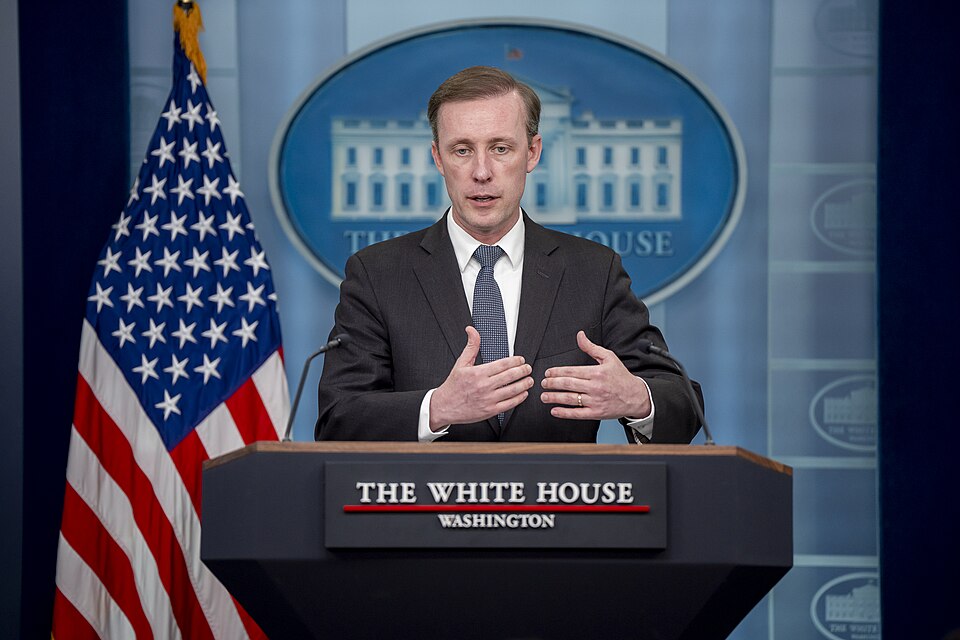
White House Details Chinese Voter-Data Collection After Trump Election-Security Address
On Thursday, July 30, 2026, the White House released a CIA-, NSA-, DHS- and ODNI-cleared fact sheet saying Chinese actors collected U.S. voter-registration files, including some non-public data.[1]
The administration told reporters it assesses Chinese actors purchased, stole or hacked voter files, obtaining tens of millions of records from 18 states in 2020 and about 220 million voter-registration files by 2023.[1] The fact sheet said Chinese cyber actors also acquired voter data posted on commercial websites in 2022 and cited declassified 2020 NIO-Cyber material showing Chinese analysis of some states' voter files for public-opinion work.[1] Post-2020 U.S. intelligence assessments concluded there is no evidence foreign actors altered ballots, vote counts or official registrations.[2]
On Thursday night, July 16, 2026, President Trump delivered an East Room primetime speech and released a trove of declassified election-security documents tied to that address.[3] In that speech he urged Congress to pass the SAVE America Act and alleged China had acquired about 220 million U.S. voter files between 2020 and 2023.[3] White House task-force member John Solomon said he has "zero evidence" that a foreign power flipped votes in 2020, 2022 or 2024, and he signed a June 2026 contract to work with acting DNI Bill Pulte on the declassification review.[4]
Initial mainstream coverage framed the July 16 speech as a relitigation of disputed 2020 claims and said the released documents largely reiterated known concerns rather than showing vote manipulation.[2] By July 30 the White House shifted the emphasis toward alleged large-scale data collection, prompting renewed debate about the security of voter rolls even as intelligence findings still draw a clear line between data gathering and technical interference with vote tallies.[1]
Mainstream coverage tends to frame Trump's speech and the accompanying document release as a reiteration of past claims without new evidence. However, Politico's analysis suggests that the event was more about political maneuvering than providing substantive national security information, arguing that it places Republicans in a difficult position of either endorsing potentially explosive claims or alienating Trump's base. This perspective highlights the partisan implications of the speech, which the mainstream summary downplays in favor of a more straightforward account of the events. Furthermore, critics point out that the heavily redacted documents released do not substantiate claims of vote manipulation, contradicting the implications of urgency and threat suggested by the White House. This aspect of the narrative, emphasizing the lack of credible evidence, is notably absent from the mainstream summary, which focuses instead on the claims of data collection without addressing the skepticism surrounding their validity.
Additionally, while the mainstream account mentions the intelligence community's conclusion that foreign actors did not alter vote counts, it does not delve into the concerns about the politicization of intelligence under the current administration. Critics argue that this politicization undermines public trust and institutional integrity, a viewpoint that adds depth to the discussion of the implications of Trump's actions and the administration's approach to election security. This critical angle is essential for understanding the broader context of the White House's claims and the potential long-term effects on the electoral process and public confidence in democratic institutions.[5][6]
Show source details & analysis (10 sources)
📌 Key Facts
- On Thursday night, July 16, 2026, President Trump delivered an East Room primetime speech in which he declassified and discussed election‑security documents released with the address (East Room primetime speech).
- On July 30, 2026, the White House published a fact sheet — cleared by the CIA, NSA, DHS and ODNI — alleging China collected U.S. voter‑registration files, including some “non‑publicly available” data (fact sheet).
- The administration told reporters it assesses Chinese actors purchased, stole or hacked voter files, obtaining tens of millions of records from 18 states in 2020 and about 220 million voter‑registration files by 2023 (220 million voter-registration files).
- Declassified 2020 NIO‑Cyber material and other released memos show Chinese analysis of some states’ voter data for public‑opinion purposes, but post‑2020 intelligence findings — including a March 2021 intelligence assessment — concluded there is no evidence foreign actors altered ballots, vote‑counting or official registrations (March 2021 intelligence assessment).
- NPR’s review of the newly released documents found they largely reiterated previously known concerns (for example, aging equipment) and did not provide evidence that any votes were changed in U.S. elections (NPR review).
- Election‑security experts quoted by outlets emphasized that most U.S. voting machines are kept offline, supported by paper ballots or receipts and audits, and that publicly available voter files alone cannot be used to change official registration records (voting machines).
- In the July 16 address Trump also urged Congress to pass the SAVE America Act, highlighting its proof‑of‑citizenship and citizenship‑showing photo‑ID requirements for federal voter registration and voting (SAVE America Act).
- John Solomon — who signed a June 2026 contract to serve as a special government employee reviewing declassification work with acting DNI Bill Pulte — told reporters there is “zero evidence” that a foreign power flipped votes in 2020, 2022 or 2024 and said he is still researching related claims (John Solomon).
📊 Analysis & Commentary (5)
"The author argues that Trump’s planned prime‑time speech and curated release of declassified documents on election security is a partisan spectacle that deliberately puts Republicans in a lose‑lose position—endorse contested claims and alienate moderates, or repudiate the president and anger his base—while raising doubts about the credibility and motives of the document release."
"The author argues Trump’s primetime election-integrity address was an anticlimax — a politically motivated spectacle that failed to deliver new, conclusive evidence (and was undercut by the very declassified memos released), designed more to push the SAVE Act and rally supporters than to advance a credible, evidence-based case."
"This commentary is a pro‑speech, pro‑transparency opinion piece arguing that President Trump's election‑security address and the declassified documents are important and have been unfairly dismissed by the media and establishment; the author urges full public scrutiny of the underlying evidence and contends the focus on whether votes were 'flipped' is a distraction from real vulnerabilities."
"The author criticizes President Trump's East Room election‑integrity speech as theatrical but idea‑poor, arguing great speeches need verifiable evidence and concrete policy proposals rather than declassified theatrics and unproven claims."
"The author criticizes acting DNI Bill Pulte’s role in the White House’s election‑security document release tied to Trump’s prime‑time speech, arguing it was a partisan 'power play' that politicized intelligence, produced theater rather than convincing evidence, and harmed institutional credibility."
📰 Source Timeline (10)
Follow how coverage of this story developed over time
- On Thursday, July 30, 2026, the White House released a fact sheet, cleared by the CIA, NSA, DHS and ODNI, reiterating that China allegedly collected U.S. voter registration files, including some "non-publicly available" data.
- An administration official said U.S. intelligence assesses that China purchased, stole or hacked U.S. voter files and had obtained tens of millions of records from 18 states in 2020 and about 220 million voter-registration files by 2023.
- The fact sheet asserted that Chinese cyber actors also acquired voter registration data stored on commercial websites in 2022, though it did not specify which states or what non-public elements were involved.
- Newly spotlighted declassified 2020 NIO-Cyber material said Chinese intelligence analyzed multiple U.S. states' voter data for public-opinion analysis of the 2020 election, and a separate memo warned that access to voter-registration systems could, in theory, allow data manipulation to block voters, while noting no evidence any country had specific plans to do so.
- The article restates that post‑2020 National Intelligence Council assessments found no foreign actors, including China, attempted to alter registrations, ballot casting, vote counting or other technical aspects of the 2020 election, underscoring a distinction between data collection and vote manipulation.
- Election experts quoted emphasize that publicly available voter files alone cannot be used to modify official registration records, and that many states routinely release voter-roll information under their laws.
- The article notes Biggs assisted Trump's attempts to block certification of the 2020 presidential election by voting against accepting Electoral College votes from Arizona and other battleground states after the Jan. 6, 2021 riot.
- It recounts that Kolodin was sanctioned by the Arizona state bar in connection with two 2020 election lawsuits that courts found baseless, one directly seeking to overturn Joe Biden's Arizona win on fraud grounds.
- These details tie Arizona's 2026 statewide nominees for governor and secretary of state to the state's post-2020 election litigation and congressional certification disputes.
- On Thursday night, July 16, 2026, after President Trump's address, task-force member and White House special employee John Solomon told MS NOW there is 'zero evidence' that any foreign power flipped votes in the 2020, 2022 or 2024 U.S. elections.
- Solomon said 'the intelligence is very clear' that Venezuela did not tamper with U.S. voting machines and that its manipulation capabilities were confined to its own systems, whose protocols he said are similar to U.S. machines.
- Pressed on whether there is any intelligence supporting claims of election fraud, Solomon replied there is 'not yet' any such intelligence, adding that he is 'still researching' the legitimacy of the 2020 election results.
- The article contrasts Solomon's comments with Trump's July 16, 2026 East Room speech, noting that the newly released declassified materials include no evidence that Chinese or other foreign officials accessed U.S. voting infrastructure despite Trump's claims.
- Chinese Embassy spokesperson Liu Chang issued a statement rejecting Trump's allegation of Chinese election meddling and reiterating China's stated policy of non-interference in other nations' internal affairs.
- The piece newly confirms that Solomon signed a June 2026 contract with the White House as a special government employee to work with acting DNI Bill Pulte on reviewing and declassifying election-related intelligence documents.
- On Thursday night, July 16, 2026, NPR reporters reviewed the declassified election-related intelligence documents Trump released with his East Room primetime speech and initially found no new information that would affect the security of U.S. voting systems.
- NPR's review found the documents largely reiterated existing concerns, such as aging voting equipment in some jurisdictions, and did not provide evidence of a single fraudulent vote or of votes being changed in any election.
- NPR noted that nearly all U.S. voters now use paper ballots, which have already been subjected to audits and investigations by both Republicans and Democrats after the 2020 election, none of which found evidence of widespread fraud.
- NPR political correspondent Tamara Keith reported that Trump's executive actions attempting to change election administration have been blocked by courts and that his SAVE America Act still lacks sufficient support in the Senate, with many Republicans preferring to focus on voter priorities like the cost of living.
- The article reports that in his primetime address Trump devoted relatively little time to economic affordability or the ongoing war in Iran, despite those being key voter concerns.
- In his primetime East Room address on Thursday, July 16, 2026, President Trump alleged the U.S. election system falls 'catastrophically short' and again made claims experts say are heavily disputed.
- The White House released a trove of newly declassified election-security documents in conjunction with the speech, but a White House official told reporters hours beforehand that none of the material alleges votes were switched or voting machines hacked.
- Trump used the address to urge Congress to pass the SAVE America Act, highlighting its proposed proof-of-citizenship requirement for voter registration as a key change.
- Trump alleged that from 2020 to 2023 the Chinese government acquired 220 million U.S. voter-registration files and called it 'the largest compromise of election data in history,' claiming U.S. intelligence agencies kept this information from him and from Congress.
- The article notes that U.S. voter-registration files are generally public records and cites a previously declassified 2020 intelligence report stating China obtained some states' voter data to conduct public-opinion analysis of the 2020 election, with no evidence of altered votes.
- The story reiterates that a March 2021 U.S. intelligence-community assessment found no foreign actor attempted to alter technical aspects of the 2020 voting process, including ballot casting, counting, or voter registrations.
- David Becker of the Center for Election Innovation and Research said after the speech that 18 months of Trump administration inquiries had produced 'rehashed, debunked conspiracy theories' rather than evidence of massive voter fraud.
- During the East Room speech on Thursday night, July 16, 2026, Trump claimed newly declassified intelligence showed U.S. elections were 'left vulnerable to being rigged and stolen' and that material had been 'buried and covered up.'
- The declassified package consists of heavily redacted intelligence documents on China and Venezuela, including a CIA analysis that Venezuela had 'some capability in manipulating electronic voting systems' in its own elections but that 'neither Smartmatic nor the Venezuelan Government had the capability – that is, the level of control or access required – to manipulate the outcome of an election outside of Venezuela.'
- John Solomon, a Trump appointee on the election task force and prominent election denier, told MS NOW on July 16 that 'the intelligence community has zero evidence that someone, that a foreign power flipped a vote in 2020, '22 or '24' and acknowledged Venezuela had not tampered with U.S. voting machines.
- CIA Director John Ratcliffe issued a statement on the declassifications saying the documents 'shed further light on China’s intentions' and on Venezuela’s 'capabilities,' but he did not claim any foreign hacking or access changed U.S. election outcomes.
- The article underscores the intelligence community’s long-standing distinction between foreign influence operations (such as social media campaigns by Iran, China, and Russia in 2020) and interference (technical compromise of voting systems to alter votes), reiterating that assessments find no evidence of the latter.
- On Thursday night, July 16, 2026, President Trump said in his prime-time speech that U.S. voting machines and ballot-counting systems are "extremely exposed to attack" and "easily compromised."
- Trump cited newly declassified CIA intelligence describing a plot to use voting machines to aid Venezuela's Maduro government, relying on systems made by Smartmatic, whose technology is not used in the U.S. except in Los Angeles County.
- The National Intelligence Council memo Trump appeared to invoke states that U.S. adversaries have the capability to compromise election infrastructure, particularly voter-registration databases, but says systems that tabulate votes or display results would be difficult to manipulate at scale without detection.
- The NIC memo and a March 2021 intelligence assessment both conclude foreign actors did not alter technical aspects of the 2020 voting process and describe postelection audits and paper trails as likely to uncover any large-scale manipulation.
- Election-security expert David Becker and others are quoted explaining that U.S. voting machines are kept under lock and key, are not connected to the internet, and are backed up by paper ballots or receipts that can be audited by hand, making undetected compromise extremely difficult.
- The article notes that every ballot in Georgia's 2020 general election was counted three times—an initial machine tally, a full hand audit, and a machine recount requested by the Trump campaign—with all three counts confirming Joe Biden's victory.
- On Thursday, July 16, 2026, CBS reports that sources say part of President Trump's 9 p.m. ET White House address will raise new allegations of Chinese access to U.S. voter data.
- The article reiterates that U.S. intelligence agencies have found no indications that China or any foreign power altered ballots, vote-counting or voter registrations in the 2020 election, distinguishing "influence" efforts from technical "interference."
- CBS provides a detailed description of the SAVE America Act's key provisions, including in-person proof-of-citizenship requirements to register for federal elections and photo IDs that themselves must show citizenship to cast a ballot.
- On Thursday night, July 16, 2026, President Trump is scheduled to give a prime-time address on 'election integrity' as his Iran war approaches the five-month mark.
- White House Press Secretary Karoline Leavitt said at Thursday's briefing that Trump will present 'findings' about election integrity and that 'everything he is saying will be backed by facts and by evidence that will be provided this evening.'
- Leavitt said Trump will also talk about the SAVE America Act, including its proof-of-citizenship requirement for voter registration and ID requirement for voting, reiterating his push on Congress to pass the stalled bill.
- Senate Minority Leader Chuck Schumer said on the Senate floor on July 16 that he views the upcoming address as an effort to undermine the 2026 elections before votes are cast and to relitigate Trump's false 2020 claims.
- The article recalls that a March 2021 declassified federal intelligence report, shared with Trump on January 7, 2021, found no indications that any foreign actor altered technical aspects of the 2020 U.S. voting process.