
House Passes Sunshine Protection Act To Make Daylight Saving Time Permanent
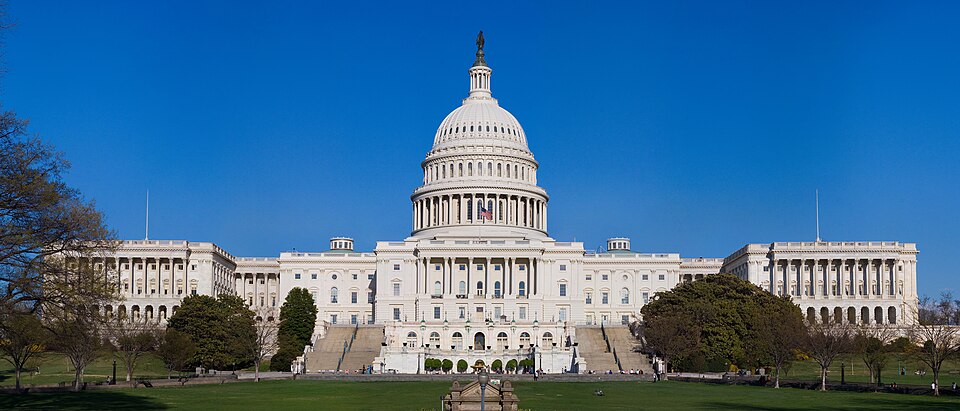
The House on Tuesday, July 14, 2026, passed the Sunshine Protection Act 308-117 to make daylight saving time permanent nationwide, sending the measure to the Senate and the president.[1]
The vote was 308-117 and included bipartisan support, with proponents saying extra evening light will help tourism and small businesses and opponents warning of darker winter mornings for children and commuters.[2] The White House publicly called the bill a "popular, common-sense reform" and said advisers would recommend the president sign it if it reaches his desk.[3] President Donald Trump posted "Great News for America!" on July 15 and has said he will sign the bill if it reaches his desk.[4]
Senator Marco Rubio first introduced the Sunshine Protection Act in March 2018, modeling it on a Florida law the state passed that year. The Senate passed a similar measure by unanimous consent in March 2022, but it stalled without a House vote. The bill was reintroduced in the current Congress and the House Energy and Commerce Committee advanced it 48-1 in May 2026.
MS NOW reported House leaders timed the floor vote to appease Rep. Anna Paulina Luna after she paused House business over demands on an unrelated elections bill.[2] By Wednesday, coverage shifted to the Senate, where Majority Leader John Thune said senators' main concern is preserving states' option to choose and CBS listed senators from both parties who oppose the bill.[4] A 2025 AP-NORC poll found 56% of U.S. adults, if forced to choose, prefer permanent daylight saving time.[3]
The mainstream summary frames the Sunshine Protection Act as a straightforward, popular reform, but Josh Barro critiques this perspective by arguing that the move to make daylight saving time permanent is driven more by political theater than by solid evidence of its benefits. He emphasizes that the potential harms—such as darker winter mornings, public health impacts, and safety risks—are real and often understudied compared to the modest benefits touted by proponents. Furthermore, while the summary mentions bipartisan support, it downplays the significant concerns raised by critics regarding the uneven burdens that a federal one-size-fits-all approach would impose on states and local communities, which may not align with their specific needs or preferences. This contrast highlights the complexity of the issue beyond the simplistic framing of a popular legislative fix, suggesting that the implications of such a change warrant deeper scrutiny than what mainstream coverage has provided.
Additionally, the summary does not address the criticism that the Sunshine Protection Act consolidates power in Washington, D.C., limiting states' ability to opt out compared to the current Uniform Time Act. This perspective, shared by users on social media, underscores a tension between federal standardization and state autonomy that is absent from the mainstream narrative. The discussion around the potential impacts on farmers and schoolchildren, as well as the broader economic motivations behind the legislation, further complicates the portrayal of the act as merely a beneficial adjustment to timekeeping practices.
Show source details & analysis (7 sources)
📊 Relevant Data
Under the Uniform Time Act, daylight saving time currently begins on the second Sunday in March and ends on the first Sunday in November each year.
Daylight Saving Time | State Legislation — National Conference of State Legislatures
The Sunshine Protection Act would make daylight saving time the new permanent standard time nationwide, advancing clocks by one hour year-round relative to standard time.
H.R.139 - 119th Congress (2025-2026) — Congress.gov
📌 Key Facts
- The House passed the Sunshine Protection Act 308-117 on Tuesday, July 14, 2026, a measure that would make daylight saving time permanent nationwide if the Senate agrees and the president signs it (Sunshine Protection Act).
- The White House publicly backed the measure as a "popular, common-sense reform," and President Donald Trump has repeatedly said he would sign it if it reaches his desk, calling the House vote "Great News for America!" in a July 15 post (President Donald Trump).
- Florida and 19 other states have already passed laws to adopt permanent daylight saving time that could take effect if federal law changes, and the bill allows states to adopt permanent standard time statewide if they do so before the Sunshine Protection Act becomes law (Florida and 19 other states).
- A 2025 AP‑NORC poll found that 56% of U.S. adults, if forced to choose, prefer permanent daylight saving time while roughly 4 in 10 prefer permanent standard time (2025 AP-NORC poll).
- MS NOW reports House leaders brought the bill to the floor on Tuesday, July 14, 2026, in part to appease Rep. Anna Paulina Luna after she had paralyzed House business with demands on an unrelated election‑security bill (Rep. Anna Paulina Luna).
- Coverage frames the vote as reviving debate reminiscent of the failed 1973–74 year‑round daylight saving experiment under President Nixon — when public support fell sharply once dark winter mornings began — and notes that a similar bill passed the Senate four years earlier but stalled in the House (1973-74 year‑round daylight saving experiment).
- Senate response is mixed: on Wednesday morning, July 15, 2026, Senate Majority Leader John Thune said senators' main concern is preserving "optionality for states," and a Capitol Hill aide listed senators from both parties who have opposed permanent daylight saving time in the Commerce Committee, making the divide more geographic than strictly partisan (John Thune).
- Supporters on the House floor such as Rep. Gus Bilirakis highlighted tourism and small‑business benefits of more evening daylight, while critics including Rep. Mary Gay Scanlon warned of darker, potentially hazardous winter mornings for children and commuters and Rep. Jim McGovern questioned whether this was the best use of congressional time amid cost‑of‑living pressures (Rep. Gus Bilirakis).
📊 Analysis & Commentary (1)
"Josh Barro is critiquing the House's Sunshine Protection Act (making Daylight Saving Time permanent), mocking its popularity and arguing that the policy is a politically attractive but ultimately foolish choice because its harms — darker winter mornings, health and safety trade-offs, and uneven burdens — outweigh the modest benefits proponents tout."
📰 Source Timeline (7)
Follow how coverage of this story developed over time
- On Wednesday morning, July 15, 2026, Senate Majority Leader John Thune said the main concern among senators is preserving 'optionality for states' on daylight saving time.
- Thune acknowledged 'there's a lot of interest' in the bill but noted that some GOP senators support it and others oppose it, and he personally has voted against making daylight saving time permanent.
- A senior Capitol Hill aide said a number of senators on both sides of the aisle have voted against permanent daylight saving time in the Senate Commerce Committee, listing Republicans Tom Cotton, Ted Budd, Deb Fischer, Jerry Moran, Tim Sheehy, Dan Sullivan, Roger Wicker and Todd Young, and Democrats Lisa Blunt Rochester, Tammy Duckworth, Amy Klobuchar, Gary Peters and Jacky Rosen.
- The aide characterized the divide over permanent daylight saving time as 'not really a partisan issue' but a 'geographic issue,' with opposition concentrated in certain regions.
- The article reiterates President Trump's support, quoting a July 15, 2026 Truth Social post calling the House vote 'Great News for America!' and noting his earlier statement in May that he would sign the bill if it reaches his desk.
- CBS recaps that most of the U.S. is currently on daylight saving time, which began March 8, 2026, and is scheduled to end November 1, 2026, when clocks would revert to standard time if the law is not changed.
- CBS video segment, published Wednesday, July 15, 2026, reiterates that the House passed the bill on Tuesday, July 14, 2026, with bipartisan support.
- The segment emphasizes that the measure would end the twice-a-year time change and that it now awaits action in the Senate.
- Article reiterates that on Tuesday, July 14, 2026, the House voted 308-117 to pass the Sunshine Protection Act to make daylight saving time permanent, with a state opt-out before enactment.
- Adds House floor quotes from supporters such as Rep. Gus Bilirakis, who said Americans are ready to "ditch the switch" and highlighted tourism and small-business benefits in Florida.
- Adds specific criticism from Rep. Mary Gay Scanlon warning of darker, potentially more hazardous winter mornings for children and commuters, and from Rep. Jim McGovern questioning whether this is the best use of Congress's time amid cost-of-living pressures.
- Confirms that the White House called the Sunshine Protection Act a "popular, common-sense reform" and said advisers would recommend the president sign it if it reaches his desk.
- Cites a 2025 AP-NORC poll finding that, if forced to choose, 56% of U.S. adults prefer permanent daylight saving time, while about 4 in 10 prefer permanent standard time.
- Notes that the Senate previously passed a similar bill four years earlier, but it stalled in the House, providing historical context on past congressional action.
- Article confirms that on Tuesday, July 14, 2026, the House voted to make daylight saving time permanent through passage of the Sunshine Protection Act, framing it as ending twice-yearly clock changes nationwide if the Senate and president agree.
- It provides additional political framing and vote context around the July 14 House action, building on prior committee and floor coverage.
- Confirms the House vote took place Tuesday, July 14, 2026, and describes it as making daylight saving time permanent if enacted.
- Quotes Rep. Gus Bilirakis and Rep. Mary Gay Scanlon laying out pro and con arguments about evening daylight versus dark winter mornings.
- Notes Rep. Jim McGovern's criticism that the House may not be prioritizing more pressing economic issues despite his support for the bill.
- Reports that a 2025 AP-NORC poll found 56% of U.S. adults prefer permanent daylight saving time if forced to choose, while about 4 in 10 prefer permanent standard time.
- States that the White House publicly backed the Sunshine Protection Act as a popular, common-sense reform and said advisers would recommend the president sign it if it reaches his desk.
- Clarifies that states could opt out by legislative action before enactment, and that the Senate must still pass the bill for it to become law.
- The article explicitly links House leaders' decision to bring the bill to the floor on Tuesday, July 14, 2026, to efforts to appease Rep. Anna Paulina Luna after she had paralyzed House business over demands that the Senate pass an unrelated election-security bill eliminating most mail-in voting.
- It notes that President Donald Trump has intermittently advocated for making standard time permanent but, regardless of that preference, has made elimination of the twice-yearly clock change a legislative priority and pushed this specific bill in recent months.
- The piece reiterates that the bill passed the House on July 14, 2026, by a 308-117 vote and frames that action as reviving the failed 1973-74 year‑round daylight saving experiment under President Richard Nixon, providing historical polling figures showing public support dropping from nearly 80% to 42% once dark winter mornings took effect.
- The story details that Florida and 19 other states have already passed laws to adopt permanent daylight saving time, which would be allowed to take effect if federal law changes, and that the bill also permits states to adopt permanent standard time statewide if they do so before the Sunshine Protection Act becomes law.
- Rep. Frank Pallone, D‑N.J., is quoted at a House Rules Committee hearing the day before the vote emphasizing tourism and small‑business benefits of more evening daylight for boardwalks and local economies.