
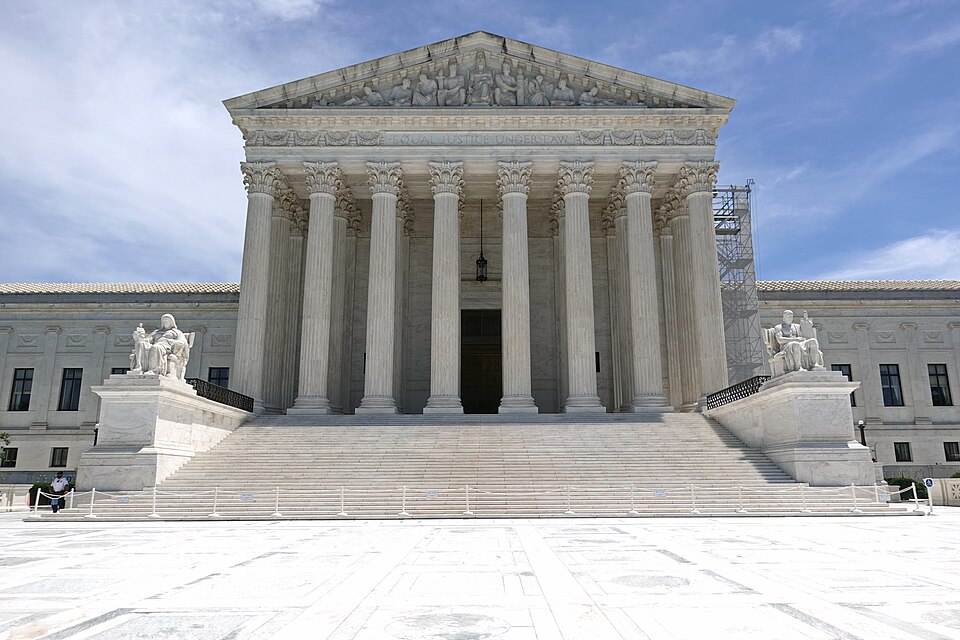
Kagan And Barrett Detail Rising Threats As They Ask Congress For More Supreme Court Security Funding
Justices Elena Kagan and Amy Coney Barrett testified before House and Senate Appropriations subcommittees on July 14, 2026, asking Congress to raise the Supreme Court's security funding amid a surge in threats.[1]
The Court sought more than $228 million for fiscal 2027, commonly reported as about $230 million.[2] That request includes $14.6 million to expand personal protection, fund roughly six extra Supreme Court Police agents per justice and cover security travel when justices are outside Washington, D.C.[2] Kagan testified the Supreme Court Police expects a 38% increase in threats in 2026 and noted a 57% jump in Marshals Service security incidents in fiscal 2025.[2] Barrett said her home was swatted about six weeks before the hearing and that she had been issued a bulletproof vest after the May 2022 leak of the Dobbs draft.[2]
In May 2022, the leak of a draft Dobbs opinion touched off protests near justices' homes and helped prompt stepped-up protections, a dynamic reporters say underpins the funding push.[3] A 2022 armed plot against Justice Brett Kavanaugh and other incidents then led the Justice Department to expand the U.S. Marshals' role in protecting justices' residences.
Early accounts emphasized how rare it is for sitting justices to testify publicly on budget matters.[3] Later reporting from CBS and NPR shifted focus to alarming specifics, amplifying threat statistics and personal anecdotes that framed the funding request as urgent.[2]
Members of the appropriations panels from both parties appeared receptive to the justices' warnings about rising threats.[4] House appropriators also raised concerns about the Court's internal ethics rules and Rep. Rosa DeLauro urged a ban on most gifts and an enforcement mechanism.[1]
The mainstream summary emphasizes the justices' urgent funding request and the alarming statistics regarding rising threats, but it does not fully capture the broader context of these developments. For instance, while the summary notes a projected 38% increase in threats for 2026, it omits the specific data from the U.S. Marshals Service, which indicates that threats have been recorded against 396 unique federal judges in FY 2025 and 276 in partial FY 2026, showcasing a troubling trend in judicial safety that extends beyond justices Kagan and Barrett. This context highlights the systemic nature of the threats faced by the judiciary, rather than framing it solely as an issue for the Supreme Court justices themselves.[5]
Moreover, the summary does not address the significance of this testimony as a rare occurrence, marking the first time in five years that justices have sought security funding from Congress. This point, noted by social media commentators, underscores the increasing urgency of the situation and the justices' acknowledgment of a deteriorating security environment. The framing of the justices' testimonies as a direct response to documented increases in threats adds a layer of urgency that the mainstream account does not fully convey.[6]
Show source details & analysis (11 sources)
📊 Relevant Data
USMS protective investigations data show threats named 276 unique federal judges in partial FY 2026 (out of ~2,600 active federal judges) and 396 unique judges in FY 2025, with annual unique-judge totals ranging 302-455 from FY 2022-2025.
Protective Investigations - Threat Statistics — U.S. Marshals Service
📌 Key Facts
- On July 14, 2026, Justices Elena Kagan and Amy Coney Barrett testified before House and Senate Appropriations subcommittees asking Congress to raise the Supreme Court's security funding.
- The Court sought more than $228 million for fiscal 2027 (commonly reported as about $230 million), including an additional $14.6 million specifically to expand personal security for the justices.
- Budget documents say the $14.6 million request would fund roughly six additional Supreme Court Police agents per justice and cover security-related travel when justices are outside the Washington, D.C., region.
- Court officials and the justices reported sharp increases in threats: the 38% rise in threats expected in 2026, a 57% jump in Marshals Service “security incidents of significant concern” for federal judges in fiscal 2025, and U.S. Marshals logging 370 threats and opening 512 investigations as of July 1, 2026.
- Justice Amy Coney Barrett recounted bringing home a bulletproof vest and said her home was swatted about six weeks before the July 14 hearing, with her Supreme Court security detail preventing local police from storming the residence.
- Elena Kagan said justices historically lived largely without protection and recalled that Reps. Darrell Issa and Elijah Cummings pressed the Court a decade earlier to strengthen security after Justice Antonin Scalia died on a hunting trip.
- Members of Congress on the panel from both parties appeared receptive to the justices' warnings about rising threats and the requested security funding.
- House appropriators raised concerns about the Court's internal ethics regime, and Rosa DeLauro urged legislation to ban most gifts to justices and called for an enforcement mechanism for the Court’s ethics code.
- News outlets emphasized the rarity of the event, describing the July 14 appearance as a first public testimony by sitting Supreme Court justices since 2019 and an unusual step of justices personally advocating to Congress for budgetary security needs.
📊 Analysis & Commentary (1)
"Paul Gigot discusses two contemporaneous Washington events — Justices Kagan and Barrett’s plea for increased Supreme Court security funding and Acting AG Todd Blanche’s contentious Senate confirmation hearing — arguing that the Court’s security concerns merit serious attention while Blanche’s confirmation spotlights troubling DOJ missteps that merit scrutiny."
📰 Source Timeline (11)
Follow how coverage of this story developed over time
- During July 14, 2026 House Appropriations testimony, Justice Amy Coney Barrett described bringing home a bulletproof vest and her 12-year-old son asking what it was, saying she had not expected to have to explain that to her children.
- Barrett disclosed that her home was swatted roughly six weeks before the July 14 hearing and said a security detail on site prevented local police from storming the residence in response to the fake emergency call.
- Justice Elena Kagan contrasted legitimate criticism of the Court with attempts at intimidation, testifying that when political figures of any stripe try to intimidate judges, that crosses a line.
- The article notes that the Court’s $207 million budget request amounts to less than one-tenth of one percent of the federal budget.
- Kagan recounted that then-Reps. Darrell Issa and Elijah Cummings pushed the Court a decade earlier to strengthen security after Justice Antonin Scalia died on a hunting trip without nearby protection, saying it was unacceptable that the justices had less security than the Office of Personnel Management director.
- CBS segment confirms that on Tuesday, July 14, 2026, Justices Amy Coney Barrett and Elena Kagan appeared before both House and Senate committees, not just a single House panel, to argue for increased Supreme Court security funding.
- The piece emphasizes that their testimony framed the situation as "increasing threats" they personally face, underscoring the security rationale for the roughly $230 million budget request.
- Article reiterates the approximate scale of the requested security budget as about $230 million, aligning with earlier figure of more than $228 million for FY 2027 and highlighting it as the central ask in their appearances.
- CBS segment, published Tuesday, July 14, 2026, reiterates that Justices Elena Kagan and Amy Coney Barrett used their appearance before a House Appropriations subcommittee to urge Congress to boost Supreme Court security funding.
- The piece frames their testimony as part of a broader push by the justices to increase personal and institutional security resources in response to rising threats.
- On Tuesday, July 14, 2026, Justices Elena Kagan and Amy Coney Barrett appeared before Congress in the first public testimony by sitting Supreme Court justices since 2019.
- The PBS segment frames the appearance explicitly as coming "in the wake of threats" to the justices and describes the session as an effort by the court "to increase security funding."
- On Tuesday, July 14, 2026, Justices Elena Kagan and Amy Coney Barrett testified before both House and Senate appropriations subcommittees, described in this piece as "regular budget" hearings focused on the Court's funding request.
- Justice Kagan recounted that after Justice Antonin Scalia died in his sleep on a hunting trip without security nearby, Reps. Darrell Issa and Elijah Cummings pressed the Court about having less protection than lower-level officials and urged it to beef up security.
- Kagan said that before those changes the justices largely lived without protection, driving themselves to work, going to movies and supermarkets alone, and traveling privately without security details.
- Kagan noted that the Supreme Court's budget is about $207 million, which she characterized as roughly one‑tenth of 1% of the federal budget, while emphasizing that a large share now goes to physical and cyber security.
- Justice Barrett provided a detailed anecdote about bringing home a bulletproof vest, describing how her 12‑year‑old son asked what it was and that she had not expected her service on the Court to require explaining such equipment to her children.
- Barrett also told lawmakers that her home was swatted about six weeks before the July 14 hearing; she said local police would have entered the house on a false emergency call but were intercepted by her Supreme Court security detail.
- House appropriators raised concerns about Supreme Court ethics rules, contrasting Congress' strict $50 gift limit with the Court's lack of a similar cap, and Rep. Rosa DeLauro voiced support for legislation that would ban most gifts to justices and called for an enforcement mechanism for the Court’s ethics code.
- Axios reiterates that on Tuesday, July 14, 2026, Justices Elena Kagan and Amy Coney Barrett told a House Appropriations subcommittee that the Supreme Court is facing a sharp rise in threats and needs additional security funding.
- The article underscores their warning that some threats now extend beyond the justices to family members and staff, reinforcing the urgency of the requested $14.6 million increase for personal security within a roughly $228 million fiscal 2027 Court budget.
- Axios highlights that members of Congress on the panel, from both parties, appeared receptive to the justices' warnings about the trend in threats, adding detail on the political reception to the funding request.
- On Tuesday, July 14, 2026, CBS aired a segment confirming that Justices Elena Kagan and Amy Coney Barrett testified on Capitol Hill advocating for a higher Supreme Court security budget.
- The CBS piece reiterates that the justices framed the request as a response to an increase in security threats against the Court.
- On Tuesday, July 14, 2026, Justices Elena Kagan and Amy Coney Barrett told a House Appropriations subcommittee that the Supreme Court is seeking more than $228 million for FY 2027, including an additional $14.6 million specifically to expand security for the justices.
- Budget documents indicate the extra $14.6 million would fund roughly six additional Supreme Court Police agents per justice and cover security-related travel when justices are outside the Washington, D.C., region.
- Kagan testified that the Supreme Court Police expects a 38% increase in threats against the justices in 2026, and cited a 57% rise in Marshals Service "security incidents of significant concern" involving federal judges in fiscal 2025.
- As of July 1, 2026, the U.S. Marshals Service has logged 370 threats to judges this fiscal year and opened 512 investigations; last fiscal year saw 564 total threats.
- Barrett disclosed that she was the target of a swatting incident approximately six weeks before her July 14 testimony and recounted being issued a bulletproof vest following the May 2022 leak of the draft decision overturning Roe v. Wade.
- Kagan said that recent increases in the Supreme Court's budget have been "almost entirely" for security since its in-house police force took over residential protection from the U.S. Marshals Service, and warned that for some justices "those threats have come very close."
- CBS analysis referenced in the hearing context found 126 prosecutions in 2025 tied to threatening communications, including 12 involving threats directed at judges.
- On Tuesday, July 14, 2026, Justices Elena Kagan and Amy Coney Barrett formally asked lawmakers to raise the Supreme Court's security budget, citing an increase in threats.
- CBS characterizes their appearance as a rare instance of sitting Supreme Court justices testifying before Congress specifically to push for more security funding.
- The CBS segment focuses on their explicit linkage between recent threats and the requested budget increase, framing it as a security-driven request rather than a routine appropriations briefing.
- Article published July 14, 2026, ahead of the scheduled hearing, reiterates that Justices Elena Kagan and Amy Coney Barrett will appear in rare public testimony before a House Appropriations subcommittee to discuss Supreme Court security funding.
- It underscores the unusual nature of sitting justices personally advocating before Congress for specific budgetary needs tied to security.
- The piece further situates the hearing as part of ongoing tensions over threats to justices since Dobbs and recent swatting incidents, reinforcing that the testimony is focused on expanded security measures.