
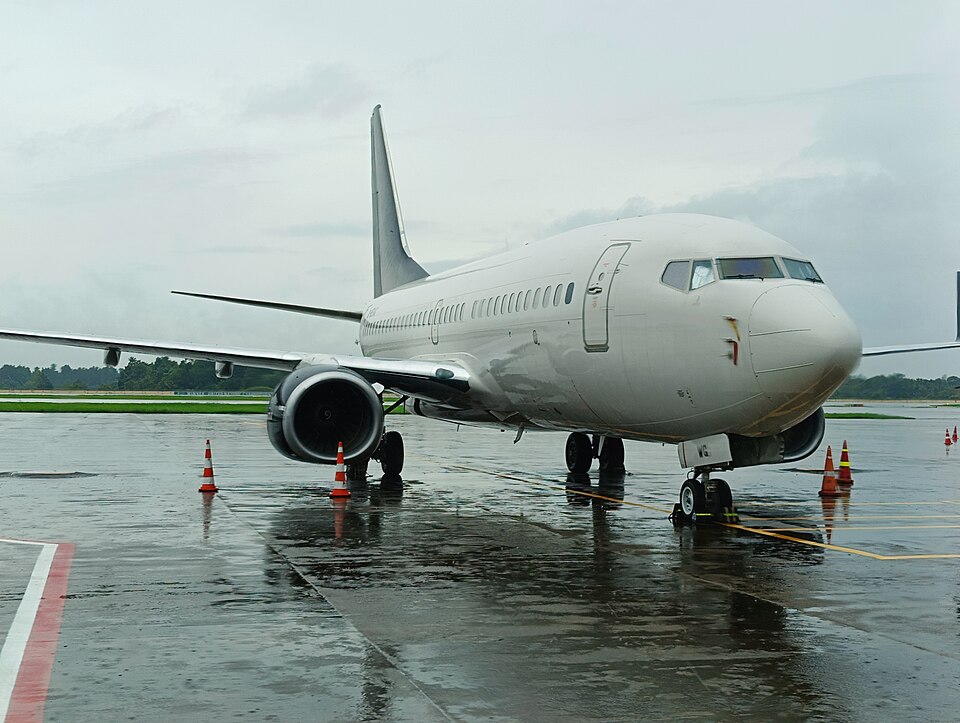
Passenger Partly Sucked From Boeing 737 Window On Greece-Germany Flight
A passenger was partially sucked out of a dislodged window on a Thessaloniki-to-Memmingen flight operated by Malta Air on Friday morning, July 10, 2026.[1]
Fellow passengers pulled the 61-year-old man back into the cabin; he sustained neck and shoulder injuries and friction burns and was treated in Thessaloniki.[1] The Boeing 737-800 returned to Thessaloniki after the cabin decompressed.[1]
The flight was operated by Malta Air on a Boeing 737-800 that had been in Ryanair service since 2008. Some social media posts suggested a piece of the engine detached and struck the cabin window, and other posts said passengers and the man's seatbelt held him for several minutes; authorities have not publicly confirmed a cause.
Greek authorities treated the injured passenger in Thessaloniki, and the U.S. National Transportation Safety Board was notified and will assist an investigation led by North Macedonia's accident committee.[1]
The mainstream summary does not mention that approximately 40-50 rapid decompression events occur annually on commercial aircraft, highlighting that such incidents, while alarming, are not uncommon and often manageable without serious injury. This context suggests that the incident involving the Boeing 737-800 may be part of a broader pattern in aviation safety rather than an isolated failure. Additionally, social media reports indicate that a piece of the engine may have detached and struck the cabin window, a claim that has not been confirmed by authorities but could provide crucial insight into the cause of the decompression. This contrasts with the mainstream account, which lacks specifics about the potential causes of the incident, thereby downplaying the complexity of the situation and the implications for aviation safety protocols.
Furthermore, while the mainstream summary notes the passenger's injuries, it does not elaborate on the critical role that fellow passengers played in preventing a more severe outcome. Reports indicate that the man's seatbelt and the efforts of nearby passengers held him in place for several minutes, which is a significant detail that underscores the human element in crisis situations. This aspect of the incident, along with the operational history of the aircraft since 2008, raises questions about the aircraft's maintenance and safety standards that the mainstream coverage fails to address adequately. These additional perspectives point to a need for a deeper examination of safety practices in the aviation industry, particularly regarding low-cost carriers like Ryanair, which operate under different pressures than traditional airlines.[2][3]
Show source details & analysis (1 source)
📊 Relevant Data
Approximately 40-50 rapid decompression events occur worldwide annually on commercial aircraft, though most are manageable with no injuries or notable structural damage.
Uncontrolled decompression — Wikipedia
The Boeing 737-800 involved in the incident had been operated by Ryanair since 2008.
Boeing 737 Makes Emergency Landing After Broken Window Injures Passenger — Wall Street Journal
📌 Key Facts
- On Friday morning, July 10, 2026, a passenger was partially sucked out of a dislodged window on a Thessaloniki-to-Memmingen flight operated by Ryanair subsidiary Malta Air.
- Fellow passengers pulled the 61-year-old man back into the cabin; he sustained neck and shoulder injuries and friction burns and was treated in Thessaloniki.
- The Boeing 737-800 returned to Thessaloniki after cabin decompression; the NTSB was notified and will assist an investigation led by North Macedonia’s accident committee.
📰 Source Timeline (1)
Follow how coverage of this story developed over time