
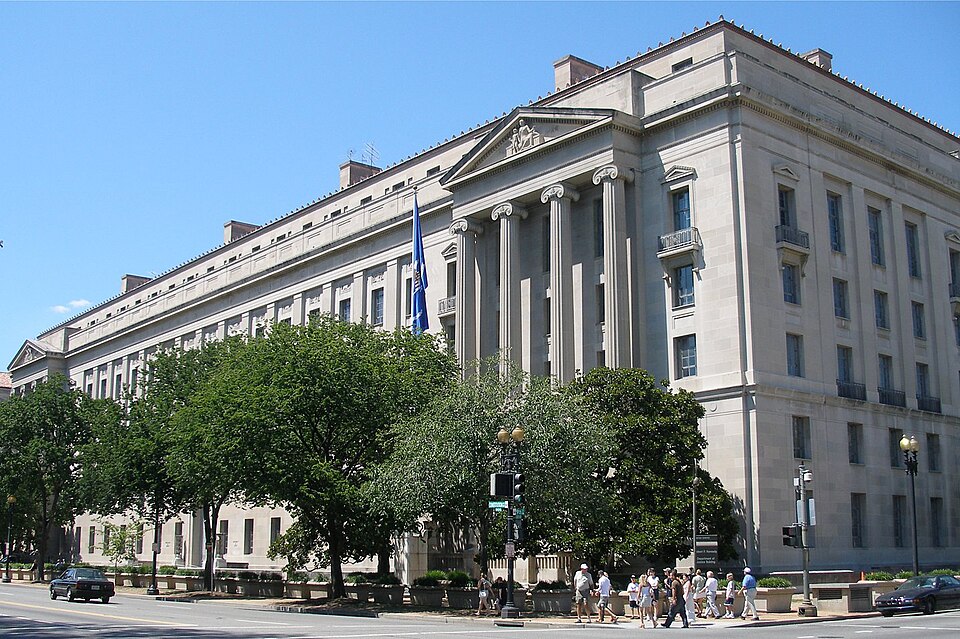
Blanche Meeting With Epstein Survivors Described As Token As He Cites Limits On His Authority
Acting Attorney General Todd Blanche met with Jeffrey Epstein survivors Thursday, July 16, 2026, at Justice Department headquarters in Washington.[1]
The roughly hourlong session drew sharp criticism from survivors who called it a "check-the-box" exercise and said Blanche interrupted and offered few commitments.[1] Attendees and reporters said Blanche repeatedly emphasized limits on his authority, saying "The FBI has the power to open investigations, not me" and that he needed "testimony and evidence" to open probes.[2]
Blanche had defended DOJ's handling of the Epstein-files release a day earlier and publicly acknowledged redaction mistakes that exposed survivors' personal information and images.[3] Sen. Thom Tillis demanded Blanche meet survivors within two weeks and said he would withhold a committee vote until that happened.[4] The meeting followed a June order from a federal judge requiring DOJ to explain withheld or redacted records and months of pressure after Congress ordered the department to publish about 3.5 million pages under the Epstein Transparency Act.
Earlier coverage highlighted the department's claims it had spoken with more than 30 representatives for dozens of victims and invited survivor attorneys to meet with the FBI.[3] Later reporting and survivor statements shifted the focus to anger over the redaction errors and to Blanche's repeated emphasis that he personally lacked the authority to open probes, which made the meeting feel like a token concession to attendees.[2]
The Justice Department described the session as "productive," saying FBI special agents and victim services personnel attended and that survivors spoke afterward about scheduling interviews.[1] Blanche told reporters he would pursue prosecutions if new evidence emerges but he would not assure survivors there is now evidence to charge people beyond Epstein and Ghislaine Maxwell.[5] Sen. Tillis's demand remains a live factor as Blanche seeks to advance his nomination through the Senate Judiciary Committee.[6]
The mainstream summary frames Todd Blanche's meeting with Epstein survivors as a necessary but limited engagement, emphasizing his claims of authority constraints. However, social media insights reveal a deeper frustration among survivors and advocates regarding the DOJ's ongoing failures to comply with transparency mandates, particularly the significant delay in releasing millions of pages of documents mandated by Congress. For instance, Representative Ro Khanna criticized the DOJ's lack of action, suggesting that the Epstein case highlights a systemic issue where powerful individuals evade accountability, a nuance that the mainstream account does not fully capture. Additionally, the pressure surrounding Blanche's Senate confirmation hearing adds another layer of urgency that was not addressed in the summary, indicating that political motivations may be influencing the DOJ's actions more than a genuine commitment to justice.
Moreover, while the summary mentions that Blanche expressed willingness to pursue prosecutions if new evidence arises, it fails to acknowledge the broader context of survivor advocacy that has pushed for accountability and transparency. Social media comments underscore that survivors have been waiting for over 200 days for the DOJ to fulfill its obligations, illustrating a significant disconnect between the department's assurances and the lived experiences of those affected by Epstein's crimes. This context is crucial for understanding the skepticism surrounding the meeting and the ongoing challenges faced by survivors in their pursuit of justice.
Show source details & analysis (10 sources)
📌 Key Facts
- On Wednesday, July 15, 2026, Acting Attorney General Todd Blanche defended the Justice Department's implementation of the Epstein Transparency Act and said DOJ was reviewing “millions and millions” of potentially responsive files (Epstein Transparency Act).
- Blanche publicly acknowledged on July 15, 2026 that "redaction mistakes" had exposed survivors' personal information and images in the Epstein-file releases, apologized, said he takes responsibility, and said dozens of DOJ lawyers were on call to correct errors quickly (redaction mistakes).
- Blanche told senators DOJ had spoken with more than 30 representatives for dozens of victims and invited survivors and their attorneys to meet with the FBI, and he urged accusers to bring any evidence to the FBI to help build potential cases (more than 30 representatives).
- Sen. Thom Tillis said on Thursday, July 16, 2026 that he will not vote to advance Blanche out of the Senate Judiciary Committee unless Blanche meets with Jeffrey Epstein survivors within the next two weeks, making the meeting a condition for committee approval (Sen. Thom Tillis).
- On Thursday, July 16, 2026, Blanche met for roughly an hour with Epstein accusers at Justice Department headquarters; DOJ called the session “productive,” with senior DOJ officials, FBI special agents and victim services representatives attending and survivors speaking to FBI agents afterward about scheduling interviews (Justice Department headquarters).
- Several survivors criticized the July 16 meeting as a "check-the-box" exercise: Dani Bensky and Annie Farmer said Blanche was interruptive, "abrasive, condescending, and intentionally noncommittal," and failed to present a credible plan to pursue accountability beyond Jeffrey Epstein and Ghislaine Maxwell (Dani Bensky).
- Attendees told MS NOW that Blanche repeatedly emphasized limits on his authority during the July 16 session—saying things like "The FBI has the power to open investigations, not me" and "I'm just the attorney general"—and he told survivors he needed "testimony and evidence" to open probes even though survivors say they have provided sworn statements for years (MS NOW).
- Blanche said DOJ will indict and prosecute additional individuals if new information emerges from victims or the document releases, while also acknowledging he cannot now assure survivors there is evidence to support prosecutions beyond Epstein and Maxwell (Blanche will indict and prosecute additional individuals).
📰 Source Timeline (10)
Follow how coverage of this story developed over time
- The DOJ meeting between acting Attorney General Todd Blanche and Epstein survivors took place late Thursday afternoon, July 16, 2026, at department headquarters and lasted roughly an hour (timing previously only generally described).
- According to one attendee and a representative for two others, Blanche told survivors, "I'm not asking you guys to commit to anything today, and I don't expect that I have to commit to anything, too."
- Those present say Blanche asserted that "The FBI has the power to open investigations, not me" and added, "I'm just the attorney general," indicating he personally could not open new probes.
- When Sky Roberts, brother of the late Virginia Giuffre, asked what was needed to open an investigation, Blanche replied, "I need testimony and evidence," despite being told survivors have provided sworn statements for decades.
- Roberts specifically pressed Blanche about investigating Andrew Mountbatten-Windsor, whom Giuffre accused of rape, and attendees say Blanche responded that he could not investigate the former prince (the article truncates before giving his full explanation).
- The article reports Blanche privately told Roberts he empathized with him over the loss of his sister, saying Blanche himself had lost a sister.
- MS NOW sought comment from the Justice Department and Blanche about these quoted remarks; DOJ did not immediately respond at the time of publication.
- On Thursday, July 16, 2026, Acting Attorney General Todd Blanche spent about an hour meeting Epstein accusers at Justice Department headquarters in Washington.
- Blanche told reporters after the meeting that he urged accusers to bring any information to the FBI to help build potential cases against additional figures tied to Epstein but said DOJ currently has no evidence that would support prosecutions beyond Jeffrey Epstein and Ghislaine Maxwell.
- Blanche characterized the session as 'not all cordial,' saying survivors want a form of justice he is not sure he can provide and acknowledging he cannot assure them there will be additional prosecutions.
- Epstein accuser Dani Bensky issued a statement calling the meeting a 'check-the-box exercise' aimed at securing confirmation votes, saying Blanche 'danced around his wording,' interrupted survivors, and offered no credible plan to pursue accountability beyond Epstein and Maxwell.
- Bensky told the Senate Judiciary Committee earlier on Thursday that survivors had repeatedly asked through multiple channels to meet with Blanche and that he had not responded before this week’s session.
- On Thursday, July 16, 2026, Acting Attorney General Todd Blanche met for about an hour with a group of Jeffrey Epstein accusers at Justice Department headquarters in Washington, D.C., following Sen. Thom Tillis’ request.
- A DOJ spokesperson described the meeting as “productive” and said senior DOJ officials, FBI special agents and victim services representatives attended, with accusers speaking to FBI agents afterward about scheduling interviews.
- Blanche told reporters he encouraged survivors to bring any evidence to the FBI, said he had answered questions and explained investigative needs, and acknowledged that victims want “some form of justice” he is not sure he can provide.
- Epstein accuser Annie Farmer issued a statement after the meeting saying Blanche was “abrasive, condescending, and intentionally noncommittal,” and that she feels even more confident urging senators to vote against his confirmation.
- Survivor Dani Bensky, whose personal information was exposed in prior DOJ document releases, said Blanche treated the session as a “check-the-box” exercise to secure votes, repeatedly interrupted survivors, and failed to lay out a credible plan to pursue accountability beyond Epstein and Ghislaine Maxwell.
- Blanche reiterated publicly that DOJ will investigate and prosecute anyone, in the Epstein matter or otherwise, if victims or their representatives provide evidence of crimes, and said officials have previously spoken with more than 30 survivor representatives.
- On Thursday, July 16, 2026, Sen. Thom Tillis publicly stated he would not confirm Todd Blanche as attorney general until Blanche meets with Jeffrey Epstein survivors.
- The CBS clip frames Tillis's stance as a direct condition on his confirmation vote, not just a general concern about DOJ's handling of Epstein files.
- On Thursday, July 16, 2026, during the second day of Todd Blanche's Senate Judiciary confirmation hearing, Sen. Thom Tillis said he will not vote to advance Blanche's attorney general nomination out of committee unless Blanche meets with Jeffrey Epstein survivors beforehand.
- Tillis stated he has a "positive predisposition" toward Blanche but called a meeting with survivors "a very important part of getting to yes," and tied his eventual committee vote explicitly to that condition.
- Dani Bensky, an Epstein survivor whose name and personal information were mistakenly exposed in DOJ's Epstein-file releases, testified before the committee that she and other survivors had previously reached out to former Attorney General Pam Bondi and Blanche but received no meeting or response.
- Blanche reiterated under questioning that "mistakes were made" in the Epstein-file redactions, apologized to survivors, and said he is "prohibited from meeting directly with them" and must go through their lawyers, while insisting he has never refused to meet survivors.
- The article notes that with the Judiciary Committee now split 11 Republicans and 10 Democrats after Sen. Lindsey Graham's July 11 death, Blanche needs the support of both Sen. Thom Tillis and Sen. John Cornyn to advance his nomination.
- The piece reiterates that senators questioned Blanche about the $1.8 billion "anti-weaponization" fund created in the Trump-IRS settlement and notes continuing bipartisan backlash over that agreement, though Blanche has said the fund "doesn't exist anymore."
- Article reports detailed back-and-forth between Sen. Thom Tillis and Todd Blanche at the July 16, 2026 Senate Judiciary hearing in which Tillis explicitly conditions his vote on Blanche meeting Epstein survivors within two weeks.
- It adds New York Times’ characterization of Tillis as a key GOP swing vote on the nomination and describes GOP concerns about both the redaction errors and broader DOJ compliance with the Epstein Files Transparency Act.
- The story provides additional color on how Blanche responded to Tillis’ demand, including his stated willingness to meet survivors and his defense of DOJ’s review process, beyond earlier summaries of his ‘redaction mistakes’ admission.
- On Thursday, July 16, 2026, Sen. Thom Tillis, R-N.C., said during the second day of Todd Blanche's Senate Judiciary confirmation hearings that he will not vote to advance Blanche unless Blanche meets with Jeffrey Epstein survivors within the next two weeks.
- Tillis stated he has a 'positive predisposition' toward Blanche but tied his committee vote explicitly to Blanche holding a meeting with survivors, saying this was 'a very important part of getting to yes.'
- Epstein survivor Dani Bensky testified to the committee on July 16 that the Justice Department has 'ignored survivors for months' and that neither Blanche nor DOJ staff had contacted them in the 24 hours since Blanche's prior-day testimony, despite his suggestion that staff could meet them.
- Tillis said he expects the survivors' meeting to occur before he is 'willing to vote out of this committee,' effectively making such a meeting a condition for clearing Blanche from the Judiciary Committee.
- On Wednesday, July 15, 2026, Acting Attorney General Todd Blanche publicly acknowledged 'redaction errors' or 'redaction mistakes' in the Epstein files during his Senate confirmation hearing.
- Blanche's acknowledgement of mistakes came under what CBS characterized as intense questioning by senators at the hearing.
- CBS framed the admission as a focal point of the confirmation hearing coverage, emphasizing Blanche personally took responsibility for the redaction errors.
- On Wednesday, July 15, 2026, during his Senate Judiciary Committee confirmation hearing, Acting Attorney General Todd Blanche defended DOJ's implementation of the Epstein Transparency Act and its review of "millions and millions" of potentially responsive files.
- Blanche acknowledged that DOJ made redaction mistakes in the Epstein records releases, including documents that exposed personal information and images of survivors, and said he takes responsibility while noting that dozens of lawyers were on call to correct errors quickly.
- Blanche told senators that, contrary to criticism that he has refused to meet Epstein survivors, DOJ has spoken with more than 30 representatives for dozens of victims and invited survivors and their attorneys to meet with the FBI.
- Blanche stated that DOJ will indict and prosecute additional individuals if new information emerges from victims or the document releases, a departure from a July 2025 unsigned FBI/DOJ memo issued while he was deputy AG that said investigators had found no basis to pursue uncharged people.
- Blanche asserted that the Trump administration "has been more transparent than any past administration" regarding Epstein-related materials.