
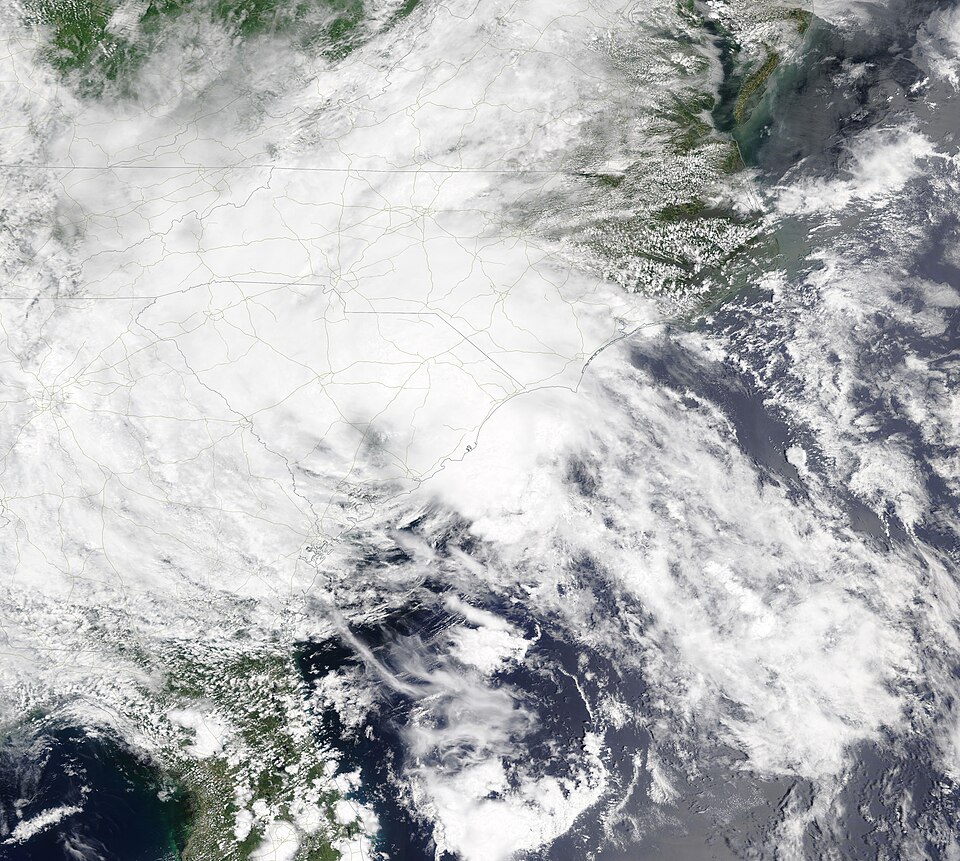
Forecasters See Very Strong El Nino Driving Below-Average 2026 Atlantic Hurricane Season
Forecasters say a very strong El Nino is likely to suppress Atlantic hurricane activity in 2026, prompting seasonal outlooks that now call for a below-average hurricane season.[1]
NOAA told forecasters in its July monthly update that the 2026-27 El Nino has an 81% chance of reaching "very strong" strength by fall.[1] Ocean temperatures in key equatorial Pacific regions are already at or near record highs for this time of year, and the event — which formed only last month — has intensified from weak to moderate.[1] Colorado State University revised its July 8 seasonal outlook and now expects Atlantic activity to be "well below normal" because of increased confidence in a strong or very strong El Nino.[1] The first major seasonal forecast published just before NOAA's update similarly moved to a quieter outlook for 2026.[2]
On June 11, NOAA announced that El Nino had formed in the equatorial Pacific. Sea surface temperatures rose rapidly after that announcement, supporting an expectation of further strengthening. The Climate Prediction Center upgraded its odds on July 9, citing stronger atmospheric coupling and higher chances of a very strong event.[1]
Colorado State's July 8 revision explicitly linked its downgrade to the emerging El Nino signal, and NOAA's July 9 update reinforced that rationale by boosting the probability of a very strong event.[1]
Forecasters stress that a quieter-than-normal season does not eliminate risk, and local meteorologists urge communities to stay prepared for the possibility of significant landfalling storms. Since 1950, only three El Nino events have reached "very strong" status on the Oceanic Niño Index, in 1982-83, 1997-98 and 2015-16, highlighting how uncommon such powerful pulses are.
The mainstream summary frames the forecast for the 2026 Atlantic hurricane season as primarily influenced by a very strong El Niño, but it does not delve into the specific mechanisms at play. For instance, @philklotzbach points out that Colorado State University's downgrade to nine named storms is largely due to the anticipated increase in vertical wind shear across the Atlantic basin, a critical factor that could significantly affect storm formation. This nuance highlights a more complex interplay between El Niño conditions and hurricane activity than the summary suggests.
Additionally, the summary overlooks the historical context of El Niño events. While it mentions the rarity of very strong El Niño occurrences, it does not emphasize that, according to NOAA Senior Scientist Michael McPhaden, the frequency of extreme El Niño events is expected to increase due to anthropogenic climate change, potentially leading to stronger events more frequently in the future. This perspective adds urgency to the discussion about preparedness, as @SteveWAFB reminds us that past El Niño years have still brought significant impacts, particularly in vulnerable regions like Louisiana.
Show source details & analysis (2 sources)
📊 Relevant Data
Since 1950, only three El Niño events have reached 'very strong' status on the Oceanic Niño Index: 1982-83, 1997-98, and 2015-16.
El Niño and La Niña Years and Intensities — ggweather.com
📌 Key Facts
- In its latest monthly update issued Thursday, July 9, 2026, NOAA said the 2026–27 El Niño has an 81% chance of reaching “very strong” strength by fall (the highest category).
- Forecasters report that ocean temperatures) in key equatorial Pacific regions are already at or near record highs for this time of year, and the event — which formed only last month — has intensified from weak to moderate.
- Scientists quoted in the article say this El Niño is likely to rival, and possibly exceed, the strength of the 1997–1998 event, and they emphasize it is occurring on top of long‑term human‑caused ocean warming.
- Meteorologists say a very strong El Niño further raises the odds of a wetter winter across much of the southern United States and a warmer winter in the northern United States and Canada.
- Colorado State University said in its July 8, 2026 seasonal outlook revision that, “due to increased confidence in a strong or very strong El Niño,” it now expects Atlantic hurricane activity to be “well below normal.”
📰 Source Timeline (2)
Follow how coverage of this story developed over time
- In its latest monthly update issued Thursday, July 9, 2026, NOAA said the 2026-27 El Nino has an 81% chance of reaching 'very strong' strength by fall, its highest category.
- NOAA and affiliated scientists say ocean temperatures in key equatorial Pacific regions are already at or near record highs for this time of year, and the event formed only last month but has already intensified from weak to moderate.
- Scientists quoted in the article say this El Nino is likely to rival, and possibly exceed, the strength of the 1997-1998 event, and emphasize that it is occurring on top of long-term human-caused ocean warming.
- Meteorologists reiterate that a very strong El Nino further increases the odds of a wetter winter across much of the southern United States and a warmer winter in the northern United States and Canada.
- Colorado State University's July 8, 2026 seasonal outlook revision is explicitly tied 'due to increased confidence in a strong or very strong El Nino,' and CSU now expects Atlantic hurricane activity to be 'well below normal.'