
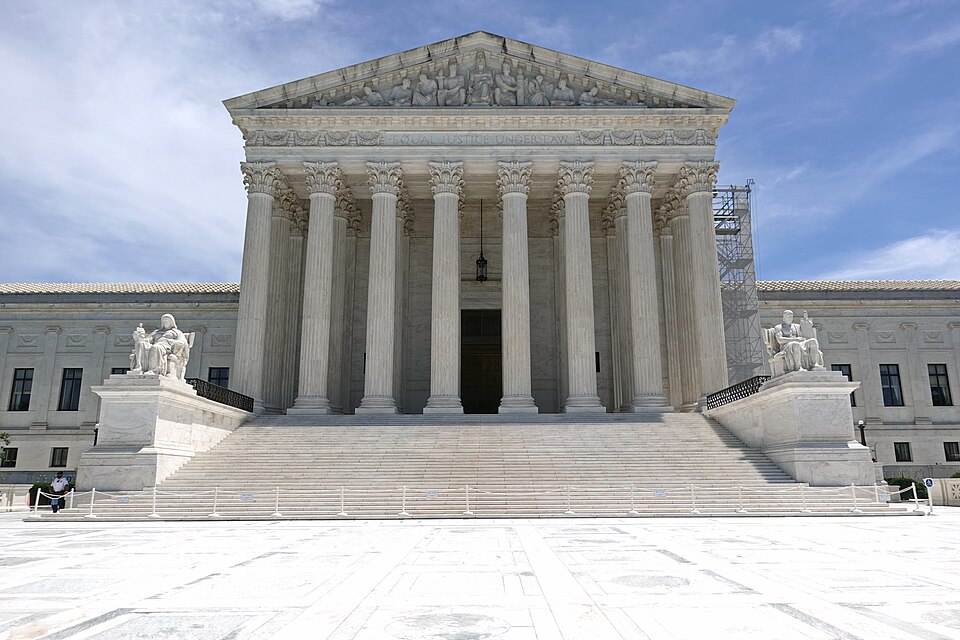
Supreme Court Allows Texas App Age-Verification And Parental-Consent Law To Be Enforced During Appeals
On Monday, July 6, 2026, the U.S. Supreme Court issued an unsigned, unexplained order allowing Texas to enforce its App Store Accountability Act while lower-court appeals proceed.[1]
The law requires app stores to verify every user's age and generally bars Texans under 18 from downloading most apps without parental consent, with narrow exceptions for emergency services and college-entrance-exam apps.[1] A federal district judge had blocked the law as unconstitutional, but a Fifth Circuit panel reinstated enforcement in June and the Supreme Court's order leaves that reinstatement in place while lower-court appeals continue.[1]
Texas enacted Senate Bill 2420, the App Store Accountability Act, during the 2025 legislative session; Governor Greg Abbott signed it on May 27, 2025, and it took effect January 1, 2026. Industry groups and a student organization sued in October 2025. U.S. District Judge Robert Pitman issued a preliminary injunction blocking the law on December 23, 2025, and the Fifth Circuit stayed that injunction in June 2026.
Reporters note the Texas measure aligns with similar laws recently adopted in Utah, Louisiana and Alabama.[1] Last year the Court treated children's access to pornography differently when it upheld age-verification requirements for pornographic sites, a precedent observers cite as relevant to the current litigation.[1] Social-media posts from court reporters said the order denied emergency requests from Texas teens and left the law enforceable while the legal fights continue.
The mainstream summary does not address the significant concerns raised by critics regarding the law's reliance on the concept of 'social media addiction.' Sally Satel argues that recognizing social media addiction as a legal basis for broad regulatory measures is premature and vague, potentially leading to arbitrary applications of the law. She emphasizes that there are more effective, non-coercive ways to protect minors, such as parental controls and education, rather than imposing sweeping restrictions based on an unsettled medical definition of addiction. This perspective contrasts with the mainstream framing that largely accepts the law's intent without questioning the underlying rationale for its enforcement.
Additionally, while the mainstream account notes the law's alignment with similar measures in other states, it does not highlight the broader context of rising youth mental health concerns that have prompted such legislation. A report by New America points to increasing societal and parental worries about the negative impacts of digital spaces on minors, which have fueled a wave of online safety initiatives, including age verification laws. This context adds depth to the discussion about the motivations behind the Texas law and its implications for youth online safety, which the mainstream summary overlooks.
Show source details & analysis (2 sources)
📊 Relevant Data
Texas is one of at least three states that have enacted app store-specific accountability laws requiring age verification for all users and parental consent for minors' downloads and in-app purchases; similar laws exist in Utah and Louisiana.
Texas is the 3rd State to Require App Store Age Verification — Various legal alerts and reporting
U.S. mobile in-app consumer spending is projected to exceed $52 billion by the end of 2026.
Mobile in-app U.S. consumer spend 2026 — Statista
The Texas law mandates age verification for every prospective app store user (not only minors) and assigns users to one of four age brackets: under 13, 13-15, 16-17, or adult.
Texas App Store Accountability Act Ushers in Sweeping Age Verification Mandates — O'Melveny
📌 Key Facts
- On Monday, July 6, 2026, the Supreme Court issued an unsigned, unexplained order allowing Texas to enforce its App Store Accountability Act while lower-court lawsuits proceed.
- The App Store Accountability Act requires app stores to verify users' ages and generally bars Texans under 18 from downloading most apps without parental consent, with narrow exceptions for emergency services and college-entrance-exam apps.
- A district court initially blocked the law as unconstitutional, a Fifth Circuit panel reinstated it in June 2026, and the Supreme Court’s decision to let that reinstatement stand means the law can be enforced while appeals continue.
- The Court’s unsigned order is not a ruling on the merits but has been viewed as a tentative signal favorable to the law while legal challenges proceed.
- Reporters place the Texas measure alongside similar laws in Utah, Louisiana and Alabama and note the Court has previously treated children's access to pornography differently, referencing last year’s age-verification ruling for pornographic sites.
📊 Analysis & Commentary (3)
"The author argues (critically) that lawmakers and courts should not treat 'social media addiction' as a legal justification for age‑verification or content restrictions — scientific uncertainty, vagueness, enforcement problems, and risks to free expression mean policy should favor targeted, evidence‑based, non‑coercive measures instead."
"The author argues that courts cannot be relied on as the primary means to defeat populists — recent actions like the Supreme Court letting Texas enforce its app‑store age rule illustrate how litigation is slow, procedural and politically contingent — so defenders of democratic norms should prioritize politics, organizing and institutional reform over litigation as the main strategy."
"The City Journal piece argues that states should be allowed (and even encouraged) to curb teenagers' unfettered access to apps — praising the Supreme Court’s decision to let Texas’s age‑verification/parental‑consent law be enforced during appeals — and contends that legal and technical objections are outweighed by the need to protect kids from harmful platform practices."
📰 Source Timeline (2)
Follow how coverage of this story developed over time
- On Monday, July 6, 2026, the Supreme Court issued an unsigned, unexplained order allowing Texas to enforce its App Store Accountability Act while lower-court lawsuits proceed.
- The article details that the law requires app stores to verify all users' ages and generally bars Texans under 18 from downloading most apps without parental consent, with only narrow exceptions such as emergency services and college-entrance exam apps.
- The piece explains that a district court initially blocked the law as unconstitutional, a Fifth Circuit panel reinstated it in June 2026, and the Supreme Court’s refusal to intervene leaves that reinstatement in place for now.
- The report situates the case alongside similar laws passed in Utah, Louisiana and Alabama and notes that the Court has previously treated children's access to pornography differently from other online content, referencing last year’s age-verification ruling for pornographic sites.
- The article underscores that Monday’s order is not a ruling on the merits but is viewed as a tentative signal favorable to the law while challenges continue.