
Major Wildfires Hit Portugal, Greece And Spain; Toxic Smoke Warning Issued
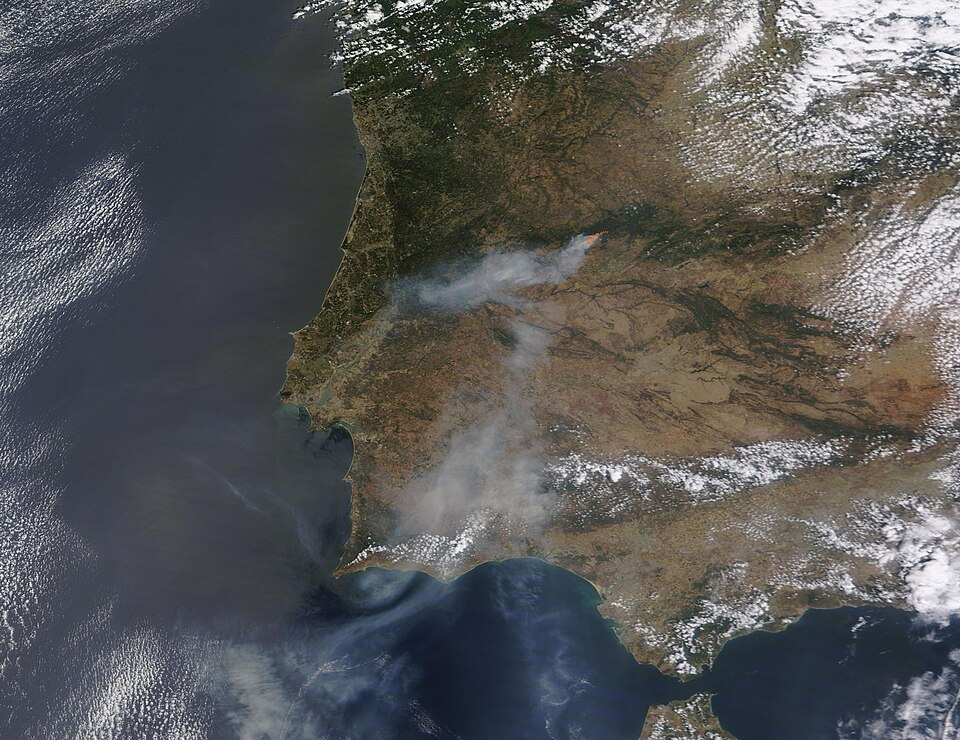
Simultaneous wildfires burned across Portugal, Greece and Spain on Sunday, July 5, 2026, triggering large firefighting deployments and a toxic-smoke advisory for parts of Thessaloniki.[1]
Portugal's Vouzela blaze, active since Thursday, has scorched roughly 12,000 hectares and involved about 1,200 firefighters, 400 vehicles and 15 aircraft, with additional crews and planes from Spain and Italy.[1] A Girona fire that began Friday has burned nearly 2,200 hectares, stretched a roughly 40-kilometer perimeter and was not expected to be fully controlled on Sunday.[1] Near Thessaloniki, a recycling plant engulfed by flames sent toxic smoke over parts of the city, and authorities urged residents to stay indoors and shut windows and doors.[1] Fire crews also fought a major pine-forest blaze near Mandra west of Athens using 155 firefighters, 16 planes and six helicopters, and a 76-year-old man was arrested on alleged negligent ignition near Thessaloniki.[1]
A severe heatwave that began in late May swept across southern Europe and peaked in June with record temperatures and widespread drought. By early July, soils and vegetation were much drier, leaving conditions primed for fast-moving fires. Portugal had formally sought firefighting support from EU partners, Spain and Morocco as officials warned the season could worsen.
European partners moved crews and aerial resources to the hotspots, and authorities cautioned residents in vulnerable areas to be ready for evacuations and poor air quality as containment efforts continued.[1]
The mainstream summary does not mention the alarming scale of wildfires across the EU this year, where as of early July 2026, fires larger than 30 hectares have burned approximately 118,737 hectares, significantly lower than the 208,037 hectares burned by the same time last year. This suggests a complex and evolving fire season rather than a straightforward escalation, as the summary implies. Additionally, the record-breaking heatwave in June 2026, which set multiple national temperature records and resulted in excess deaths in countries like France, is only briefly referenced in the context of the wildfires, missing the broader implications of climate change on fire frequency and intensity. The World Weather Attribution report indicates that anthropogenic climate change has made such extreme fire weather conditions in Spain and Portugal approximately 40 times more likely, a crucial detail that underscores the urgency of addressing climate impacts on wildfire risks.
Furthermore, the mainstream account does not address underlying socio-economic factors contributing to wildfire risks, such as rural depopulation and agricultural land abandonment, which have led to unmanaged forests and increased fuel loads. This perspective is vital for understanding the full scope of the wildfire crisis in Southern Europe, as it highlights the interplay between climate change and human activity in exacerbating fire conditions.[2][3]
Show source details & analysis (1 source)
📊 Relevant Data
As of early July 2026, fires larger than 30 hectares had burned approximately 118,737 hectares across the EU since the start of the year, compared with 208,037 hectares by the same date in 2025.
Current wildfire situation in Europe — Joint Research Centre
Europe experienced a record-breaking heatwave in June 2026 that set multiple all-time national and regional temperature records, including 41.7°C in parts of Germany and 40.5°C in Poland, with associated excess deaths reported in countries such as France.
Record-breaking heat spreads through Europe — World Meteorological Organization
📌 Key Facts
- On Sunday, July 5, 2026, simultaneous wildfires were burning in Portugal, Greece and Spain, drawing large domestic and EU firefighting responses.
- Portugal's Vouzela fire, active since Thursday, has burned roughly 12,000 hectares (30,000 acres) and involved over 1,200 firefighters, about 400 vehicles and 15 aircraft, with additional crews and planes from Spain and Italy.
- A Girona, Spain wildfire that began Friday has burned nearly 2,200 hectares (5,400 acres) with a 40-kilometer perimeter and was not expected to be fully controlled on Sunday.
- In Greece, toxic smoke from a recycling plant engulfed by a wildfire near Thessaloniki led authorities to urge residents in parts of the city to stay indoors and close windows and doors.
- Greek firefighters were also battling a new major wildfire Sunday in pine forest near Mandra west of Athens, using 155 firefighters, 16 planes and six helicopters, while a 76-year-old man was arrested over alleged negligent ignition near Thessaloniki.
📰 Source Timeline (1)
Follow how coverage of this story developed over time