
NASA Backs Private Space Tug Launch To Reboost Falling Swift Telescope
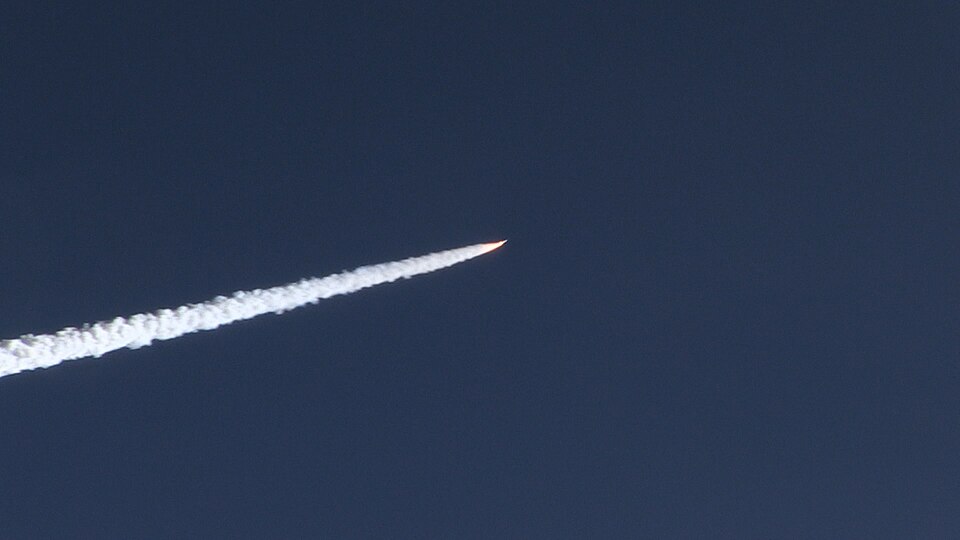
A Pegasus XL launched Katalyst Space's LINK tug from a Northrop Grumman L-1011 over the Marshall Islands at 4:36 a.m. ET July 3, 2026, to boost the falling Neil Gehrels Swift Observatory.[1]
NASA awarded Katalyst a $30 million contract, including the launch, to design and build LINK in eight months to rescue the $250 million Swift Observatory.[1] LINK will attempt to dock with Swift using three robotic arms and raise its orbit to about 370 miles during a 10- to 12-week reboost campaign.[1] NASA astrophysics officials say Swift will reenter and burn up by the end of 2026 if its orbit is not raised.[1]
In late 2024 and early 2025 increased solar activity expanded Earth's upper atmosphere and sped atmospheric drag on Swift, which has no onboard propulsion and has been in gradual orbital decay since its 2004 launch. By early 2025 models projected a high risk of reentry by the end of 2026, and NASA sought a commercial servicing option that led to the September 2025 contract with Katalyst.
In February 2026 Swift operators suspended two instruments and adjusted the satellite's attitude to minimize drag while engineers prepared the servicer. Observers on social media noted Katalyst built and launched LINK in under a year and called the mission a key test of commercial satellite life-extension.
The mainstream summary does not mention that the Swift Observatory, originally designed for a two-year mission, has remarkably operated for over 21 years, showcasing its longevity and the significance of its ongoing contributions to gamma-ray burst detection, which averages around 100 events per year. This extended operational timeline underscores the importance of the LINK mission as not just a rescue operation but also a pivotal moment in the evolution of satellite servicing technologies, especially given the rising challenges posed by increased solar activity that has accelerated Swift's orbital decay. Furthermore, while the summary highlights NASA's $30 million contract with Katalyst, it downplays the broader implications of this mission as a key test for future commercial satellite life-extension efforts, which are increasingly viewed as essential in light of the growing population of aging satellites and advances in autonomous servicing technologies. This context is crucial for understanding the strategic shift toward public-private partnerships in space exploration, which has been driven by the need for cost-effective solutions amid stagnating budgets and heightened global competition in space capabilities.[2]
Show source details & analysis (1 source)
📊 Relevant Data
Swift detects approximately 100 gamma-ray bursts per year and had detected its 1,000th GRB by October 2015.
Neil Gehrels Swift Observatory — Wikipedia
Swift was designed for a two-year mission but launched in November 2004 and has operated for more than 21 years.
Neil Gehrels Swift Observatory — Wikipedia
Swift's current altitude is approximately 232-235 miles (373-378 km), with decay accelerated by increased solar activity during the current solar maximum.
Neil Gehrels Swift Observatory — Wikipedia
📌 Key Facts
- On July 3, 2026, a Pegasus XL rocket launched Katalyst Space's LINK tug from a Northrop Grumman L-1011 over the Marshall Islands at 4:36 a.m. ET.
- NASA awarded Katalyst Space a $30 million contract, including launch, to design and build LINK in eight months to rescue the $250 million Neil Gehrels Swift Observatory.
- LINK will attempt to dock with Swift using three robotic arms and raise its orbit to about 370 miles over a 10- to 12-week reboost campaign.
- NASA astrophysics officials say Swift will reenter and burn up by the end of 2026 if its orbit is not raised.
📰 Source Timeline (1)
Follow how coverage of this story developed over time