
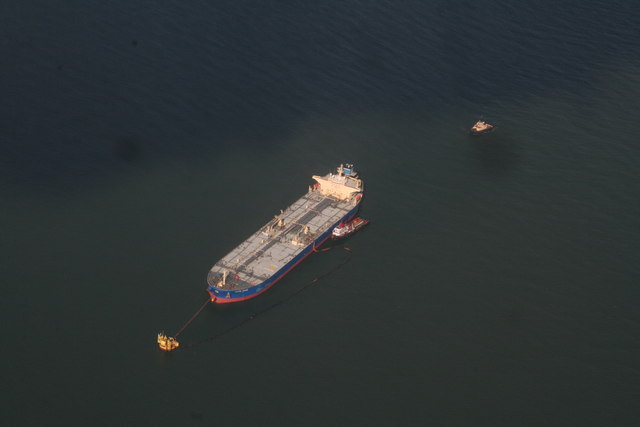
DOJ And FTC Warn Oil Firms Against Price-Fixing Amid Market Volatility
On Friday, July 3, 2026, the Justice Department and the Federal Trade Commission warned state attorneys general that antitrust and consumer protection laws still bar collusion on crude and retail fuel prices.[1] The agencies sent a joint letter saying oil price volatility does not suspend those laws and urging states to monitor local market conduct.[1]
In late February 2026, military conflict involving Iran escalated and halted most shipping through the Strait of Hormuz, removing roughly 20% of global oil supply and pushing Brent crude above $100 per barrel. Prices then swung sharply lower in June after a U.S.-Iran ceasefire. Retail gasoline prices fell more slowly, prompting President Trump on June 24 to accuse oil companies of gouging and to order the Justice Department to investigate. Brent crude averaged $105 per barrel in June and July 2026, while global oil inventories drew down about 6.3 million barrels per day in Q2 2026.
The agencies also told states to consider enforcement under state price-gouging laws because DOJ and the FTC lack direct authority to prosecute those cases.[1] Thirty-nine states, plus several U.S. territories and the District of Columbia, have statutes or rules that define and prohibit price gouging during declared emergencies, giving state attorneys general legal avenues to pursue complaints.
The mainstream summary does not mention the underlying geopolitical factors that contributed to the oil price volatility, particularly the military conflict involving Iran and the subsequent disruption of shipping through the Strait of Hormuz. According to an analysis by Peter Niculescu and Leslie Rahl, the surge in oil prices, with WTI rising from around $70 to nearly $100 per barrel, was primarily driven by these supply disruptions, while demand pressures played a secondary role. This context is crucial for understanding the broader market dynamics that prompted the DOJ and FTC's warnings against price-fixing.
Additionally, while the summary notes that the DOJ and FTC lack direct authority to prosecute price gouging, it does not elaborate on the historical context of regulatory scrutiny during crisis periods. Niculescu and Rahl highlight that such market disruptions often attract increased scrutiny from regulatory agencies, which investigate potential manipulative practices by traders or firms. This aspect underscores the heightened vigilance of regulators in response to market instability, a nuance absent from the mainstream coverage.
Show source details & analysis (1 source)
📊 Relevant Data
Brent crude oil spot prices averaged $105 per barrel in June and July 2026, following a surge driven by the closure of the Strait of Hormuz and resulting global inventory drawdowns of 6.3 million barrels per day in Q2 2026.
Short-Term Energy Outlook: Global oil markets — U.S. Energy Information Administration
Thirty-nine states, Guam, Puerto Rico, the Northern Mariana Islands, the U.S. Virgin Islands, and the District of Columbia have statutes or regulations defining and prohibiting price gouging during declared emergencies or disasters.
Price Gouging State Statutes — National Conference of State Legislatures
📌 Key Facts
- On Friday, July 3, 2026, DOJ and FTC sent a joint letter to state attorneys general about oil market conduct
- The agencies said crude price volatility does not suspend antitrust or consumer protection laws or allow collusion on retail prices
- Federal officials urged states to review possible enforcement under state price-gouging laws, which DOJ and FTC cannot directly enforce
📰 Source Timeline (1)
Follow how coverage of this story developed over time