
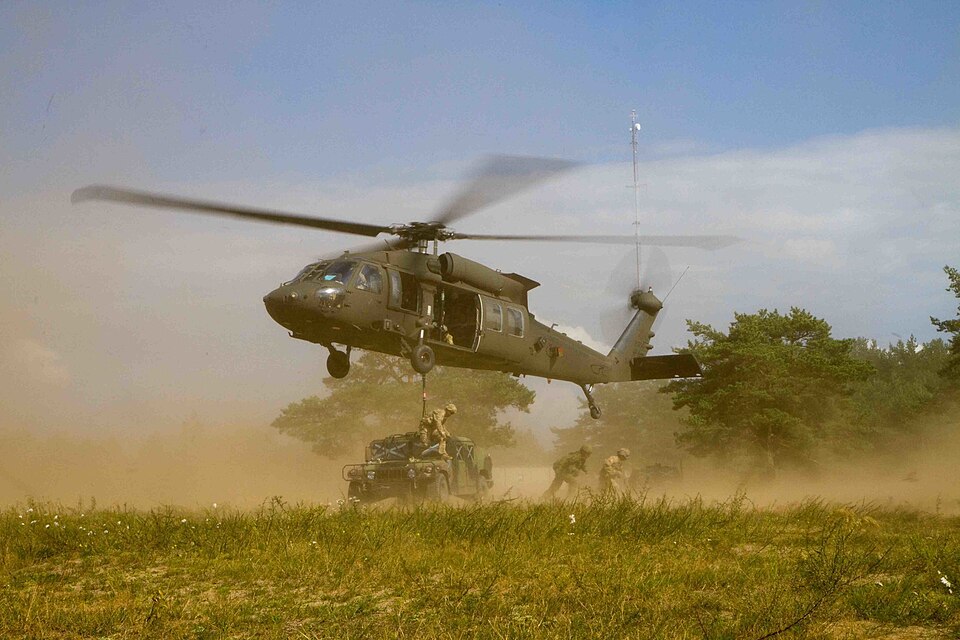
NATO Commander Says Europe Has Filled Most Gaps From U.S. Force Cuts
NATO's top commander said on Friday, July 3, 2026, that European allies have largely filled most capability gaps created by recent U.S. cuts to the alliance's force pool, easing immediate readiness concerns.[1]
Gen. Alex Grynkewich told reporters the gaps were filled in a matter of weeks.[1] He said where Europe still lacks like-for-like platforms, NATO commanders are identifying alternate assets that can produce matching operational effects.[1] Grynkewich said the issue will be a central topic at NATO's July 7-8 summit in Ankara, Turkey.[1]
On June 3, 2026, U.S. European Command formally told allies it would no longer routinely provide an aircraft carrier strike group, support ships, aerial refueling tankers and dozens of fighters under the NATO Force Model.[1] That shift followed the Pentagon's January 2026 National Defense Strategy, which directed U.S. forces to prioritize deterrence in the Indo-Pacific and asked European partners to assume primary responsibility for conventional defense of Europe.
Allies and Canada have been boosting defense budgets; combined real-term defense spending rose nearly 20 percent in 2025 versus 2024, adding more than $90 billion in constant 2021 prices. NATO commanders and U.S. officials say Article 5 remains in force, but allies will need to sustain higher readiness and assets for the long term to match the operational commitments now expected of them.
The mainstream summary does not mention that European allies and Canada increased their combined defense expenditure by nearly 20 percent in real terms in 2025 compared to 2024, which adds significant context to their ability to fill gaps left by U.S. cuts. This increase, amounting to over $90 billion in constant 2021 prices, underscores a broader commitment to defense that is not fully captured in the initial report. Furthermore, while the summary states that NATO commanders are identifying alternate assets, it overlooks the framing by Gen. Grynkewich that these U.S. cuts aim to end an 'unhealthy co-dependence' on American forces, suggesting a strategic shift in NATO's operational philosophy that may have long-term implications for alliance dynamics.
Additionally, social media insights indicate that there is a growing recognition among U.S. officials that Europe must contribute more significantly to its own defense, particularly in light of the strategic pivot towards the Indo-Pacific. This perspective is crucial as it highlights the expectation for European nations to sustain a larger military burden in the future, a nuance that the mainstream summary does not address. Such discussions are set to be central at the upcoming NATO summit in Ankara, where the implications of these shifts will likely be further explored.
Show source details & analysis (1 source)
📊 Relevant Data
European Allies and Canada increased their combined defence expenditure by nearly 20 percent in real terms in 2025 compared to 2024, adding over USD 90 billion in constant 2021 prices.
📌 Key Facts
- On June 3, 2026, the U.S. told allies it would no longer routinely supply an aircraft carrier, support ships, tankers and dozens of fighters under the NATO Force Model.
- On July 3, 2026, Gen. Alex Grynkewich said European allies have "largely filled" those gaps in a matter of weeks.
- For remaining shortfalls where Europe lacks like capabilities, NATO commanders are identifying alternate assets that can provide matching operational effects.
- The force-planning issue will be a key topic at the July 7-8 NATO summit in Turkey.
📰 Source Timeline (1)
Follow how coverage of this story developed over time