
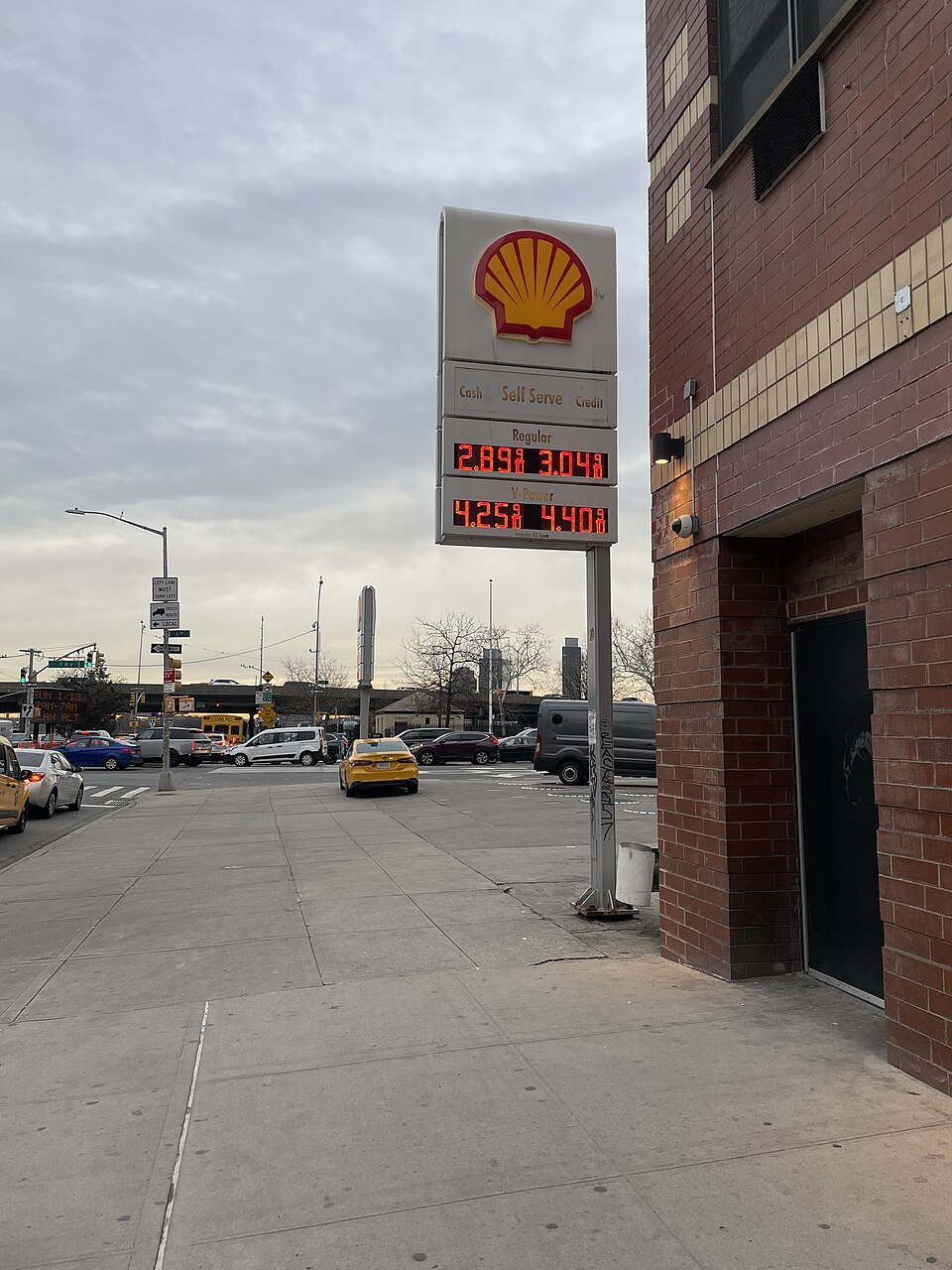
U.S. Consumer Confidence Inches Up In June As Gas Prices Fall
On Tuesday, June 30, 2026, the Conference Board said its consumer confidence index rose 0.6 point to 91.2 in June, a modest gain tied to falling gasoline prices.[1]
The index remains below its June 2025 reading of 95.2 and far under pre-pandemic levels that regularly exceeded 120.[1] The share of consumers saying jobs are "hard to get" rose to 22.5% in June from 19.8% in May.[1] Economists expect the June jobs report to show roughly 100,000 new jobs and a 4.3% unemployment rate.[1]
On Feb. 28, 2026, U.S. and Israeli forces launched Operation Epic Fury, a series of nearly 900 strikes on Iranian military sites and infrastructure. Iran responded by disrupting shipping through the Strait of Hormuz, which drove global crude prices sharply higher and pushed U.S. gasoline above $4.50 a gallon. A preliminary ceasefire and eased supply strains by mid-June helped bring pump prices down to about $3.85 a gallon, easing one key burden on household budgets.
Despite the modest uptick, analysts say the reading masks a split: consumers report worse present conditions on jobs and finances but feel somewhat more hopeful about the months ahead. Gasoline spending accounted for about 3.1% of average U.S. household income in March 2026 and 4.2% for median lower-income households, so further price drops could more strongly lift sentiment if they hold.
The mainstream summary highlights a modest rise in consumer confidence but overlooks the deeper implications of this uptick. While the summary notes the index's increase to 91.2, it fails to mention that this figure has remained below the 1985 benchmark of 100 for 16 consecutive months, as pointed out by @SteveRattner. Furthermore, the summary does not address the split in consumer sentiment, where individuals feel increasingly pessimistic about current job and financial conditions, even as they express some optimism about the future due to falling gas prices. This nuanced perspective is captured by @PrometeusCT, emphasizing that the overall confidence reading masks significant underlying concerns.
Additionally, while the summary focuses on the impact of falling gasoline prices, it does not discuss how these prices accounted for a substantial portion of household income, particularly for lower-income families, which could amplify the effects of any further price drops on consumer sentiment. According to data from the Bank of America Institute, gasoline spending represented 4.2% of median lower-income households' income in March 2026, a detail that underscores the economic pressures many face despite the slight boost in confidence. This context is essential for understanding the broader implications of consumer confidence trends amid ongoing economic challenges.
Show source details & analysis (1 source)
📊 Relevant Data
Gasoline spending accounted for about 3.1% of average U.S. household income and 4.2% for median lower-income households in March 2026.
Do consumers have wiggle room to absorb higher gas prices? — Bank of America Institute
Total U.S. consumer spending on energy represented 3.66% of personal expenditures in 2025.
2026 Factbook: Top Six Trends — Business Council for Sustainable Energy
📌 Key Facts
- On Tuesday, June 30, 2026, the Conference Board reported its consumer confidence index rose 0.6 point to 91.2 in June.
- The index remains below its June 2025 reading of 95.2 and well under pre-pandemic levels that regularly exceeded 120.
- The share of consumers saying jobs are 'hard to get' increased to 22.5% in June from 19.8% in May.
- Average U.S. gasoline prices have fallen from above $4.50 after the Feb. 28 Iran conflict began to $3.85 per gallon, according to AAA.
- Economists expect the June jobs report to show roughly 100,000 new jobs and a 4.3% unemployment rate.
📰 Source Timeline (1)
Follow how coverage of this story developed over time