
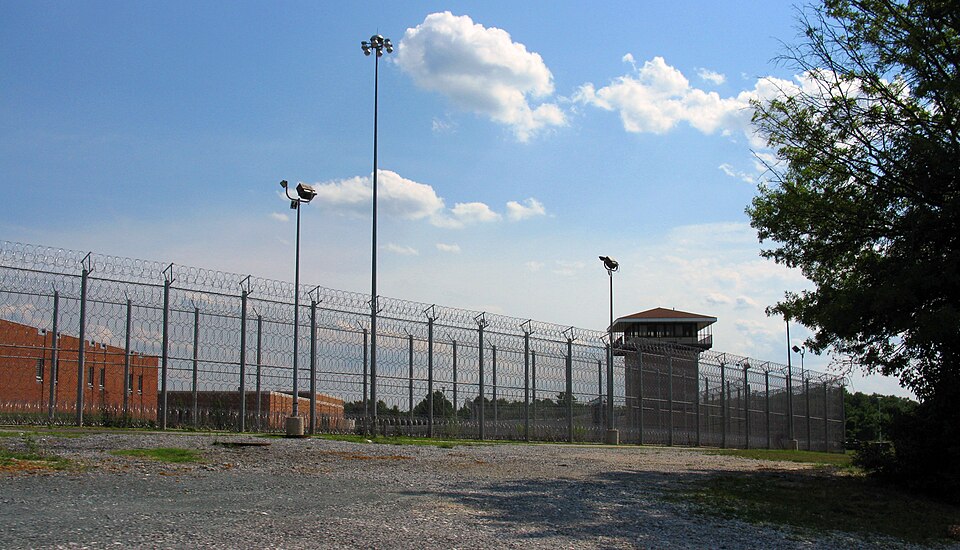
Report, Video Detail St. Louis County Jail Riot Over Access Limits
Thirty-four inmates at the St. Louis County Justice Center refused to return to their cells and briefly took control of a housing unit on Feb. 7, 2026.[1]
Surveillance video shows inmates barricading the door with furniture and using a basketball to knock down a mounted security camera, causing more than $30,800 in damage.[1] Authorities used chemical agents to end the disturbance, and Captain Tim Ware said understaffing that forced limits on inmate movement fueled the unrest.[1] The county later approved $3 million in emergency medical funding and is seeking to fill about 80 correctional officer vacancies; four inmates were referred as main actors for possible criminal charges.[1]
Officer employment at the county jail fell 32% between 2021 and 2024 while the incarcerated population climbed 40%. By fall 2025 the facility had roughly 22 to 27 percent of positions vacant and more than 100 inmates over its rated capacity, forcing tighter movement schedules and reduced phone and Wi-Fi access.
The jail released surveillance footage under Missouri's Sunshine Law, and social posts described the episode as a localized housing-unit disturbance rather than a full-scale revolt.[1] The Justice Center's rated capacity is 1,232, but it housed 1,266 inmates as of April 2026.
The mainstream summary frames the incident primarily as a localized disturbance driven by frustrations over limited access to amenities, but it downplays the broader context of severe understaffing and overcrowding that has plagued the St. Louis County Justice Center. While the summary mentions a 32% decrease in officer employment from 2021 to 2024, it does not highlight that the jail's population surged by 40% in the same period, which significantly exacerbated tensions among inmates. As of September 2025, the facility was operating with 74 fewer officers than needed, compounding the issues of overcrowding and limited inmate movement that contributed to the riot. This structural context is crucial for understanding the underlying causes of the unrest, as noted by The Marshall Project, which emphasizes the self-reinforcing cycle of staffing shortages leading to increased violence and disturbances in correctional facilities.
Moreover, while the mainstream account describes the incident as a riot, social media perspectives clarify that it was perceived more as a tantrum over access issues, suggesting a more nuanced view of the inmates' motivations. This distinction is important as it reflects the inmates' frustrations with their conditions rather than a coordinated revolt, a framing that the mainstream summary does not adequately address. The narrative surrounding the incident is thus more complex, revealing a combination of systemic failures and immediate grievances that the mainstream coverage overlooks.
Show source details & analysis (1 source)
📊 Relevant Data
The St. Louis County Justice Center has a rated capacity of 1,232 but has operated above capacity, housing 1,266 inmates as of April 2026.
Capacity reached at St. Louis County Justice Center — First Alert 4
Officer employment at the St. Louis County jail decreased by 32% between 2021 and 2024 while the incarcerated population climbed by 40%.
St. Louis County jail remains overcrowded, understaffed — Spectrum Local News
As of a September audit, the jail population reached 1,340 (more than 100 above rated capacity) with full-time staff at 269, down from an average of 362 the prior year, leaving the facility short 74 officers.
The St. Louis Jails Are Running Out of Officers — The Marshall Project
📌 Key Facts
- On February 7, 2026, 34 inmates at the St. Louis County Justice Center refused to return to their cells and briefly took control of a housing unit.
- Surveillance video shows inmates barricading the door with furniture and using a basketball to knock down a mounted security camera, causing more than $30,800 in damage.
- Captain Tim Ware said understaffing that forced limits on inmate movement fueled the unrest, and the county later approved $3 million in emergency medical funding and is seeking to fill about 80 correctional officer vacancies.
- Authorities used chemical agents to end the disturbance and have referred four inmates identified as main actors for possible criminal charges.
📰 Source Timeline (1)
Follow how coverage of this story developed over time