
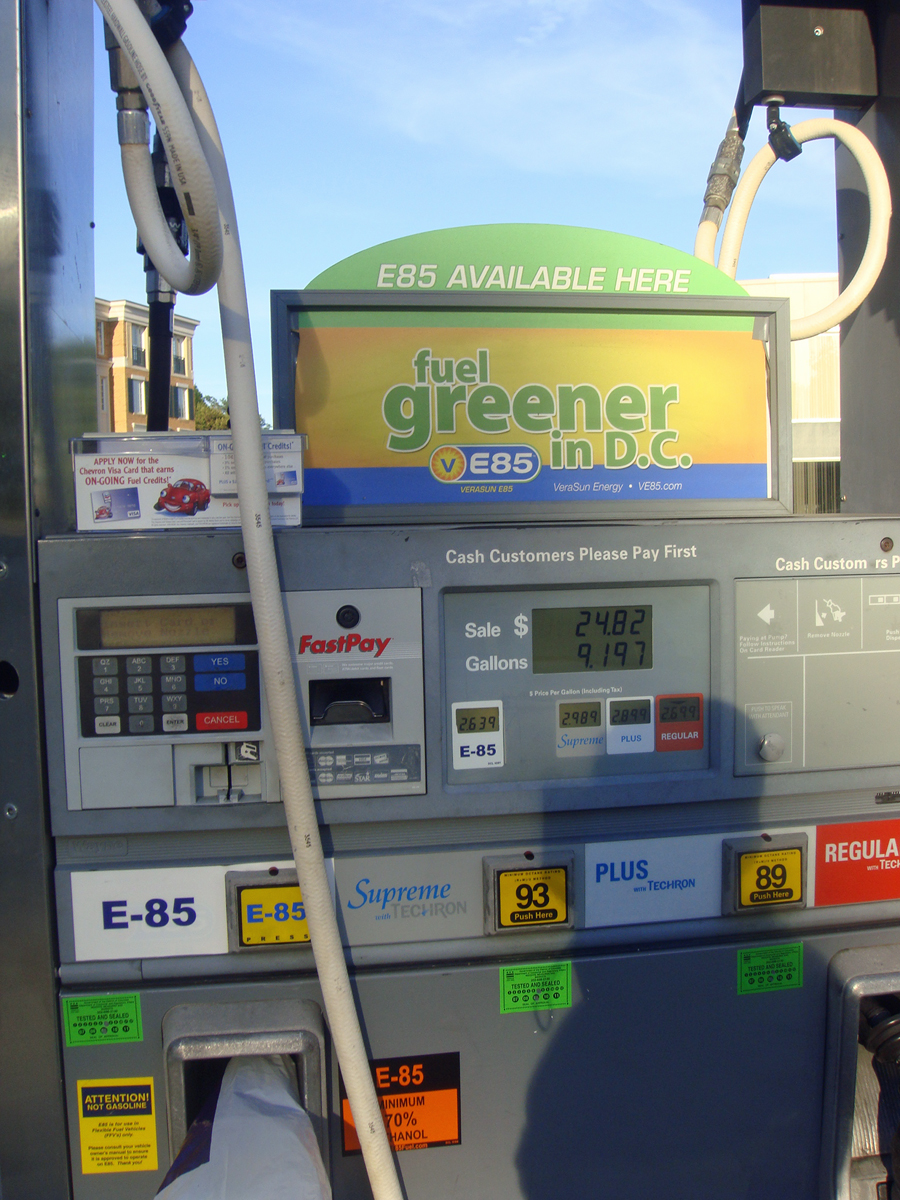
Trump To Seek Year-Round E15 Gasoline Sales In Supplemental Request
On Wednesday, June 24, 2026, a U.S. official said the Trump administration will ask Congress to make E15 gasoline available year-round as part of a supplemental funding package.[1]
The White House will include the request in a supplemental funding bill it is submitting to lawmakers.[1] The administration says the move is meant to blunt higher pump prices tied to the war with Iran by expanding ethanol supply.[1] The White House says broad use of E15 could save more than $20 billion a year in fuel costs, and the blend typically sells about 25 cents per gallon cheaper than regular gasoline.[1] Under current EPA rules, E15 is restricted in hot weather because its higher ethanol content increases evaporation and smog risk.
On March 25, 2026, the Environmental Protection Agency issued an emergency nationwide waiver allowing E15 sales through the summer driving season after the Middle East situation tightened oil flows. The administration launched strikes on Iran in late February 2026, a step that effectively closed the Strait of Hormuz and pushed global oil prices sharply higher. On March 2, 2026, the Renewable Fuels Association urged Congress to pass legislation allowing nationwide year-round E15 sales as a way to offset rising pump prices.
E15 is sold at just over 3,000 retail stations in 31 states, a current figure from Department of Energy tracking. EPA-approved E15 is compatible with model year 2001 and newer light-duty vehicles, representing nine of ten cars, trucks, and SUVs on U.S. roads. Supporters in the ethanol industry and some lawmakers say permanent access would boost domestic fuel supply and corn demand, while critics warn higher ethanol blends can damage engines and reduce fuel efficiency, and congressional action remains uncertain.
The mainstream summary overlooks the fact that Congress has already passed a bill for year-round E15 sales, which some analysts argue will have limited impact on alleviating pump prices. This suggests that the administration's push for permanent access may be more about political optics than substantive relief for consumers. Additionally, while the mainstream account emphasizes the potential savings from E15, it does not address the concerns raised by critics regarding the compatibility of higher ethanol blends with certain vehicles, which could lead to engine damage and decreased fuel efficiency for those not rated for E15. This critical perspective is echoed by users on social media who warn about the risks associated with the blend, highlighting a significant gap in the mainstream narrative that frames E15 primarily as a cost-saving measure without acknowledging the potential drawbacks.
Moreover, the mainstream summary does not mention the EPA's recent research indicating no significant impact on evaporative emissions from extending the 1-psi RVP waiver to E15, a finding that could bolster the administration's argument for year-round sales. This data point adds depth to the discussion around environmental concerns, which the summary simplifies by framing the issue as primarily about economic relief. The interplay between economic and environmental factors in this debate is crucial and warrants more attention than the mainstream coverage provides.
Show source details & analysis (1 source)
📊 Relevant Data
E15 is currently available at just over 3,000 retail stations in 31 states.
E15 — Alternative Fuels Data Center, U.S. Department of Energy
EPA-approved E15 is compatible with model year 2001 and newer light-duty vehicles, representing 9 out of 10 cars, trucks, and SUVs on U.S. roads and 97% of unleaded fuel market volume.
E15 — Alternative Fuels Data Center, U.S. Department of Energy
EPA research found no significant impact on evaporative emissions when extending the 1-psi RVP waiver to E15.
EPA Issues Emergency Fuel Waiver for E15 Sales — U.S. Environmental Protection Agency
📌 Key Facts
- On Wednesday, June 24, 2026, a U.S. official said the Trump administration will ask Congress to make E15 gasoline available year-round.
- The request will be included in a supplemental funding package the White House is submitting to lawmakers.
- Under current EPA rules, E15 is restricted in hot weather because its higher ethanol content increases evaporation and smog risk.
- The administration frames year-round E15 as a response to higher gas prices driven by the war with Iran.
- E15 is typically about 25 cents per gallon cheaper than regular gas, and the White House says broad use could save over $20 billion a year in fuel costs.
📰 Source Timeline (1)
Follow how coverage of this story developed over time