
Senior Military Leaders Urged Flu Shots Weeks Before Lackland Outbreak Prompted Policy Reversal
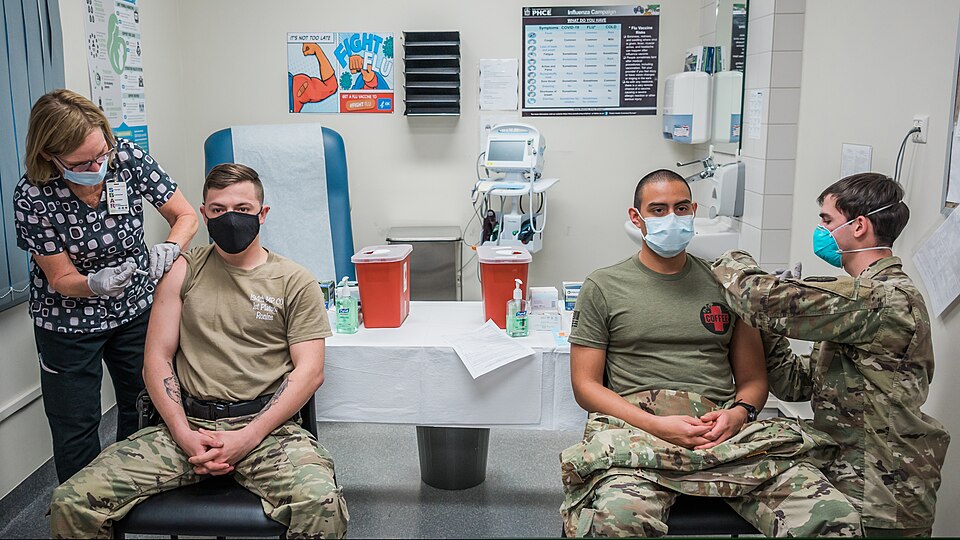
Senior military medical leaders urged that flu vaccinations remain mandatory for new recruits in late May and early June.[1] Defense Secretary Pete Hegseth initially resisted those recommendations but reimposed the requirement only after a large outbreak at Joint Base San Antonio-Lackland sickened roughly 275 trainees and staff.[1]
Internal emails warned that recruit vaccination rates at Lackland had fallen sharply and that a significant outbreak was likely in the close-quarters training environment.[1] Hegseth had publicly framed his April 21 policy change as ending "overly broad" health mandates while privately worrying that restoring the flu requirement could undermine his broader push against vaccine mandates.[1]
On April 21 Hegseth announced that annual influenza vaccines would no longer be mandatory for service members. The memorandum let military departments seek exemptions to keep the requirement for specific high-risk groups and communal settings. Services filed exemption requests by early May, and those requests were approved in early June after a risk review, letting branches continue mandates for recruits.
New reporting showed that uniformed health officials had pressed senior leaders and warned that action was needed before the outbreak forced a change.[1] The Pentagon moved to require flu shots for recruits as the Air Force base dealt with the outbreak.[2]
The mainstream summary does not mention the significant scale of the training operations at Joint Base San Antonio-Lackland, which processes approximately 35,000 to 36,000 recruits annually through its basic training program. This context highlights the potential impact of the flu outbreak, as 60% of recruits reportedly skipped the vaccine, leading to 150 illnesses and one recruit's death, which underscores the severity of the situation that prompted the policy reversal. The summary also overlooks the broader implications of Hegseth's initial decision to rescind the mandate, which was influenced by a growing 'medical freedom' narrative stemming from the COVID-19 vaccine debates. This shift reflects a changing attitude towards vaccine mandates within the military, as noted in a 2026 analysis that connects these decisions to a decline in institutional trust following the pandemic. Such factors suggest that the military's vaccination policies are not only reactive to immediate health crises but also shaped by evolving societal attitudes towards medical autonomy and institutional credibility.[3][4][5]
Show source details & analysis (2 sources)
📊 Relevant Data
Joint Base San Antonio-Lackland processes approximately 35,000 to 36,000 Air Force and Space Force recruits through its 7.5-week basic military training program each year.
What Air Force Recruits Go Through at JBSA-Lackland | Basic ... — IMD Aviation Channel (YouTube)
📌 Key Facts
- In late May and early June 2026, the Joint Chiefs’ medical staff and the service surgeons general circulated internal recommendations urging that flu vaccinations remain mandatory for new recruits across all services (Joint Chiefs’ medical staff).
- Internal emails warned that recruit vaccination rates at Joint Base San Antonio-Lackland had fallen sharply and that a significant flu outbreak was likely in the close-quarters training environment (internal emails).
- Defense Secretary Pete Hegseth and his immediate political aides initially rejected or slow-walked those recommendations, insisting the services rely on voluntary vaccinations and education rather than restoring a mandate (Defense Secretary Pete Hegseth).
- Hegseth publicly framed the April 21, 2026 policy change as a move to end “overly broad” health mandates while privately expressing concern that restoring the flu requirement could undermine his broader push against vaccine mandates (April 21, 2026 policy change).
- Hegseth agreed to reimpose mandatory flu shots for recruits only after the Lackland outbreak in June 2026 infected roughly 275 trainees and staff, with his reversal linked directly to the scale of the outbreak (Lackland outbreak).
📰 Source Timeline (2)
Follow how coverage of this story developed over time
- The article reports that in late May and early June 2026, the Joint Chiefs’ medical staff and the service surgeons general circulated internal recommendations urging that flu vaccinations remain mandatory for new recruits across all services.
- It says Defense Secretary Pete Hegseth and his immediate political aides initially rejected or slow-walked those recommendations, insisting that services rely on voluntary vaccinations and education rather than restoring a mandate.
- According to internal emails quoted in the piece, senior uniformed health officials specifically warned that recruit vaccination rates at Joint Base San Antonio-Lackland had fallen sharply and that a significant flu outbreak was likely in the close-quarters training environment.
- The story details that Hegseth only agreed to reimpose mandatory shots for recruits after the Lackland outbreak infected roughly 275 trainees and staff in June 2026, linking his reversal directly to the scale of the outbreak.
- NYT reporting adds that Hegseth had publicly framed the April 21, 2026 policy change as a move to end "overly broad" health mandates, while privately expressing concern that restoring the flu requirement could undermine his broader push against vaccine mandates.