
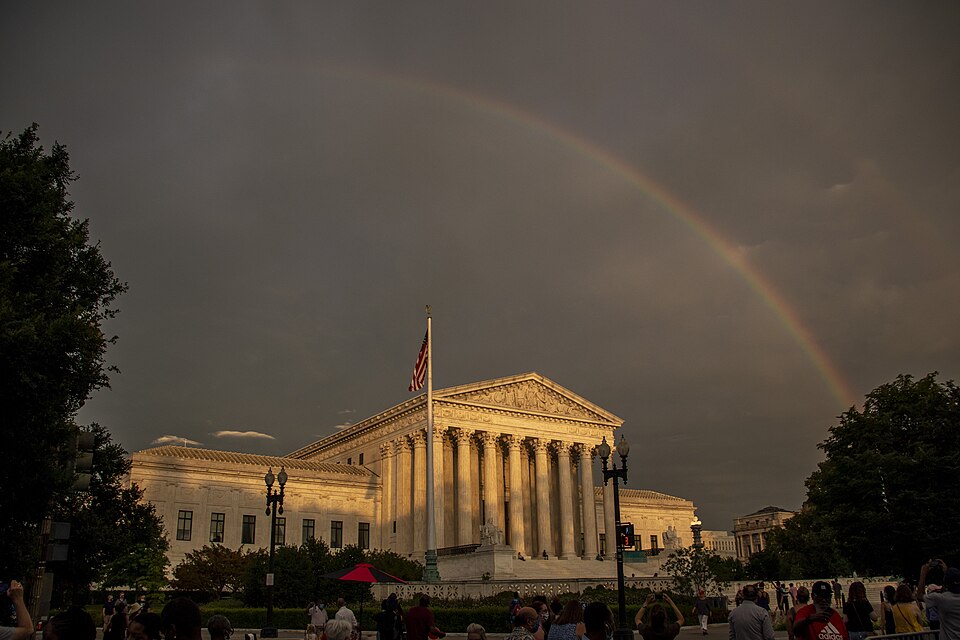
Supreme Court Allows ExxonMobil Helms-Burton Suit Against Cuban Firms
On June 23, 2026, the Supreme Court ruled 6-3 that Title III of the Helms-Burton Act removes foreign sovereign immunity for Cuban state firms, clearing the way for ExxonMobil's lawsuit.[1]
ExxonMobil is pursuing claims tied to property seized after the 1959 revolution, including a refinery and an extensive retail network.[1] The New York Times reports the company has refined estimates of the claim's present value before any possible treble-damages enhancement.[1] The decision clears a major legal hurdle for ExxonMobil and could revive Title III litigation even though fewer than 50 Title III suits have been filed to date.[2]
ExxonMobil filed its Title III suit against three Cuban state-owned companies on May 2, 2019, the same day President Trump allowed the long suspension of the Helms-Burton private right of action to lapse. A federal trial judge let parts of the case go forward, but in July 2024 the D.C. Circuit ruled that foreign sovereign immunity still applied and sent the case back for further proceedings. Exxon petitioned the Supreme Court in December 2024; the high court agreed to review the case in October 2025 and heard argument in February 2026.
One month before this ruling, the Court issued an 8-1 decision in Havana Docks v. Royal Caribbean that broadened Title III liability and helped lay the groundwork for today's holding.[1] Legal commentators and analysts noted the two recent rulings give U.S. owners a stronger path to press claims for confiscated property.
The mainstream summary does not mention that fewer than 50 Title III lawsuits have been filed under the Helms-Burton Act despite over 5,000 certified claims, highlighting a significant gap between potential claims and actual litigation activity. This discrepancy suggests that while the Supreme Court's ruling may clear the way for ExxonMobil, the broader context of Title III litigation remains limited and underutilized, as noted by Venable LLP. Furthermore, the summary overlooks the implications of the recent Havana Docks ruling, which had already broadened Title III liability, indicating a trend in the Court's approach that could affect future claims against Cuban state entities.
Additionally, while the mainstream coverage frames the ruling primarily as a legal victory for ExxonMobil, it does not address the potential ramifications for Cuban state-owned companies and the wider implications for U.S.-Cuba relations. The structural explanation provided by the Washington Office on Latin America points out that the Helms-Burton Act codified the embargo and requires congressional action to lift its provisions, underscoring the entrenched nature of U.S. policy towards Cuba and the challenges of achieving any diplomatic resolution. This context is crucial for understanding the significance of the Supreme Court's decision beyond ExxonMobil's immediate interests.
Show source details & analysis (2 sources)
📊 Relevant Data
Fewer than 50 Title III lawsuits have been filed under the Helms-Burton Act despite more than 5,000 certified claims.
Helms-Burton Act — Venable LLP
In one early Helms-Burton Title III case, a federal court entered judgments exceeding $100 million against each of four major cruise lines for trafficking in confiscated Cuban property.
Supreme Court to hear arguments on confiscations by Cuban government — SCOTUSblog
📌 Key Facts
- The June 23, 2026 New York Times article reports that the Supreme Court issued a 6-3 decision holding that Title III of the Helms-Burton Act strips foreign-sovereign immunity from Cuban state-owned firms that benefited from expropriated U.S. property.
- The article says the ruling was decided by a 6-3 vote, favoring ExxonMobil's ability to press claims against Cuban entities under Title III.
- The story details ExxonMobil's seized assets in Cuba, including a refinery and an extensive retail network.
- The reporting refines estimates of the claim's present value for ExxonMobil before any possible treble-damages enhancement.
- The piece explains how the new ruling fits with and builds on the Court's earlier decision in Havana Docks Corp. v. Royal Caribbean, emphasizing the combined effect on future Helms-Burton litigation.
- The reporting appears in the New York Times article titled Supreme Court Sides With Exxon in Lawsuit Over Assets Seized by Cuba, published June 23, 2026.
📰 Source Timeline (2)
Follow how coverage of this story developed over time
- Article (June 23, 2026) provides additional detail on the Supreme Court's 6-3 holding that Title III of the Helms-Burton Act strips foreign-sovereign immunity from Cuban state-owned firms benefitting from expropriated U.S. property.
- It further elaborates on the scale and characteristics of ExxonMobil's seized assets in Cuba, including the refinery and retail network, and refines estimates of the claim's present value before any treble-damages enhancement.
- The story adds nuance on how the ruling fits with, and builds on, the Court's earlier decision in Havana Docks Corp. v. Royal Caribbean, emphasizing the combined effect on future Helms-Burton litigation.