
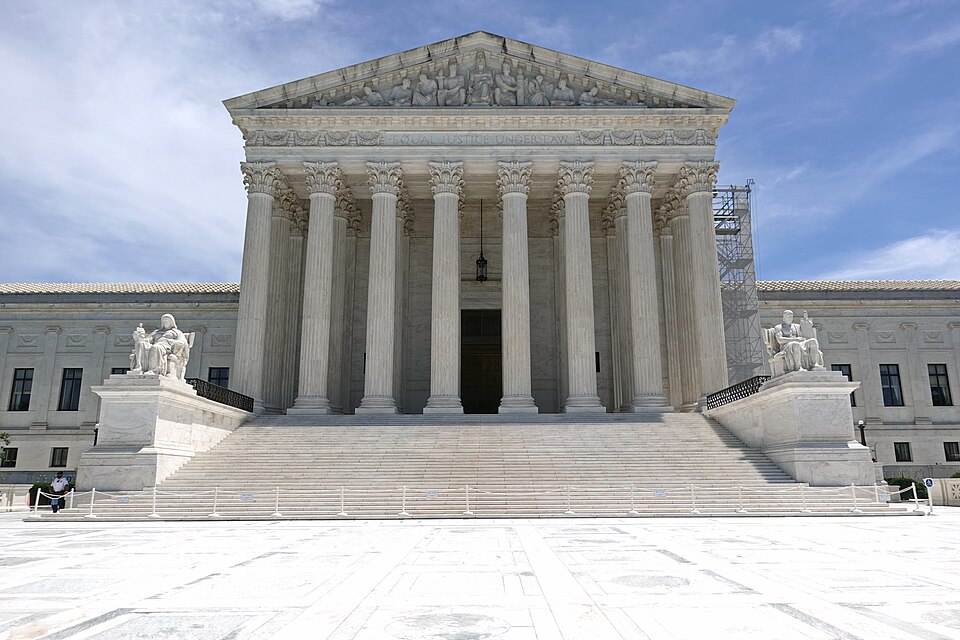
Supreme Court Lets 8th Circuit Curb Private Voting Rights Act Suits
The Supreme Court on Monday, June 22, 2026 declined to review an Arkansas Voting Rights Act case, leaving in place an 8th Circuit ruling that bars private lawsuits under Section 208 in seven states.[1]
The case stems from Arkansas United v. Thurston, in which a three-judge 8th Circuit panel in July 2025 reversed a 2022 district court decision that had struck down an Arkansas law limiting non-poll workers to assisting six voters.[1] The panel applied a November 2023 8th Circuit ruling that held private parties cannot sue to enforce Section 2 of the Voting Rights Act.[1]
Arkansas United filed its suit in 2020, arguing the state limit on who may assist voters conflicted with Section 208 of the Voting Rights Act.[1] The Supreme Court's decision not to take up the appeal leaves the 8th Circuit as the only federal appeals court to reject a private right of action under Sections 2 and 208.
Over the last 40 years, private individuals and organizations brought 93% of Section 2 Voting Rights Act cases, with at least 197 successful claims out of more than 400 filings. The Justice Department has filed only a small number of Section 208 suits, including actions against Texas in 2021 and Fort Bend County in 2009.
The mainstream summary does not mention the significant historical context regarding the erosion of private enforcement mechanisms under the Voting Rights Act. According to a 2024 Congressional Research Service report, Justice Neil Gorsuch's 2021 concurring opinion in Brnovich v. Democratic National Committee questioned the long-held assumption that Section 2 of the Voting Rights Act conferred a private right of action, leading to the 8th Circuit's novel interpretation that only the Attorney General may enforce these provisions. This shift in judicial interpretation represents a departure from decades of precedent, which is crucial to understanding the implications of the Supreme Court's decision not to review the Arkansas case.
Additionally, while the summary highlights the statistics of private lawsuits under the Voting Rights Act, it fails to emphasize that private individuals and organizations have been responsible for 93% of Section 2 cases over the last 40 years, with a notable success rate of at least 197 claims. This statistic underscores the critical role that private enforcement has played in protecting voting rights, a role that is now being curtailed by recent judicial rulings. The lack of mention of these dynamics in the mainstream coverage may lead to an incomplete understanding of the broader implications of the Supreme Court's decision.
Show source details & analysis (1 source)
📊 Relevant Data
Private individuals and organizations brought 93% of Section 2 Voting Rights Act cases filed in federal court over the last 40 years, with at least 197 successful claims out of more than 400 total.
The Importance of Letting Voters Defend Their Rights in Court — Brennan Center for Justice
The U.S. Department of Justice has filed a small number of Section 208 Voting Rights Act cases in recent years, including actions against Texas in 2021 and Fort Bend County in 2009.
Cases Raising Claims Under Section 208 Of The Voting Rights Act — U.S. Department of Justice Civil Rights Division
📌 Key Facts
- On Monday, June 22, 2026, the Supreme Court declined to review an Arkansas Voting Rights Act case involving Section 208.
- The decision leaves binding 8th Circuit precedent that private individuals and groups cannot sue under Section 208 in seven states.
- The case arose from Arkansas United’s challenge to a state law limiting non–poll workers to assisting six voters, which a district court struck down in 2022 before the 8th Circuit reversed in 2025.
- The 8th Circuit is currently the only federal appeals court to reject a private right of action under Sections 2 and 208 of the Voting Rights Act.
📰 Source Timeline (1)
Follow how coverage of this story developed over time