
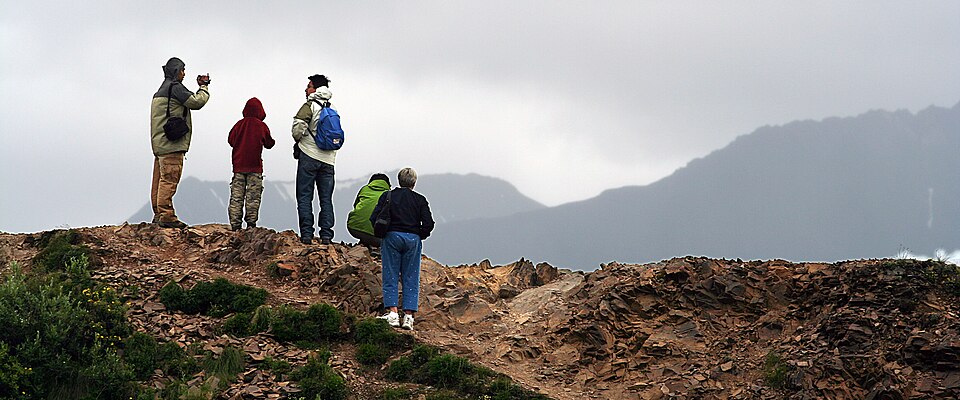
Four Grand Canyon Hikers Die In June As Park Warns Of Extreme Heat
Four hikers have died in June in Grand Canyon National Park after apparent heat-related incidents, park officials said.[1]
The National Park Service said a 72-year-old man died June 12 on the South Kaibab Trail, and a 67-year-old man and a 68-year-old woman died June 16 on the North Kaibab Trail.[2] A separate June 3 case involved an 18-year-old man who collapsed below Havasupai Gardens on the Bright Angel Trail and was later pronounced dead; that case remains under investigation.[1] Officials said rangers responded quickly and used aerial support but the June 12 and June 16 victims were found deceased and taken to the Coconino County Medical Examiner's Office.[1]
Record Southwest heat in March set the stage for persistent drought and higher-than-normal temperatures into June. The National Weather Service issued an extreme heat watch for Grand Canyon National Park from midday Monday, June 22, through Tuesday, June 23, forecasting temperatures at or above 110°F at Phantom Ranch.[2] The park has strongly advised visitors to avoid hiking in the middle of the day after a recent influx of heat-related incidents.[2] Meteorologist Justin Johndrow warned bottom-of-canyon temperatures often run 20-25°F hotter than at the rim and that the region is approaching its hottest period before the monsoon.[2]
A wildfire near Sedona in Oak Creek Canyon prompted evacuations and burned several hundred acres of steep terrain as firefighters worked to keep it from moving deeper into Coconino National Forest.[2] Separately, the Iron Fire in Juab County, Utah, had burned about 34 square miles and forced the evacuation of the town of Eureka, and officials said much of the West was seeing above-average heat and elevated fire danger.[3]
The mainstream summary does not mention that Grand Canyon National Park records an average of approximately 12 to 17 deaths per year from all causes, which contextualizes the recent fatalities within a broader trend of visitor risks in the park. This statistic highlights that while the recent heat-related deaths are tragic, they are part of a larger pattern of incidents that occur annually, suggesting that the park's dangers are not solely attributable to the extreme heat this June but are also influenced by ongoing visitor behavior and environmental conditions.
Moreover, a 2023 review by ABC News indicates that heat-related deaths in national parks like the Grand Canyon are rising, correlating with both climate change and increasing visitation levels. This perspective suggests that the combination of rising temperatures and a surge in park visitors—driven in part by social media visibility—may be exacerbating the risks faced by hikers, a nuance that the mainstream coverage does not fully explore.[4]
Show source details & analysis (4 sources)
📊 Relevant Data
Grand Canyon National Park records an average of approximately 12 to 17 deaths per year from all causes.
Three people died in two separate incidents while hiking at the Grand Canyon — KING 5 / mygrandcanyonpark.com (citing NPS data)
📌 Key Facts
- The National Park Service reported three apparent heat-related deaths in the Grand Canyon this month: a 72-year-old man on June 12 on the South Kaibab Trail and a 67-year-old man and a 68-year-old woman on June 16 on the North Kaibab Trail.
- A separate June 3 case involved an 18-year-old male who experienced heat-related symptoms below Havasupai Gardens on the Bright Angel Trail, was located about 30 feet below the trail near Garden Creek, and was later pronounced dead; that case remains under investigation.
- The NPS said that despite rapid response and helicopter support, the June 12 and June 16 victims were found deceased and transported to the Coconino County Medical Examiner’s Office.
- The National Weather Service issued an extreme heat watch for Grand Canyon National Park from midday Monday, June 22 through Tuesday, June 23, forecasting temperatures at or above 110°F at Phantom Ranch.
- Meteorologist Justin Johndrow of the NWS office in Flagstaff warned the region is approaching its hottest period before the monsoon and that bottom-of-canyon temperatures are often 20–25°F hotter than at the rim.
- The National Park Service strongly advised hikers to avoid hiking in the middle of the day following a recent influx of heat-related incidents in the park.
- A wildfire near Sedona in Oak Creek Canyon prompted evacuations, burned several hundred acres of steep terrain, and remained uncontained as of June 21.
- The Iron Fire in Juab County, Utah, had burned about 34 square miles as of June 21, leading to evacuation of the town of Eureka; authorities said a backburn operation helped protect the town and that the human-caused blaze is under investigation.
- Officials said much of the western U.S. was experiencing above-average temperatures with elevated fire danger, the NWS issued a red-flag warning for the southwest corner of Colorado through Monday, June 22, and U.S. Drought Monitor data show severe to extreme drought across much of Utah.
📰 Source Timeline (4)
Follow how coverage of this story developed over time
- On Sunday, June 21, 2026, the Iron Fire in Juab County, Utah, had burned about 34 square miles (87 square kilometers) after being first detected on Saturday, June 20, 2026.
- Authorities ordered the evacuation of the town of Eureka, Utah, with a population of about 1,000, and a nearby ranch due to the Iron Fire, though no homes had been lost as of June 21.
- UTAH Fire Info reported firefighters conducted a successful backburn operation to help protect Eureka from the Iron Fire.
- Utah Division of Forestry Fire and State Lands specialist Kelly Wickens said the Iron Fire is human-caused, remains under investigation, and is growing amid drought conditions; it is one of six fires burning in Utah at varying containment levels.
- The National Weather Service issued a red flag warning for the southwest corner of Colorado through Monday, June 22, 2026, due to gusty winds and low relative humidity.
- A separate wildfire near Sedona, Arizona, in Oak Creek Canyon burned about 300 acres (120 hectares) of steep terrain, remained uncontained as of Sunday afternoon June 21, and residents had not yet been allowed to return home.
- The article notes that much of Utah is in severe to extreme drought and parts of Arizona and Colorado are in severe drought, according to the U.S. Drought Monitor.
- Temperatures in parts of the Southwest, including Carlsbad, New Mexico, were forecast to reach up to 108°F (42.2°C) on Sunday, June 21, 2026.
- A brush fire in Miami-Dade County, Florida, spread across about 2,000 acres (800 hectares) on Saturday, June 20, 2026, amid the broader heat and dryness.
- A June 19, 2026 National Park Service press release states Grand Canyon rangers responded to two separate Inner Canyon heat-related incidents on June 12 and June 16, 2026, resulting in three deaths.
- NPS specifies that on June 12, 2026, a 72-year-old male died of apparent heat-related illness along the South Kaibab Trail, and on June 16, 2026, a 67-year-old male and a 68-year-old female died of apparent heat-related illness on the North Kaibab Trail.
- NPS reports that despite rapid response and aerial support, all three June 12 and June 16 victims were found deceased and transported to the Coconino County Medical Examiner’s Office.
- A separate NPS release describes a June 3, 2026 incident in which an 18-year-old male on a same‑day hike from the South Rim to the Colorado River and back via the Bright Angel Trail experienced heat-related symptoms below Havasupai Gardens and was later pronounced dead despite helicopter-supported rescue efforts.
- The June 3 victim was located approximately 30 feet below Bright Angel Trail near Garden Creek, and that case remains under investigation with the Coconino County Medical Examiner’s Office.
- The National Weather Service issued an extreme heat watch for Grand Canyon National Park from midday Monday, June 22, through Tuesday, June 23, 2026, forecasting temperatures at or above 110°F at Phantom Ranch.
- The National Park Service said in a mid-June 2026 release that hikers are strongly advised to avoid hiking in the middle of the day following a recent influx of heat-related incidents.
- NPS reiterated that June 16 deaths of two hikers, ages 67 and 68, on the North Kaibab Trail and the June 12 death of a 72-year-old on the South Kaibab Trail appear to be heat-related.
- Meteorologist Justin Johndrow of the National Weather Service office in Flagstaff warned that the region is approaching its hottest period of the year before monsoon rains, with bottom-of-canyon temperatures often 20–25°F hotter than at the rim.
- Late Friday, June 19, 2026, visitors and residents in Oak Creek Canyon, about 90 miles south of the Grand Canyon, were evacuated as a wildfire burned roughly 500 acres of steep terrain north of Sedona, and firefighters worked to keep it from moving into Oak Creek Canyon and deeper into Coconino National Forest.
- Officials said much of the western U.S. from the Rockies to the Pacific Coast was experiencing above-average temperatures as of Saturday, June 20, 2026, with expectations of even hotter conditions early the following week and elevated fire danger due to prolonged hot, dry weather and low humidity.