
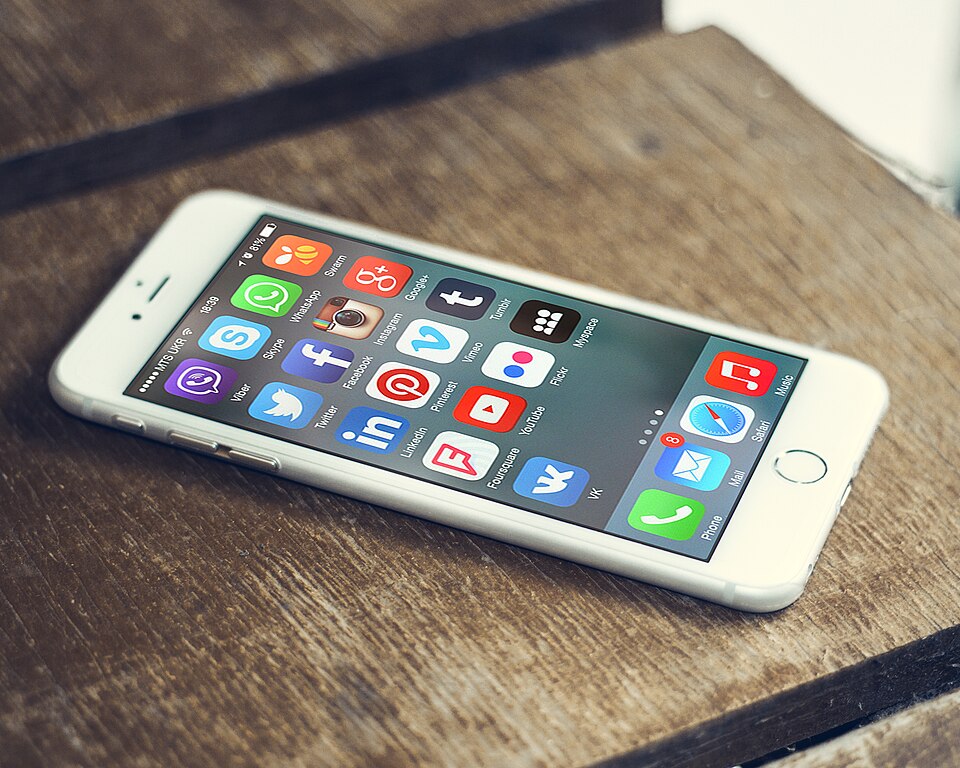
UK Sets Early-2027 Start For Under-16 Ban On Major Social Media Apps
On Monday, June 15, 2026, Prime Minister Keir Starmer announced that Britain will ban children under 16 from major social media apps, including TikTok, Snapchat and YouTube, with restrictions set to start in early 2027.[1]
The plan would cover Instagram, Facebook and X while exempting messaging services such as WhatsApp and Signal and the YouTube Kids app.[2] It would also block under-16s from livestreaming and contact with strangers, extend limits to gaming platforms, and bar people under 18 from AI "romantic" or sexual chatbots.[3] Enforcement will target platforms, not children, with companies facing multimillion-dollar fines if they fail to take reasonable steps to keep under-16s off their services.[1] Starmer said he aims to have the law passed by late December 2026 so the ban can take effect by spring 2027.[3]
The Online Safety Act 2023 placed duties on platforms to assess and mitigate risks to children, and Ofcom set enforcement deadlines in 2025. The House of Lords passed amendments in January 2026 that pushed for an under-16 ban, and the government's "Growing up in the online world" consultation from March to May drew about 116,000 responses with more than 90 percent backing a ban.[1]
Early reports focused on the announcement and the planned corporate fines.[2] Later coverage and experts shifted to enforcement doubts, the limits of current age-verification tools, and warnings that a blanket restriction could push children toward anonymous, less-safe services.[1]
More than 90 percent of 13- to 15-year-olds had their own social-media profiles in 2025, and 80 percent of 10- to 12-year-olds used social media that year, underscoring how many children the policy would affect.
Mainstream coverage frames the UK government's proposed ban as a straightforward protective measure for children, but Sarah McLaughlin argues that this blanket approach is misguided and could lead to unintended consequences. She emphasizes that enforcement mechanisms like age-verification are unreliable and privacy-invasive, suggesting that a hard ban might push children toward less regulated and potentially more dangerous online spaces. This critical perspective is absent from the mainstream summary, which does not delve into the complexities of enforcement or the potential for negative outcomes associated with the ban.
Additionally, while the summary notes that more than 90 percent of 13- to 15-year-olds have social media profiles, it does not highlight the implications of this statistic. The data indicates a significant portion of the youth population is likely to be affected by the ban, raising questions about the efficacy and practicality of such a sweeping restriction. Furthermore, the Australian experience, where a similar age restriction led to the removal of 4.7 million under-16 accounts, suggests that enforcement could be more challenging than the government anticipates. This context adds depth to the discussion that the mainstream summary overlooks, focusing solely on the announcement without examining the broader implications of implementation and enforcement challenges.[4][5]
Show source details & analysis (6 sources)
📊 Relevant Data
More than 90% of the UK's 2.5 million 13- to 15-year-olds have their own social media profile, and 80% of 10- to 12-year-olds (about 2.5 million) use social media.
Impact of social media ban for under-16s in UK hinges on ... — The Guardian
Australian age-restricted platforms removed access to 4.7 million under-16 accounts by mid-December 2025 following the December 2025 ban start.
Social media age restrictions — eSafety Commissioner (Australian Government)
📌 Key Facts
- On Monday, June 15, 2026, Prime Minister Keir Starmer formally announced that Britain will ban children under 16 from using major social media platforms, including TikTok, Snapchat and YouTube, with the restrictions expected to take effect in early 2027 (Prime Minister Keir Starmer).
- The announced ban is intended to cover major apps such as Instagram, Facebook and X while exempting messaging services like WhatsApp and Signal and the YouTube Kids app (Instagram, Facebook and X).
- Enforcement would target platforms, not children: companies would face multimillion-dollar fines for failing to take reasonable steps to keep under-16s off their services, and children themselves would not be penalized (multimillion-dollar fines).
- The government said its public consultation drew about 116,000 responses and that more than 90% of respondents favored an under-16 social media ban (public consultation).
- Starmer said he aims to have the legislation passed by late December 2026 so the ban can take effect by spring 2027 (with other reports citing early 2027 as the expected start) (late December 2026).
- The plan would also seek to block under-16s from “harmful functions” such as livestreaming and contact with strangers, extend restrictions to gaming platforms, and bar people under 18 from accessing AI "romantic" or sexual chatbots (AI romantic or sexual chatbots).
- Critics and tech platforms warned the policy could be difficult to enforce: YouTube said a blanket restriction might push children to anonymous, less-safe services, expert critics questioned the effectiveness of current age-verification tools, and the U.S. Embassy in London urged that rules be narrowly tailored to avoid free-speech or undue burdens on U.S. firms (U.S. Embassy in London).
- Broad coverage of the UK move places it alongside international precedents — including Australia’s December 2025 under-16 social media ban and similar measures in Indonesia and Malaysia — though early evidence from Australia suggests many children may remain on platforms despite the law (Australia’s December 2025 under-16 social media ban).
📊 Analysis & Commentary (1)
"The Persuasion piece responds to the UK plan to ban under‑16s from major social apps (the 'UK Sets Early‑2027 Start...' story) and argues against a blanket ban — the author critiques the policy as unenforceable, privacy‑invading and likely to push kids into less safe spaces, and urges targeted regulatory and educational alternatives instead of prohibition."
📰 Source Timeline (6)
Follow how coverage of this story developed over time
- CBS segment on June 16, 2026 reiterates that Prime Minister Keir Starmer has announced a near-total social media ban for children under 16, to take effect in 2027.
- The piece frames the UK move alongside similar under-16 social media restrictions already in place in Australia, Indonesia and Malaysia, underscoring an emerging global pattern.
- The segment is explicitly constructed as an explainer on 'how it will work,' reinforcing that enforcement will be aimed at platforms via age-verification and compliance systems rather than at children.
- On Monday, June 15, 2026, Prime Minister Keir Starmer announced a proposed law that would ban anyone under 16 from social media apps such as TikTok and Snapchat.
- The CBS segment emphasizes that social media companies themselves would be required to verify users' ages or face "big fines" under the proposed law.
- The report reiterates that the obligation and penalties are aimed at platforms, not at children, highlighting enforcement via corporate liability.
- On Monday, June 15, 2026, Prime Minister Keir Starmer formally announced that Britain will ban children under 16 from using major social media apps, including Snapchat, TikTok and YouTube, with the ban expected to take effect early next year.
- Starmer stated that enforcement will target platforms with multimillion-dollar fines for failing to take reasonable steps to keep under-16s off their services, reiterating that children themselves will not be penalized.
- He said the UK will follow Australia’s under-16 account ban model but “go further,” including moves to prevent strangers contacting children on gaming and livestreaming platforms and to restrict AI romantic or sexual chatbots to over-18s.
- The government disclosed that a public consultation drew about 116,000 responses and that more than 90% of respondents favored an under-16 social media ban.
- Starmer acknowledged some teens will try to circumvent the rules but argued the government can enforce the policy, comparing it to underage drinking laws.
- The U.S. Embassy in London publicly warned that broad regulations should be narrow so as not to infringe free-speech protections and said it is concerned about burdens on American technology companies.
- Expert critics quoted in the article, including the Molly Rose Foundation’s Kate Edwards and University of Cambridge professor Jon Crowcroft, questioned the effectiveness of current age-verification tools and warned that bans may not address harmful algorithms and could push minors to worse, less-regulated sites.
- On Monday, June 15, 2026, Prime Minister Keir Starmer said the UK plan will also block under-16s from "harmful functions" such as livestreaming and contact with strangers, and extend restrictions to gaming sites.
- The proposal would additionally bar people under 18 from accessing artificial intelligence "romantic companions," though the article notes details of implementation remain unclear.
- Starmer said he aims to have the legislation passed by late December 2026 so the ban can take effect by spring 2027.
- The U.S. Embassy in London previously issued a notice expressing concern that age-gating may not work, urging that protections be narrowly tailored to preserve free speech and calling parents "the first and best line of defense."
- Australia’s December 2025 under-16 social media ban is cited as precedent, with polling from March 2026 showing roughly 70% of Australian parents say their children remain on platforms despite the law.
- On Monday, June 15, 2026, Prime Minister Keir Starmer formally announced that Britain will ban children under 16 from using major social media platforms, including TikTok, Snapchat and YouTube, with the restrictions expected to take effect in early 2027.
- Starmer specified that the ban will also cover Instagram, Facebook and X, while exempting messaging services such as WhatsApp and Signal and the YouTube Kids app.
- He said enforcement would target technology companies with multimillion-dollar fines for failing to take reasonable steps to keep under-16s off their services, rather than penalizing children.
- The UK government reported that its public consultation received about 116,000 responses, with more than 90% supporting an under-16 social media ban.
- A YouTube spokesperson warned that a blanket under-16 restriction could push children toward anonymous, less-safe services, and the U.S. Embassy in London cautioned that any rules should be narrowly tailored so as not to infringe free speech or unduly burden U.S. tech firms.
- Starmer said he plans to raise the child social media restrictions with President Donald Trump and other leaders at the G7 summit in France starting June 15, 2026.