
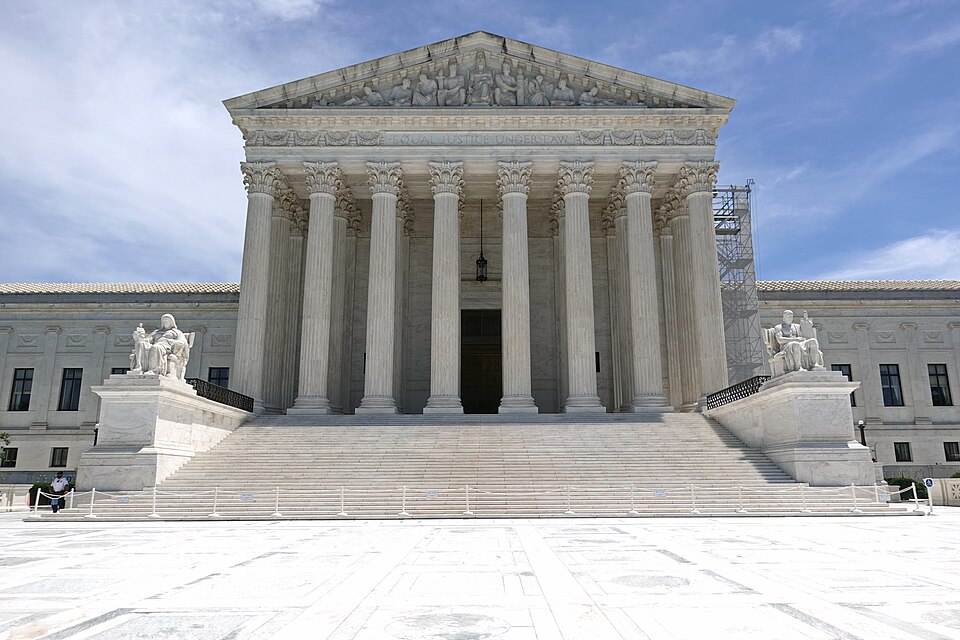
Supreme Court Declines 98-Year-Old Judge Pauline Newman's Reinstatement Bid
The U.S. Supreme Court on Monday, June 15, 2026, declined to hear 98-year-old Federal Circuit Judge Pauline Newman's bid to return to active service, leaving her suspension in place.[1]
The refusal means a D.C. Circuit ruling that bars some constitutional challenges to judicial-council authority remains controlling, and it effectively ends Newman's path to reinstatement through the high court.[1]
In March 2023, Federal Circuit Chief Judge Kimberly Moore opened an inquiry under the Judicial Conduct and Disability Act after court staff raised concerns about Newman's case delays and possible cognitive impairment.[1] Orders in May 2023 required Newman to undergo neurological and neuropsychological exams and to provide medical records, which she refused.[1] The Federal Circuit Judicial Council suspended Newman from taking on new cases on September 20, 2023, citing her non-cooperation.[1] That suspension was renewed in September 2024 and again in August 2025.[1]
Newman sued in federal district court, saying the process violated the Judicial Conduct and Disability Act and her constitutional rights as a life-tenured judge.[1] The D.C. Circuit affirmed dismissal of the suit in August 2025 and held that the Act bars such constitutional challenges.[1]
The mainstream summary does not mention that the U.S. Court of Appeals for the Federal Circuit has 12 judges in active service, which highlights the context of Newman's suspension within a broader judicial framework. Additionally, while the summary focuses on Newman's individual case, it overlooks the fact that there is no mandatory retirement age for Article III federal judges, a detail that raises questions about the implications of her suspension for the aging judiciary overall. This is particularly relevant given that senior judges currently handle about 20 percent of the total district and appellate caseload, suggesting that the judiciary may increasingly confront similar challenges as its members age.
Moreover, the summary does not address the ongoing discourse around cognitive decline among older judges, as highlighted by University of Minnesota law professor Francis Shen. Shen argues that the combination of lifetime tenure and increased life expectancy has led to an older federal judiciary, which raises concerns about cognitive abilities impacting judicial performance. His advocacy for individualized cognitive assessments every five years presents an alternative perspective on how to manage the challenges posed by aging judges, a nuance absent from the mainstream account.[2][3]
Show source details & analysis (1 source)
📊 Relevant Data
The U.S. Court of Appeals for the Federal Circuit has 12 judges in active service by statute.
Judges - U.S. Court of Appeals for the Federal Circuit — cafc.uscourts.gov
There is no mandatory retirement age for Article III federal judges.
Types of Federal Judges — uscourts.gov
Senior judges handle about 20 percent of the total district and appellate caseload.
Types of Federal Judges — uscourts.gov
📌 Key Facts
- On Monday, June 15, 2026, the Supreme Court declined to hear Judge Pauline Newman's case seeking reinstatement to active service.
- Newman was first suspended from hearing cases by the Federal Circuit's Judicial Council in September 2023, with renewals in September 2024 and August 2025.
- The D.C. Circuit earlier ruled that the Judicial Conduct and Disability Act bars certain constitutional challenges to judicial council authority, and that ruling now remains in force.
📰 Source Timeline (1)
Follow how coverage of this story developed over time