
Supreme Court Keeps Alabama Nitrogen Method On Hold As State Seeks Lethal Injection For Jeffrey Lee
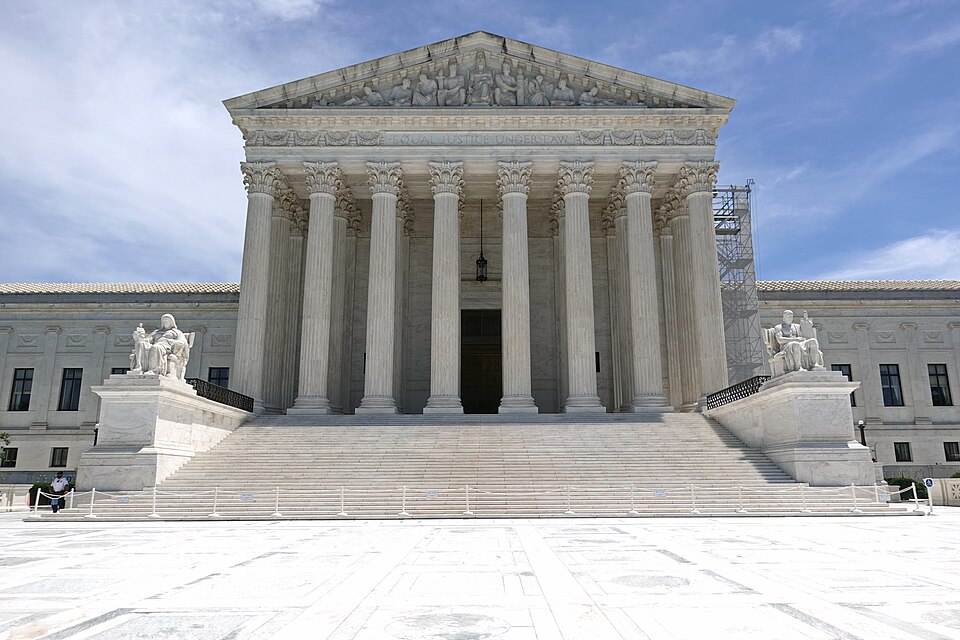
The U.S. Supreme Court on Thursday, June 11, 2026, blocked Alabama from executing Jeffrey Lee by nitrogen hypoxia, leaving intact a federal judge's permanent injunction and halting a scheduled execution that evening.[1]
At least six justices agreed to deny Alabama's emergency request while three conservative justices dissented, and state officials confirmed the execution was called off for the evening.[2] Judge Emily Marks concluded the state's nitrogen protocol causes roughly 60 to 180 seconds of "severe air hunger" with acute anxiety and physiological distress, a "substantial risk of serious harm" she found unconstitutional.[3]
A three-judge 11th U.S. Circuit panel had reversed Marks on Monday, June 8, saying the minutes before loss of consciousness were intolerable, and Marks then held a three-day bench trial before issuing her June 9 permanent injunction.[2] Alabama first used nitrogen hypoxia in January 2024, and the method has been used repeatedly since then, drawing broader constitutional challenges.[3]
Early reporting had described Alabama as prepared to carry out nitrogen executions, but the legal record and appellate rulings shifted coverage toward concerns that the method can cause intolerable suffering; commentators noted that outlets including CBS News and the New York Times documented that shift.[4]
After the Supreme Court left Marks's injunction in place, Alabama Attorney General Steve Marshall asked the Alabama Supreme Court on Friday, June 12, for a new death warrant to allow lethal injection instead, noting the injunction bars only nitrogen hypoxia; Lee, 49, was convicted in a 1998 pawn-shop robbery that left two people dead, and his jury had recommended life before a judge overrode that verdict and imposed death.[5]
The mainstream summary does not mention that Alabama has a significant number of inmates on death row, totaling 154 as of June 2026, nor does it highlight that nearly 20% of these sentences were imposed through judicial override. This context is crucial, as it underscores the broader implications of the Supreme Court's ruling and the state's ongoing challenges with its death penalty system. The Equal Justice Initiative notes that Alabama has executed 83 people since 1976, raising questions about the consistency and fairness of capital punishment practices within the state.
While the mainstream account focuses on the immediate legal proceedings surrounding Jeffrey Lee's case, it downplays the structural issues at play, such as the historical reliance on judicial overrides that have led to a disproportionate number of death sentences. This practice, documented by Michael L. Radelet, reflects political motivations among judges that could influence sentencing outcomes, further complicating the ethical landscape of Alabama's death penalty system. The absence of these details in the summary leaves a gap in understanding the systemic factors that contribute to the current situation.
Show source details & analysis (10 sources)
📊 Relevant Data
Alabama has 154 inmates on death row as of June 2026.
Inmates on Death Row — Alabama Department of Corrections
Alabama has executed 83 people since 1976.
Alabama's Death Penalty — Equal Justice Initiative
Nearly 20% of people currently on Alabama's death row were sentenced to death through judicial override.
The Death Penalty in Alabama: Judge Override — Equal Justice Initiative
📌 Key Facts
- U.S. District Judge Emily Marks on Tuesday, June 9, 2026, issued a permanent injunction barring Alabama from executing Jeffrey Lee by nitrogen hypoxia, reversing her earlier finding that the protocol was constitutional (U.S. District Judge Emily Marks).
- Judge Marks concluded the state’s nitrogen protocol causes roughly 60–180 seconds of “severe air hunger” with corresponding emotional distress, anxiety, physiological stress and physical discomfort, creating a “substantial risk of serious harm” that she found unconstitutional under the Eighth Amendment (nitrogen protocol).
- The U.S. Supreme Court issued an emergency order on Thursday, June 11, 2026, blocking Alabama from executing Jeffrey Lee by nitrogen hypoxia and leaving Marks’s permanent injunction in place; the order was decided 6–3 with Justices Clarence Thomas, Samuel Alito and Neil Gorsuch dissenting, and Alabama officials confirmed the execution was called off for the evening (Supreme Court).
- Alabama Attorney General Steve Marshall pressed appeals and emergency relief arguing a firing-squad alternative was “not feasible,” and after the Supreme Court blocked nitrogen he asked the Alabama Supreme Court on Friday, June 12, 2026, to issue a new death warrant to execute Lee by lethal injection (Alabama Attorney General Steve Marshall).
- Jeffrey Lee, 49, has been on death row for a 1998 pawn-shop robbery in which two people were killed; his jury recommended life (7–2) but a judge overrode the jury and imposed a death sentence via judicial override (Jeffrey Lee, 49).
- The appellate and trial sequence: Marks initially upheld Alabama’s nitrogen protocol in May 2026; a three-judge 11th Circuit panel on Monday, June 8, 2026, reversed—saying the period before loss of awareness was “intolerable”—and after a full three-day bench trial Marks reevaluated and issued her June 9 permanent injunction (11th Circuit).
- The courts found that a firing squad is a “feasible, readily implemented” alternative that would substantially reduce the risk of serious harm and that Alabama had not shown a legitimate penological reason to refuse considering it (firing squad).
- Since 2024, eight people in the U.S. have been executed by nitrogen hypoxia — seven in Alabama and one in Louisiana — and advocacy groups and international human-rights leaders have condemned the method as experimental and potentially torturous (eight people).
📰 Source Timeline (10)
Follow how coverage of this story developed over time
- On Friday, June 12, 2026, the Alabama Attorney General's Office asked the Alabama Supreme Court to issue a new death warrant for Jeffery Lee using lethal injection instead of nitrogen hypoxia.
- State lawyers told the Alabama Supreme Court that the injunction only bars execution by nitrogen hypoxia and does not prevent Alabama from using its other authorized methods, lethal injection or the electric chair.
- Lee, 49, has been on death row since his conviction for a 1998 pawn shop robbery in which two people were killed, and his death sentence was imposed through judicial override after a jury voted 7-2 for a life sentence.
- The article underscores that Judge Emily Marks' June 9, 2026 ruling was a permanent injunction issued after a "full three-day bench trial on the merits"—described as the first such trial anywhere on the constitutionality of Alabama's nitrogen asphyxiation protocol.
- Lee's lawyers argued to the Supreme Court that his case was "unlike every previous method of execution challenge" because Alabama was asking the Court, via emergency relief, to effectively nullify a final judgment rather than a temporary stay.
- Georgetown law professor Steve Vladeck filed an amicus brief telling the Court that granting Alabama's emergency request would frustrate the justices' ability to conduct plenary review of Judge Marks' permanent injunction.
- The piece notes that Alabama continued to press to execute Lee by nitrogen gas on Thursday, June 11, 2026, even though Judge Marks' order explicitly left the state free to carry out the execution by other methods such as a firing squad.
- The article situates the June 11, 2026 order as a departure from the Court's typical shadow-docket pattern of allowing executions to proceed, emphasizing that three conservative justices (Thomas, Alito, Gorsuch) dissented but did not explain their votes.
- The PBS article confirms the Supreme Court's emergency order was issued well after the scheduled 6 p.m. Central execution start time on Thursday, June 11, 2026, and that Alabama officials subsequently confirmed the execution was "off for the evening" and would not proceed by another method that night.
- The vote breakdown is reported as 6-3, with Justices Clarence Thomas, Samuel Alito and Neil Gorsuch publicly indicating they would have granted Alabama's request to lift the injunction.
- Alabama Attorney General Steve Marshall issued a detailed statement calling the ruling a "miscarriage of justice" for victims Jimmy Ellis and Elaine Thompson and pledging the state is prepared to "do whatever is necessary" to see Lee's sentence carried out.
- Lee's legal team emphasized in a statement that his jury had recommended life imprisonment and that a judge overrode that recommendation, urging Governor Kay Ivey to restore the jury's life-without-parole verdict.
- The article clarifies the appellate sequence: U.S. District Judge Emily Marks initially upheld Alabama's nitrogen protocol in May 2026, a three-judge 11th Circuit panel reversed her on Monday, June 8, calling the 3-minute period before loss of awareness "intolerable" given likely suffering, and Marks then reevaluated the case and on Tuesday, June 9, issued a new ruling finding the protocol cruel and unusual.
- Prison officials said that on June 11, 2026, Lee declined a formal last meal but consumed potato chips, Skittles, water and a Sprite in the hours before the anticipated execution.
- On Thursday, June 11, 2026, the Supreme Court issued an unexplained order rejecting Alabama's emergency application to execute Jeffery (Jeffrey) Lee with nitrogen gas, with Justices Clarence Thomas, Samuel Alito and Neil Gorsuch noted as dissenting.
- The article details Alabama's argument that Judge Emily Marks underestimated risks and implementation challenges of a firing-squad alternative and that Lee's scheduled June 11 execution date should have undercut his claim because a firing squad could not be implemented within two days.
- Judge Marks denied Alabama's motion to lift her permanent injunction, stating the motion largely repeated earlier rejected arguments and pointing out that the state itself chose to schedule the execution while litigation was pending.
- A divided 11th Circuit panel upheld Marks' injunction, emphasizing deference to a district court's permanent injunction findings and noting that executing Lee by an unconstitutional method would be irreparable harm, while a delay would not irreparably injure the state because it can still use other authorized methods.
- 11th Circuit Judge Robert Luck dissented, highlighting that Lee was sentenced to death for a 26‑year‑old double murder and that he had previously chosen nitrogen hypoxia as his execution method under Alabama law.
- On Thursday evening, June 11, 2026, the Supreme Court issued a one-sentence order denying Alabama's request to immediately execute Jeffery (Jeffrey) Lee using nitrogen gas.
- The NPR report notes that Justices Clarence Thomas, Samuel Alito, and Neil Gorsuch would have granted Alabama's request but filed no written dissent.
- NPR emphasizes that Lee's execution, scheduled for July 11, 2026, will be delayed but that he still faces the death penalty.
- The article recounts that on Monday, June 8, 2026, an appeals court held Alabama's nitrogen protocol 'presents a substantial risk of serious harm — severe pain over and above death itself.'
- The story adds context that there have been eight executions by nitrogen gas since 2024, seven in Alabama, and highlights President Trump's push to expand federal use of the death penalty amid states' difficulty obtaining lethal injection drugs.
- On Thursday, June 11, 2026, the U.S. Supreme Court issued an emergency order blocking Alabama from executing inmate Jeffrey Lee using nitrogen hypoxia.
- The Court’s order came shortly before Lee’s scheduled 6 p.m. Central execution time and left in place U.S. District Judge Emily Marks’s permanent injunction against Alabama’s nitrogen protocol for Lee.
- At least five justices voted to grant relief; the majority did not issue a full written opinion, while one or more justices filed separate dissenting writings criticizing the decision.
- Alabama officials said they would not attempt to execute Lee by any other method on June 11 and would instead review next legal steps in light of the Supreme Court’s action.
- Advocacy groups and death-penalty opponents immediately hailed the ruling as a major setback for nitrogen hypoxia executions and a signal that Alabama’s protocol faces heightened constitutional scrutiny.
- As of Thursday afternoon, June 11, 2026, the U.S. Supreme Court is considering an emergency application from Alabama Attorney General Steve Marshall seeking to vacate Judge Emily Marks's June 9 order that permanently barred executing Jeffrey Lee by nitrogen hypoxia.
- Lee's execution by nitrogen hypoxia is scheduled for 6 p.m. Central on Thursday, June 11, 2026, and Gov. Kay Ivey's office says she "remains prepared to move forward" if courts allow it.
- Alabama's filing to the Supreme Court argues that executing Lee by firing squad, the alternative Judge Marks cited, is "not feasible or readily implemented" because the state has no firing squad protocol, and it defends nitrogen hypoxia as causing inmates to lose consciousness quickly.
- The article reiterates that, to date, eight people in the U.S. have been executed using nitrogen gas, including seven in Alabama and one in Louisiana, underscoring that the protocol is now in repeated use.
- Background detail emphasized that Alabama first used nitrogen hypoxia in 2024 on an inmate who had survived multiple botched lethal injection attempts, and that international human rights leaders have condemned the method as experimental and potentially torturous.
- On Wednesday, June 10, 2026, the New York Times reported additional detail on Judge Emily Marks's June 9 order permanently blocking Alabama from executing Jeffrey Lee by nitrogen gas.
- The article describes how Alabama officials had prepared for Lee's June 11 execution using the same nitrogen hypoxia protocol previously used on Kenneth Smith in January 2024 and how the ruling forced late-stage logistical changes by the state corrections department.
- The Times account emphasizes that Marks's decision, grounded in both her April bench trial record and the June 8 Eleventh Circuit decision, could invite broader Eighth Amendment challenges to nitrogen executions beyond Lee's case.
- On Tuesday, June 9, 2026, U.S. District Judge Emily Marks issued a new ruling permanently barring Alabama from executing Jeffrey Lee by nitrogen hypoxia, reversing her own earlier finding that the protocol was constitutional.
- The opinion, issued after an April 2026 bench trial and guided by an 11th Circuit ruling on June 8, 2026, concludes Alabama's nitrogen protocol causes 'severe air hunger and corresponding emotional distress, anxiety, physiological stress, and physical discomfort' for at least one to three minutes.
- Judge Marks held that this 60- to 180-second period of suffering poses a 'substantial risk of serious harm' and is 'constitutionally intolerable' under the Eighth Amendment.
- Lee, 49, was scheduled to be executed by nitrogen hypoxia on Thursday, June 11, 2026, but the ruling halts that execution method for him.
- The court found that a firing squad is a 'feasible, readily implemented' alternative that would significantly reduce the risk of serious harm, and rejected Alabama's refusal to consider it, saying the state had not articulated a legitimate penological reason.
- Alabama Attorney General Steve Marshall's office has indicated it will appeal, raising the likelihood that the nitrogen hypoxia protocol will be reviewed by the U.S. Supreme Court.
- The article notes that Lee would have been the ninth person in the U.S. executed by nitrogen hypoxia and the eighth in Alabama, with one prior nitrogen execution in Louisiana.