
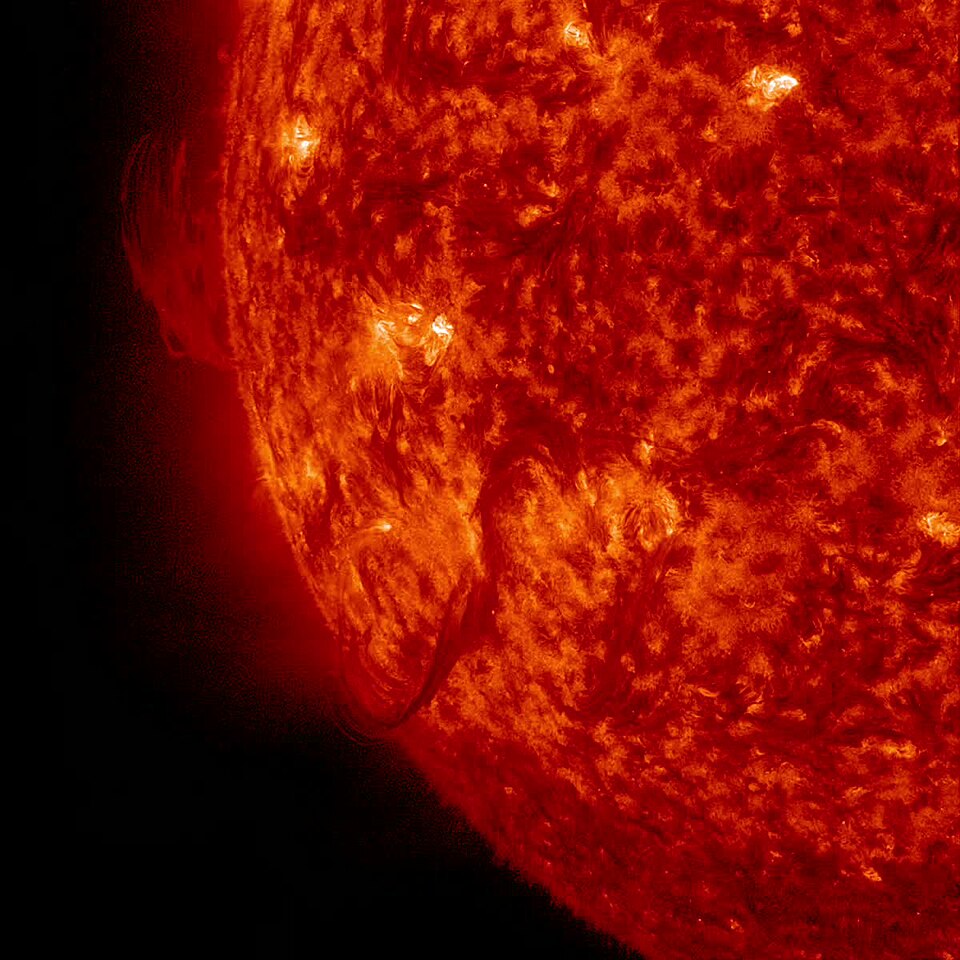
Triple Solar Flares May Trigger Strong Geomagnetic Storm Near Earth
Three solar flares erupted from the sun within 24 hours and are expected to merge en route to Earth, possibly triggering a strong to severe geomagnetic storm on June 4-5, 2026.[1]
NASA said the most powerful blast peaked just before 6:30 a.m. Central on Wednesday, June 3, 2026, and was classified as an X1.0 flare.[1] The National Oceanic and Atmospheric Administration's Space Weather Prediction Center forecasts a geomagnetic storm of roughly "strong" to "severe" intensity.[1] That raises risks to power grids, satellites and radio communications and boosts the chance to see auroras across much of the U.S. on June 4-5, 2026.[1]
Two other flares erupted within the previous 24 hours and are expected to merge with the X1.0 eruption as the coronal mass ejections travel toward Earth.[1] When coronal mass ejections merge, they can amplify the magnetic disturbance that strikes Earth's magnetosphere and increase storm intensity.
Officials warn disruptions to power and communications are possible.[1] Skywatchers as far south as the northern U.S. may glimpse auroras if conditions align.[1] Officials advise monitoring NOAA and NASA updates for the latest timing and intensity.
Show source details & analysis (1 source)
📌 Key Facts
- Three solar flares erupted from the sun within a 24-hour period and are expected to reach Earth after merging en route.
- NASA said a powerful flare peaked just before 7:30 a.m. ET on Wednesday, June 3, 2026, and classified it as X1.0.
- The Space Weather Prediction Center forecasts a geomagnetic storm of roughly "strong" to "severe" intensity, raising both infrastructure risks and the chance to see northern lights across much of the U.S. on June 4–5, 2026.
📰 Source Timeline (1)
Follow how coverage of this story developed over time