
U.S. Army Tests AI-Driven Kill Chains And Robots In African Lion Drill
The U.S. Army tested AI-driven kill chains and armed robots during the African Lion 2026 exercise in southern Morocco, sharpening questions about speed and human oversight.[1]
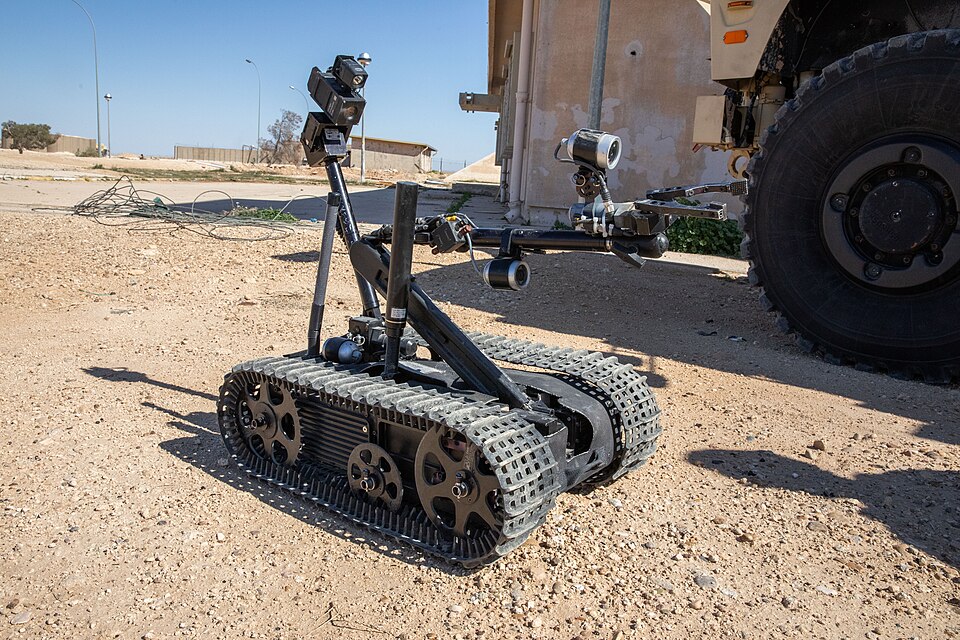
A Joint Operations Center in Agadir used Palantir's Project Maven platform with Anthropic's Claude large-language interface to fuse sensor data and guide targeting decisions.[1] Lt. Col. Ramon Leonguerrero said a kill-chain decision that once took two to three hours was completed in about three minutes during a drill.[1] U.S. troops exercised with an armed ground robot, explosive drones and a quadcopter prototype carrying a 9mm rifle.[1]
Palantir's Project Maven and the Claude interface routed live sensor feeds into commander dashboards so analysts could prioritize targets faster than manual workflows.[1]
The reporting also notes that fully autonomous lethal systems that can fire without a human in the loop already exist, though no specific operations were disclosed.[1] The tests have renewed debate among policymakers, ethicists and soldiers about the balance between speed and human control.
The mainstream summary emphasizes the rapid decision-making capabilities enabled by AI, framing this as a technological advancement. However, Milton Ezrati argues that while faster decision cycles are beneficial, the focus should be on ensuring proper governance and human oversight rather than succumbing to alarmist rhetoric. He contends that the historical context shows that technological shifts, including AI, have ultimately increased productivity and created new job opportunities, a nuance that the mainstream coverage does not fully explore. Ezrati's commentary suggests that the debate surrounding AI in military contexts should prioritize measured oversight and clear rules of engagement, rather than framing AI as an existential threat.
Additionally, the summary mentions the existence of fully autonomous lethal systems but does not delve into the implications of these technologies. Ezrati notes that experts and ethicists are calling for binding regulations on autonomous weapons, highlighting a critical perspective that the mainstream account underplays. This adds depth to the discussion about the balance between speed and human control, suggesting that the conversation is not merely about technological efficiency but also about ethical governance and accountability in military applications.
Show source details & analysis (1 source)
📌 Key Facts
- In May 2026, the U.S. Army tested AI-enabled systems during the African Lion 2026 exercise in southern Morocco.
- A Joint Operations Center in Agadir used Palantir’s Project Maven platform, with Anthropic’s Claude LLM interface, to analyze battlefield data and guide targeting.
- Lt. Col. Ramon Leonguerrero said a kill-chain decision that once took two to three hours was completed in about three minutes during a drill.
- U.S. troops exercised with an armed ground robot, explosive drones and a quadcopter prototype carrying a 9mm rifle.
- The article reports that fully autonomous lethal systems that can fire without a human in the loop already exist, though no specific operations were disclosed.
📊 Analysis & Commentary (1)
"The City Journal piece argues we should not panic about AI — instead of apocalyptic responses to reports (like military AI tests), the author urges measured governance, human‑in‑the‑loop safeguards, workforce adaptation, and targeted regulation to capture benefits while managing risks."
📰 Source Timeline (1)
Follow how coverage of this story developed over time