
Trump Poland Troop Pledge And Rubio NATO Outreach Highlight Confusion Over U.S. Deployments
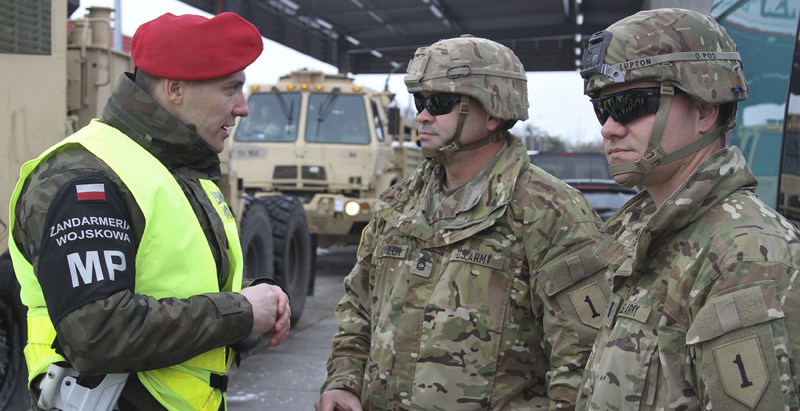
President Donald Trump pledged on Thursday, May 21, 2026, to send 5,000 additional U.S. troops to Poland, a move NATO foreign ministers debated at their May 22 meeting in Helsingborg, Sweden.[1]
At the Helsingborg meeting, ministers publicly welcomed the Poland pledge but also described U.S. messaging as confusing.[2] Polish Foreign Minister Radoslaw Sikorski said, "All's well that ends well," while Swedish Foreign Minister Maria Malmer Stenergard called the U.S. NATO position "confusing indeed" and questioned "social media negotiation." CBS News Secretary of State Marco Rubio attended to assuage allies, declined to give details on force changes, and said reductions were "not a punitive thing" as he acknowledged administration disappointment with some allies over their refusal to support U.S. operations in the Iran war.[1]
Earlier in May the administration announced it would reduce U.S. forces in Europe by about 5,000, stopped rotating roughly 4,000 service members into Poland from Germany, and halted deployment to Germany of personnel trained to fire long-range missiles.[3] Unnamed U.S. defense officials said they "spent the better part of two weeks" reacting to the initial withdrawal order and were unsure what the reversal meant for planning, and the initial pullback followed public criticism from German Chancellor Friedrich Merz and threats of tariffs on European cars.[3]
PBS's early coverage emphasized allied bewilderment at rapid shifts in U.S. posture.[3] Later reporting from CBS captured a more mixed tone, quoting ministers who publicly welcomed the Poland pledge even as they worried about how the U.S. communicates such moves.[2] Rubio warned the issue of deployments "won't be solved or addressed today" and said the alliance "has to be good for everyone who's involved." PBS
Show source details & analysis (4 sources)
📌 Key Facts
- At a NATO foreign ministers' meeting in Helsingborg, Sweden, on Friday, May 22, 2026, multiple European ministers publicly welcomed Trump's Poland troop announcement but described U.S. messaging as confusing (NATO foreign ministers' meeting in Helsingborg, Sweden).
- Polish Foreign Minister Radoslaw Sikorski responded to the reversal by saying "All's well that ends well" on Friday, May 22, 2026 (Polish Foreign Minister Radoslaw Sikorski).
- Swedish Foreign Minister Maria Malmer Stenergard called the U.S. NATO position "confusing indeed" and questioned the idea of "social media negotiation" as a way to handle alliance decisions (Swedish Foreign Minister Maria Malmer Stenergard).
- Secretary of State Marco Rubio attended the NATO meeting in Helsingborg on Friday, May 22, 2026 to try to assuage allies' concerns; he repeatedly declined en route to give details on possible changes to U.S. forces, said any reductions were "not a punitive thing," and acknowledged the administration's disappointment with some allies over refusal to support U.S. operations in the Iran war (Secretary of State Marco Rubio).
- Rubio warned the issue of U.S. deployments and burden‑sharing "won't be solved or addressed today" at the Helsingborg meeting and stressed the alliance "has to be good for everyone who's involved" (Rubio embarks on another mission to ease tensions with allies).
- President Trump's Truth Social post on Thursday, May 21, 2026 pledged an "additional 5,000 troops to Poland," a move that PBS ties to his personal relationship with Polish President Karol Nawrocki and follows his earlier comments about "studying and reviewing" troop reductions in Germany (Truth Social post).
- Earlier in May the administration said it was reducing U.S. forces in Europe by about 5,000 troops, stopped rotating roughly 4,000 service members into Poland from Germany, and halted deployment to Germany of U.S. personnel trained to fire long‑range missiles, actions that contributed to allied bewilderment (reducing U.S. forces in Europe by about 5,000 troops).
- Unnamed U.S. defense officials said they "spent the better part of two weeks" reacting to the initial withdrawal order and did not know what the subsequent reversal meant for planning, while Latvian Foreign Minister Baiba Braze said allies now see "no change of posture. For now." (unnamed U.S. defense officials).
📰 Source Timeline (4)
Follow how coverage of this story developed over time
- On Friday, May 22, 2026, at a NATO foreign ministers' meeting in Helsingborg, Sweden, multiple allied ministers publicly described Trump's rapid shift on Europe force levels as "confusing" and hard to navigate.
- The article details that earlier in May the Trump administration said it was reducing U.S. forces in Europe by about 5,000 troops, stopped rotating roughly 4,000 service members into Poland from Germany, and halted deployment to Germany of U.S. personnel trained to fire long-range missiles.
- Trump's Truth Social post on Thursday, May 21, 2026, pledging an "additional 5,000 troops to Poland" is explicitly tied in this account to his personal relationship with, and prior endorsement of, Polish President Karol Nawrocki.
- Unnamed U.S. defense officials are quoted on background saying "we just spent the better part of two weeks" reacting to the initial withdrawal order and that they also do not know what the reversal means for planning.
- Latvian Foreign Minister Baiba Braze is quoted saying allies understood that U.S. posture was being reconsidered and now view there as being "no change of posture. For now."
- The piece reiterates that Trump's initial withdrawal order followed public criticism from German Chancellor Friedrich Merz over U.S. Iran war strategy, and that Trump coupled the withdrawal comments with threats of additional tariffs on European cars.
- On Friday, May 22, 2026, Secretary of State Marco Rubio attended a NATO foreign ministers' meeting in Helsingborg, Sweden, tasked with assuaging allies' concerns about U.S. intentions toward NATO and troop levels.
- Rubio declined en route to Sweden to give details on possible further changes to the U.S. military presence in Europe or reductions under the NATO Force Model, despite President Trump’s May 21 social media pledge to send 5,000 additional troops to Poland.
- Rubio told reporters in Miami on May 22 that President Trump and others in the administration are 'very disappointed' with NATO, particularly over some allies’ refusal to support U.S. operations in the Iran war, while still calling himself a strong supporter of the alliance.
- The article notes Rubio has repeatedly been dispatched in 2026 to present a less antagonistic face for the Trump administration to allies, including at the Munich Security Conference and on a recent visit to Italy and Pope Leo XIV after Trump publicly criticized the pontiff.
- At a NATO foreign ministers' meeting in Helsingborg, Sweden, on Friday, May 22, 2026, multiple European ministers publicly welcomed Trump's Poland troop announcement but described U.S. messaging as confusing.
- Polish Foreign Minister Radoslaw Sikorski responded to the reversal by saying "All's well that ends well" on May 22, 2026.
- Swedish Foreign Minister Maria Malmer Stenergard called the U.S. NATO position "confusing indeed" and questioned "social media negotiation" as a way to handle alliance decisions.
- Secretary of State Marco Rubio told reporters in Sweden on May 22, 2026 that any U.S. troop reductions in Europe were "not a punitive thing" but acknowledged Trump's disappointment with some NATO allies' refusal to join offensive operations against Iran.
- Rubio said the issue of U.S. deployments and alliance burden-sharing "won't be solved or addressed today" at the Helsingborg meeting and stressed that the alliance "has to be good for everyone who's involved."
- The article ties Trump's May 21, 2026 Poland announcement to his earlier statement that the U.S. was "studying and reviewing" possible troop reductions in Germany following a dispute with Chancellor Friedrich Merz, reinforcing the sense of rapidly shifting U.S. posture toward NATO.