
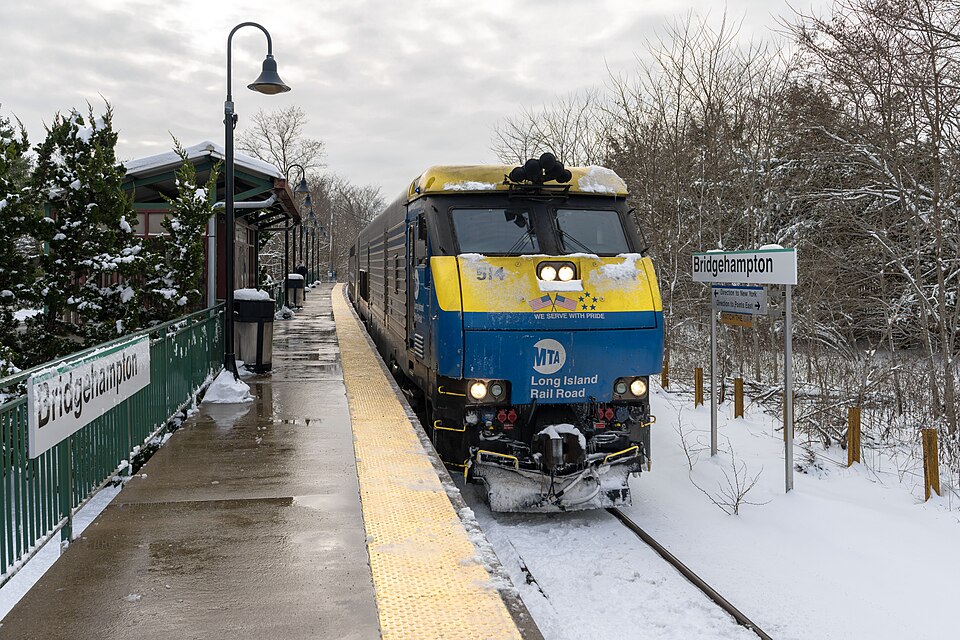
Long Island Rail Road Strike Ends As Tentative Deal Restores Service
Gov. Kathy Hochul announced Monday that the MTA and five Long Island Rail Road unions reached a tentative contract agreement ending the strike.[1]
About 3,500 LIRR employees had walked off the job during the stoppage, which shut down the railroad for three days.[2] Phased train service is expected to resume Tuesday, May 19, 2026, at noon Central, though officials warned full restoration could take days for inspections and crew positioning.[1] The MTA had deployed 275 free shuttle buses from six stations with capacity for about 13,000 riders compared with more than 250,000 normal daily LIRR riders.[3]
Five unions representing roughly half the LIRR workforce walked off at 12:01 a.m. Saturday, May 16, 2026.[4] Negotiators had been deadlocked over wages and health-care costs, with unions seeking a 14.5% raise over four years and the MTA offering 9.5% over the first three years while contesting the fourth year and proposing bigger new-hire health-care contributions.[5] Payroll records show typical 2024 LIRR pay of about $121,646 plus roughly $25,957 in overtime, putting typical total compensation near $150,000 and above Long Island's 2023 median household income.[6]
Negotiations resumed under pressure from the National Mediation Board and state officials after a late-night session that ran until about 1:30 a.m. Monday.[5] Early coverage emphasized MTA and payroll figures to argue workers were among the highest-paid in the country, while later reporting highlighted unions' claims about inflation and cost-of-living pressures as central to their demand for higher pay.[5][4]
The mainstream summary largely frames the LIRR strike as a necessary labor action driven by union demands for higher wages, but it downplays critical perspectives on the justification for these demands. Ken Girardin argues that the strike was unjustified given the already high compensation of LIRR workers, which includes substantial overtime, suggesting that the public interest should take precedence over union leverage in such disputes. He advocates for policy changes to prevent future strikes that disrupt essential services, a viewpoint that contrasts sharply with the more sympathetic portrayal of the unions in the mainstream account. Additionally, James Freeman emphasizes that public-sector workers are overpaid relative to typical wages, framing their strike as an audacious disruption of critical infrastructure rather than a legitimate labor action. This critique of public-sector compensation and the leverage exerted by unions is notably absent from the mainstream narrative, which tends to focus on the unions' claims regarding inflation and cost-of-living pressures without adequately addressing the counterarguments about worker pay and public disruption.
While the mainstream summary mentions the high salaries of LIRR workers, it does not explore the implications of these figures in the context of public sentiment and economic impact, as highlighted by Girardin and Freeman. They argue that the unions' demands are not only excessive but also exploitative of the public, a framing that suggests a deeper societal conflict over labor rights and public service priorities that the mainstream coverage does not fully engage with.
Show source details & analysis (8 sources)
📌 Key Facts
- Five unions representing about half of the Long Island Rail Road workforce walked off the job at 12:01 a.m. Saturday, May 16, 2026 (Five unions).
- About 3,500 Long Island Rail Road employees walked off the job for three days in the wage dispute (about 3,500 Long Island Rail Road employees).
- The strike shut down the Long Island Rail Road and disrupted hundreds of thousands of commuters; the MTA deployed 275 free shuttle buses from six stations into Queens with capacity for about 13,000 daily riders versus more than 250,000 normal LIRR riders (275 free shuttle buses).
- A late-night National Mediation Board bargaining session on Sunday, May 17, 2026 ran until about 1:30 a.m. Monday, May 18, 2026 without producing a deal, and the NMB summoned both sides to resume talks at 7:30 a.m. Central on Monday, May 18, 2026 (National Mediation Board bargaining session).
- Unions demanded a 14.5% raise over four years, while the MTA had offered 9.5% raises over the first three years (with a disputed fourth-year proposal) and at one point sought to raise new hires' health-care contributions from 2% to 10% (14.5% raise).
- Payroll data showed average 2024 LIRR pay of $121,646 plus average overtime of $25,957 (roughly $150,000 typical annual earnings), with 325 employees receiving at least $100,000 in overtime; by comparison Long Island's 2023 median household income was about $131,000 (Payroll data).
- Gov. Kathy Hochul announced that the MTA and the five LIRR unions reached a tentative contract agreement ending the strike and said phased LIRR service will resume beginning Tuesday, May 19, 2026 at noon Central, though officials warned full restoration could take days for inspections and crew positioning (Gov. Kathy Hochul).
📊 Analysis & Commentary (4)
"A City Journal opinion argues that the multi-day LIRR strike — which snarled commutes and forced limited bus shuttles — was unjustified given transit workers' high compensation and the disproportionate public harm; the author criticizes the unions and urges structural, policy remedies so essential transit can no longer be crippled by strikes."
"This Wall Street Journal opinion piece comments on the Long Island Rail Road strike (the May 18 LIRR story), arguing that many LIRR workers are overpaid and mocking their 'nerve' in striking — contending that well‑paid public‑sector employees unfairly leverage essential public infrastructure to the detriment of commuters and taxpayers."
"The WSJ editorial is a direct critique of the Long Island Rail Road strike (the 'Long Island Rail Road Strike Enters First Weekday' story), arguing that LIRR unions are using their monopoly power to extort taxpayers with a 14.5% raise demand despite many workers receiving high overtime pay, and that such strikes unfairly punish commuters and should be resisted."
"The author is commenting on the Long Island Rail Road strike story — arguing that Gov. Kathy Hochul's steady, pragmatic intervention produced a swift, balanced resolution that restored service, defused overheated media frames about pay, and showcased effective crisis management and political prudence."
📰 Source Timeline (8)
Follow how coverage of this story developed over time
- The Wall Street Journal reports that about 3,500 Long Island Rail Road employees walked off the job for three days over a wage dispute.
- Gov. Kathy Hochul said Monday, May 18, 2026, that a deal was reached between the Metropolitan Transportation Authority and the five unions representing LIRR workers.
- Hochul stated that phased train service on the Long Island Rail Road will resume on Tuesday, May 19, 2026, at noon.
- On Monday, May 18, 2026, Gov. Kathy Hochul announced that the MTA and the five Long Island Rail Road unions reached a tentative contract agreement ending the strike.
- Hochul said in a statement on X that phased LIRR service will resume beginning Tuesday, May 19, 2026, at noon Central time.
- The article notes that the National Mediation Board summoned LIRR union leaders and MTA management back to bargaining Sunday evening, leading to resumed negotiations on Monday and the tentative agreement.
- Union leaders had previously warned it could take days to fully restore train operations, even after a tentative deal was reached.
- The article specifies that Monday, May 18, 2026, is the first weekday of the Long Island Rail Road shutdown, with commuters forced into complex combinations of car, bus and subway routes.
- It reports that five unions representing about half of LIRR’s workforce walked off the job at 12:01 a.m. Saturday, May 16, 2026, in the first strike since a two-day work stoppage in 1994.
- The story confirms that union and MTA negotiators bargained much of Sunday, May 17, wrapping around 1 a.m. Monday, May 18, without a deal, and then returned to the table Monday under National Mediation Board and Gov. Kathy Hochul’s pressure.
- Union leaders are quoted emphasizing inflation and cost-of-living concerns, with Brotherhood of Locomotive Engineers and Trainmen vice president James Louis saying, "We're just trying to keep their heads above water. We're not asking for anything outrageous."
- Gov. Hochul said Sunday, May 17, that workers would lose every dollar they stand to gain in a new contract by remaining on strike, while MTA Chair Janno Lieber said LIRR service could resume as soon as Tuesday, May 19, if a deal is reached Monday.
- The article notes the unions and MTA have been negotiating since 2023, that a Trump-administration expert panel appointment in September 2025 temporarily averted a strike, and that talks remain stalled over salary and health-care costs.
- On Monday, May 18, 2024 payroll data from the LIRR showed employees had an average 2024 income of $121,646 plus an average of $25,957 in overtime pay, for typical annual earnings of about $150,000.
- The article reports that the median household income on Long Island in 2023 was $131,000, lower than the typical individual LIRR employee’s total compensation.
- LIRR unions are demanding a 14.5% raise over four years with no conditions, while the MTA has offered a 9.5% raise over three years plus an additional 4.5% in the fourth year tied to productivity increases.
- Contract rules allow LIRR workers to earn double pay if they operate both electric and diesel equipment, or work in both a yard and on an active train in the same day.
- Payroll data reviewed by the New York Post and cited here show 325 LIRR employees receive at least $100,000 annually in overtime alone.
- Brotherhood of Locomotive Engineers and Trainmen LIRR General Committee Chair Gil Lang is quoted saying workers have gone three years without raises and that the union "cannot make any more compromises to cover for the MTA’s mismanagement."
- CBS segment published at 7:22 a.m. Central on Monday, May 18, 2026, reiterates that the Long Island Rail Road is on strike for the first time in decades over wages and health benefits.
- The video framing emphasizes that the strike is 'impacting thousands of workers' in addition to hundreds of thousands of riders, underscoring labor-side consequences.
- Article text confirms the core issues in dispute as wages and health benefits, aligning with but also succinctly restating the stakes from the workers' perspective.
- By Monday morning, May 18, 2026, the LIRR strike had entered its third day, with the railroad still fully shut down.
- The National Mediation Board summoned the MTA and unions for talks Sunday night, May 17, but no deal was reached; bargaining is scheduled to resume at 7:30 a.m. Central on May 18.
- The MTA has deployed 275 free shuttle buses from six LIRR stations into Queens, with total capacity for about 13,000 daily riders compared with more than 250,000 normal daily LIRR riders.
- Even if an agreement is reached on Monday, May 18, sources say full LIRR service will not resume immediately and will require at least one additional day for inspections of tracks, equipment and signals and for crew positioning.
- The article restates that the wage dispute centers on the fourth year of a four-year deal, with the MTA having agreed to 9.5% raises over the first three years and then proposing to raise new-hire health-care contributions from 2% to 10%.
- Former New York City transportation commissioner Sam Schwartz warned that South Shore drivers could see unusually heavy backups on the Belt Parkway and Gowanus Expressway and that subways and buses will experience heavier loads.
- A late-night National Mediation Board bargaining session on Sunday, May 17, 2026, ran until about 1:30 a.m. Monday, May 18, 2026, without producing a deal to end the strike.
- The strike has shut down the Long Island Rail Road, leaving hundreds of thousands of commuters facing major disruptions at the start of the workweek.
- The National Mediation Board summoned both sides and scheduled bargaining to resume at 7:30 a.m. Monday, May 18, 2026.
- Union sources say the MTA had agreed to a 9.5% wage hike for the first three contract years and was 2 percentage points apart on the fourth year before suddenly demanding new hires’ health-care contributions jump from 2% to 10%.
- MTA Chair and CEO Janno Lieber said LIRR unions are the highest-paid railway workers in the country, earning well over six figures, and accused them of trying to force a bad deal.
- Gov. Kathy Hochul said each day of the strike equates to about $61 million in economic losses and publicly appealed Sunday, May 17, 2026, for unions to return to the table.
- The MTA plans to begin strike shuttle bus service at 4 a.m. Monday, May 18, 2026, linking select Long Island locations to the New York City subway, but only at six sites.