
April Inflation And Iran War Energy Shock Pressure Retailers As Walmart Eyes Tariff-Funded Price Cuts
Walmart told investors on Thursday, May 21, 2026 it will likely use newly refunded U.S. tariff payments to cut store prices as high fuel and energy costs squeeze shoppers.[1]
CFO John David Rainey said investing in price is "the single best return" on capital and that customers at Walmart gas stations have recently begun filling up with fewer than 10 gallons, a sign of stress.[1] Walmart reported U.S. sales growth of 4.1% from February through April but warned that persistently high gasoline tied to the Iran war will push up in-store costs through higher transportation and fertilizer expenses.[1]
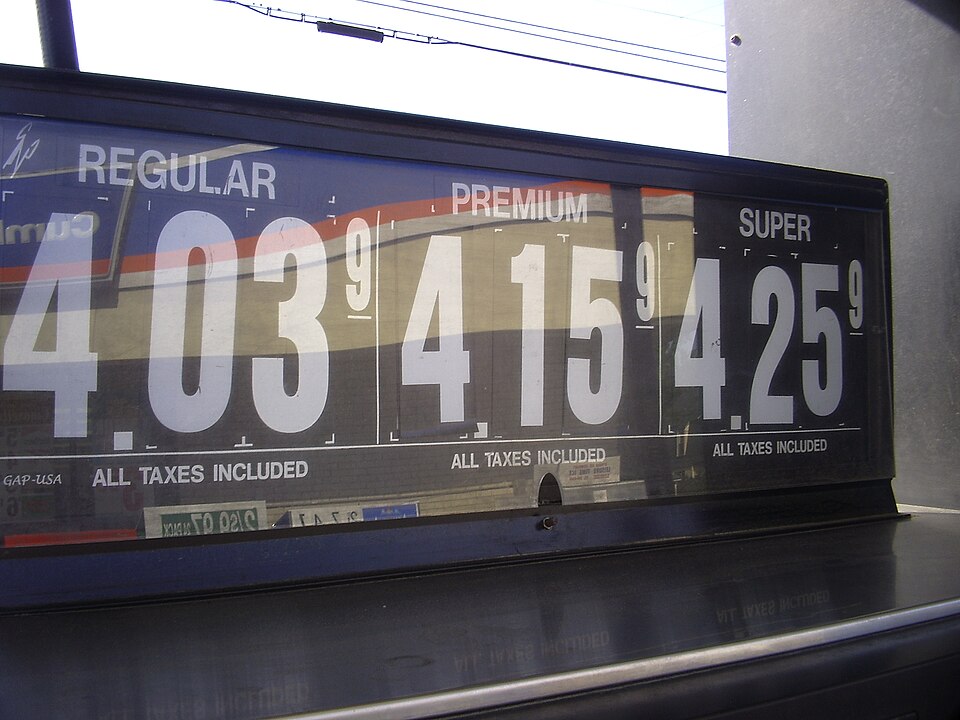
On Wednesday, May 13, 2026 the Labor Department reported the producer price index for April rose 6% year-over-year and 1.4% from March, with energy components up 7.8% month-to-month and gasoline up 15.6%.[2] That same day the International Energy Agency warned Iran's closure of the Strait of Hormuz had cut global oil supplies by about 12.8 million barrels per day, depleting inventories at a record pace.[2] AAA reported the national average gasoline price at roughly $4.51 per gallon on May 13.[2] By May 20 AAA put the average at $4.56 and GasBuddy forecast summer prices could average about $4.80 and might test $5.02 if the Strait of Hormuz remains closed.[3]
PBS detailed how those energy shocks and rising freight costs are feeding food and retail inflation, reporting food-at-home prices rose 2.9% year-over-year in April and noting diesel was about 61% higher, which raises farm and delivery expenses.[4] More recent coverage shifted to retailer reactions, with NPR laying out Walmart's plan to use tariff refunds for price cuts while noting Home Depot may instead apply refunds to offset mounting fuel costs.[1]
The mainstream summary emphasizes Walmart's plans to cut prices using tariff refunds but does not address the broader implications of rising energy costs on consumer behavior and economic stability. Matthew Yglesias argues that reliance on temporary price cuts is insufficient and advocates for a long-term strategy focused on clean energy production to shield consumers from geopolitical shocks like the Iran war. He asserts that investing in clean energy infrastructure would provide a more sustainable solution to energy price volatility rather than short-term fixes that could exacerbate inflation in the long run. This perspective highlights a critical gap in the mainstream narrative, which primarily focuses on immediate price adjustments without considering the structural changes needed to mitigate future energy crises.
Moreover, the summary does not mention the psychological impact of inflation on consumers. Roland Fryer points out that the perception of rising prices is often driven by visible price increases in essential goods, such as energy and groceries, which can feel more acute than what headline inflation numbers suggest. This insight underscores the need for policymakers to consider how inflation affects consumer sentiment and spending patterns, a dimension that the mainstream account overlooks while concentrating on corporate strategies and economic indicators.
Show source details & analysis (6 sources)
📌 Key Facts
- On Wednesday, May 13, 2026 the U.S. Labor Department reported the U.S. producer price index for April rose 6% year‑over‑year (the highest in more than three years) and 1.4% from March (the largest monthly gain in more than four years); energy components jumped 7.8% month‑to‑month and 22.7% year‑over‑year, with gasoline up 15.6% and diesel up 12.6%.
- On May 13, 2026 the International Energy Agency warned that Iran’s closure of the Strait of Hormuz has cut global oil supplies by about 12.8 million barrels per day since late February, depleting inventories at a record pace.
- Gasoline prices have surged: GasBuddy forecasters say U.S. pump prices could average about $4.80 per gallon for the summer and might test the prior all‑time high of $5.02 if the Strait of Hormuz remains closed, while AAA reported the national average at roughly $4.51 per gallon on May 13, 2026 and $4.56 on May 20, 2026.
- The Commerce Department reported on Thursday, May 14, 2026 that U.S. retail sales rose 0.5% in April 2026 (0.3% excluding gas), with department store sales down 3.2% and analysts linking the slowdown in nonessential categories to higher gasoline prices tied to the Iran war.
- Grocery inflation climbed in April: food‑at‑home prices were up 2.9% year‑over‑year and overall food costs (including restaurants) rose 3.2%; fresh fruits and vegetables were about 6.5% higher and meat about 8.8% higher, and Purdue economists say energy‑cost increases from the Iran war may take three to six months to fully show up in retail grocery prices while diesel was roughly 61% higher year‑over‑year as of May 12.
- Rising logistics costs are feeding wholesale inflation: wholesale truck freight rose more than 8% from March to April and air freight climbed 3.6%, and economists warn diesel’s role in farm equipment and commercial shipping could put additional upward pressure on food prices if the Iran war persists.
- On Thursday, May 21, 2026 Walmart CFO John David Rainey told investors Walmart will likely use newly refunded U.S. tariff payments to lower store prices, calling investment in price “the single best return” on capital, and said customers at Walmart gas stations have recently begun filling up with fewer than 10 gallons—an "indication of stress" among shoppers.
- The U.S. government has begun issuing tariff refunds tied to tariffs imposed by President Trump and later struck down by the Supreme Court, and retailers are signaling different uses for those refunds—Walmart plans price cuts while Home Depot may use its refunds to offset mounting fuel expenses instead of lowering prices.
📊 Analysis & Commentary (6)
"The author argues (in an opinion piece) that instead of short‑term fixes when oil and gas prices spike, the U.S. should invest to create abundant, cheap clean electricity and electrify the economy to permanently insulate consumers from geopolitically driven energy inflation — a position framed in response to recent reporting about rising inflation driven by energy costs."
"The WSJ editorial argues that because some ObamaCare surtaxes aren’t inflation‑indexed, inflation and rising asset values are pushing more middle‑class taxpayers into higher effective tax rates (a ‘‘stealth’’ tax increase), and it urges lawmakers to use reconciliation to repeal, reduce, or index those surtaxes."
"The WSJ opinion argues that currency swap lines — exemplified by Treasury Secretary Scott Bessent’s endorsement of an emergency swap with the UAE — are low‑cost, interest‑earning foreign‑policy tools that could help blunt the Iran‑war energy shock, and Congress should modernize laws that now constrain their use."
"The WSJ opinion uses recent Labor Department and energy‑market reporting (notably the April CPI/PPI surge tied to the Iran war) to argue that concentrated, visible price shocks — especially in energy and freight — make everything feel more expensive than headline inflation suggests, and that policymakers should heed upstream cost pressures and distributional effects rather than rely on headline CPI alone."
"The WSJ opinion contends that economic capacity and consequences should drive foreign‑policy choices: sustained economic backing can secure victory for Ukraine, while military escalation with Iran risks steep domestic economic pain (energy‑driven inflation) and therefore should be avoided or tightly constrained."
"This Slow Boring opinion piece critiques recent policy choices (linked to the Iran/Strait of Hormuz energy shock covered in the April inflation story) as a 'dumb' cause of rising grocery prices, arguing that policymakers ignored the predictable pass‑through from higher energy costs to wholesale and retail food prices and should reverse or mitigate those decisions."
📰 Source Timeline (6)
Follow how coverage of this story developed over time
- On Thursday, May 21, 2026, Walmart CFO John David Rainey told investors the company will likely use newly refunded U.S. tariff payments to lower store prices, calling investment in price 'the single best return' on capital right now.
- Rainey said that in recent weeks customers at Walmart gas stations have begun filling up with fewer than 10 gallons for the first time since 2022, which he described as an 'indication of stress' among shoppers facing higher fuel costs.
- Walmart reported U.S. sales growth of 4.1% from February through April 2026, and executives warned that persistently high gasoline prices tied to the Iran war and Strait of Hormuz disruptions will eventually push up in-store prices via higher transportation and fertilizer costs.
- The article notes that the U.S. government last week began refunding tariffs imposed by President Trump that were later struck down by the Supreme Court, and that Home Depot may instead use its own tariff refunds to offset mounting fuel expenses rather than cutting prices.
- On Wednesday, May 20, 2026, AAA reported the national average gasoline price at $4.56 per gallon, the highest since 2022.
- GasBuddy forecasts U.S. gasoline prices will average about $4.80 per gallon between Memorial Day weekend and Labor Day 2026.
- GasBuddy analyst Patrick De Haan said gas prices could test the prior all-time high of $5.02 per gallon if the Strait of Hormuz remains closed late into the summer.
- The article notes gas prices are up more than $1.40 from a year earlier and more than 50% since the U.S. and Israel attacked Iran in late February 2026.
- De Haan said even after the Strait of Hormuz reopens, it could take a year or more for gasoline prices to fully recover.
- The piece reiterates that summer gasoline blend requirements and seasonal demand typically add a combined 10-30 cents per gallon to pump prices.
- On Thursday, May 14, 2026, the Commerce Department reported U.S. retail sales rose 0.5% in April 2026, down from a revised 1.6% gain in March.
- Retail sales excluding gas stations increased 0.3% in April, compared with a 0.7% increase excluding gas in March 2026.
- In April 2026, department store sales fell 3.2%, furniture and home furnishings sales slipped 2%, and building material and garden equipment sales rose 0.1%.
- Online retailers saw a 1.1% sales increase in April 2026, while electronics and appliance stores posted a 1.4% gain and restaurants logged a 0.6% increase.
- The article links the April slowdown in nonessential retail categories to higher gasoline prices driven by the Iran war, noting the average U.S. regular gas price reached $4.53 per gallon on Thursday, May 14, 2026, $1.35 higher than a year earlier.
- The piece reiterates that U.S. employers added 115,000 jobs in the most recent month despite the Iran war shock, tying labor-market resilience to the consumer-spending backdrop.
- The article reports that food-at-home prices rose 2.9% in April 2026 compared with April 2025, the highest year-over-year inflation rate for groceries since August 2023.
- It says overall food prices, including restaurants and other prepared-meal outlets, increased 3.2% year-over-year in April 2026, according to the Labor Department's consumer price index.
- Purdue University economists Ken Foster and Bernhard Dalheimer say energy-cost increases from the Iran war typically take three to six months to fully show up in retail grocery prices, so much of the current food inflation likely predates the conflict.
- The article notes that as of Tuesday, May 12, 2026, average U.S. diesel prices were up 61% from a year earlier, according to AAA, affecting fishing boats, farm equipment and trucks that move 83% of U.S. agricultural products.
- It cites USDA data that grocery prices have risen an average of 2.6% annually over the last 20 years, providing a long-run baseline to compare the current 2.9% grocery inflation rate.
- Consumers in U.S. cities paid 6.5% more for fresh fruits and vegetables and 8.8% more for meat in April 2026 than in April 2025, reflecting particular pressure on perishable and refrigerated goods.
- The story attributes part of a 40% rise in retail tomato prices in the 12 months before April 2026 to the Trump administration's 17% duty on fresh Mexican tomato imports imposed in July 2025.
- It links a 15% year-over-year rise in beef prices in April 2026 in part to dry weather in the Western U.S. and other supply factors, and notes coffee prices were up 18.5%, in part due to drought and other weather issues abroad.
- Independent grocer Sparrow Market in Ann Arbor, Michigan, reports that multiple meat, produce and dry-goods vendors have recently added fuel surcharges to deliveries and some wholesale prices have risen, pressuring margins.
- On Wednesday, May 13, 2026, the Labor Department reported that the U.S. producer price index for April 2026 rose 6% from a year earlier, the highest year-over-year wholesale inflation reading in more than three years.
- Producer prices increased 1.4% from March to April 2026, the largest monthly gain in more than four years.
- Energy components of the PPI jumped 7.8% in April from March and 22.7% from April 2025; gasoline prices rose 15.6% month-over-month while diesel prices rose 12.6%.
- AAA data cited in the article show the national average gasoline price reached $4.51 per gallon as of Wednesday, May 13, 2026.
- Excluding food and energy, core producer prices rose 1% month-over-month in April and 5.2% year-over-year.
- The International Energy Agency warned on May 13, 2026 that mounting supply losses from Iran’s closure of the Strait of Hormuz have reduced global oil supplies by 12.8 million barrels per day since late February, depleting inventories at a record pace.
- The article notes that wholesale truck freight costs rose more than 8% from March to April, and air freight costs rose 3.6% over the same period.
- Oxford Economics economist Grace Zwemmer said diesel’s role in powering farm equipment and commercial shipping means higher fuel costs could put upward pressure on food prices if the Iran war persists.
- Economist Carl Weinberg of High Frequency Economics wrote that the unexpectedly high PPI figures would "set off alarm bells" at the Federal Reserve and in financial markets.
- The piece explicitly links the April PPI surprise to political pressure over affordability ahead of the November 3, 2026 U.S. elections.