
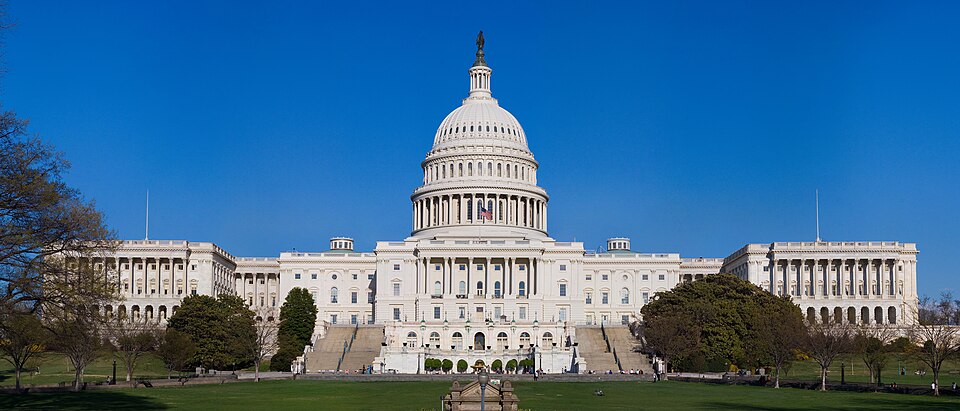
Trump's $87.6 Billion Iran War Supplemental Faces Senate Resistance
The White House on Wednesday sent Congress an $87.6 billion supplemental request largely to cover costs tied to the Iran war, setting up an immediate fight on Capitol Hill over its price and scope.[1]
The package asks roughly $67 billion for the Pentagon — including $21 billion earmarked for munitions and stockpile replenishment — and bundles other items such as $11.1 billion in aid for farmers, a $1.4 billion Ebola response, and infrastructure and Energy Department nuclear-security spending.[2] A separate White House request also seeks about $672 million for removal and verification of Iranian nuclear materials, a detail that adds to lawmakers' jitters.[3] Lawmakers moved quickly to push back: the Senate this week approved a symbolic war-powers rebuke of the administration's Iran campaign, and Senate Republican leaders warned the supplemental faces an uncertain path.[4][5]
The request follows months of war, blockade and diplomacy. On Feb. 28 the U.S. and Israel struck Iranian targets and a Pakistan-brokered ceasefire took effect April 7-8; the U.S. then imposed a naval blockade of Iranian ports and mediators later sketched a Pakistan-drafted memorandum to reopen the Strait of Hormuz and begin a 60-day negotiating window.[6] Pentagon officials have given varying public tallies of the war's price — an April-May Pentagon accounting put direct military costs near $29 billion — but analysts and later Pentagon planning materials say replenishing munitions and repairing systems will take years and far more money.[7]
Coverage of the war's cost has shifted from relatively modest early figures to recognition of much larger needs. Initial Pentagon testimony emphasizing $25-29 billion in direct spending has been eclipsed by administration planners and outside analysts who say total budgetary and industrial fixes could run well above that, prompting critics to call the $87.6 billion ask a rebranding of a broader defense and economic package rather than a narrow war supplemental.[8][2]
The mainstream summary frames the $87.6 billion supplemental request as primarily a response to the Iran war, but it downplays the significant critiques surrounding the allocation of funds. For instance, the request bundles military spending with unrelated items like farm aid and Ebola response, which critics argue dilutes the urgency of military needs and raises concerns about fiscal responsibility. BlueSky users have pointed out that this approach resembles a political maneuver rather than a straightforward war funding request, with House Minority Leader Hakeem Jeffries labeling it a 'reckless and costly war of choice.' Furthermore, while the Pentagon's reported direct military costs stand at $29 billion, independent estimates suggest that the overall economic impact of the war could reach as high as $132 billion, highlighting a much larger financial burden than the mainstream account acknowledges. This discrepancy raises questions about the administration's transparency and the long-term implications of its funding strategy.
Moreover, the mainstream narrative does not fully capture the skepticism among lawmakers regarding the administration's handling of the Iran conflict. The Senate's recent symbolic war-powers rebuke indicates a significant pushback against the administration's approach, suggesting that many lawmakers are not only concerned about the costs but also about the broader implications of U.S. military involvement in the region. This political resistance reflects a growing unease that is not adequately represented in the mainstream coverage, which tends to focus more on the request's logistics rather than the contentious political landscape surrounding it.[9][10][1]
Show source details & analysis (324 sources)
📊 Relevant Data
The $87.6 billion supplemental request includes $21 billion for the Department of Defense to support munitions procurement and industrial base capabilities, with the remainder allocated to non-defense items such as $1.4 billion for Ebola response and $768 million for Energy Department nuclear security programs.
White House requests $87.6 billion supplemental spending for Iran war and other programs — CNBC
Total U.S. defense funding for FY2026 reached approximately $1 trillion, including $838.7 billion in the defense appropriations act plus additional mandatory funding.
President Proposes $1.5 Trillion Defense Budget — National Guard Association of the United States
Pentagon officials reported direct military costs of the Iran war at $29 billion as of mid-May 2026, with independent estimates including economic impacts reaching $132 billion overall.
The Costs of the Iran War: Thousands of Lives and Billions in Damage — The New York Times
📌 Key Facts
- On Tuesday, May 12, 2026, Secretary Pete Hegseth, Joint Chiefs Chairman Gen. Dan Caine and Pentagon comptroller Jules Hurst are scheduled to defend the $1.5 trillion FY 2027 defense budget in a House Appropriations Committee hearing.
- The article specifies that the request would raise defense spending by nearly 50% from 2026 levels while cutting domestic spending.
- It reports Hegseth's April testimony line that 'the biggest challenge, the biggest adversary we face at this point are the reckless, feckless, and defeatist words of congressional Democrats and some Republicans.'
- Hurst previously told Congress that the Iran war has cost at least $25 billion so far, mostly for munitions, with outside reports suggesting the total may be higher.
- The story notes Hegseth publicly accused Sen. Mark Kelly of divulging classified information on CBS and said he would have Pentagon legal counsel review Kelly's remarks.
- It adds that Senate Minority Leader Chuck Schumer and other Democrats have pledged to ensure the $1.5 trillion request 'never passes,' highlighting the 60-vote filibuster hurdle in the Senate.
- On Tuesday, May 12, 2026, Defense Secretary Pete Hegseth and Joint Chiefs Chairman Gen. Dan Caine are testifying in back-to-back hearings before the House and Senate Appropriations subcommittees that oversee defense spending on the $1.5 trillion fiscal 2027 budget request.
- The article specifies that the $1.5 trillion Pentagon proposal represents a 42% increase over 2026 defense spending levels, slightly refining earlier characterizations of an almost 50% jump.
- President Trump said Monday, May 11, 2026, that the Iran ceasefire is 'on life support' and called Iran's latest peace proposal 'totally unacceptable,' linking the fraught ceasefire directly to the new budget push.
- The story reiterates that Hegseth previously told Congress the Iran war has cost $25 billion so far, while unnamed U.S. officials say internal assessments put the cost closer to $50 billion, sharpening the dispute over the war's true price tag.
📊 Analysis & Commentary (32)
"The WSJ opinion argues that, in light of public clashes over who 'controls' the Strait and claims of a U.S. blockade, Washington should stop relying on rhetoric and instead harden the blockade with clearer legal authority, sustained operational capacity, allied cooperation and measures to close sanctions‑evasion channels so the blockade has real 'teeth.'"
"The WSJ opinion is commenting on recent CENTCOM testimony and public disputes over Iran (the CBS/NPR/New York Times reporting captured in 'Trump, Iran Officials Clash...'), arguing that Admiral Brad Cooper’s measurable, sober accounting of battlefield results is the most credible baseline for judging U.S. progress — preferable to White House hyperbole — and that his metrics should inform funding and strategy even as risks persist."
"The City Journal opinion argues that the planned U.S. strike on Iran was the culmination of decades of Iranian aggression and therefore justified, criticizes the decision to delay or call it off at Gulf leaders' request as undermining U.S. leverage, and urges that credible, force‑backed pressure — not empty pauses — is needed to address the long‑standing threat."
"The WSJ commentary endorses the view (citing Seth Cropsey) that Iran’s regime is fundamentally hostile and will act accordingly — like the parable’s scorpion — so Western policy must abandon the hope that concessions will reform Tehran and instead build clear, durable deterrence."
"The WSJ opinion argues that current Pentagon fixes—big spending commitments to legacy primes—won’t fix missile and munitions shortages because the real problem is industry concentration; instead the Pentagon should use procurement to create and foster competing alternative suppliers so more firms can produce needed weapons at scale."
"The WSJ editorial comments on the recent U.S. pause in strikes and diplomacy with Iran (as reported in coverage of Trump's halted May 19 strike plan), arguing Trump has rightly refused a weak settlement but warning the cease‑fire has been stretched and Iran is exploiting leverage (notably the Strait of Hormuz), so the administration must be ready to back diplomacy with firmer measures rather than accept a bad deal."
"A critical Persuasion commentary (matching reporting on the Trump Iran negotiations) argues that public talk — and allied fantasies — about installing a friendly leader in Iran reveal a dangerous, politically driven appetite for regime change that would undermine diplomacy, escalate the conflict, and produce serious regional blowback."
"Bernard‑Henri Lévy criticizes mainstream commentary on the Iran war (as covered in reporting about the U.S. pause for negotiations with Tehran), arguing that televised experts and intellectuals express a sickening, reflexive anti‑American glee or moral superiority that reduces serious debate to spectacle and corrodes responsible public judgment."
"The author treats reports of a draft U.S.-Iran memorandum reopening the Strait of Hormuz as potentially significant but urges skepticism — arguing it may be a tactical pause mediated by regional actors rather than a durable turning point, especially given classified intelligence that Iran retained substantial military capability."
"This Nate Silver analysis examines how popular the Iran war actually is, arguing that measured support is conditional and sensitive to question framing and visible costs (economic disruption, munitions, casualties) and that shifting intelligence and elite messaging have eroded durable public backing — a reading grounded in the reporting about the U.S.-Iran war and its political/economic fallout."
📰 Source Timeline (324)
Follow how coverage of this story developed over time
- On Wednesday, July 1, 2026, Vice President JD Vance delivered a speech to active-duty personnel at Naval Air Station Oceana in Virginia Beach defending President Trump's effort to use negotiations to 'unwind' the Iran war.
- Vance criticized unnamed critics who, he said, want the military to 'just keep going and keep going' and who attack Trump for using battlefield 'leverage' to negotiate.
- He reiterated the administration's claimed Iran war objectives as dismantling Iran's nuclear program, crippling its military and destroying its defense industrial base, despite U.S. intelligence suggesting Iran's military was less damaged than portrayed.
- Vance told troops that 'the president of the United States has asked you to do more than I think any group of service members has ever been asked to do' over the past 18 months, while offering no timeline for ending hostilities or deployments.
- The article highlights Vance's effort to reconcile his past opposition to 'forever wars' with his current defense of Trump's Iran policy, framing the war as having 'clear objectives' rather than an ideological shift.
- On Monday, June 29, 2026, Secretary of State Marco Rubio and Iran envoy Steve Witkoff held separate unclassified phone briefings for the full House and Senate, the first such all-member briefings since Trump and Iran signed their mid-June memorandum of understanding.
- Democratic Reps. Madeleine Dean, Gregory Meeks, and Debbie Wasserman Schultz used the House call to question the memorandum, with Meeks pressing for both a public Foreign Affairs Committee hearing and a classified briefing, and Wasserman Schultz challenging planned oil-sanctions relief until the call abruptly ended.
- Republican Rep. Rich McCormick criticized the logic of negotiating with a "defiant" Iran and objected to lifting sanctions before a final agreement, while Rubio responded that Iran is already taking steps it had previously refused and said success is "not even likely" but worth attempting.
- Rep. Derrick Van Orden raised constituent concerns that money could flow to Iran before it complies with a final deal and urged the administration to communicate enforcement and monitoring mechanisms more clearly to the public.
- Rubio told lawmakers that "no one here is under any illusion that this is easy, or even likely" and framed the 60-day process under the 14‑principle MOU as an opportunity that might still fail after 47 years of U.S.-Iran tensions.
- The article specifies that a Pakistan- and Qatar-led mediation track produced a truce in April 2026 and a June 17, 2026 memorandum of understanding that aims to reopen the Strait of Hormuz and lift the U.S. blockade to allow Iran to export oil, with a 60‑day deadline for a broader nuclear agreement.
- It reports that Egypt’s intelligence chief Hassan Rashad and Turkish officials helped keep Gulf countries, including Saudi Arabia, from entering the war, reducing the potential scope of operations that the supplemental is intended to sustain or wind down.
- The piece underscores that Iran’s acceptance of uranium-dilution commitments and its scaled‑back economic demands were conditioned on U.S. sanctions relief and investment pledges, providing context for the diplomatic environment in which the supplemental funding request was sent to Congress.
- On Wednesday, June 24, 2026, Congress received a nearly $88 billion Iran war supplemental package after months of speculation over timing and cost.
- The request includes $67 billion for the War Department, with $21 billion to replenish missile stockpiles used in Operation Epic Fury, $17 billion for ongoing military operations, $2.4 billion for drones, $5.1 billion for cybersecurity and autonomy, and $12 billion for classified programs.
- Additional items include $2 billion for the Coast Guard, $800 million for the National Guard, $11 billion in aid for farmers, and $1.4 billion to combat the Ebola outbreak in Africa.
- The proposal seeks $672 million for removal of Iranian nuclear materials such as uranium hexafluoride and highly enriched research reactor fuel, plus support for prospective U.S. verification activities and International Atomic Energy Agency inspections in Iran.
- Sen. Chris Murphy said on June 25, 2026 that the package "seems designed to repel Democratic votes" and argued farm assistance in the bill is effectively a war cost.
- Senate Minority Leader Chuck Schumer posted on X that President Trump is "asking taxpayers to clean up his messes" and called the request a "blank check" after what he labeled a reckless war.
- Sen. Josh Hawley cited Senate Democrats’ previous rejection of negotiated measures, including FISA and appropriations deals, to argue he would be shocked if they supported the war supplemental, which needs 60 votes in the Senate.
- On Thursday, June 25, 2026, Brent crude fell to $73.87 per barrel, its closest point to the roughly $70 pre-war level in almost four months, and later traded around $72.90.
- U.S. benchmark crude fell to $70.34 per barrel early Thursday and later traded near $69.37, extending recent declines below $80.
- The article attributes the recent oil-price drop to shipping across the Strait of Hormuz slowly resuming under the U.S.-Iran memorandum of understanding reached the prior week.
- By June 25, 2026, Secretary of State Marco Rubio was in Bahrain as part of a Gulf tour, pledging at a Gulf Cooperation Council meeting to keep the U.S. "completely aligned" with Gulf partners during the 60‑day negotiation process with Iran.
- The initial U.S.-Iran deal that launched the 60‑day process did not address Gulf states' long-standing concerns over Iran's missile program, a gap Rubio explicitly acknowledged while assuring that the U.S. would not undermine allied security.
- Late on Wednesday, June 24, 2026, the Senate rejected a procedural motion to advance Sen. Tim Kaine's Iran war-powers resolution by a 50–47 vote, with Republicans Susan Collins and Lisa Murkowski voting to advance it, Rand Paul voting present and Democrat John Fetterman voting no.
- The Office of Management and Budget formally sent the $87.6 billion supplemental request to Congress on Wednesday, June 24, 2026.
- OMB Director Russ Vought’s transmittal letter to Speaker Mike Johnson urges Congress to act on the request "as soon as possible."
- The request specifies about $67 billion for the Department of Defense for Operation Epic Fury-related war costs, including personnel, readiness and stockpile rebuilding.
- The package includes $11.1 billion in economic assistance for American farmers to offset war-related impacts, a detail on the farm-aid component not previously specified at that level.
- The request includes $1.4 billion for the Ebola virus outbreak in Central Africa and $500 million for restoration and construction projects in and around Washington, D.C.
- It earmarks $1 billion to support final design and construction of a modernized Penn Station in New York City, a key regional earmark for New York lawmakers.
- The supplemental bundles several policy riders: proposed changes to federal hemp-product regulations, adjustments to year-round renewable-fuel (E15-style) sales rules, and lifting some restrictions on U.S. investment support involving Venezuela.
- The article underscores the difficult political path: it arrived hours after President Trump berated GOP senators over a war-powers resolution limiting further hostilities with Iran, and notes bipartisan reluctance to be seen as endorsing the war.
- Sen. Patty Murray, the lead Democrat on Senate Appropriations, publicly criticized the request as an effort to secure "tens of billions" in unrelated Pentagon priorities that she says should be handled in regular appropriations.
- On Wednesday, June 24, 2026, the Trump administration formally sent Congress a supplemental funding request totaling about $87.6 billion tied largely to the Iran war.
- Roughly $67 billion of the request is for the Pentagon, including $21 billion for munitions, $17.3 billion for operational costs, and $12.1 billion for classified programs.
- The package also includes funding related to the Ebola outbreak in Central Africa and support for American farmers, though exact amounts for those components were not specified in the article.
- CBS reports that the request is expected to face stiff opposition from Democrats and could put vulnerable Republicans in a difficult political position given the Iran war's unpopularity.
- On Wednesday, June 24, 2026, IAEA Director General Rafael Mariano Grossi said in Fukushima that Iran's enrichment sites "will" be inspected under the signed U.S.-Iran memorandum, stressing that IAEA supervision of nuclear material and facilities is explicitly written into the accord.
- Iranian deputy foreign minister Kazem Gharibabadi responded on X on June 24 that any IAEA visits to enrichment sites would only be decided "within the framework of a final agreement" after sanctions are ended, and denied meeting Grossi in Switzerland, sharpening Tehran's public rejection of near-term inspections.
- The article reiterates that since Israel's 12-day war on Iran in 2025, the IAEA has been blocked from enrichment sites even while visiting other nuclear locations, leaving inspectors unable to verify the current status of Iran's highly enriched uranium stockpile.
- The piece notes that the interim deal signed the previous week calls for Iran's uranium to be downblended from highly enriched levels, but that U.S. and Iranian leaders have publicly contradicted each other for days over what the document requires on inspections and other points.
- Israel on Wednesday, June 24, 2026, conducted its first airstrike in Lebanon since the latest ceasefire took effect Saturday, killing two people in southern Lebanon according to the state news agency, an incident described as a flare-up that threatens the fragile U.S.-Iran-mediated diplomacy.
- The report specifies that the interim agreement includes a plan to unfreeze billions in Iranian assets, with U.S. Treasury Secretary Scott Bessent saying his department will station personnel in Qatar and expects "a very large percent" of the funds to be used to purchase U.S. foodstuffs and medicines, effectively recycling money into U.S. exports.
- The article adds that U.S. Secretary of State Marco Rubio is on a three-nation Gulf tour, meeting first on June 24 in Abu Dhabi with UAE President Mohammed bin Zayed and then traveling to Kuwait and Bahrain to reassure allies the U.S. will not undermine their security as it implements the Iran deal and Lebanon security arrangements.
- Pakistan's Foreign Ministry said technical-level U.S.-Iran talks to implement the memorandum are expected to resume in Switzerland early next week, underscoring Islamabad's ongoing mediating role.
- On Wednesday, June 24, 2026, the Trump administration confirmed it is seeking $672 million within an $80 billion Iran-war supplemental to remove Iranian nuclear materials, fund verification inside Iran, and support IAEA inspections and nuclear-smuggling detection.
- The $672 million would go to the Department of Energy to cover removal and elimination of Iranian nuclear materials such as uranium hexafluoride (UF6), uranium in various forms and research reactor fuel, including highly enriched uranium, and to expand Nuclear Emergency Support Team operations in the Middle East.
- The June 17, 2026 U.S.-Iran memorandum of understanding is quoted as setting "downblending" of Iran's roughly 900-pound near-weapons-grade uranium stockpile as the minimum acceptable methodology, with the material to be processed on site in Iran under IAEA supervision.
- Vice President JD Vance is leading technical talks in Switzerland to translate the June 17 memorandum into a detailed agreement on the fate of Iran's enriched uranium, and he has publicly called Iran's agreement to allow IAEA inspectors back in a "major milestone."
- Secretary of Defense Pete Hegseth is briefing the House Republican Study Committee this week on the $80 billion request to fund Operation Epic Fury against Iran and to rebuild U.S. munitions stockpiles.
- Defense Secretary Pete Hegseth said in March 2026 that roughly 400 U.S. service members had been injured in the Iran conflict and that 'almost 90%' had only minor injuries and had returned to duty.
- Chief Warrant Officer Rodney Bearman, 57, was badly wounded on March 1, 2026 when an Iranian drone struck his multi‑trailer work station at Port of Shuaiba, Kuwait, during the deadliest single strike of the conflict on U.S. forces.
- Medical records reviewed by CBS show Bearman suffered shrapnel throughout his body, a concussion, hearing and vision loss, and lung damage, yet the Army classified him as 'not seriously injured' and initially told his wife he had been treated and released back to duty.
- Sergeant First Class Cory Hicks, 37, also suffered severe shrapnel wounds in the March 1 Port of Shuaiba attack, underwent multiple emergency surgeries in Kuwait, and says his wife was told his injuries were 'minor' and that he would be returned to duty.
- Injured soldiers and families told CBS they believe the Army and Pentagon are downplaying injuries by labeling them 'not seriously injured' and by saying troops have 'returned to duty' even when they are assigned to specialized Soldier Recovery Units.
- An Army spokesperson told CBS that 'seriously injured' and 'very seriously injured' are narrowly defined as cases where a soldier is at risk of dying within 72 hours, and a Pentagon spokesperson said soldiers in recovery units are not counted as having returned to duty.
- On Wednesday, June 24, 2026, IAEA Director General Rafael Mariano Grossi said from Fukushima, Japan, that inspections of Iranian nuclear sites 'are going to happen' under the U.S.-Iran memorandum, and that whether they occur 'the day after tomorrow or in one week or in ten days' is 'important, but not essential.'
- Grossi explicitly stated that the memorandum signed by both presidents 'explicitly states' that nuclear activities and facilities covered by the accord 'will be supervised by the IAEA — in all letters,' framing inspections as a binding element of the deal.
- The article reports that on Tuesday, June 23, 2026, the U.S. Senate approved a House-passed resolution directing President Trump to 'remove United States Armed Forces from hostilities against the Islamic Republic of Iran,' described as a rare but likely symbolic rebuke of the president's conduct of the war.
- Secretary of State Marco Rubio arrived in the United Arab Emirates on Tuesday, June 23, 2026, beginning a Gulf trip that will include Kuwait and Bahrain to discuss the U.S.-Iran memorandum of understanding with regional leaders and attend a Gulf Cooperation Council meeting.
- Rubio told reporters in Abu Dhabi that the memorandum does not address Iran's missile program and proxies and reiterated the U.S. position that the Strait of Hormuz is an international waterway where 'no country is allowed to charge tolls or fees,' responding to Iranian and Omani statements about potential 'costs' for transit.
- On Wednesday, June 24, 2026, IAEA Director General Rafael Mariano Grossi said in Japan that inspections of Iran’s nuclear enrichment sites under the U.S.-Iran interim deal are "going to happen" even if timing is uncertain.
- Grossi stated that a Memorandum of Understanding "signed by both presidents" explicitly requires that nuclear activities and facilities in Iran under the roadmap be supervised by the IAEA, implying access to enrichment sites.
- Grossi characterized recent conflicting U.S. and Iranian public statements over inspections as a "war of words," emphasizing that the written accord governs.
- He said timing of inspections — "the day after tomorrow or in one week or in 10 days" — is "important, but not essential," underscoring confidence that on-site access will occur.
- Iranian Foreign Ministry spokesperson Esmail Baghaei said Tuesday, June 23, 2026, that U.N. inspectors were not scheduled to examine enrichment sites bombed by the U.S. in 2025, directly rejecting Vice President J.D. Vance’s earlier comments.
- The article confirms that since Israel’s 12‑day war on Iran in 2025, the IAEA has been blocked from visiting key enrichment sites believed to hold enough 60%-enriched uranium for potentially up to 10 nuclear weapons, even as it maintained access to other facilities like Bushehr.
- Grossi said both Iran and the IAEA maintain that Tehran is not currently enriching, but nonproliferation experts fear stockpiles may have been moved to undeclared locations.
- The piece reiterates that the interim deal agreed last week requires Iran to downblend its highly enriched uranium and provides U.S. sanctions relief on Iranian oil while a 60‑day clock runs to negotiate a final agreement.
- The report notes that Iran has again said it closed the Strait of Hormuz amid clashes involving Hezbollah in Lebanon, while violence in Lebanon flared Tuesday but did not escalate.
- On Wednesday, June 24, 2026, IAEA Director General Rafael Mariano Grossi said in Fukushima that inspections of Iran's enrichment sites under the interim U.S.-Iran deal "are going to happen."
- Grossi cited a Memorandum of Understanding digitally signed by both presidents stating that nuclear material and facility activities under the deal "will be supervised by the IAEA — in all letters."
- He said timing of inspections (in "the day after tomorrow or in one week or in 10 days") is "important, but not essential," emphasizing inevitability rather than a fixed start date.
- Grossi confirmed that the IAEA has been barred from Iran's enrichment sites since Israel's 12‑day war on Iran in 2025, while retaining access to other facilities such as the Bushehr plant.
- The interim deal reached last week requires Iran to downblend its highly enriched uranium stockpile, with IAEA inspections as the verification mechanism.
- On Tuesday, June 23, 2026, Iranian Foreign Ministry spokesperson Esmail Baghaei reiterated that no IAEA inspections were scheduled at bombed nuclear sites, rejecting earlier comments by U.S. Vice President JD Vance.
- The article notes expert concern that Iran may be moving part of its stockpile to undeclared areas, even as both Iran and the IAEA say Tehran is not currently enriching.
- U.S. Secretary of State Marco Rubio arrived in Abu Dhabi on June 24, 2026, beginning a three‑nation Gulf tour that includes meetings with leaders in the United Arab Emirates, Kuwait and Bahrain to discuss the interim deal and regional security.
- On June 23, 2026, Iranian chief negotiator Mohammad Bagher Ghalibaf said "the administration of the strait will never return to the way it was before the war" and tied ship passages to registration with a new Iranian insurance company, a step seen as laying groundwork for future fees.
- Also on June 23, Secretary of State Marco Rubio publicly responded that "no country is allowed to charge tolls or fees on an international waterway," rejecting Iran's implied plan to monetize Strait of Hormuz transits.
- Iranian Foreign Ministry spokesman Esmaeil Baghaei stated there have been no meetings with the International Atomic Energy Agency director general and "no plans" for inspections of Iran's nuclear facilities, directly contradicting U.S. claims.
- President Donald Trump, speaking the same day, insisted Iran privately agreed to "100 percent inspections" and said if Tehran were correct in its public denials he would cancel the talks, while also acknowledging inspectors would not be on the ground "any time soon."
- Iranian UN Ambassador Ali Bahreini said only Iran will decide how any unfrozen assets are spent, pushing back on Vice President J.D. Vance's prior assertion that such funds would be routed through American agriculture to "make American farmers richer."
- Rubio traveled to the United Arab Emirates on June 23, 2026, where he sought to reassure Gulf partners hurt by Iranian attacks and urged them to be patient with the diplomatic process.
- On Tuesday, June 23, 2026, the Senate voted 50-48 to approve a concurrent war powers resolution directing the removal of U.S. armed forces from hostilities with Iran.
- Four Republican senators — Bill Cassidy of Louisiana, Susan Collins of Maine, Rand Paul of Kentucky, and Lisa Murkowski of Alaska — joined Democrats in supporting the resolution.
- The measure is not legally binding, will not be sent to the White House for signature, and functions as a symbolic directive from Congress.
- The House approved the same resolution earlier in June 2026, completing congressional passage of the nonbinding measure.
- President Trump publicly criticized the House vote in a Truth Social post, accusing lawmakers of trying to limit his war powers "right in the middle" of his final negotiations to end the war with Iran.
- On Tuesday, June 23, 2026, Iranian Foreign Ministry spokesperson Esmail Baghaei said in Tehran that U.N. inspectors were not scheduled to examine nuclear sites bombed by the U.S., contradicting U.S. Vice President JD Vance's earlier comments that inspections had been agreed.
- President Donald Trump told reporters on June 23, 2026 that he would cut off talks with Tehran immediately if Iran had not agreed to inspections, but also said there was no rush for those inspections to begin.
- The International Maritime Organization said a plan is underway, in cooperation with Iran, Oman, other regional coastal states, the United States and the maritime industry, to move ships and evacuate about 11,000 stranded crew members through the Strait of Hormuz, with traffic managed gradually to avoid collisions.
- IMO Secretary-General Arsenio Dominguez said the organization has secured necessary safety guarantees and verified conditions for safe navigation to support these operations.
- Data firm Kpler reported that 39 ships crossed the Strait of Hormuz on Monday, June 22, 2026, compared with about 92 crossings between Friday and Sunday and roughly 100 ships per day before the war.
- Iranian President Masoud Pezeshkian, on his first visit to Islamabad since the U.S.-Israel strikes, said at a June 23, 2026 news conference that there was no mention of Iran's missile program in the memorandum of understanding with the U.S. and vowed Iran would never compromise or negotiate its missile capabilities.
- Iranian Deputy Foreign Minister Kazem Gharibabadi told state-run IRNA that the Switzerland talks have created negotiation groups focused on sanctions relief, nuclear issues, reconstruction and monitoring, as well as a mechanism to discuss ship movements through Hormuz.
- Iran and the U.S. have agreed to establish a de-confliction cell to address fighting between Israel and Hezbollah in Lebanon as part of the 60-day window to reach a permanent deal.
- The article reports that on Tuesday, June 23, 2026, Israeli soldiers fired on four Hezbollah members in southern Lebanon, killing two people near a bulldozer, in the longest pause in airstrikes and shelling since the latest Israel-Hezbollah war began in March.
- Israeli Prime Minister Benjamin Netanyahu said June 22, 2026 that the Israeli military retains full freedom of action in Lebanon, and President Trump responded that the U.S. would "take a look" at the situation.
- The State Department said a new round of Israel-Lebanon talks began on Tuesday, June 23, 2026 in Washington, covering both political and security issues.
- On Tuesday, June 23, 2026, President Trump traveled to a Mack Trucks facility in Pennsylvania to tout both his economic agenda and the emerging Iran agreement.
- The Pennsylvania event occurred the same day the Senate adopted the House-passed Iran war powers resolution that symbolically rebukes his Iran war policy.
- CBS framed the Senate vote as a "symbolic rebuke" coinciding with Trump's public promotion of the Iran deal.
- On Tuesday, June 23, 2026, the Senate voted 50-48 to approve the House-passed concurrent war powers resolution on Iran, marking the first time an Iran war powers measure has cleared both chambers.
- Four Republican senators — Susan Collins, Bill Cassidy, Lisa Murkowski and Rand Paul — joined most Democrats in favor, while Democratic Sen. John Fetterman opposed; Republicans Mitch McConnell and Dave McCormick did not vote.
- The resolution directs the president to remove U.S. armed forces from hostilities against Iran unless Congress declares war or passes an authorization for use of military force, but as a concurrent resolution it does not have the force of law and does not go to the president.
- The House previously passed the same concurrent resolution on June 3, 2026, with four Republicans (Thomas Massie, Brian Fitzpatrick, Tom Barrett and Warren Davidson) joining all Democrats; Rep. Jared Golden switched from prior opposition to support, giving Democrats unanimity.
- CBS reports this was the tenth Senate war powers vote forced by Democrats since the Iran war began in late February 2026, and that an earlier Tim Kaine joint-resolution war powers measure advanced 50-47 but still requires further Senate and then House action.
- Senate Majority Leader Chuck Schumer used the June 23 floor debate to urge Republicans to back the resolution and to put themselves on record on whether they support continuation of what he called "Trump's disastrous war."
- On Tuesday, June 23, 2026, the Senate approved a House-passed war powers resolution rebuking President Trump’s Iran war on a 50-48 vote, with Republicans Rand Paul, Susan Collins, Lisa Murkowski and Bill Cassidy joining nearly all Democrats.
- The measure is explicitly symbolic and nonbinding, will not go to the president’s desk, and therefore does not legally curb Trump’s war powers despite the rebuke.
- Senate Armed Services Chair Roger Wicker issued a statement blasting the U.S.-Iran memorandum of understanding, warning it “negotiates away the victories of Operation Epic Fury” and singling out a proposed $300 billion reconstruction fund as exceeding the payouts in the 2015 JCPOA.
- Senate Majority Leader John Thune said he wants any lifting of Iranian oil sanctions and financial incentives tied to conditions on Iranian behavior, while acknowledging that reopening the Strait of Hormuz is part of those discussions.
- Lawmakers are preparing to consider an approximately $80 billion Pentagon supplemental spending request for Iran war costs, more than double what War Secretary Pete Hegseth and the comptroller previously told Congress earlier in 2026.
- Sen. Tim Kaine argued that with the MOU in place this is the “perfect time” for Congress to reassess the “next chapter” of Iran policy instead of allowing “one man” to decide alone, and noted that any final deal covering Iran’s nuclear program would be subject to a congressional vote.
- On Tuesday, June 23, 2026, as he arrived in Pennsylvania, President Trump said Iran had agreed to allow United Nations nuclear watchdog inspections of its nuclear sites and that he would have canceled the talks if they had not agreed.
- Trump told reporters there was 'no rush' on the inspections and said the inspectors would be 'on the ground at the appropriate time,' without giving a timetable.
- Asked about Republicans in Congress, including Sen. Ted Cruz, who have criticized his interim deal to end the war with Iran, Trump said anyone critical of the agreement 'has to be educated — even if they're friends of mine.'
- The article reiterates critics' concerns that the interim deal provides Iran significant benefits while securing few immediate concessions, placing Trump's new comments within that domestic political debate.
- On Tuesday, June 23, 2026, the Senate is set to vote for the 10th time on a War Powers Resolution aimed at blocking U.S. military action against Iran tied to the current conflict.
- The resolution the Senate will consider is the House-passed Iran War Powers Resolution, which cleared the House earlier in June with four Republicans joining all Democrats.
- Democrats have been forcing nearly weekly Iran War Powers votes in the Senate since the U.S.-Israel strikes on Iran on February 28, 2026, but none has yet secured a majority in the GOP-controlled chamber.
- As many as four Republican senators — Lisa Murkowski, Susan Collins, Rand Paul and Bill Cassidy — have previously supported Iran War Powers resolutions, while Democrat John Fetterman has typically opposed them.
- President Trump last week signed a Memorandum of Understanding with Iran that starts a 60-day clock to reach a broader agreement over ending Iran's nuclear program.
- Republican critics have focused on a proposed $300 billion Iran reconstruction fund in the emerging deal, sharply contrasting it with the $1.7 billion refund under the Obama-era 2015 Iran agreement.
- Defense Secretary Pete Hegseth is on Capitol Hill this week seeking roughly $80 billion in supplemental funding primarily for the Iran war to backfill munitions and stockpiles, with experts estimating overall war costs near $100 billion.
- The Trump administration is seeking $1.5 trillion in total defense funding for the year, including $350 billion to be moved through a budget-reconciliation package that GOP leaders hope to pass without Democratic support.
- The article notes that the Pentagon initially estimated Iran war costs at $11.3 billion in its first week and that the White House frames the $1.5 trillion request as part of a broader defense buildup following 2025 tax cuts that already added about $175 billion for the military.
- On Tuesday, June 23, 2026, U.S. Secretary of State Marco Rubio arrived in Abu Dhabi to begin a three-nation Gulf tour (UAE, Kuwait, Bahrain) aimed at easing regional concerns about the emerging U.S.-Iran roadmap agreement.
- Rubio told reporters the U.S. will not accept any Iranian plan to charge tolls or service fees for passage through the Strait of Hormuz, saying, "No country is allowed to charge tolls or fees on an international waterway. That's existing international law."
- Rubio said the proposed $300 billion investment fund for Iran will not materialize unless Iranian leaders choose to act as "a country instead of a revolutionary movement that exports terror."
- He argued that although the memorandum of understanding does not single out Iran's missile program or proxies, its call for a "complete end of hostilities and conflicts in the region" will require Tehran to halt funding for groups such as Hamas, Hezbollah and the Houthis.
- Rubio framed his Gulf meetings, starting Wednesday, June 24, 2026, as an effort to explain the benefits of the roadmap to skeptical partners that in some cases have taken a harder line on Iran than the Trump administration.
- On Monday, June 22, 2026, the U.S. issued a 60‑day license allowing Iran to sell oil on the global market in dollars for the first time since 2018.
- The waiver permits Iranian banks, including the central bank, to receive direct payments from foreign financial institutions and temporarily exempts them from some terrorism‑related sanctions, according to analysis cited from The Wall Street Journal.
- Under earlier sanctions, Iran relied on a 'shadow fleet' and recently sold about 1.4 million barrels of oil, nearly 90% to China and mostly at discounted prices; the waiver enables open‑market sales at higher prices.
- Bloomberg reporting cited in the piece says many Asian buyers remain hesitant due to the 60‑day term, questions about reliability, and sharp recent swings in U.S. Iran policy.
- President Trump told CNBC on Monday, June 22, 2026, that Iran is supposed to use oil revenue and previously frozen assets to buy U.S. agricultural products such as corn and soybeans, though Iran has publicly disputed that characterization.
- The article says the U.S.–Iran memorandum of understanding includes language that the U.S. will 'terminate all types of sanctions' against Iran on an agreed schedule as part of a final deal, framing the 60‑day license as early sanctions relief.
- Vice President JD Vance has said nuclear inspectors would return to Iran, but Iran has appeared to contradict that statement, and it remains unclear whether inspections will resume under the emerging roadmap.
- On Tuesday, June 23, 2026, Fox News reported that the Pentagon is expected to request roughly $80 billion in supplemental funding from Congress to cover the cost of the Iran war, confirming the ballpark figure previously cited in broader reporting.
- Fox reports that earlier this year War Secretary Pete Hegseth and Pentagon Comptroller Jay Hurst had testified to lawmakers that the Iran war had cost $29 billion, meaning the forthcoming $80 billion request is more than double that earlier cost figure.
- Senate Majority Leader John Thune is quoted saying there is strong interest in replenishing depleted munitions and in ensuring the U.S. can "deter and defeat any threat," but he noted the Senate will have to see the details and votes are uncertain.
- The article notes that Hegseth recently visited Capitol Hill and Deputy War Secretary Steve Feinberg also lobbied senators for an $80 billion supplemental, with Feinberg’s outreach first reported by the Wall Street Journal.
- Fox adds detail that President Trump is scheduled to meet top executives from major defense contractors at the White House on Wednesday, June 24, 2026, in a follow-up to a March 6 meeting where firms including Lockheed Martin, RTX, BAE Systems, Boeing, Honeywell Aerospace, L3Harris and Northrop Grumman pledged to quadruple production of key munitions.
- The piece reiterates that on June 16, 2026, Trump invoked the Defense Production Act to address "systemic constraints" in the munitions industrial base, tying that move explicitly to the need to replenish SM-3, Patriot, THAAD and Tomahawk stocks used in the Iran war.
- On Tuesday, June 23, 2026, the Pentagon told senators it needs roughly $80 billion, mostly to cover the costs of the U.S. war against Iran.
- Defense Secretary Pete Hegseth has been meeting with lawmakers on Capitol Hill ahead of submitting a formal supplemental funding request.
- PBS reports that the $80 billion figure would come on top of an already sizable military spending boost previously sought by President Donald Trump.
- The piece notes that this funding push comes days after Trump signed an interim agreement to end the Iran war and as he pivots publicly to domestic economic events, such as a visit to a Mack Truck plant in Pennsylvania.
- The New York Times reports that regional experts now see both Tehran and Washington as having exhausted other options and as more ready to negotiate "in good faith" after two devastating wars and two failed mediation attempts.
- The article specifies that the current talks in Switzerland, which began the weekend of June 20-21, 2026, are led by U.S. Vice President JD Vance and Iranian Parliament Speaker Mohammed Bagher Ghalibaf and were preceded by months of wrangling over a mutually acceptable framework.
- It notes that Iran made its participation conditional on a cease-fire in Lebanon between Hezbollah and Israel, described as a test of the Trump administration's ability to restrain Israel and a major vulnerability for the talks.
- Analyst Ellie Geranmayeh highlights that inspectors will eventually need access to Iran's nuclear sites and to account for roughly 970 pounds of highly enriched uranium that may be buried under rubble from U.S.-Israeli strikes in the 12-day war with Iran in June 2025, warning that any discrepancy in accounting could trigger a breakdown in talks.
- Experts quoted in the piece say the formally announced 60-day negotiation window is widely expected to be extended and could stretch into months, serving more as a device to create milestones and sustain momentum than a real deadline.
- On Tuesday, June 23, 2026, the White House publicly insisted that U.S. negotiations with Iran are progressing despite escalating Israel-Hezbollah fighting in Lebanon.
- President Trump and Vice President J.D. Vance are currently asserting that Iran agreed to allow nuclear inspectors into the country, while Tehran is simultaneously denying those claims.
- Israeli and Lebanese teams are scheduled to meet in Washington, D.C., on Tuesday, June 23, 2026, to address the Israel-Hezbollah conflict that threatens to derail the U.S.-Iran talks.
- On Tuesday, June 23, 2026, Iranian officials publicly denied Vice President JD Vance's claim that Tehran agreed to allow IAEA inspectors to return to nuclear sites as part of the current negotiations.
- The CBS segment frames Iran's statement as directly contradicting Vance's description of an inspections understanding within the emerging U.S.-Iran roadmap.
- The report underscores that the specific point of contention is whether there is any agreed arrangement yet for the IAEA to resume access to previously struck nuclear facilities.
- On Tuesday, June 23, 2026, CBS reported that the U.S. Treasury Department issued a two‑month license allowing Iran to produce, sell and deliver oil without triggering U.S. penalties on buyers.
- The CBS segment framed the license explicitly as being granted "in exchange for what the White House called progress in negotiations," reinforcing that the sanctions relief is conditional on talks.
- The United States has temporarily lifted oil sanctions on Iran under a 60-day exemption, allowing Tehran to sell oil freely at standard global prices in U.S. dollars, similar to other Gulf producers.
- The sanctions waiver is explicitly framed as one of several economic incentives intended to benefit Iran as part of the 60-day roadmap negotiations.
- NPR reports that the current agreement also includes releasing billions of dollars in frozen Iranian funds held in overseas accounts in Qatar.
- Vice President J.D. Vance is publicly pitching the deal as primarily beneficial to the U.S., stating that Iran will not receive benefits until it changes its policies and that Iran has agreed to allow International Atomic Energy Agency inspectors to return.
- Vance characterizes renewed IAEA access as 'the first step in permanently denuclearizing or permanently ending a nuclear weapons program in Iran' and suggests inspectors will visit damaged sites such as Fordow, Isfahan, and Natanz.
- Iranian officials, however, maintain that there are no plans for inspections of the damaged nuclear sites and that such inspections were not discussed in the current talks, reinforcing a specific point of dispute.
- NPR polling cited in the piece puts President Trump's overall job-approval rating at 36% approval and 59% disapproval as he seeks to link the Iran deal and Strait of Hormuz reopening to eventual domestic economic gains.
- On Tuesday, June 23, 2026, Iranian Foreign Ministry spokesman Esmaeil Baqaei said there have been no meetings with the IAEA director general and that Iran has no current plans for the agency to inspect nuclear facilities damaged by U.S. and Israeli strikes.
- Baqaei’s June 23 statement directly contradicts U.S. Vice President JD Vance’s June 22 claim that Iran had agreed to allow IAEA inspectors to visit those sites as soon as this week.
- Isfahan is identified as a key damaged site where IAEA officials believe roughly 900 pounds of Iranian uranium enriched to 60% is buried under rubble, close to weapons-grade level.
- On Tuesday, June 23, 2026, Iran’s chief negotiator Mohammad Bagher Ghalibaf said the Strait of Hormuz will "never return to its pre-war conditions" and declared it will be administered by the Islamic Republic of Iran "in accordance with international law."
- Shipping data from maritime tracking firm Kpler show at least 35 commodity carriers transited the Strait of Hormuz on Monday, June 22, 2026, described as the busiest day for traffic there since the war began but still only about one-third of pre-war levels.
- The article notes some additional vessels likely transited the strait with their AIS location transponders switched off and may not yet appear in tracking totals.
- On Monday, June 22, 2026, high-level negotiations in Switzerland were led by U.S. Vice President JD Vance and Iranian parliamentary speaker Mohammad Bagher Qalibaf, and technical teams are now working on the detailed terms of a war-ending deal.
- Iranian President Masoud Pezeshkian traveled to Islamabad on Tuesday, June 23, 2026, for talks with Pakistani leaders Asif Ali Zardari and Shehbaz Sharif, who have been mediating between Tehran and Washington.
- Foreign Ministry spokesperson Esmail Baghaei said in Tehran that no visits have been scheduled for the International Atomic Energy Agency to inspect Iranian nuclear sites bombed by the United States last year, contradicting Vance’s earlier claim that such inspections were agreed.
- Iranian state media reported that the Swiss technical talks have produced specific negotiation groups focused on sanctions relief, nuclear issues, reconstruction and monitoring, along with a contact mechanism for ship movements through the Strait of Hormuz and for the fighting in Lebanon.
- Pezeshkian publicly cautioned on X on June 23 that the effectiveness of the talks depends on full adherence to agreed obligations and warned that statements "outside the agreed text" do not help advance negotiations.
- Mediators Pakistan and Qatar said the planned de-confliction cell on Lebanon would include the Lebanese government, though it remains unclear whether it will halt clashes between Hezbollah and Israel.
- As of Monday, June 22, 2026, multiple Republican senators said they have not yet received a classified briefing on the recently signed U.S.-Iran Memorandum of Understanding and the ongoing talks in Switzerland.
- The White House has not provided daily or frequent classified updates to senators on the MOU; several Republicans, including Sen. Kevin Cramer, said they are willing to wait through the 60-day negotiating window rather than demand constant briefings.
- Republican skepticism has focused in part on the administration's temporary 60-day lifting of Iran oil sanctions, with Morning Joe analyst Steve Rattner estimating Iran could earn about $10 billion during the waiver period.
- Sen. Susan Collins said she is concerned about the potential impact of the 60-day oil sanctions relief and wants a detailed briefing; Sens. Rick Scott and John Hoeven also voiced concerns while saying they hope the talks succeed.
- Vice President J.D. Vance told reporters after the first days of Switzerland talks that negotiators "laid a successful foundation" and that Iran has agreed to allow International Atomic Energy Agency inspectors back into the country.
- Vance also indicated the U.S. may consider unfreezing some Iranian assets to permit purchases of U.S. agricultural products such as soy, corn and wheat as part of the negotiations.
- Senate Armed Services Committee Chair Roger Wicker reaffirmed his earlier, sharply critical statement that the MOU risks "negotiating away" the gains of Operation Epic Fury, saying on June 22 his position "still stands."
- Sen. John Cornyn, no longer constrained by re-election concerns, reiterated his view that Iran is unlikely to honor any agreement, saying that parties "can agree to ... the moon is made out of green cheese" but Iran will not abide by it.
- Senators expect President Trump to meet privately with the GOP conference on Capitol Hill on Wednesday, June 24, 2026, and several indicated Iran will likely be a key topic at that closed-door session.
- On Tuesday, June 23, 2026, Iranian Foreign Ministry spokesperson Esmail Baghaei told reporters in Tehran that no visit has been scheduled for International Atomic Energy Agency inspectors to the nuclear sites bombed by the United States in the 2025 war.
- Baghaei’s statement directly contradicts earlier comments by U.S. Vice President J.D. Vance, who said negotiations in Switzerland produced an agreement for IAEA access to Iranian sites, including the bombed enrichment facilities.
- The article notes that while the IAEA has been in and out of Iran since Israel’s 12‑day war against Iran in 2025, Tehran has not granted inspectors access to the U.S.-bombed enrichment sites to date.
- On Monday, June 22, 2026, the U.S. temporarily removed oil sanctions on Iran as the first round of talks in Switzerland concluded, creating the potential for a large Iranian inflow of U.S. dollars.
- Treasury Secretary Scott Bessent announced that his department would issue a license authorizing the production, delivery and sale of Iranian oil beginning in late August as part of an interim agreement to end the war.
- Sanctions analyst Miad Maleki estimated that Iran has roughly 67–68 million barrels of oil in floating storage near Asia that could immediately be sold, worth an estimated $8–9 billion at current prices.
- Vice President J.D. Vance said the talks "did exactly what we wanted" and outlined four achievements: a mechanism to keep the Strait of Hormuz open, coordination mechanisms for the Israel‑Hezbollah cease-fire in Lebanon, a process for remaining technical negotiations, and an agreement on International Atomic Energy Agency inspections of nuclear facilities.
- Iran’s Foreign Ministry publicly denied that nuclear issues were being negotiated or that Tehran had accepted any new nuclear commitments.
- The report notes a lull in Israeli airstrikes in Lebanon on June 22 following a bloody weekend strike that killed at least two dozen people, including five children, even as Israel maintains forces in southern Lebanon and Hezbollah vows continued resistance.
- Qatari officials reported a deadly blast killing at least 13 people at a natural gas export terminal that had recently resumed operations after earlier Iranian strikes, though authorities said there was no indication it was an attack.
- On Monday, June 22, 2026, Vice President JD Vance said that after hours of negotiations Iran agreed to allow international nuclear inspectors inside the country.
- Vance characterized the latest round of talks as having set a 'good foundation' to end the war.
- Multiple sources say President Trump will meet at the White House on Wednesday, June 24, 2026, with top executives from the largest U.S. defense contractors, including Lockheed Martin, RTX, BAE Systems, Boeing, Honeywell Aerospace, L3Harris and Northrop Grumman.
- The June 24 meeting follows a March 6, 2026 White House session with the same firms, part of an ongoing effort to push contractors to prioritize production and U.S. manufacturing capabilities over shareholder dividends and stock buybacks.
- In January 2026, Trump issued an executive order seeking to curtail defense contractor dividend payments and stock repurchases; Congress is considering codifying similar restrictions into law.
- Northrop Grumman and RTX raised shareholder dividends by about 7% in May 2026, and Northrop also conducted a relatively small buyback earlier in the year, while RTX and Lockheed Martin have halted repurchases and Boeing has not paid dividends or bought back stock since 2020.
- On June 11, 2026, Trump invoked the Defense Production Act in a memo to Defense Secretary Pete Hegseth to ramp up weapons production, citing systemic constraints in the munitions industrial base, including limited capacity, fragile supply chains, long-lead dependencies and production bottlenecks that could impair the ability to produce and expand required munitions and equipment.
- On Monday, June 22, 2026, Vice President JD Vance gave an on-camera update from Switzerland saying the U.S. and Iran had made further progress toward a deal.
- Vance identified ongoing clashes between Israel and Hezbollah in Lebanon as a key remaining sticking point for both sides in the negotiations.
- The CBS segment underscores that the Israel-Hezbollah front remains an active concern shaping the final contours and timing of any U.S.-Iran agreement.
- On Monday morning, June 22, 2026, Vice President JD Vance said at a press conference that the U.S. and Iran are making notable progress in their talks.
- Vance stated that Tehran will allow International Atomic Energy Agency inspectors to enter Iran to survey nuclear facilities as part of the ongoing negotiating process.
- The comments were delivered publicly in a televised press conference and reported by CBS News correspondents Aaron Navarro and Courtney Kealy.
- On Sunday–Monday, June 21–22, 2026, Vice President JD Vance held lengthy talks in Obbürgen, Switzerland, with senior Iranian officials including parliamentary speaker Mohammad Bagher Qalibaf and said they created a "good foundation for a successful final deal" to permanently end the U.S.-Israel war with Iran.
- On Monday, June 22, 2026, the U.S. Treasury issued a 60-day license waiving sanctions on Iranian oil, authorizing production, delivery and sale through August 21, 2026, which Treasury Secretary Scott Bessent publicly tied to the "ongoing productive talks in Switzerland."
- Vance said the first real test of the talks will be ending the fighting in Lebanon, which Iran described as an area of "major progress" in the negotiations.
- Vance floated a proposal, credited to Jared Kushner and Qatari officials, under which unfrozen Iranian assets would be used specifically to buy U.S. soy, corn and wheat, with Qatar having approval authority over the process; Iran has not yet publicly commented on this idea.
- Iranian state media reported that negotiations temporarily paused after President Trump's "insulting" social-media message, but Vance said the parties continued negotiating past 1 a.m. local time and that Trump's threats did not derail the talks.
- On Monday, June 22, 2026, Vice President JD Vance said in a CBS News interview that the Strait of Hormuz is open despite ongoing tensions with Iran.
- Vance said Iran has agreed to allow International Atomic Energy Agency nuclear inspectors to reenter the country to ensure compliance with the agreement now being negotiated.
- Vance characterized some Iranian behavior as "threatening" and "whining" but asserted that negotiations are nonetheless progressing.
- NPR reports that early on June 22, 2026, mediators from Qatar and Pakistan issued a joint statement saying the U.S. and Iran agreed to "a roadmap" aimed at finalizing a deal within 60 days.
- The joint statement, as summarized by NPR, says the two sides will form a committee to address nuclear monitoring and sanctions and will establish a dedicated communication line to prevent incidents in the Strait of Hormuz.
- NPR further reports that the roadmap framework explicitly includes steps to cease military operations in Lebanon.
- The article adds domestic-political context that President Trump is struggling to sell the memorandum inside his own party, with critics noting there has been no regime change in Iran and no current restrictions on uranium enrichment, and links his push for the deal to concerns over gasoline prices at or around $4 a gallon ahead of U.S. midterm elections.
- On Sunday, June 21, 2026, U.S. and Iranian delegations held an approximately 18-hour first-round negotiating session in Switzerland, from about 9:00 a.m. Sunday to around 3:00 a.m. Monday, June 22, according to Iran’s foreign ministry spokesman Esmail Baqaei.
- Pakistani and Qatari mediators said on Monday, June 22, that the Lake Lucerne Summit produced “encouraging progress” and occurred in a “positive and constructive atmosphere.”
- Mediators announced that the U.S. and Iran agreed to establish a direct communication line “to avoid incidents and miscommunication” and to help ensure safe transit for commercial shipping through the Strait of Hormuz.
- The U.S., Iran and Lebanon agreed to create a deconfliction cell with Lebanon’s government to monitor adherence to the memorandum’s requirement to halt military operations in Lebanon, particularly Israeli-Hezbollah fighting.
- Iranian Foreign Minister Abbas Araghchi publicly called the deconfliction cell and the push to end the Lebanon fighting the first real test of the U.S.-Iran agreement.
- Oil markets reacted to the “positive” talks and mediators’ mention of a roadmap to a final agreement, with Brent crude falling more than 1% in Monday Asian trading to just under $80 a barrel, and major oil contracts declining in afternoon trade.
- On Sunday, June 21, 2026, the first round of U.S.–Iran implementation talks under the June 17 memorandum began at Bürgenstock near Lucerne, Switzerland.
- Iranian President Masoud Pezeshkian said on June 21 that $6 billion of Iranian funds held in Qatar "will be returned," and claimed Trump had acknowledged Iran's rights in a recent speech.
- Paragraph 11 of the memorandum of understanding states the U.S. "undertakes to make fully available" restricted and frozen Iranian funds, but ties access to a step‑by‑step compliance process rather than immediate release.
- Analyst Alex Vatanka said current negotiations are focused on securing access to roughly $24–25 billion as an initial tranche out of an estimated $100–120 billion in frozen assets, and emphasized that control and spending conditions on the funds are emerging as a major political dispute.
- President Trump told reporters that frozen Iranian money "isn't our money" and that the U.S. had merely frozen it, adding that the U.S. would "have to give it back" at some point, while also posting on Truth Social that Iran will get "not ten cents" during the 60‑day negotiation period if it fails to uphold commitments.
- Qatar's Foreign Ministry said on June 21 that the Bürgenstock talks aim at a comprehensive, lasting agreement covering all framework elements, with technical teams working on the final deal and oversight groups to monitor implementation.
- On Sunday, June 21, 2026, President Donald Trump posted that if Iran does not stop its 'highly paid proxies in Lebanon' from 'causing trouble,' the U.S. will 'hit Iran very hard again, just like we did last week, only harder.'
- On Sunday, June 20, 2026 (the day before publication), Iran's military publicly announced it had closed the Strait of Hormuz in response to continued Israeli strikes in Lebanon against Hezbollah, accusing the U.S. of failing to rein in Israel and thus breaching last week's tentative agreement that requires all fighting in Lebanon to end.
- U.S. Central Command stated on June 21, 2026 that shipping through the Strait of Hormuz was 'proceeding normally,' directly contradicting Iran's closure claim.
- Vice President J.D. Vance arrived in Switzerland early Sunday, June 21, 2026 and held meetings at the Bürgenstock Resort near Lucerne with Pakistani mediators, including Prime Minister Shehbaz Sharif and Staff Field Marshal Asim Munir, alongside Iranian officials, Qatari mediators and IAEA chief Rafael Grossi.
- Iranian President Masoud Pezeshkian said on Sunday morning, June 21, 2026 that Iran will 'never back down from the right to enrich uranium' and that 'the other side is also forced to accept it,' reiterating Tehran's position that its nuclear program is peaceful.
- Despite a ceasefire announcement on Friday, June 19, 2026, Israeli forces and Hezbollah exchanged heavy fire on Saturday, June 20, 2026, killing at least 16 people, including civilians, according to Lebanon's National News Agency.
- Vance told reporters on June 21, 2026 that the Switzerland talks have made 'great progress over just the last few hours' and that he feels 'great about where we are in Lebanon,' while acknowledging the process is 'a little bit messy' and saying there is still 'additional wood to chop.'
- The interim head of the United Nations Interim Force in Lebanon told NPR that on Sunday, June 21, 2026, for the first time since the Israel-Hezbollah war began on March 2, the mission recorded no attacks from either side.
- On Sunday, June 21, 2026, U.S. Ambassador to the UN Mike Waltz told CBS's 'Face the Nation' that the Trump administration is 'laser focused' on preventing Iran from obtaining a nuclear weapon.
- Waltz said the administration's goal is 'Iran not having a nuclear program' and that it wants the program 'permanently destroyed,' appearing to reaffirm President Trump's longstanding red line against any Iranian enrichment.
- He contrasted current aims with earlier broader war goals, noting Mr. Trump has recently said it is 'OK' for Iran to have ballistic missiles and that he is not seeking regime change.
- Waltz confirmed that Department of Energy 'technical experts' are participating in the Switzerland negotiations to work through detailed issues such as disposition of Iran's highly enriched uranium stockpile.
- He said any agreement would be 'all about verification' and that sanctions relief would serve as 'carrots,' adding that revenues from allowed Iranian oil sales would be directed to places the U.S. 'can still monitor' rather than a 'slush fund.'
- The article reiterates that last week's U.S.-Iran memorandum of understanding sets downblending of stockpiled enriched material as the 'minimum' outcome but leaves many specifics for 60 days of technical talks.
- On Sunday, June 21, 2026, JD Vance opened the Lake Lucerne Summit by telling Iranian officials there was an opportunity to 'turn over a new leaf' in relations.
- The Associated Press account confirms that Vance’s meetings at the Bürgenstock resort include not only Iranian parliamentary speaker Mohammad Bagher Qalibaf and Foreign Minister Abbas Araghchi, but also mediators from Pakistan and Qatar present in the room.
- The article specifies that Iran’s Foreign Ministry spokesman Esmail Baghaei said Tehran’s main focus in Sunday’s talks would be the ongoing war between Israel and Hezbollah in Lebanon.
- It reports that Iran’s military announced after the interim agreement that it had 'again closed' the Strait of Hormuz, and that a renewed Lebanon ceasefire brokered on Saturday, June 20, 2026, appeared to be holding as of June 21.
- Immediately after Vance praised 'great progress' on Lebanon on June 21, 2026, President Donald Trump posted on social media threatening that if Iran did not rein in Hezbollah, the U.S. would 'hit Iran very hard again, just like we did last week, only harder!!!'.
- Iranian President Masoud Pezeshkian was quoted Sunday, June 21, 2026, insisting Iran 'will never back down from the right to enrich uranium,' and that the other side is 'forced to accept it.'
- Iranian spokesman Baghaei publicly warned the same day that 'the implementation of any document is more important than its signing,' signaling Tehran’s skepticism after prior U.S. strikes interrupted nuclear-related talks twice in the past year.
- On Sunday, June 21, 2026, Sen. Lindsey Graham told CBS's "Face the Nation" he expects the new U.S.-Iran diplomatic push to fail but says he prefers trying diplomacy first.
- Graham said he spent about four and a half hours with President Trump on Friday, June 19, discussing Iran and the Strait of Hormuz.
- He asserted that if the 60-day negotiating effort collapses, he expects President Trump to move to seize control of the Strait of Hormuz by force, charge transit fees to fund the operation, and expand the Abraham Accords in 2026, including trying to bring Saudi Arabia into the framework.
- Graham said that if Iran "contests" U.S. control of the Strait, the U.S. would "obliterate" Iran, framing this as the administration's next-step policy if talks fail.
- He said his position on the Iran memorandum has shifted because he now believes the roughly $300 billion in reconstruction financing would likely come from U.S.-aligned Gulf states rather than Western governments, which he views as a sign those Sunni states see Iran as a potential business partner.
- Graham characterized the 14-point memorandum of understanding with Iran as "problematic" but argued the money involved is not enough to fundamentally reconstruct Iran.
- On Sunday, June 21, 2026, Vice President JD Vance met in Obbürgen/Bürgenstock, Switzerland, with Iranian parliamentary speaker Mohammad Bagher Qalibaf and Foreign Minister Abbas Araghchi in a session branded the 'Lake Lucerne Summit.'
- Vance said there was an opportunity to 'turn over a new leaf' with Iran and asked whether the sides could 'change relations in the Middle East permanently' as the talks to build out last week’s interim deal began.
- Iranian Foreign Ministry spokesman Esmail Baghaei said before the meeting that Iran’s main focus Sunday would be the ongoing war between Israel and Hezbollah in Lebanon.
- The article confirms that the interim agreement was signed last week and that U.S. and Iranian negotiators are now in a defined 60‑day sprint to finalize technical details with major implications for global security and the world economy.
- The piece reports that after the interim deal, intensified fighting in Lebanon and Iran’s military announcement that it had again closed the Strait of Hormuz are already stress‑testing the agreement.
- A renewed ceasefire in Lebanon, brokered Saturday, June 20, 2026, appeared to be holding as of Sunday, June 21, and Vance said 'great progress' had been made on Lebanon.
- Minutes after Vance’s remarks, President Donald Trump posted on social media warning that if Iran does not rein in Hezbollah, the U.S. would 'hit Iran very hard again, just like we did last week, only harder.'
- Iranian officials signaled caution, with spokesman Baghaei saying 'the implementation of any document is more important than its signing' and its president reiterating that Iran will maintain its right to a nuclear program.
- On Sunday, June 21, 2026, Vice President JD Vance met for about 80 minutes with Iranian parliamentary speaker Mohammad Bagher Qalibaf and Foreign Minister Abbas Araghchi at a Swiss resort near Lake Lucerne, with Pakistani and Qatari mediators present.
- Vance publicly framed the talks as an opportunity to 'turn over a new leaf' with Iran and asked whether the sides could 'change relations in the Middle East permanently' rather than revert to 'the old way.'
- Iranian Foreign Ministry spokesman Esmail Baghaei said ahead of the session that Iran intends to focus its negotiations on the war between Israel and Hezbollah in Lebanon.
- The article reiterates that the interim agreement was signed last week and that U.S. and Iranian negotiators now have a 60‑day window to work out technical details affecting the global economy and security, including commitments on Iran's nuclear program and keeping the Strait of Hormuz open.
- Minutes after Vance touted 'great progress' on Lebanon on June 21, President Donald Trump posted on social media threatening that if Iran does not rein in Hezbollah, 'we'll hit Iran very hard again, just like we did last week, only harder!!!'
- The piece notes Iran's caution, with Baghaei saying 'the implementation of any document is more important than its signing' and referencing that past U.S.–Iran nuclear talks in the last year were twice interrupted by large‑scale U.S. military strikes on Iran.
- On Sunday, June 21, 2026, Vice President JD Vance met directly with Iranian parliamentary speaker Mohammad Bagher Qalibaf and Foreign Minister Abbas Araghchi at a Swiss resort near Lake Lucerne, with Pakistani and Qatari mediators present.
- Iranian state media said the Lake Lucerne talks lasted about 80 minutes, entered a "difficult phase," and recessed after publication of what it called an "insulting" social media message from President Trump.
- President Trump, posting from Camp David on June 21, warned that if Iran does not rein in its "highly paid proxies" in Lebanon, "we'll hit Iran very hard again, just like we did last week, only harder!!!" and also threatened action if Iran moved to close the Strait of Hormuz.
- Qalibaf publicly responded on X that Iranian armed forces are "prepared to respond" and said U.S. officials "would do better to be careful" about their statements.
- Despite Iranian media accounts that their delegation left the negotiating site after Trump's post, an official familiar with the talks told the AP that Iran remains engaged and has not indicated to mediators that it intends to quit the negotiations.
- On Sunday, June 21, 2026, U.S. and Iranian delegations convened at the Bürgenstock resort overlooking Lake Lucerne in Switzerland to begin talks aimed at finalizing a deal to permanently end the months‑long war.
- Vice President JD Vance said on June 21 that negotiators had already made "great progress over just the last few hours" and that he expected additional progress later that day.
- The article reports that Israeli leaders are not participating in the Switzerland negotiations, even though ongoing Israel‑Hezbollah fighting in Lebanon is a central issue.
- Iran has defined cessation of hostilities in Lebanon as a non‑negotiable "red line" for any final agreement, while the Israeli military and Hezbollah accuse each other of violating a Lebanon ceasefire.
- The memorandum of understanding signed last week commits Iran to ensure safe and free passage of commercial vessels through the Strait of Hormuz for 60 days while it works with Oman to define future administration and maritime services for the waterway.
- Iran has reaffirmed in the memorandum that it will not procure or develop nuclear weapons and agreed with the U.S. to discuss how to dispose of its highly enriched uranium stockpile under U.S. and International Atomic Energy Agency supervision.
- The memorandum does not address dismantling Iran's ballistic missile program, despite that being a previously stated U.S. and allied concern.
- The memorandum says the U.S. will work toward ending economic sanctions on Iran, which have long constrained Iran's economy.
- On Saturday, June 20, 2026, Iran declared the Strait of Hormuz closed again in response to Israeli strikes in Lebanon; U.S. Central Command publicly disputed that the strait was closed and said commercial traffic there had increased that day.
- The article notes that about 3,800 people have been killed in Lebanon during the current conflict, citing Lebanon's health ministry.
- President Donald Trump, speaking at the G7 summit in France the prior week, publicly criticized Israeli Prime Minister Benjamin Netanyahu's campaign in Lebanon, saying Israel did not "have to knock down a building every time somebody walks into it that's from Hezbollah."
- The piece specifies that the U.S.-Iran memorandum and Switzerland talks come about 15 weeks after Trump and Netanyahu ordered a joint attack on Iran on February 28, 2026, which led Iran to effectively close the Strait of Hormuz and helped drive up global oil and gas prices.
- Vice President JD Vance landed in Switzerland shortly before 6 a.m. local time on Sunday, June 21, 2026, to join the new round of U.S.-Iran negotiations.
- The talks are being held in Bürgenstock, Switzerland, with Swiss officials confirming the Iranian delegation’s arrival and travel to the site on Saturday, June 20, 2026.
- Vance said before departing Joint Base Andrews on June 20 that this trip’s goals include setting the structure of the negotiations, with a principal political leadership level and a technical team remaining on the ground.
- Vance identified two main substantive priorities for this round: making progress on Iran’s nuclear program and on a Lebanon ceasefire involving Israel and Hezbollah.
- The article confirms that Iranian Foreign Minister Abbas Araghchi is expected to participate in the Bürgenstock talks.
- President Trump posted on Truth Social on Saturday, June 20, 2026, warning the U.S. could impose tolls in the Strait of Hormuz if the negotiations fail to yield a lasting agreement before the current 60-day ceasefire expires.
- Vance said he expects to remain in Switzerland for “a day or two” during this initial phase and described conditions in Lebanon as improving despite ongoing sporadic clashes.
- On Sunday, June 21, 2026, U.S. and Iranian delegations are scheduled to meet in Switzerland for the first round of detailed negotiations on a permanent peace deal, rather than just for a memorandum signing ceremony.
- The U.S. delegation will include Vice President JD Vance, special envoy Steve Witkoff and Jared Kushner; Iran’s team will be led by Parliament Speaker Mohammad-Bagher Ghalibaf, with Pakistani Prime Minister Shahbaz Sharif and Field Marshal Gen. Asim Munir continuing as mediators.
- President Donald Trump and Iranian President Masoud Pezeshkian digitally signed the Islamabad memorandum of understanding on Wednesday, June 17, 2026, alongside Sharif, establishing a 60-day, extendable window to negotiate a full peace compact.
- The memorandum specifies that for those 60 days Iran will ensure safe and free passage of commercial vessels through the Strait of Hormuz and work with Oman to define the future administration and maritime services for the waterway.
- On Saturday, June 20, 2026, Iran declared the Strait of Hormuz closed again in response to Israeli strikes in Lebanon, while U.S. Central Command publicly disputed that assertion and said commercial traffic through the Strait had in fact increased that day.
- The memorandum includes an Iranian reaffirmation that it will not procure or develop nuclear weapons and commits the U.S. and Iran to discuss the disposition of Iran’s highly enriched uranium stockpile under supervision by the U.S. and the International Atomic Energy Agency.
- The article recaps that the Feb. 28, 2026 joint U.S.–Israeli attack on Iran launched the current war, with authorities estimating roughly 3,900 deaths in Lebanon and a similar toll in Iran so far, and that Iran’s effective closure of the Strait had previously driven up oil and gas prices.
- On Saturday, June 20, 2026, Vice President JD Vance departed for Switzerland to begin direct long-term peace negotiations with Iran.
- CBS reports that Vance’s trip is explicitly framed as the start of "direct long-term" peace talks, not just technical or preliminary discussions.
- The CBS segment links his departure to new disruptions in shipping in the Strait of Hormuz after Iran said it was closing the waterway, underscoring that talks are starting amid fresh tensions over maritime traffic.
- On Saturday, June 20, 2026, U.S. and Iranian negotiators traveled to a Swiss venue for technical-level talks to add details to their interim agreement to halt the war, with Pakistan saying talks will begin Sunday and Qatari mediators also participating.
- Iran’s joint military command on June 20 reiterated that it had closed the Strait of Hormuz, but U.S. Central Command spokesperson Capt. Tim Hawkins said Iran does not control the strait and reported that 55 merchant ships carrying more than 17 million barrels of oil transited that day.
- The article specifies the composition of Iran’s delegation to Switzerland, led by parliamentary Speaker Mohammad Bagher Qalibaf and including Foreign Minister Abbas Araghchi plus central bank and oil officials, underscoring that unfreezing Iranian assets and oil sales are on the table.
- U.S. Vice President JD Vance departed for Switzerland on Saturday evening, saying he would be there for "a day or two" and expressing optimism about progress on Iran’s nuclear program discussions and a ceasefire in southern Lebanon; the story also confirms that Jared Kushner and Steve Witkoff are already on the ground as top U.S. negotiators.
- A Hezbollah official told the Associated Press that Iran has informed Hezbollah it will not reopen the Strait of Hormuz until Israel publicly commits to a "comprehensive ceasefire" in Lebanon and halts military operations there, and that Hezbollah would commit to a ceasefire if Israel does.
- An unnamed Israeli military official said on June 20 that the army had received "updated directives from the political echelon to cease fire" in Lebanon and was now operating in a defensive manner, retaining the right to respond to Hezbollah attacks; the same official said five Israeli soldiers were killed in southern Lebanon in the prior 48 hours.
- Lebanon’s health ministry updated the death toll in the latest Israel–Hezbollah war to more than 4,000 as of June 20, 2026, and the article details at least 16 people killed, including two children, in Israeli strikes across multiple southern Lebanese villages that day.
- The piece clarifies that merchant traffic through Hormuz began transiting again after the interim U.S.-Iran agreement was signed earlier in the week and notes that the U.S. has lifted its blockade of Iran’s ports and is allowing Tehran to sell oil freely under the memorandum, raising questions in Congress about the war’s cost and benefits.
- The article restates that the interim deal signed by Trump and Iranian President Masoud Pezeshkian includes a 60-day window for negotiators to reach a nuclear agreement and can be extended, and notes that the agreement includes toll-free travel through Hormuz for 60 days even as Trump publicly threatens future U.S. tolls.
- On Saturday, June 20, 2026, President Donald Trump posted that if a final deal with Iran is not reached within the memorandum’s 60‑day window, the U.S. will begin charging tolls for passage through the Strait of Hormuz, saying the money would be for “services rendered as the Guardian Angel to the countries of the Middle East.”
- The article specifies that the interim U.S.-Iran agreement explicitly guarantees toll‑free travel through the Strait of Hormuz for the 60‑day negotiating period.
- Iran’s joint military command on June 20 reiterated that it had closed the Strait of Hormuz, characterizing it as a response to a U.S. “clear breach of its commitments” by failing to end the war on all fronts.
- U.S. Central Command spokesperson Capt. Tim Hawkins, also on June 20, disputed Iran’s claim and said Iran does not control the Strait of Hormuz, reporting that 55 merchant ships carrying more than 17 million barrels of oil transited the strait that day.
- Iran’s state media reported on June 20 that its negotiating team, including parliamentary Speaker Mohammad Bagher Qalibaf and Foreign Minister Abbas Araghchi, departed for Switzerland after a delay, to begin technical talks toward a final agreement once key commitments are upheld.
- U.S. Vice President JD Vance confirmed that lead U.S. negotiators Jared Kushner and Steve Witkoff were already in Switzerland working on technical details and said he expects to travel there “in the next couple of days.”
- A Hezbollah official told the Associated Press that Iran has informed Hezbollah it will not reopen the Strait of Hormuz until Israel publicly announces it will comply with a “comprehensive ceasefire” in Lebanon and end military operations there; the official said Hezbollah would commit to a ceasefire if Israel does.
- An Israeli military official later said Israel’s military had received updated directives from the political leadership to cease fire in Lebanon but would continue defensive operations, including responses to Hezbollah attacks.
- The article reports that on Saturday, June 20, Israeli strikes in southern Lebanon killed at least 16 people, including two children, with deaths in Barish, Nabatiyeh and several nearby villages, as Lebanon’s Health Ministry said the war’s death toll has surpassed 4,000.
- The Israeli military said Hezbollah fired more than 50 projectiles at Israeli forces in southern Lebanon overnight before the June 20 strikes.
- The report notes that ships began transiting the Strait of Hormuz after the interim U.S.-Iran agreement was signed earlier in the week, following the U.S. lifting its naval blockade and allowing Iran to sell oil freely, and that those terms have prompted questions in the U.S. Congress about whether the war was worth the costs.
- On Saturday, June 20, 2026, Iran's joint military command said it closed the Strait of Hormuz because of Israel's attacks in Lebanon and what it called a U.S. breach of commitments to end the war.
- U.S. Central Command spokesperson Capt. Tim Hawkins responded on June 20 that "Iran does not control the Strait of Hormuz" and reported that 55 merchant ships carrying more than 17 million barrels of oil transited the strait that day.
- Iranian state media said the negotiating team left for Switzerland on June 20, including parliamentary Speaker Mohammad Bagher Qalibaf, Foreign Minister Abbas Araghchi, and senior central bank and oil officials.
- Iranian Foreign Ministry spokesperson Esmail Baghaei warned on June 20 that if key commitments in the interim memorandum are not upheld, "the memorandum of understanding as a whole will be jeopardized."
- U.S. Vice President JD Vance confirmed that U.S. negotiators Jared Kushner and Steve Witkoff are already in Switzerland working through technical details, and said he expects to depart for Switzerland "in the next couple of days."
- Pakistani Interior Minister Mohsin Naqvi met Foreign Minister Abbas Araghchi in Tehran on Saturday, June 20, as part of efforts to revive direct U.S.-Iran talks, and Pakistan said technical-level talks in Switzerland will begin Sunday, June 21, with Qatari mediators also participating.
- A Hezbollah official told the Associated Press that Iran has informed Hezbollah it will not reopen the strait until Israel publicly commits to a "comprehensive ceasefire" and an end to all military operations in Lebanon; the official said Hezbollah would honor a ceasefire if Israel does.
- An Israeli military official later said, on condition of anonymity, that the Israel Defense Forces had received "updated directives from the political echelon to cease fire" in Lebanon, indicating an order to halt fire following the Iranian-Hezbollah linkage to Hormuz reopening.
- On Saturday, June 20, 2026, Iran's joint military command announced on state television that it had closed the Strait of Hormuz, explicitly citing Israeli attacks in Lebanon and what it called U.S. "bad faith" and a "clear breach" of commitments to end the war.
- Iranian Foreign Ministry spokesperson Esmail Bagahei said the delegation's trip to Switzerland "is about demanding that the other side fulfill its obligations" and warned that if key U.S. commitments are not upheld, "the memorandum of understanding as a whole will be jeopardized."
- The article specifies that Iran's negotiating team, now departing after a delay, includes parliamentary Speaker Mohammad Bagher Qalibaf, Foreign Minister Abbas Araghchi, and senior central bank and oil officials, indicating the level and composition of the delegation.
- Vice President JD Vance confirmed that top U.S. negotiators Jared Kushner and Steve Witkoff are already in Switzerland working through technical details on the nuclear track and said he expects to travel to Switzerland "sometime the next couple of days."
- The U.S. military responded to Iran's June 20 closure claim by stating that commercial traffic continued through the Strait of Hormuz that day, reporting 55 merchant ships transiting and transporting more than 17 million barrels of oil to global markets.
- A Hezbollah official told the Associated Press that Iran has informed Hezbollah it will not reopen the Strait of Hormuz until Israel publicly announces that it will comply with a "comprehensive ceasefire" in Lebanon and end military operations there.
- On Saturday, June 20, 2026, Iran’s joint military command said it had closed the Strait of Hormuz due to what it called a clear U.S. breach of commitments by failing to end the war, stressing that the interim deal is meant to halt fighting on all fronts.
- Also on June 20, 2026, U.S. Central Command spokesperson Capt. Tim Hawkins publicly disputed Iran’s claim, saying Iran does not control the strait and reporting that 55 merchant ships carrying more than 17 million barrels of oil transited that day.
- Key mediator Pakistan said technical-level talks under the U.S.-Iran memorandum will begin Sunday, June 21, 2026, in Bürgenstock, Switzerland, with Qatari mediators also taking part.
- Iran’s delegation flying to Switzerland on June 20 includes parliamentary speaker Mohammad Bagher Qalibaf, Foreign Minister Abbas Araghchi and senior central bank and oil officials, according to Iranian state media.
- Iranian Foreign Ministry spokesperson Esmail Bagahei warned June 20 that substantive negotiations toward a final agreement will begin only once Iran believes the U.S. is honoring its commitments, saying failure to do so would jeopardize the memorandum of understanding as a whole.
- In Washington, Vice President JD Vance confirmed June 20 that top U.S. negotiators Jared Kushner and Steve Witkoff are already in Switzerland working through technical nuclear issues and said he expects to travel there "in the next couple of days."
- The article reports that, following signing of the interim agreement earlier in the week, the U.S. lifted its naval blockade of Iran’s ports and is allowing Tehran to sell its oil freely, with eventual unfreezing of Iranian assets also envisioned.
- A Hezbollah official told the Associated Press that Iran has informed the group it will not reopen the Strait of Hormuz until Israel publicly announces it will comply with what Tehran calls a comprehensive ceasefire in Lebanon and end to military operations there.
- On Saturday, June 20, 2026, Iran's joint military command announced on state television that it had closed the Strait of Hormuz, citing Israeli attacks in Lebanon and alleged U.S. bad faith and breach of commitments by failing to end the war.
- The Iranian military statement warned that if "aggression continues, subsequent steps have been planned," framing the claimed closure as the first in a potential series of actions.
- Shortly after the closure announcement, Iranian state media said Tehran's negotiating team, including parliamentary Speaker Mohammad Bagher Qalibaf, Foreign Minister Abbas Araghchi, and central bank and oil officials, would depart for Switzerland for talks that had originally been planned for Friday.
- Pakistan said technical-level talks between U.S. and Iranian delegations will begin Sunday, June 21, 2026, in Bürgenstock, Switzerland, with Pakistani and Qatari mediators participating.
- Foreign Ministry spokesperson Esmail Bagahei said in Tehran that little substantive negotiation will occur until Iran believes the U.S. is fulfilling its obligations under the memorandum, adding that if key commitments are not upheld "the memorandum of understanding as a whole will be jeopardized."
- Vice President JD Vance confirmed that top U.S. negotiators Jared Kushner and Steve Witkoff are already in Switzerland working through technical details of anticipated nuclear talks, and said he expects to travel there "sometime the next couple of days."
- The U.S. military responded to Iran’s closure claim by saying that on Saturday, June 20, 2026, commercial traffic was still moving through the Strait of Hormuz, with 55 merchant ships transiting and carrying more than 17 million barrels of oil to global markets, though it did not specify the time of those transits.
- The article reports that Israeli strikes in southern Lebanon earlier on June 20 killed at least 16 people, including two children, in Nabatiyeh and nearby villages, hours after reports of a ceasefire agreement there.
- On Saturday, June 20, 2026, Iranian state media carried a military declaration that the Strait of Hormuz is "closed" in response to Israeli attacks on Hezbollah in Lebanon, as relayed by the Associated Press.
- U.S. Central Command said shortly afterward that commercial ship traffic through the Strait of Hormuz actually increased on June 20 and that U.S. forces continued operating to support freedom of navigation.
- Vice President J.D. Vance said on Fox News early June 20 there was no evidence the strait remains closed, while acknowledging mines may still affect commercial routes.
- The article reports that U.S. special envoy Steve Witkoff and Jared Kushner have already arrived in Switzerland and are working on technical implementation details of the U.S.-Iran memorandum of understanding, with Vance planning to join "some time the next couple days."
- MS NOW cites a U.S. official saying Israel and Hezbollah agreed to a ceasefire and notes Israeli Ambassador Yichael Leiter posted that Israel halted offensive operations Friday morning local time but kept forces in southern Lebanon.
- A U.S. official told MS NOW that U.S. intelligence agencies assess Prime Minister Benjamin Netanyahu is likely to continue attacking Hezbollah in Lebanon even if it hinders long‑term U.S.-Iran peace talks, an assessment first reported by the Washington Post.
- Lebanon's civil defense agency said on Saturday, June 20, that Israeli strikes overnight in southern Lebanon killed at least 16 people.
- The article updates the Lebanese Public Health Ministry’s toll, stating Israel’s military campaign against Hezbollah has killed nearly 3,900 people since March 2, mostly in southern Lebanon.
- President Trump is quoted saying on Tuesday that Israel "doesn't have to knock down an apartment house every time" it targets individuals in Lebanon because "there are a lot of people in those houses, and they're not all Hezbollah."
- On Saturday, June 20, 2026, Israeli strikes on southern Lebanon killed at least seven people, including two children, after earlier reports of a ceasefire.
- Lebanon's National News Agency reported the strikes hit Nabatiyeh and nearby villages and said at least seven more people remained trapped under rubble.
- A heavy exchange of fire on Friday, June 19, 2026, killed at least 47 people in Lebanon and four Israeli soldiers.
- An Israeli military official said Hezbollah fired more than 50 projectiles at Israeli forces in southern Lebanon overnight before the latest Israeli strikes.
- Israeli ambassador to the U.S. Yechiel Leiter posted that Israel remains committed to an immediate ceasefire if Hezbollah ceases hostilities, while Hezbollah has said it will abide by a ceasefire if Israel does, but neither side has confirmed that a ceasefire is formally in place.
- A Hezbollah official, speaking anonymously, said Qatar, the U.S. and Iran are working to broker an Israel-Hezbollah ceasefire but stopped short of confirming a reached agreement.
- The interim U.S.-Iran agreement signed earlier in the week has already reopened the Strait of Hormuz and calls for halting military operations in Lebanon and respecting Lebanese sovereignty, but planned U.S.-Iran technical talks in Switzerland that were to start Friday, June 19, 2026, have been delayed with no new date announced.
- Hezbollah has refused to halt attacks unless Israel commits to withdrawing from southern Lebanon, which Iran also describes as a condition of the interim deal, while Prime Minister Benjamin Netanyahu has vowed to keep Israeli forces in southern Lebanon until threats to Israel are eliminated.
- Specific Saturday strikes included a strike on the village of Barish that killed four family members (two parents and two children), a death in Arab Salim when a body was pulled from a destroyed house, and drone strikes in Doueir and Kfar Rumman that killed a motorcyclist and a Lebanese soldier.
- Overnight between June 18 and June 19, 2026, Israeli missiles hit more than 100 targets in southern Lebanon, with Lebanese health officials reporting nearly 50 people killed.
- A U.S. official confirmed to PBS that Israel and Hezbollah agreed to a conditional ceasefire in southern Lebanon facilitated by Qatar and the United States.
- Israel has stated it will keep forces inside Lebanon in a forward defensive posture, and Israeli officials indicated they carried out additional strikes after the ceasefire took effect, saying they were in response to a Hezbollah attack that killed four Israeli soldiers inside Lebanon.
- Iran’s Foreign Ministry said plans are still underway to hold a meeting with U.S. officials in Switzerland in the coming days, but conditioned that on the ceasefire holding and fighting not resuming in Lebanon.
- The White House publicly described Vice President J.D. Vance’s postponement of his trip to near Lucerne as due to logistics that have 'never been simple or predictable' and gave no new target date for the talks.
- President Trump told Axios in an interview taped before the latest Lebanon escalation that he views the memorandum of understanding with Iran as 'probably' unconditional surrender by Iran.
- Former President Barack Obama, in a 'Today Show' interview, criticized the current war and said the U.S. is 'back where we were before we started the war, except maybe a little bit worse,' after billions spent and many deaths.
- On Friday, June 19, 2026, a U.S.-backed ceasefire between Israel and Hezbollah in Lebanon was scheduled to take effect at 9 a.m. Eastern / 4 p.m. local, with U.S. and Israeli officials confirming the timing.
- Hezbollah told Fox News Digital it would abide by the ceasefire if Israel does but said it does not yet view the truce as in effect, alleging Israel continued strikes in southern Lebanon more than an hour after the start time and reserving "the right to respond" to any violations.
- Prime Minister Benjamin Netanyahu posted a video after the 4 p.m. local start time claiming the Israel Defense Forces struck 150 Hezbollah targets in Lebanon and killed dozens of militants, though the timing of the strikes could not be independently verified.
- An IDF spokesperson said Hezbollah killed four Israeli soldiers in overnight strikes early Friday, June 19, just hours before the ceasefire was due to begin.
- An Israeli official told Fox News Digital that Israel intends to honor the ceasefire, saying, "If Hezbollah doesn’t shoot, we won’t shoot. If they shoot — we will respond."
- The White House confirmed that plans for upcoming U.S.–Iran technical talks in Switzerland "have not been finalized" and that the U.S. delegation is prepared to depart at the first available opportunity, but did not publicly explain why the talks were postponed.
- At the G7 summit in France earlier in the week, President Trump publicly criticized Netanyahu’s conduct of the Lebanon campaign, saying "Bibi has to be more responsible with respect to Lebanon" and arguing Israel does not need to "knock down buildings in Beirut" in response to limited drone incidents.
- On Friday, June 19, 2026, intense fighting between Israel and Hezbollah in southern Lebanon led mediators to renew their ceasefire, according to two regional officials and one U.S. official speaking on background.
- Lebanon's Health Ministry reported at least 21 people killed in the latest clashes, while Israel said four soldiers were killed, including a lieutenant colonel, and five others wounded in an explosive drone attack near Nabatiyeh.
- Israeli forces conducted strikes on what they described as Hezbollah infrastructure in Nabatiyeh and multiple areas of southern Lebanon, and later on targets in the Bekaa Valley near the village of Douris.
- A Hezbollah official said mediators were attempting to implement a new ceasefire and that an agreement would be announced soon, but stopped short of confirming it was already in effect.
- An Israeli military spokesman said the army is operating in a 'forward defense zone' in Lebanon and has not received new instructions from the government despite reports of a ceasefire renewal.
- On Friday, June 19, 2026, planned U.S.-Iran talks in Switzerland were called off after intense fighting between Israel and Hezbollah in southern Lebanon.
- Iranian officials declined to travel to Switzerland, insisting that Israeli-Hezbollah fighting in Lebanon must stop before talks can take place.
- U.S. Vice President JD Vance postponed his Switzerland trip tied to those talks on June 19, beyond earlier indications of delay.
- Israel reported that four soldiers, including a lieutenant colonel, were killed on June 19 when a tank was attacked near Nabatiyeh in southern Lebanon, and said an explosive drone wounded five more soldiers.
- Lebanon’s Health Ministry said at least 21 people were killed by Israeli strikes and fighting in southern and eastern Lebanon overnight into June 19, 2026.
- The Israel Defense Forces said they carried out multiple strikes on Hezbollah infrastructure around Nabatiyeh and later in the Bekaa Valley, including near the village of Douris, calling Hezbollah’s actions “blatant ceasefire violations.”
- Hezbollah acknowledged targeting Israeli tanks near the Ali al‑Taher hilltop overlooking Nabatiyeh, saying its attacks were in response to Israeli violations of the ceasefire and Israeli attempts to seize the position.
- Later on June 19, according to two regional officials and one U.S. official, Israel and Hezbollah agreed to renew their ceasefire in Lebanon, in a truce mediated by Qatar, the United States and Iran.
- The article underscores that the Israel‑Hezbollah front is described by officials as the most precarious part of the Iran deal framework, even though neither party is a direct signatory.
- CBS, in a segment published Friday, June 19, 2026, reports that Vice President JD Vance is not traveling to Switzerland this weekend for the expected U.S.-Iran negotiations.
- The report frames the postponement of Vance's trip explicitly in the context of fresh Israeli strikes in Lebanon, linking the delay in talks to the latest Israel-Lebanon escalation.
- The segment indicates that U.S.-Iran talks had been anticipated in Switzerland over the upcoming weekend but are now on hold at the vice-presidential level, without specifying a new date.
- On Friday, June 19, 2026, NPR reported that Vice President JD Vance is postponing his planned trip to Switzerland, where he was to negotiate detailed terms of a peace agreement with Iran under the recently signed memorandum.
- NPR reports that on Thursday, June 18, 2026, U.S. Central Command announced U.S. forces had lifted their blockade on ships entering and exiting Iranian ports and coastal areas, implementing a key condition of the ceasefire memorandum.
- NPR notes that Iranian Foreign Ministry officials have said the planned Switzerland signing ceremony and related technical meetings are now off for the time being, while the White House says plans for the technical talks have not yet been finalized.
- On Friday, June 19, 2026, Vice President JD Vance delayed his planned trip to Lucerne, Switzerland, where he was to negotiate the detailed peace agreement with Iran; the article says the talks were called off at the last minute with hundreds of journalists already in place.
- NPR reports that the memorandum of understanding signed Wednesday, June 17, 2026, explicitly promises to end military operations on all fronts and to reopen the Strait of Hormuz, and that the United States has already lifted its naval blockade on Iran pursuant to the memorandum.
- The article notes continuing heavy Israeli bombardment and ground operations in southern Lebanon after the memorandum, with Lebanese media reporting at least 18 people killed in overnight strikes and Israel saying four of its soldiers were killed in fighting there; Israel also released a new map on Thursday, June 18, 2026, showing an expanded area of southern Lebanon under its occupation.
- Iranian Foreign Minister Abbas Araghchi is quoted saying that Iran views Israeli withdrawal from territories occupied during the war in southern Lebanon as essential to considering the war fully ended, underscoring a potential condition for broader implementation of the deal.
- Trump is quoted at the G7 summit in France characterizing the memorandum as revocable, saying, "If I don't like it, if they don't behave, we'll go right back to dropping bombs right smack in the middle of their head," highlighting the provisional nature of the document.
- The article reiterates that the memorandum creates a 60-day window, extendable by mutual agreement, to negotiate a broader agreement resolving longstanding U.S.-Iran enmity beyond just the immediate cessation of hostilities.
- Overnight into Friday, June 19, 2026, Israeli airstrikes and clashes in southern Lebanon killed at least 18 people that Lebanese officials described as civilians, marking the deadliest attacks there since the U.S. and Iran finalized their memorandum of understanding.
- Israel said on Friday, June 19, 2026, that four of its soldiers, including a lieutenant colonel, were killed in fighting in southern Lebanon, and that an explosive drone attack wounded another five soldiers.
- The memorandum of understanding signed digitally on Wednesday, June 17, 2026, requires an immediate halt to military operations "on all fronts, including in Lebanon," and calls for ensuring Lebanon's territorial integrity and sovereignty, making the renewed fighting a potential violation.
- Planned direct talks between Iran and the U.S., expected to begin in Switzerland on Friday, June 19, 2026, were postponed; two regional officials told the Associated Press that Iran suspended the talks specifically over the renewed Lebanon fighting and comments by Israeli Prime Minister Benjamin Netanyahu.
- Vice President JD Vance postponed his trip to Switzerland that was to lead the next-phase talks under the memorandum, with the White House publicly citing logistical issues for the delay.
- On Thursday night, June 18, 2026, President Trump posted that the United States expects "a complete Ceasefire on all fronts, including Lebanon, Hezbollah, and Israel" and urged all parties to allow negotiations with Iran to proceed.
- The article states that, according to Vice President JD Vance on Thursday, June 18, 2026, the 60-day clock to turn the 14-point memorandum into a comprehensive nuclear agreement formally began that day.
- It reports that multiple provisions took effect immediately upon signing on Wednesday, June 17, 2026: cessation of hostilities, reopening of the Strait of Hormuz, lifting of the U.S. naval blockade, issuance of oil waivers, and initial steps to unfreeze billions in Iranian assets.
- The piece says the MOU guarantees fee-free safe passage through the Strait of Hormuz only for 60 days and explicitly shifts responsibility for negotiating any longer-term toll-free regime to Gulf allies rather than the U.S.
- It notes Iran has 30 days under the MOU to remove mines and other technical and military obstacles in the Strait, with U.S. officials warning demining could take longer and potentially test U.S. patience if traffic does not rebound quickly.
- The article quotes Vance insisting that a final deal must ensure the Strait is never again used as a global economic choke point and warning that without such a provision "there's not going to be a final deal."
- It reports that, on Thursday evening June 18, 2026, the White House announced Vice President Vance would not attend the first round of follow-on talks in Switzerland, despite earlier plans for him to be there, citing unpredictable logistics.
- The story adds that the MOU’s Paragraph 13 requires the process of releasing frozen Iranian assets to begin before negotiations even start, which undercuts administration rhetoric that asset release will be strictly conditioned on Iranian performance.
- A senior U.S. official is quoted expressing confidence that Gulf states will press Iran to maintain toll-free transit in the Strait of Hormuz to protect their own interests.
- The article references a G7 joint statement from this week’s summit that envisions a France- and UK-led defensive initiative to protect merchant vessels in the Strait and support verification that all mines are removed.
- The Pentagon has told Congress the Iran war cost $29 billion through mid-May 2026, including $11.3 billion spent in the first six days of fighting.
- Outside defense-spending experts estimate the true cost is likely between $50 billion and $100 billion once munitions replacement and asset repairs are included.
- A Center for Strategic and International Studies analysis released Friday, June 19, 2026, estimates munitions alone likely cost about $25 billion, with Tomahawk cruise missiles and Patriot interceptors among the most expensive.
- CSIS projects repairing and replacing damaged U.S. military assets and rebuilding damaged U.S.-affiliated bases and facilities across the Middle East will cost an additional $11 billion to $14 billion.
- The Congressional Research Service reports that at least 42 fixed-wing or unmanned U.S. aircraft have been damaged or destroyed since U.S. strikes on Iran began on February 28, 2026.
- Experts cited in the article say the U.S. has burned through roughly one-third to one-half of its most critical munitions stockpiles, raising concerns about a "window of vulnerability" for a future conflict, particularly with China in the Western Pacific.
- Defense Secretary Pete Hegseth, pressed for a detailed accounting of war costs, told lawmakers, "When it's relevant and required, we will share it," a response that has drawn bipartisan criticism over transparency.
- Public finance expert Linda Bilmes notes that Pentagon cost estimates exclude veterans' disability and healthcare obligations and points to $7.3 trillion in disability benefits owed to veterans of prior wars as a benchmark for the long-term liabilities current Iran war veterans may create.
- On June 18, 2026, Vice President J.D. Vance publicly framed the 14-point memorandum as President Trump’s "peace plan" and said Iran must verify behavior changes to gain economic integration.
- The memorandum requires the U.S. to end the naval blockade and immediately lift sanctions on Iranian oil and petroleum products while Iran guarantees a 60-day return to prewar ship movements through the Strait of Hormuz.
- The agreement obliges Iran to downblend its stockpile of highly enriched uranium on Iranian soil, with details to be worked out in follow-on talks rather than removing the material from the country.
- International Atomic Energy Agency Director General Rafael Grossi said on June 18 his agency will join U.S. and Iranian officials to formulate concrete technical steps to implement the interim agreement.
- The White House has had the agreement read aloud to reporters but, as of June 18, 2026, had not yet released the memorandum’s full written text.
- Israeli and Hezbollah actions in southern Lebanon continued after the deal, with Lebanon’s state news agency reporting at least three deaths from attacks on June 18 even though the memorandum states Lebanon is covered by the cease-fire.
- Vice President Vance delivered unusually sharp public criticism of Israeli leaders on June 18, saying that if he were in Israel’s cabinet he would not be attacking "the only powerful ally" left to the country.
- The segment documents a series of changed or softened Trump statements from February–March 2026 to June 17–18 on destroying Iran’s missile industry, pursuing regime change, and seizing Iran’s enriched uranium, contrasted with the narrower obligations in the actual memorandum.
- Vance said on June 18 that a formal signing ceremony with Iranian representatives in Switzerland, initially expected Friday, may slip into the weekend.
- On Thursday, June 18, 2026, U.S. Central Command announced that U.S. forces have lifted their blockade on ships entering and exiting Iranian ports and coastal areas.
- The memorandum specifies that Iran will allow commercial vessels, including oil tankers, to transit the Strait of Hormuz "with no charge for 60 days only," after which future administration and maritime services will be determined jointly by Iran, Oman and other Persian Gulf states.
- Iranian officials have floated the possibility of imposing "service fees" on ships after the initial 60 days, a prospect industry analysts describe as legally questionable on an international waterway.
- CENTCOM says the U.S. Navy will remain in the Hormuz area to monitor and enforce compliance with the ceasefire terms even as the blockade is lifted.
- The article reiterates that under the memorandum Iranian oil exports are now free of U.S. sanctions and will move through the strait as part of the 60-day arrangement.
- Vice President J.D. Vance, who is leading negotiations with Iran, said at a June 18 White House briefing that the U.S. "holds all the cards" and argued Iran will not significantly benefit until it verifiably changes its behavior.
- Vance framed the lifting of the blockade and resumption of Iranian oil exports as "not a new benefit to the Iranians," saying it merely restores pre-blockade conditions to promote global energy flows.
- Vance is expected to travel to Switzerland as early as the weekend following June 18 to lead the next phase of 60-day negotiations, though no exact departure date was given.
- The memo envisions a $300 billion fund for Iran's reconstruction and economic development to be created with "regional partners," with details to be negotiated within the 60-day window.
- The ceasefire's extension to Lebanon would require cooperation from Israel, which is not a signatory to the memorandum, highlighting an unresolved implementation issue.
- The Christian Science Monitor article emphasizes that the 14-point memorandum grants Iran immediate, complete sanctions relief on oil sales once the strait is reopened and allows Tehran to begin selling oil right away.
- The piece underscores that the reconstruction fund is described by Iranian and regional sources as 'at least' $300 billion, framed in the article as a major economic win for Iran contingent on a later nuclear-limits deal.
- The article lays out that Trump’s original publicly stated war aims included toppling the Islamic Republic, destroying its nuclear program, missile arsenal, and proxy network, and forcing Iran into 'unconditional surrender,' and that the MoU falls far short of those aims.
- It reports that the MoU does not limit or dismantle Iran’s ballistic missile arsenal and that Trump publicly said on Wednesday, June 18, 2026, it would be 'unfair' to leave Iran 'defenseless' without missiles.
- The MoU language is quoted or characterized as committing both sides to the 'immediate and permanent termination of military operations on all fronts, including in Lebanon,' highlighting that Israel is not a party and continues its campaign against Hezbollah.
- Iranian parliamentary speaker and top negotiator Mohammad Baqer Qalibaf is quoted on state TV saying that 'in the West, they have described the MoU as America’s defeat' and that Iran achieved 'many times over' through negotiations what it sought militarily.
- The article notes an Iranian conservative daily, Hamshahri, ran a front-page illustration of Trump 'eating' his written war objectives under the headline 'Gone with the wind,' signaling how the deal is being presented domestically in Iran as a strategic victory.
- On Thursday, June 18, 2026, the U.S. lifted its blockade of Iran, allowing oil tankers to resume transits through the Strait of Hormuz under the new agreement ending the war.
- Vice President JD Vance said more than 12.5 million barrels moved through the Strait of Hormuz on the night of Wednesday, June 17, 2026, as the agreement took effect.
- At least two Iranian-flagged crude tankers carrying a combined 3.8 million barrels of oil crossed the former U.S. blockade without being stopped, according to shipping data cited in the article.
- Ayatollah Mojtaba Khamenei, in his first reaction to the agreement, publicly endorsed holding future direct, face-to-face negotiations with the United States in a statement read on Iranian state media on June 18, 2026.
- Vice President Vance announced on June 18, 2026 that he may postpone a planned June 19 trip to Switzerland for a ceremonial signing of the deal, introducing uncertainty into the diplomatic timeline.
- Pakistani Prime Minister Shehbaz Sharif also postponed his planned visit to Switzerland for the ceremony near Lucerne, with Pakistani officials saying the formal signing was less urgent now that both sides have already signed.
- U.S. Central Command said American warships will remain in the region to ensure all aspects of the agreement are adhered to, even as the blockade eases.
- Maritime data firm Lloyd's List Intelligence reported that, for the first time in 110 days, tankers owned by major operators including Grimaldi Group, Cosco, Knutsen and NYK have transited the Strait following the agreement.
- Intertanko official Phillip Belcher said the main central route of the Strait of Hormuz remains mined and closed, with an estimated 80 mines, so traffic is currently using northern (Iranian) and southern (Omani) channels.
- The article reiterates that the agreement waives U.S.-backed sanctions on Iran, immediately allowing it to sell oil freely, while only requiring that its buried stockpile of highly enriched uranium be at minimum diluted under international supervision pending further talks.
- On Wednesday, June 17, 2026, President Donald Trump and Iranian President Masoud Pezeshkian digitally signed the memorandum that aims to end the war and reopen the Strait of Hormuz, giving Iran major economic relief while deferring hard nuclear issues to a 60-day negotiating window.
- On Thursday, June 18, 2026, Iranian parliament speaker and key negotiator Mohammad Bagher Ghalibaf warned via Islamic Revolutionary Guard Corps media that Iran will not honor its commitments if the United States fails to honor its own under the memorandum.
- Islamic Revolutionary Guard Corps Quds Force commander Esmail Qaani the same day warned that 'Americans should know their place' and said the U.S. should fear threats at Hormuz, Bab al-Mandeb and 'many other locations' while claiming 'Trump is trembling.'
- The 14-point plan, as described by a senior U.S. official and cited in the Fox report, includes U.S. commitments to start lifting the naval blockade, coordinate a $300 billion reconstruction and development plan for Iran, terminate U.S., U.N. and other sanctions on an agreed schedule, and grant all needed licenses and waivers for related financial transactions.
- In exchange, Iran reaffirmed that it 'shall not procure or develop nuclear weapons,' and the parties agreed to resolve the fate of Iran's stockpiled enriched material through a later mechanism, with a minimum of on-site down-blending under International Atomic Energy Agency supervision.
- On Thursday, June 18, 2026, Senate Armed Services Committee Chair Roger Wicker issued a statement sharply criticizing the Islamabad memorandum, warning it "negotiates away the victories of Operation Epic Fury" and is out of step with President Trump's stated goals.
- Wicker highlighted that the agreement's proposed $300 billion fund for reconstruction and economic development in Iran, while not funded by U.S. taxpayers, would dwarf what Iran received under President Obama's 2015 nuclear deal.
- Wicker objected to provisions involving lifting sanctions on Iran and limiting Israeli military action against Hezbollah, which he described as forcing Israel to stand down against an Iranian-backed terrorist organization.
- Sen. Ted Cruz similarly warned on June 18, 2026 that creating a large reconstruction fund for Iran amounted to giving "billions of dollars to theocratic lunatics" and compared it to funds Iran accessed under the Biden administration, arguing such money would be used to "murder Americans."
- Cruz characterized the proposed reconstruction effort as effectively a "Marshall plan for Iran" and said he believed President Trump was receiving "really bad advice" on the deal.
- Vice President JD Vance, speaking at a June 18, 2026 White House briefing, defended the $300 billion fund and insisted Iran would only be able to access the money under specified conditions; he also reiterated that the fund would not be directly financed by U.S. taxpayers.
- NPR reports it has obtained the full Islamabad Memorandum of Understanding text from a source who shared it on condition of anonymity because they were not authorized to discuss the preliminary deal.
- The article confirms the memorandum was signed Wednesday, June 17, 2026, by President Donald Trump, Iranian President Masoud Pezeshkian, and Pakistan's prime minister, who mediated the agreement.
- Clause 1 of the text states that Iran, the United States and their allies "declare the immediate and permanent termination of military operations on all fronts, including in Lebanon," and pledge not to initiate any war or military operation against each other, or threaten or use force, while affirming the territorial integrity and sovereignty of Lebanon.
- Clause 4 specifies that immediately upon signing, the United States will begin removing its naval blockade and any impediments against Iran and "will fully end the naval blockade within 30 days," and further commits to removing its forces from the "proximity" of Iran within 30 days after the final deal.
- Clause 5 commits Iran, upon signing, to use its best efforts to ensure safe passage of commercial vessels with no charge for 60 days between the Persian Gulf and the Sea of Oman, with traffic to be reinstated within 30 days as technical and military obstacles and mines are removed; it also tasks Iran with opening talks with Oman and other Gulf littoral states on future administration and services in the Strait of Hormuz under international law.
- Clause 6 commits the United States, with regional partners, to develop a mutually agreed plan of at least $300 billion for reconstruction and economic development in Iran, with implementation mechanisms to be finalized within the 60-day window for the final deal and all needed U.S. licenses, waivers and permissions to be granted for related financial transactions.
- Clauses 2 and 3 codify mutual non-interference in internal affairs and a commitment to negotiate a final deal within 60 days, extendable by mutual consent.
- Fox News on Wednesday, June 17, 2026, published the full text of the U.S.-Iran Memorandum of Understanding and reported that President Donald Trump signed it after the G7 wrapped up at the Palace of Versailles, putting the 60-day ceasefire and negotiation framework into effect.
- The memorandum’s Article 1 states that the U.S., Iran, and their allies declare the immediate and permanent termination of military operations on all fronts, including in Lebanon, and commit not to initiate any war or military operation or threaten or use force against each other, while affirming Lebanon’s territorial integrity and sovereignty.
- Article 3 commits the U.S. and Iran to negotiate and achieve a final deal within a maximum of 60 days, extendable by mutual consent.
- Article 4 obligates the United States to begin removing its naval blockade and any disturbances or impediments against Iran immediately upon signing and to fully end the naval blockade within 30 days, with vessel traffic during that period proportional to prewar levels; it also commits the U.S. to remove its forces from the proximity of Iran within 30 days after a final deal.
- Article 5 requires Iran, upon signing, to use its best efforts to provide safe, charge-free passage for commercial vessels for 60 days between the Persian Gulf and the Sea of Oman, with traffic to be restored within 30 days as demining and technical work proceed, and to consult Oman and other Gulf littoral states on future Strait of Hormuz administration consistent with international law and coastal-state rights.
- Article 6 commits the United States, working with regional partners, to develop within the final deal a mutually agreed plan of at least $300 billion for reconstruction and economic development in Iran, including granting all necessary U.S. licenses, waivers, and permissions for related financial transactions.
- On Wednesday, June 17, 2026, President Donald Trump and Iranian President Masoud Pezeshkian remotely signed the preliminary cease-fire deal, which both sides publicly acknowledged.
- By Thursday, June 18, 2026, Brent crude had fallen to about $77 a barrel, approaching price levels from the early days of the war.
- The average U.S. gasoline price fell below $4 per gallon for the first time in months, though it remains roughly $1 above the prewar level.
- A senior U.S. official told The New York Times the signed memorandum outlines a $300 billion reconstruction plan for Iran and at least temporarily lifts restrictions on Iran’s oil exports.
- The memorandum explicitly commits both sides to cease hostilities in Lebanon, linking the Iran-U.S. cease-fire to the conflict involving Hezbollah and Israel.
- Iranian officials on June 18 projected a united front, with senior figures calling Iran the "clear winner" of both the war and the negotiations, after earlier internal infighting over the deal.
- Iran’s foreign ministry suggested a formal Friday, June 19 signing ceremony in Geneva might no longer occur because the cease-fire has already been signed, though negotiating teams will still travel to Geneva.
- Prime Minister Benjamin Netanyahu has said Israel is not bound by the agreement and will maintain troop presence in parts of southern Lebanon, while Iran has said it will hold the U.S. responsible for ensuring Israeli compliance.
- On Wednesday, June 17, 2026, President Trump and Iran’s leader signed the memorandum of understanding that orders the immediate reopening of the Strait of Hormuz and launches broader direct negotiations, including on Tehran’s nuclear program.
- By Thursday morning, June 18, 2026, at least 10 commercial vessels were transiting the Strait of Hormuz and six more appeared to be heading toward it, a noticeable increase but still well below the pre-war average of about 135 ships per day.
- Tracked ships included the French‑flagged LNG carrier Mraikh operated by QatarEnergy and a vehicle carrier for Italy’s Grimaldi Group, both of which had been among hundreds stuck in the Persian Gulf since the start of the war.
- Some cargo ships and tankers owned by Hong Kong and Chinese firms were still broadcasting that they had Chinese crews on board, a practice adopted after Iran said it would target ships linked to the U.S. and Israel.
- Several sanctioned Iranian tankers that crossed the U.S. naval blockade line earlier in the week were still en route to Iranian ports as of Wednesday morning, June 17, 2026.
- On June 18, 2026, Reuters cited Israeli officials saying Israel is in "stubborn negotiations" with the U.S. over keeping Israel Defense Forces deployed in southern Lebanon despite the U.S.-Iran deal’s clause requiring permanent termination of military operations there.
- Israel’s military reported that one soldier was killed and seven others wounded in fighting in southern Lebanon on Wednesday, June 17, 2026, underscoring continued clashes despite the agreement’s Lebanon provision.
- A senior U.S. official on June 17, 2026, read out the Islamabad Memorandum of Understanding to reporters, confirming it contains only two of 14 points directly on Iran's nuclear program and places primary emphasis on economic measures and incentives.
- The MOU commits the U.S. to work with regional partners to secure a $300 billion reconstruction and economic development fund for Iran, a figure higher than the $270 billion in reparations Iran had initially demanded.
- Under the memorandum, Iran has agreed only to provide toll-free safe passage for commercial vessels through the Strait of Hormuz for 60 days, during which demining must proceed, after which Iran and Oman will negotiate future administration and maritime services with other Gulf states.
- The MOU includes a provision that the U.S. will "remove its forces from the proximity" of Iran 30 days after a final deal is reached, which a senior U.S. official clarified would merely restore U.S. force posture to pre-conflict levels rather than withdraw all American troops and assets from Middle Eastern bases.
- Israeli Prime Minister Benjamin Netanyahu has not agreed to the digitally signed Islamabad MOU, which would require Israel to halt its campaign against Hezbollah and withdraw Israel Defense Forces from southern Lebanon; U.S. officials acknowledge Netanyahu's skepticism about Iran's intentions.
- Senior U.S. officials stressed that, although the U.S. says no U.S. taxpayer dollars will go into the $300 billion fund, Washington will actively facilitate it by issuing licenses, waivers and permissions to allow private and regional investment, such as potential Emirati financing of a power plant in Iran.
- On Wednesday, June 17, 2026, President Trump held an hour-long press conference defending the Iran memorandum of understanding, explicitly acknowledging that it falls short of his earlier demands for Iran's "total surrender" and complete dismantlement of its nuclear and missile programs.
- The article quotes Trump warning that "if it doesn't get done in 60 days, we go back to bombing," while also saying the 60-day deadline for a final nuclear deal could shift.
- Axios reports that under the MOU Iran will receive sanctions relief to sell oil and get the Strait of Hormuz reopened and the U.S. blockade lifted, with the possibility of all sanctions being lifted and access to billions in frozen funds and new investment if it agrees to limit its nuclear program and "dispose of" its existing stockpile.
- Trump, in remarks summarized by Axios, expressed understanding for Iran's desire to have missiles and pursue civilian nuclear energy, a softer stance than his earlier public position of no enrichment and no ballistic missiles.
- A senior administration official told reporters Iran requested that the memorandum not be published until it was formally signed, and that this delay in releasing the text "caused a lot of consternation" inside the White House.
- Axios reports that Sen. Lindsey Graham endorsed the deal after an hour-long phone call with White House envoy Steve Witkoff on Wednesday morning, while Sen. Bill Cassidy criticized it as "the worst foreign policy blunder in decades" and said "Reagan is rolling over in his grave."
- The piece highlights that the MOU guarantees only 60 days of fee-free, unrestricted passage through the strait, after which Iran could seek to impose tolls, although a senior U.S. official insisted Gulf states would never agree to such tolls in a final agreement.
- Trump publicly argued that continuing the war risked an economic "catastrophe" akin to the Great Depression and that he did not want to be seen as another Herbert Hoover, framing the MOU as necessary to avoid that outcome.
- A U.S. official told MS NOW that President Donald Trump digitally signed the memorandum of understanding with Iran on Wednesday, June 17, 2026, while at dinner in Versailles with French President Emmanuel Macron.
- Iranian President Masoud Pezeshkian has also digitally signed the memorandum, according to Iranian state media cited by The New York Times.
- The memo text states the U.S. and Iran will seek to finalize a more detailed deal within 60 days, "extendable with mutual consent," and calls for an immediate and permanent termination of military operations on all fronts, explicitly including Lebanon.
- U.S. Ambassador to Israel Mike Huckabee said publicly that Israel's war against Hezbollah is not part of the agreement, while Israeli Prime Minister Benjamin Netanyahu has vowed to keep Israeli forces in "security zones" in southern Lebanon, underscoring implementation disputes.
- The memorandum reiterates that Iran will not "procure or develop nuclear weapons" and commits both sides to negotiate disposition of Iran's highly enriched uranium stockpile under U.S. and International Atomic Energy Agency oversight.
- The agreement specifies ending the U.S. naval action against Iran in the Strait of Hormuz, with the stated goal of restoring pre-war levels of maritime traffic through the waterway.
- As of the article's publication, it remained unclear whether a previously expected formal signing ceremony in Switzerland on Friday, June 19, 2026, would still occur, and U.S. officials had not said whether the full memorandum text will be released publicly.
- A U.S. official told CBS News that President Trump signed a 14-point memorandum of understanding with Iran on Wednesday, June 17, 2026, in France.
- The same U.S. official said the signing puts the memorandum of understanding into effect.
- On June 17, 2026, at the G7 summit in Évian-les-Bains, France, U.S. allies issued a joint statement proposing a 'strictly defensive and independent' naval mission to reopen the Strait of Hormuz with mine clearance and commercial-ship reassurance.
- France, the UK, Germany, Japan, Italy and later Canada signed the statement, saying they are committed to restoring 'unconditional and unrestricted freedom of navigation' in the strait as a next step to the U.S.-Iran framework deal.
- President Emmanuel Macron told President Donald Trump that French fighter jets could begin observation flights over the strait as soon as Tuesday, June 16, 2026, with frigates arriving within about 48 hours and the carrier Charles de Gaulle within two to three days if requested.
- Trump responded that he does not see a need for 'much help' because the strait is 'going to be open' under the tentative deal, but said he did not oppose having 'a ship or two' from other countries involved.
- France and Britain have been jointly planning the mission for months and convened a meeting of defense ministers and other representatives from 38 countries last month to discuss participation, including Australia, South Korea, Japan, Bahrain, Qatar, Canada and more than a dozen European nations.
- The envisioned mission would combine mine-clearing vessels to remove various types of naval mines with potential escorts by allied warships, drawing on prior escort operations against Houthi attacks in the Red Sea.
- Analyst Max Bergmann of the Center for Strategic and International Studies is quoted saying a UK-French naval presence would have security benefits and signal European commitment, but cautioning that its overall utility should not be overstated once a ceasefire is in place.
- On Wednesday, June 17, 2026, PBS aired and published a senior U.S. official's paragraph-by-paragraph dictation of the Memorandum of Understanding that will end the U.S.-Iran war and launch 60 days of final nuclear talks.
- The article reproduces verbatim text for key paragraphs, including Paragraph 1 declaring the 'immediate and permanent termination of military operations on all fronts, including in Lebanon,' and committing both sides not to initiate war or threaten force while affirming Lebanon's territorial integrity and sovereignty.
- Paragraph 2, as read by the official, commits the United States and Iran to respect each other's sovereignty and territorial integrity and to refrain from interfering in each other's internal affairs.
- Paragraph 3 states that the United States and Iran commit to negotiate and achieve a final deal within a maximum of 60 days, extendable only by mutual consent.
- Paragraph 4 specifies that immediately upon signing the MOU, the United States will begin removing its naval blockade and any 'disturbances or impediments' against Iran, fully ending the blockade within 30 days, and that U.S. forces will withdraw from the proximity of Iran within 30 days after the final deal.
- Paragraph 5 obligates Iran, upon signing, to use its 'best efforts' for safe, fee-free passage of commercial vessels for 60 days between the Persian Gulf and Sea of Oman while it undertakes demining and clearing of technical and military obstacles.
- The article reiterates President Trump's June 17, 2026 G7 news-conference claim that the agreement 'achieves everything we set out to accomplish, everything and much more' and his warning that 'if Iran fails to comply with the deal, we go back to bombing.'
- PBS notes that under the broader framework, the United States will unfreeze Iranian assets, end sanctions, issue waivers for Iranian oil exports, and work with regional partners on a $300 billion reconstruction and economic development plan for Iran, conditional on the final deal.
- On Wednesday, June 17, 2026, senior U.S. officials read aloud to reporters the 14-point memorandum of understanding between the United States and Iran, providing the most detailed text yet of the agreement.
- The MOU text declares the "immediate and permanent termination of military operations on all fronts, including in Lebanon," and commits both sides not to initiate war or military operations against each other going forward.
- The United States commits to begin removing its naval blockade and other impediments against Iran immediately upon signing the MOU and to fully end the blockade within 30 days, with traffic levels tied to pre-war volumes.
- Iran is authorized to begin exporting oil as soon as the MOU is signed, rather than only after a final agreement is reached.
- The United States and regional partners undertake to develop a reconstruction and economic development plan for Iran worth at least $300 billion, described in the text as a "definitive mutually agreed plan."
- The MOU commits Iran to affirm that it "shall not procure or develop nuclear weapons" and states that the parties "have agreed to resolve the disposition of stockpiled enriched material," with sanctions relief in a final deal linked to nuclear compliance.
- The document sets a maximum 60-day period, extendable by mutual consent, to negotiate and sign a final agreement; President Trump, speaking June 17 at the G7, said if a final deal is not reached within 60 days, "we go back to bombing."
- The text says the United States will remove its forces from the proximity of Iran within 30 days after a final deal is concluded.
- Iran commits to use its "best efforts" to ensure safe passage of commercial vessels with no charge for 60 days through the Strait of Hormuz once the MOU is signed, with traffic ramping up as demining and other technical work proceeds.
- The MOU calls for Iran to conduct dialogue with Oman and other Persian Gulf states on future administration and maritime services in the Strait of Hormuz in line with international law and coastal states' sovereign rights.
- On Wednesday, June 17, 2026, a senior U.S. official read out the draft U.S.-Iran memorandum of understanding to reporters while President Trump was at the G7 in France.
- The MOU text, as described, declares the immediate and permanent termination of military operations on all fronts, explicitly including Lebanon, and commits both sides not to initiate war or use or threaten force against each other.
- The United States and Iran commit to negotiate and conclude a final deal within a maximum of 60 days, extendable by mutual consent.
- Upon signing the MOU, the United States will begin lifting its naval blockade and other impediments against Iran and will fully end the blockade within 30 days, during which vessel traffic will ramp up toward pre-war levels.
- The United States undertakes to remove its forces from the proximity of Iran within 30 days after a final deal is reached.
- Upon signing, Iran will arrange safe passage for commercial vessels between the Persian Gulf and the Sea of Oman with no charge for 60 days, with traffic restarting immediately and expected to be fully reestablished within about 30 days as demining and technical work proceed.
- Iran will conduct dialogue with Oman and other Persian Gulf coastal states to define future administration and maritime services in the Strait of Hormuz consistent with international law and coastal states' sovereign rights.
- The United States undertakes, with regional partners, to develop a reconstruction and economic development plan for Iran of at least $300 billion, with implementation mechanisms to be finalized as part of the final deal within 60 days.
- The United States agrees to terminate all types of sanctions against Iran, including UN Security Council resolutions, IAEA Board of Governors resolutions and all unilateral U.S. primary and secondary sanctions, on an agreed schedule as part of the final deal.
- The MOU text includes mutual commitments to respect each other's sovereignty and territorial integrity and to refrain from interfering in each other's internal affairs.
- On Tuesday, June 16, 2026, senior U.S. officials held a press call where they read portions of the newly signed U.S.-Iran memorandum of understanding but declined to release the full written text.
- Officials said the memorandum directs the U.S. Department of Treasury to issue immediate waivers allowing exports of Iranian crude oil, petroleum products and derivatives, plus associated banking, insurance and transportation services, during the 60-day negotiating period.
- The agreement includes a commitment for the U.S. and regional partners to develop a plan worth at least $300 billion for Iran’s reconstruction and economic development, which officials framed as enabling outside investment rather than obligating direct U.S. funding.
- The memorandum guarantees toll-free commercial transit through the Strait of Hormuz for the 60-day negotiation window, leaving any longer-term transit or toll arrangements to future talks among Iran, Oman and other Gulf states.
- Officials said the minimum expected nuclear outcome under a final deal would be down-blending Iran’s enriched material under International Atomic Energy Agency supervision, while acknowledging that details on stockpile disposition and future enrichment levels remain unresolved.
- On Wednesday, June 17, 2026, President Trump said at the G7 in Évian-les-Bains that the U.S.-Iran understanding is 'not final' and that if he does not like it or Iran does not 'behave,' the U.S. will 'go back to shooting at them, dropping bombs on their head.'
- Trump said he plans to read the memorandum of understanding with Iran aloud and take questions at his June 17 G7 wrap-up news conference to avoid confusion.
- As of the morning of June 17, the administration had still not released the memorandum text, despite earlier pledges, prompting questions about transparency.
- Vice President JD Vance said on 'CBS Mornings' on June 17 that Qatar and Pakistan, which have been mediating between Washington and Tehran, asked the U.S. not to release the full text yet; he said the administration is pushing to publish it by Friday, June 19, and possibly as early as June 17.
- G7 leaders in Évian-les-Bains signed a joint statement applauding the ceasefire with Iran and pledging tougher sanctions on Russia, which President Trump also signed.
- Trump met over the previous two days with G7 and G7-allied leaders, including French President Emmanuel Macron, UAE President Sheikh Mohammed bin Zayed Al Nahyan and Egyptian President Abdel Fattah el-Sisi, ahead of the planned June 19 ceremonial signing of the Iran framework.
- Trump told reporters he would have dinner with Macron at the Palace of Versailles after his June 17 press conference, and described Macron as 'a very nice man.'
- On Wednesday, June 17, 2026, Vice President JD Vance said on 'CBS Mornings' that the full text of the U.S.-Iran memorandum of understanding will be released by Friday, June 19, 2026 'at the latest,' and that the White House is pushing to publish it as soon as June 17.
- Vance said Qatari and Pakistani mediators requested a short delay in releasing the full text but that the U.S. is pressing to accelerate publication.
- Vance stated that the agreement would reopen the Strait of Hormuz 'immediately' and that any Iranian economic benefits, including sanctions relief, reconstruction financing and access to frozen funds, are conditioned on Iran 'fundamentally' changing its behavior by halting support for terrorism and abandoning pursuit of a nuclear weapon.
- Vance said 'we've destroyed their nuclear program' and framed the deal as creating incentives for Iran not to rebuild it over the long term.
- President Trump told reporters earlier on June 17 at the G7 meeting in France that the memorandum is 'not a final deal' and warned the U.S. could resume bombing Iran 'if they don't behave.'
- Overnight before Wednesday, June 17, 2026, G7 leaders issued a declaration endorsing President Donald Trump’s tentative agreement with Iran to reopen the Strait of Hormuz and extend the ceasefire, calling it a 'historic opportunity' to prevent Iran from acquiring any nuclear weapon and address regional and ballistic threats.
- The declaration says France and the U.K. will lead an international maritime mission to help resume tanker traffic in the Strait of Hormuz by protecting merchant vessels, reassuring shippers, and supporting verification that all mines are removed.
- Leaked copies of an interim agreement, which officials say broadly match the document, state that once the deal is signed Iran will immediately take steps to reopen the Strait of Hormuz and will be allowed to sell its oil without restrictions, while the U.S. will work to end all American and UN sanctions if a final nuclear agreement is reached.
- The draft accord calls for an immediate end to fighting in Lebanon between Israel and Hezbollah; in their declaration, G7 leaders back 'an immediate robust ceasefire' to support Lebanese efforts to disarm Hezbollah and protect Lebanon’s territorial integrity and sovereignty, even as Iran publicly insists Israel must withdraw from Lebanon.
- Trump told reporters at the summit that the Iran deal is a memorandum of understanding that 'nobody knows' the contents of and said, 'if I don't like it, we'll go back to shooting at them, dropping bombs.'
- The article reiterates that U.S. military strikes on alleged drug-carrying boats in Latin America have killed more than 200 people since September, and notes that the G7 leaders issued a separate declaration pledging to step up the fight against the international drug trade and to combat migrant smuggling and human trafficking.
- On Wednesday, June 17, 2026, Lebanon's National News Agency reported new Israeli airstrikes in south Lebanon, including raids near Nabatieh al-Fawqa and Kfar Tebnit and a drone strike on Ansariyeh in the Zahrani area.
- Iranian Foreign Minister Abbas Araghchi said on Tuesday, June 16, 2026, that the continued presence of Israeli forces in Lebanon would violate the U.S.-Iran memorandum of understanding scheduled for formal signing on Friday.
- On Monday, June 15, 2026, Israeli officials said troops would remain in a wide section of southern Lebanon they have effectively occupied for three and a half months; Israel's National Security Minister Itamar Ben-Gvir said "Trump's agreement does not bind us."
- On Sunday, June 14, 2026, President Trump posted that he would authorize the immediate removal of the U.S. naval blockade, but he later said the Strait of Hormuz would only reopen when the deal is signed on Friday, while a multilateral naval command said Monday that the blockade remained in place.
- On Tuesday, June 16, 2026, a senior Iranian diplomat asserted that the U.S. blockade had already been lifted, and CBS News tracking showed at least four sanctioned Iranian-owned vessels crossing the previous U.S. blockade line since Trump's Sunday announcement.
- Major shipping companies, including BIMCO as represented by safety chief Jakob Larsen, said as of Monday, June 15, 2026, that they will not resume normal transits until deal details and security guarantees are clear and described the security situation as still too risky for routine shipping.
- As of mid‑June 2026, about 1,500 ships, including hundreds of large ocean‑going vessels, remain stuck inside the Persian Gulf awaiting exit through the Strait of Hormuz.
- Before the late‑February 2026 U.S.-Israel strikes and Iranian closure, roughly 140 ships per day transited the Strait of Hormuz, according to industry analysts and U.S. officials.
- U.S. Central Command has begun mine clearance and opened a new southern route off Oman so ships can depart without hugging the Iranian coast, according to CENTCOM spokesman Capt. Tim Hawkins.
- A U.S. official briefing reporters said the new southern route is already moving about 25 ships per day and could rise to 40–50 per day soon, with "everything" expected to be fully open by Friday, June 19, 2026 and traffic returning to normal within about 30 days.
- UK Prime Minister Keir Starmer said Britain and France will now join the demining effort, with the UK deploying autonomous mine‑hunting sea drones, counter‑drone systems, Typhoon jets and the destroyer HMS Dragon.
- Scott Savitz of RAND said the U.S. destruction of many Iranian minelaying vessels should allow demining to reach an "acceptable level of risk" for commercial traffic, but International Chamber of Shipping spokesman Tom Bartošák‑Harlow warned that merchant shipping is likely to resume only gradually because significant transit risks remain.
- At the G7 summit in Evian-les-Bains on Tuesday, June 16, 2026, President Trump said Iran will soon be ‘back in the rearview mirror’ following announcement of an agreement to end the 3 1/2‑month‑old Gulf conflict.
- Trump said sanctions on Russian oil shipments that were eased during the Iran war to lower prices can ‘go back in place’ as more oil moves through the Strait of Hormuz, indicating a prospective reimposition once flows normalize.
- Trump told reporters the United States is ‘in a position’ to restore those Russian oil sanctions ‘soon’ because ‘the oil is now flowing’ through Hormuz under the ceasefire framework.
- Trump publicly stated at the summit on June 16 that he is open to sending the Iran ceasefire memorandum of understanding to Congress for review, saying, ‘I like the idea, send it to Congress please.’
- French President Emmanuel Macron said at the G7 that France and other Western partners are ready to ‘take action very quickly’ to help peacefully reopen the Strait of Hormuz and restore maritime security as conditions allow.
- On June 16, 2026, at the G7 summit in Évian, President Trump again claimed the U.S.-Iran framework 'blocks Iran from ever developing nuclear weapons' and vowed 'unbelievable consequences' if Iran develops or buys such weapons, while still withholding the text of the deal.
- The article confirms that, as of June 16, 2026, no public text of the framework has been released, prompting skepticism among both critics and some allies in Congress; Trump said he will release it 'in a couple of days' and may read it 'word by word' at a press conference.
- Iranian Foreign Minister Abbas Araghchi said Iran expects Israel to 'immediately withdraw its military from Lebanon' and end its campaign against Hezbollah as part of the agreement, declaring that without withdrawal from territory occupied in this war, 'the war has not fully come to an end.'
- The piece reports that Israel has already rejected including an Israeli withdrawal from Lebanon as a condition of the U.S.-Iran framework, and that Trump publicly criticized Prime Minister Benjamin Netanyahu’s conduct in Lebanon and Hezbollah fighting, saying he is 'not happy with the way Israel has handled themselves.'
- Trump said on June 16 that he suggested Syria could be more effective than Israel in dealing with the Hezbollah threat, even though Syrian President Ahmed al-Sharaa has given no indication he would conduct military operations inside Lebanon.
- Iranian Foreign Ministry spokesman Esmaeil Baghaei said Iran plans to charge new passage-related costs to ships entering the Strait of Hormuz, describing them as fees 'in exchange for services we will provide,' whereas Trump insisted the strait will be 'toll-free, period' when it reopens.
- Vice President J.D. Vance, in a series of media interviews over the two days before June 16, addressed reports of a possible $300 billion reconstruction fund for Iran and stated that 'not a single cent of American money goes to Iran' under the deal unless Iran 'totally transform[s] themselves as a country.'
- Araghchi said detailed negotiations over Iran’s nuclear program would begin 'immediately' with the U.S. after the planned formal signing at an Alpine resort near Lucerne, underscoring that many nuclear specifics remain to be negotiated after the cease-fire and Hormuz provisions are signed.
- On Tuesday, June 16, 2026, President Trump issued a presidential memo invoking the Defense Production Act to address constraints in U.S. munitions, missile and equipment production.
- The memo delegates authority to the defense secretary to use a section of the 1950 law that allows "voluntary agreements and plans of action" between the government and private firms to support national defense.
- Assistant Secretary of Defense for Industrial Base Policy Michael Cadenazzi said he has been working since around September 2025 to launch a DPA voluntary agreement to bring defense companies together to tackle "nasty issues in the supply chain or industrial base."
- An April 2026 Center for Strategic and International Studies analysis estimated the U.S. may have expended more than half of its inventory of four critical munitions, including Tomahawk cruise missiles, in the campaign against Iran.
- Defense Secretary Pete Hegseth told CBS's "Face the Nation" on Sunday, June 14, 2026, that talk of a munitions crisis is a "manufactured story" and said U.S. stockpiles are "great" and "only getting stronger," even though he testified in April it could take "months to years" to replenish weapons used against Iran.
- Sen. John Cornyn said on June 16, 2026, that the Pentagon is running short of funding to acquire needed weapons and missiles and that he would support additional money, likely via a reconciliation package to lift the Defense Department budget to about $1.5 trillion.
- Republican appropriators have publicly questioned whether a third reconciliation bill to provide that record defense topline is feasible, given opposition from some Democrats.
- On Tuesday, June 16, 2026, the Senate rejected 47-48 a motion to discharge Sen. Raphael Warnock's Iran war powers resolution from committee.
- Four Republicans (Susan Collins, Bill Cassidy, Lisa Murkowski, Rand Paul) joined nearly all Democrats in favor, while Democrat John Fetterman opposed.
- Warnock's resolution would direct the president to remove U.S. armed forces from hostilities "within or against" Iran absent a declaration of war or specific authorization for use of military force.
- Last month, for the first time during the Iran conflict, the Senate advanced a separate Kaine-led war powers resolution on Iran 50-47, when three GOP senators were absent.
- Earlier this month, the House passed a separate resolution to force President Trump to end the war in Iran without congressional authorization, but the Senate has not taken it up.
- Senate Majority Leader John Thune said he requested the text of the secret U.S.-Iran framework agreement and a briefing from the administration, invoking the 2015 Iran Nuclear Agreement Review Act.
- The administration argues the War Powers Resolution of 1973 is unconstitutional and claims the 60-day termination clock was paused by an April ceasefire, a legal theory Democratic senators led by Adam Schiff are challenging in a formal letter.
- Schiff's letter stresses that lethal force has continued after the April ceasefire and that the 60‑day clock in the War Powers Resolution "does not have a pause button," urging public release of the administration's legal rationale.
- On Tuesday, June 16, 2026, Senate Republicans narrowly defeated a new Iran war-powers resolution sponsored by Sen. Raphael Warnock that sought to limit President Trump's authority as a peace deal framework emerges.
- The Warnock resolution vote followed an earlier, separate war-powers effort that advanced in the Senate the prior month with support from GOP Sens. Susan Collins, Bill Cassidy, Lisa Murkowski and Rand Paul, who again joined Democrats in backing this latest measure.
- Senate Foreign Relations Chair James Risch argued on June 16 that passing the resolution now would effectively ‘help Iran’ by prompting Tehran to walk away from the not-yet-public deal text.
- As of June 16, Senate Majority Leader John Thune said he and other senators still had not been briefed on the memorandum of understanding Trump signed with Iran and expected details only later in the week.
- Sen. Chris Murphy said that, based on early reporting, the emerging deal ‘is essentially a surrender’ that appears to favor Iran.
- As of Tuesday, June 16, 2026, about 600 commercial vessels remain trapped in the Persian Gulf due to the U.S.-Iran Hormuz war and blockade, according to shipping-intelligence firm Kpler.
- At least 14 commercial mariners have died during the 109‑day conflict, including three Indian nationals killed in a U.S. strike on an Iranian tanker last week.
- India's commercial shipping ministry says nearly 18,000 Indian mariners remain in the region, many describing conditions as "unbearable" and feeling "like in jail" according to the Forward Seamen's Union of India.
- Second Officer Nishanth Uirthanathan, an Indian national, died aboard the Iranian-flagged tanker MT Celestial Sea on June 11, 2026, roughly a month after U.S. forces diverted the ship about 400 miles to Duqm, Oman; his body remained unrefrigerated on board for three days while awaiting medical evacuation.
- U.S. Central Command had boarded and diverted the MT Celestial Sea on May 20, 2026, saying it suspected the ship of attempting to violate the U.S. blockade by transiting toward an Iranian port, then ordered it to alter course before releasing it.
- The International Transport Workers' Federation said the pending U.S.-Iran deal is "at best, the beginning" and that it is already working with the U.N. International Maritime Organization on evacuation plans for stranded crews, but no rapid repatriation is in sight.
- Indian seafarers' representatives report crews on sanctioned tankers such as the MT Marivex, hit by a U.S. strike on June 9, 2026, may not know their vessels are under U.S. sanctions, yet they bear the direct physical and economic risks.
- On Sunday, June 14, 2026, President Trump posted on Truth Social that he "fully authorize[d] the toll free opening of the Strait of Hormuz" and "authorize[d] the immediate removal of the United States Naval blockade," urging, "Ships of the World, start your engines."
- On Monday, June 15, 2026, the Joint Maritime Information Center, a multinational naval operation that includes the U.S. military, issued an advisory stating the U.S. blockade of Iran's ports and vessels would remain in effect until Friday, June 19, 2026, "pending execution" of the ceasefire memorandum, and that the maritime security threat level in the Strait of Hormuz remained SEVERE.
- Public ship-tracking data cited in the article show that only a handful of tankers have transited the strait in the days after Trump’s June 14 announcement, compared with roughly 135 ships per day before the Feb. 28, 2026 U.S.-Israel war with Iran.
- The article reports that major shipping firms, including Mitsui OSK Lines and members of the association BIMCO, say their policies remain unchanged and they will not resume normal operations in the Strait of Hormuz until safety is "sufficiently confirmed" and concrete security guarantees are in place.
- Shipping analyst Richard Meade of Lloyd's List is quoted warning that observed repositioning of empty vessels and a handful of transits "should not be mistaken for a return to normality" in the Strait of Hormuz.
- CBS reports that crude oil prices have dropped nearly 5% this week following announcement of the tentative U.S.-Iran agreement, while equity markets rallied, even as shippers largely hold off on resuming pre-war transit levels.
- On Tuesday, June 16, 2026, Iranian Foreign Minister Abbas Araghchi said the tentative deal to end the war with the United States would require Israel to withdraw from the Lebanese territory it occupied during the war, and that without such a withdrawal 'the war has not fully come to an end.'
- A U.S. official speaking on background said the deal does not call for an Israeli withdrawal from Lebanon, while Israeli Prime Minister Benjamin Netanyahu stated on Monday, June 15, 2026, that Israel would remain in Lebanon 'as long as necessary.'
- Two unnamed regional officials with direct knowledge of the interim deal told the Associated Press the accord would require Israel to leave nearly all occupied Lebanese territory, except for a few hilltop positions along the border seized earlier in the war, and that Iran insisted on including Lebanon in the final days of negotiations.
- The Swiss Foreign Ministry confirmed that the formal signing ceremony for the U.S.-Iran deal is scheduled for Friday, June 19, 2026, at the Bürgenstock resort near the city of Luzern, a location proposed by Pakistani and Qatari mediators along with the U.S. and Iran.
- President Donald Trump, speaking at the G7 summit in the French Alps on June 16, 2026, criticized Israel’s conduct of the Lebanon campaign, saying he was 'not happy with the way Israel has handled themselves with Lebanon and with Hezbollah' and that prolonged operations 'throw a negative light on the big deal' with Iran; he also said he is open to sending the agreement to Congress for review.
- The article reiterates that, according to a senior U.S. official and Pakistani mediators, the unpublished agreement calls for the 'immediate' reopening of the Strait of Hormuz via simultaneous lifting of Iran’s closure and the U.S. naval blockade, followed by a 60-day negotiation window over Iran’s nuclear program and sanctions relief, including potential release of frozen funds and a $300 billion reconstruction fund tied to benchmarks.
- Regional officials told AP that Gulf Arab states have pledged to inject billions of dollars into Iran’s economy under the deal and that Iran has agreed to discuss ways to 'dilute or remove' its highly enriched uranium stockpile during the 60-day period, though it remains unclear if Tehran will agree to disposal given internal opposition.
- As of Monday, June 15, 2026, Vice President JD Vance publicly outlined a rough 60-day timeline from the initial signing of the Iran deal to negotiate a permanent end to Iran's nuclear program.
- Vance confirmed that the framework includes a proposed $300 billion reconstruction fund that would be available to Iran if it complies with the agreement's guardrails.
- President Trump has told the public the deal is already signed, but key members of Congress, including Senate Majority Leader John Thune, say they have not seen the text and 'don't know much about it.'
- Senate Minority Leader Chuck Schumer on June 15-16, 2026, said Democrats have repeatedly been told the war is over and demanded that Trump reveal the text of his 'understanding' with Iran.
- Republican lawmakers are signaling they want a congressional vote on any final Iran agreement to make it more permanent and harder to reverse than the 2015 JCPOA.
- On Tuesday, June 16, 2026, President Trump, speaking from the G7 summit in Évian-les-Bains, France, called Israel's weekend strikes in Lebanon 'vicious' and 'too much'.
- Trump said he 'didn't like' that 'two hours before we're signing the agreement' there was an attack in Beirut, indicating the strikes almost complicated finalizing the Iran ceasefire extension to be signed Friday in Switzerland.
- He stated Israel has been fighting Hezbollah 'too long' and suggested that Israel 'let Syria take care of Hezbollah,' saying he believes Syria would do a better job.
- Trump publicly acknowledged tensions with Prime Minister Benjamin Netanyahu over the strikes, while insisting they still have a 'great relationship' and are discussing 'end details' of the broader arrangements.
- Israeli officials have said troops will remain in Lebanon because 'Trump's agreement does not bind us,' while Iran's foreign minister has warned that any remaining Israeli forces in Lebanon would violate the emerging deal.
- On Tuesday, June 16, 2026, Iranian Foreign Minister Abbas Araghchi said in Tehran that any continued Israeli occupation of Lebanese territory or strikes on Lebanon would constitute a violation of the U.S.-Iran memorandum of understanding.
- Araghchi stated Iran views the parties to the memorandum as "the United States and Israel" on one side and "Iran and Hezbollah" on the other, explicitly folding Hezbollah and Israel into what had been described as a U.S.-Iran framework.
- Israeli officials said Monday, June 15, 2026, that Israel will keep troops in a wide section of southern Lebanon occupied for three and a half months, with National Security Minister Itamar Ben-Gvir saying "Trump's agreement does not bind us."
- The article reports that a public signing ceremony for the U.S.-Iran memorandum of understanding is expected Friday, June 19, 2026, in Switzerland, which will open a second phase of direct talks on Iran's nuclear program and other issues.
- President Trump said by June 16 that ships were already leaving the Persian Gulf through the Strait of Hormuz and that the waterway will be fully reopened by Friday, though shipping firms remain reluctant pending more deal details.
- Iran’s Islamic Revolutionary Guard Corps claimed Monday that under the agreement Iran would receive $24 billion in frozen funds during the 60‑day final negotiation period, with half released before final talks begin, while U.S. Vice President JD Vance publicly disputed that figure on June 15, saying it "doesn't appear anywhere" in texts discussed with Iran.
- Trump wrote on Truth Social that a report that the U.S. is paying Iran $300 million is "Fake News," denying claims of direct U.S. reconstruction funding.
- NPR reports that as of June 16, 2026, G7 leaders are formally taking up the Middle East crisis in Evian, including discussion of ending the 3.5‑month‑old U.S. war against Iran, immediately after Trump's public announcement of an agreement to end that conflict.
- The article underscores that the Iran war and subsequent Hormuz deal have overshadowed the Ukraine war in recent weeks, shaping the priorities and tone of the G7 summit.
- It notes that European leaders have had sharp disagreements with Trump over his failure to consult them before going to war with Iran and that Trump has threatened troop drawdowns in response to their lack of support.
- On Monday, June 15, 2026, President Trump used his arrival at the G7 summit in Evian, France, to publicly declare that the Iran memorandum is "all signed" and that the Strait of Hormuz is already "partially open."
- The article reports that a senior U.S. official expects the full text of the memorandum of understanding to be released within 24 to 48 hours after June 15, 2026.
- U.S. officials told PBS that the memorandum is expected to return shipping in the Strait of Hormuz to pre-war levels, with priority given to heavy tankers carrying oil and gas.
- An Iranian Foreign Ministry spokesman, Esmaeil Baghaei, stated on June 15 that the U.S. has committed in the memorandum to releasing Iran's frozen or restricted assets and to paying compensation for war-related damages.
- Vice President J.D. Vance said on CBS on the morning of June 15, 2026, that Iran will receive access to a $300 billion reconstruction fund and other economic benefits only if it meets its obligations under the deal, and he disputed claims that "billions of dollars of assets" will be automatically released.
- A U.S. military advisory to merchant shipping, cited in the report, states that the U.S. naval blockade technically remains in effect "pending execution of the deal," despite Trump's public call for ships to "start your engines."
- On Monday, June 15, 2026, senior U.S. officials said the administration will keep its current Middle East force posture, including roughly 50,000 troops, in place during the entire 60‑day negotiation period with Iran.
- Officials said at least two U.S. carrier strike groups remain deployed in the U.S. Central Command area of responsibility as part of this sustained buildup.
- A senior official stated that the agreement only 'contemplates' force reductions after a final deal is reached, and that no drawdown will occur during the 60‑day talks.
- U.S. officials confirmed that President Donald Trump, Vice President JD Vance and Iranian Parliament Speaker Mohammad Bagher Ghalibaf have already signed the memorandum and that full text details will be released publicly within 24–48 hours, ahead of a later formal signing ceremony.
- White House officials asserted that as of June 15, 2026, 'zero dollars' in frozen Iranian assets have been released under the framework and that any sanctions or asset relief will be conditioned on verified Iranian performance during the negotiations.
- U.S. officials explicitly rejected Iranian state media claims that the framework guarantees the release of about $24 billion in frozen funds during the negotiation period, underscoring divergent public narratives about the deal’s economic terms.
- Senior officials emphasized that early U.S. steps will be limited to 'small gestures' of relief provided Iran makes corresponding 'small gestures,' but gave no specifics pending release of the memorandum text.
- Pakistani officials told the Associated Press that the memorandum of understanding starts with the simultaneous lifting of Iran's closure of the Strait of Hormuz and the U.S. blockade of Iran's ports, followed by 60 days of negotiations over Iran's nuclear program and potential sanctions relief.
- Those Pakistani officials said the deal includes an outlined phased process for easing international sanctions and releasing frozen Iranian assets, tied to progress during the 60‑day talks.
- Iranian Foreign Minister Abbas Araghchi said on Friday, June 12, 2026, that the 60‑day negotiation period can be extended if there is progress.
- A U.S. official, speaking on condition of anonymity, said the deal does not call for Israeli withdrawal from southern Lebanon and affirmed that Israel retains a right to respond to Hezbollah attacks there.
- Israel’s defense minister stated Israel will not withdraw from the large swath of southern Lebanon it has seized in recent months, while Hezbollah praised the deal but vowed to resist until full Israeli withdrawal.
- The article highlights that, beyond reopening Hormuz and starting talks, there is no indication so far that the confidential text addresses Iran’s missile program or its support for proxies like Hezbollah, the Houthis, and Iraqi Shiite militias.
- On Monday, June 15, 2026, at the G7 summit in France, President Trump publicly said he believes 'a lot of great things are going to happen in the Middle East' from the Hormuz deal and highlighted that oil prices are 'plummeting down' and the U.S. stock market is 'shooting up like a rocket' that day.
- Trump said he 'felt badly that we had to go back on the attack for two nights' before the memorandum was reached, but added that 'hopefully it's going to be a good relationship, and we get along' with Iran.
- Trump stated he is unsure whether he will personally attend the formal signing of the Iran agreement on Friday, June 19, 2026, saying, 'I may be involved. I may not,' and noting that Vice President JD Vance 'was coming in for that.'
- French President Emmanuel Macron, speaking alongside Trump on June 15, said France could deploy fighter aircraft within about 24 hours to fly observation missions over the Strait of Hormuz, dispatch frigates 'within 48 hours,' and have its nuclear-powered aircraft carrier participate within 'two to three days' as part of efforts to reopen the waterway.
- Macron told Trump that European forces are ready to help secure the Strait of Hormuz, while Trump replied, 'I don't think we're gonna need much help' because the strait is 'going to be open,' though he added it was 'not a bad idea to have a ship or two' from allied countries.
- On Monday, June 15, 2026, Prime Minister Benjamin Netanyahu said at a Jerusalem news conference that 'with an agreement, without an agreement' Israel will continue to act to prevent Iran from obtaining nuclear weapons, vowing, 'As long as I am the prime minister of Israel, it will not happen.'
- Senior Israeli political figures from multiple parties publicly blasted the preliminary U.S.-Iran deal as a 'disaster for Israel' and framed it as a major strategic and diplomatic failure attributable to Netanyahu.
- Former Prime Minister Ehud Barak told Israel's public broadcaster on June 15 that 'Iran emerged stronger; Israel emerged weaker,' calling that 'Netanyahu's strategic responsibility' and saying he 'failed.'
- Opposition leader Yair Lapid wrote Sunday, June 14, that the deal to extend the U.S.-Iran ceasefire and reopen the Strait of Hormuz is 'one of the most shocking failures in Israel's foreign and security policy' and argued it is 'entirely registered in Netanyahu's name.'
- The article reports that as part of the negotiations, Iran has insisted that any agreement to wind down the U.S.-Iran front include a cessation of Israeli hostilities in Lebanon, potentially constraining Israel's campaign there.
- Despite that linkage, Israeli Defense Minister Israel Katz said Monday that Israel would retain its troops in southern Lebanon, signaling an intent to continue Lebanese operations even as the U.S.-Iran deal advances.
- The article says President Trump has become increasingly angry over Israeli strikes in Beirut during the negotiations and has warned that such actions could jeopardize the U.S.-Iran agreement, before ultimately deciding to end the Iran conflict even at the cost of curtailing Israel's options in Lebanon.
- Former U.S. Ambassador to Israel Daniel Shapiro is quoted saying that if Hezbollah can get even a single rocket into a northern Israeli town, domestic pressure on Netanyahu to escalate will surge, giving Hezbollah and Iran leverage over the conflict's trajectory.
- On Monday, June 15, 2026, President Trump told reporters in Evian-les-Bains that the U.S.-Iran memorandum of understanding is "all signed" and said the Strait of Hormuz is already "partially opened."
- A senior administration official said over the weekend that Trump, Vice President JD Vance and Iranian Parliament Speaker Mohammad-Bagher Ghalibaf have all signed the memorandum.
- Trump said in France that the text of the memorandum may not be released until sometime after Friday, June 19, 2026, the day of the planned formal signing ceremony, and that he may not attend while Vance will represent the U.S.
- Trump said the parties will be "doing a little hunting" for sea mines in the Strait of Hormuz, and recalled Secretary of State Marco Rubio and Defense Secretary Pete Hegseth indicating mine-clearing and reopening could begin immediately.
- A senior administration official said Britain and France may contribute ships in the Strait of Hormuz to help with reopening and mine removal once the memorandum moves forward.
- The article reiterates that the memorandum will open a 60-day negotiation window and notes unresolved questions over how enriched uranium in Iran will be extracted and destroyed and how on-the-ground inspections will work.
- The piece details Trump's G7 agenda for June 15-17, 2026, including multiple working sessions and bilaterals on Iran, Ukraine, economic growth, supply chains, illegal immigration and AI, underscoring that the Iran deal will be a central topic at the summit.
- On Sunday, June 14, 2026, Vice President JD Vance told Fox News' 'The Big Weekend Show' that the Trump administration's 'key objectives' had been achieved in the U.S.-Iran agreement.
- Vance said the agreement, expected to be signed Friday, June 19, 2026, would reopen the Strait of Hormuz and 'permanently prevent Iran from pursuing a nuclear weapon,' framing that as a core U.S. objective.
- Vance said the deal would 'end the war' and make the Middle East 'more investable,' predicting lower energy prices for Americans and 'a new era of Middle East prosperity and success.'
- The article notes President Trump on June 14 authorized the 'toll-free' opening of the Strait of Hormuz in a Truth Social post, and that Pakistani Prime Minister Shehbaz Sharif was the first to announce the peace deal publicly with a planned June 19 signing in Switzerland.
- Sharif's description, cited by Fox, says the deal includes termination of military operations across the region, specifically including Lebanon where Hezbollah has been fighting Israel.
- On Monday, June 15, 2026, Vice President JD Vance told CBS Mornings that claims Iran will receive 'billions of dollars of assets' under the memorandum are 'not true.'
- Vance specifically rejected the Islamic Revolutionary Guard's assertion that Iran will gain access to $24 billion in frozen funds during the 60-day technical period, saying that figure 'just doesn't appear anywhere in any of the texts' discussed with Iran.
- He said the U.S. is 'willing to talk about unfreezing assets' but framed the larger incentive as lifting sanctions and 'unsanctioning their economy' if Iran accepts long-term nuclear constraints and inspections.
- Vance said the administration plans to release 'the full text' of the U.S.-Iran agreement this week so 'the American people can see it,' citing some diplomatic and technical protocols that must be finalized first.
- He described the deal's core as ensuring 'Iran will never have a nuclear weapon, while simultaneously opening the Strait of Hormuz,' contingent on Iran allowing 'real inspections' of its nuclear program.
- Vance said the U.S., Iran and the U.N. nuclear watchdog will work 'to go in and destroy that enriched stockpile of material,' and did not rule out some role for U.S. military forces in ensuring destruction, though he said he does not think they will be necessary.
- He indicated that how U.S. forces participate—whether as observers or in a more active role—will be addressed in technical talks beginning Friday, June 19, 2026.
- Vance characterized some statements by 'hardliner elements' in Iran as deliberate misrepresentations of the deal for a domestic audience, contrasting those claims with what he said is 'very clear' agreement text.
- On Monday, June 15, 2026, U.S. and Iranian officials publicly confirmed they had reached an initial agreement to extend their ceasefire and reopen the Strait of Hormuz, with signing planned for Friday, June 19, in Geneva.
- Iranian Deputy Foreign Minister Kazem Gharibabadi said on state television that Iran will not begin implementing the agreement until it is formally signed.
- President Donald Trump stated on social media that he had authorized the Strait of Hormuz to open and the U.S. naval blockade of Iranian ports to end, but later clarified the strait would not open until Friday when the memorandum is signed.
- The article reiterates that the agreement sets a 60-day window to decide how to handle Iran's stockpile of highly enriched uranium and its broader nuclear program, underscoring the tight timetable compared with the years-long talks that produced the 2015 nuclear deal.
- Israel is not a party to the U.S.-Iran agreement, and on June 15, 2026, Israeli Defense Minister Israel Katz said Israel plans to remain indefinitely on land it holds in Lebanon, Syria and Gaza and threatened to strike Iran with "great force" if Iran attacks Israel over Lebanon.
- A spokesman in Prime Minister Benjamin Netanyahu's office, David Mencer, said Israel will continue to act against Hezbollah attacks and that Israel and the U.S. are aligned in preventing Iran from obtaining nuclear weapons, without endorsing withdrawals tied to the memorandum.
- The Lebanese army on June 15, 2026, urged residents not to rush back to border villages, citing continued danger from "Israeli violations and aggression" despite news of the U.S.-Iran deal.
- Hezbollah’s first public statement after the deal called the agreement a "major achievement" for Iran and said it could lead to full liberation of occupied land, return of prisoners, and reconstruction, while vowing there would be no return to the pre-March 2 status quo.
- French President Emmanuel Macron, speaking Monday on TF1, said France and partners are ready to act quickly to help restore normal shipping once the deal is in force and noted French naval assets, including the carrier Charles de Gaulle, are already in the area.
- Luxembourg Foreign Minister Xavier Bettel cautioned that "It's a long time till Friday," highlighting that the memorandum remains tentative until signed.
- A diplomat with direct knowledge of the talks said U.S. and Iranian officials will hold preparatory meetings in Doha, Qatar, this week ahead of the Geneva signing.
- Provides concrete oil price moves on June 15, 2026 (Brent at $83.11, WTI at $80.47) directly linked to the newly announced Hormuz deal.
- Reports premarket gains in U.S. equity index futures (S&P 500 up 1.2%, Dow up 0.9%) tied to optimism that the memorandum will ease inflation pressures.
- Details that Trump publicly stated the Strait of Hormuz will reopen Friday after a signing and that the U.S. naval blockade of Iran will be lifted, adding implementation timing to earlier framework descriptions.
- Adds analyst expectations that tanker traffic may take weeks to reach 50% of prewar volumes despite the agreement, underscoring a lagged recovery in physical flows and prices.
- Notes that a key outstanding issue is whether Iran will be allowed to charge tolls for passage while the U.S. insists the Strait remain toll-free.
- Quantifies current U.S. fuel prices and inflation context: May CPI at a three-year high with energy contributing more than 60% of the monthly increase, and national average gasoline at $4.07 a gallon on June 15.
- As of Sunday evening, June 14, 2026, both President Trump and Iran's Supreme National Security Council publicly stated that a deal to end the war in Iran and reopen the Strait of Hormuz is complete, moving the memorandum from 'agreed in principle' to a mutually announced agreement.
- The memorandum explicitly extends the existing ceasefire between U.S. and Iranian forces for 60 days, during which negotiators are to work toward a permanent end to the war; this 60-day extension is newly detailed as the core temporal framework.
- Trump acknowledged to The New York Times that the U.S. will allow Iran to conduct low-level uranium enrichment under the eventual deal, marking a significant shift from his previously stated goal of dismantling Iran's entire nuclear program.
- The article delineates that the memorandum leaves several critical questions for the 60-day talks: long-term nuclear limits, the status of billions in frozen Iranian assets, and the sequencing and scope of U.S. and international sanctions relief.
- If no final agreement is reached during the 60 days, Trump told The New York Times he is considering either relaunching military attacks on Iran or seeking to position the United States as "guardian of the Middle East" in exchange for 20% of the region's revenues, introducing a new, controversial potential outcome.
- Pakistani Prime Minister Shehbaz Sharif and Trump both confirm that a formal signing ceremony for the memorandum is set for Friday, June 19, 2026, in Switzerland, firming up the implementation timeline reported in earlier stories.
- The article reports that the memorandum is expected to lead to immediate steps including ending skirmishes that have persisted despite a ceasefire, halting Israel-Hezbollah fighting in Lebanon, and lifting both Iranian and U.S. blockades of the Strait of Hormuz.
- Trump said the Strait of Hormuz will be opened for mine-clearing operations after the signing, an operational detail on how shipping will resume through the waterway.
- Iranian Deputy Foreign Minister Kazem Gharibabadi stated that Iran regards the deal as a victory, particularly given Iran's effective control of the Strait since shortly after the war began on February 28, 2026.
- The article notes a tension between the memorandum's condition that Israel-Hezbollah fighting cease and Israeli Defense Minister Israel Katz's statement that Israel will keep troops in southern Lebanon indefinitely.
- Iranian officials stated late Sunday, June 14, 2026, that an agreement with the U.S. has been finalized and that it will end military operations on all fronts, explicitly including Lebanon.
- President Trump announced that the Strait of Hormuz will reopen on Friday, June 19, 2026, after the planned formal signing in Switzerland and confirmed the U.S. naval blockade on Iran will be lifted.
- Ynet, citing Israeli sources, reports that Israeli Prime Minister Benjamin Netanyahu told Trump Israel will not withdraw troops from Lebanon and does not see itself as obligated to comply with the deal’s Lebanon-related provisions, a position reportedly endorsed by Israel’s cabinet.
- A diplomat briefed on the talks said Qatari mediators spent about 17 hours in Tehran in intensive negotiations that produced the agreement, with additional preparatory meetings between each side scheduled in Doha this week before the Swiss signing and technical discussions.
- Oil markets reacted immediately, with Brent crude prices dropping more than $4 a barrel after news of the agreement and the planned reopening of Hormuz.
- UK Prime Minister Keir Starmer and French President Emmanuel Macron issued public statements on June 14, 2026, welcoming the U.S.-Iran agreement, urging rapid and complete implementation, and stressing the need for the Strait of Hormuz to reopen fully and remain permanently open.
- On Sunday, June 14, 2026, U.S. and Iranian negotiators agreed to a written memorandum of understanding establishing a 60-day ceasefire across the Middle East and reopening the Strait of Hormuz.
- The memorandum ends both U.S. and Iranian blockades of the Strait of Hormuz and provides for the release of billions of dollars in frozen Iranian funds.
- Pakistani mediators say a formal signing ceremony for the memorandum is expected on Friday, June 19, 2026, and that it will launch technical discussions on Iran's nuclear program and U.S. sanctions over the following 60 days.
- Iranian Deputy Foreign Minister Kazem Gharibabadi confirmed on Iranian state TV early Monday local time that the agreement was reached and said the June 19 ceremony will determine the framework for the next stage of negotiations.
- The memorandum explicitly includes a ceasefire in Lebanon, where Israel's offensive has displaced an estimated 1.4 million people, with Hezbollah rocket attacks on northern Israel cited as a trigger for the conflict.
- The article reports that an Israeli missile strike on June 14, 2026, in Beirut on what Israel described as a Hezbollah command center nearly derailed the deal, prompting Iran to threaten retaliation and its top negotiator Mohammad Baqer Qalibaf to question U.S. ability or willingness to uphold a ceasefire.
- President Trump issued a June 14 statement criticizing Israel's Beirut strike as something that 'should not have happened' on a day close to a peace deal and publicly called on all sides to 'stand down' to preserve the agreement.
- The article characterizes the April 8 short-term truce as having been undermined by continuing retaliatory attacks and dueling U.S. and Iranian blockades of the Strait of Hormuz through June 14, highlighting that the new memorandum is designed to supersede that fragile arrangement.
- On Sunday, June 14, 2026, Trump posted on Truth Social that 'The Deal with the Islamic Republic of Iran is now complete' and that he 'fully authorize[s] the toll free opening of the Strait of Hormuz' and 'immediate removal of the United States Naval blockade.'
- Trump said the Strait of Hormuz will reopen 'upon the signing of the Deal on Friday' to allow mine removal and resumption of oil flows 'on both ends.'
- Pakistani Prime Minister Shehbaz Sharif, described as the lead mediator, publicly stated that a formal signing ceremony is scheduled for Friday in Switzerland and said 'both sides have declared the immediate and permanent termination of military operations on all fronts, including in Lebanon.'
- Fox reports, citing Sharif, that the peace deal text includes termination of military operations across the region, explicitly including the Lebanon front where Hezbollah has been fighting Israel.
- The article notes that Iran's deputy foreign minister told Reuters further U.S.-Iran talks on a final, more comprehensive agreement, including the nuclear program, will occur during a 60‑day ceasefire period following the signing.
- Trump claimed in his statement that 'many presidents have tried to make Peace with Iran, and all have failed before me,' and asserted the deal will bring 'Peace and Security to the whole Region.'
- CBS reports that on Sunday night, June 14, 2026, President Trump described the U.S.-Iran agreement as "now complete" during a televised segment, going beyond prior language of a deal "in principle."
- Trump said in the CBS piece that the Hormuz blockade would end immediately, reinforcing and time-stamping the operational shift from blockade enforcement to reopening the strait.
- Pakistan's prime minister appeared alongside Trump in this announcement and jointly stated that the deal to end fighting in the Middle East had been completed.
- On Sunday, June 14, 2026, NPR reports that President Trump, Iranian officials and Pakistani mediators all say a deal has been reached to end the U.S.-Iran war.
- Trump's social media post quoted by NPR states: "The Deal with the Islamic Republic of Iran is now complete. Congratulations to all!" and adds, "Ships of the World, start your engines. Let the oil flow!"
- Pakistani Prime Minister Shehbaz Sharif is quoted as saying both sides have declared "the immediate and permanent termination of military operations on all fronts, including in Lebanon," and that an official signing ceremony will take place Friday in Switzerland.
- Iranian Deputy Foreign Minister Kazem Gharibabadi, via Iranian state media, frames the agreement as due partly to "Iran's military achievements" and "the pure blood of the martyrs" in defending the regime.
- On Sunday, June 14, 2026, Pakistan publicly stated that both the U.S. and Iran have declared the immediate and permanent termination of military operations on all fronts, including in Lebanon, under the new agreement.
- The article says a formal signing ceremony for the deal will take place on Friday, June 19, 2026, in Switzerland, reiterating and reinforcing the timeline for formalization.
- The report notes that Iranian state TV framed the settlement with a banner reading "US was forced to sign an agreement to end the war," while Iran’s government itself had not yet issued a formal statement as of June 14.
- It adds that Israeli forces, excluded from the negotiations, carried out attacks on Beirut’s southern suburbs on June 14 against Hezbollah even as mediators pushed to finalize the agreement.
- The piece underscores that the war’s outcome leaves Iran retaining its missile program, its regional proxy networks such as Hezbollah, and its stockpile of highly enriched uranium, while Khamenei’s son has assumed the role of supreme leader and his signoff was required for the deal.
- On Sunday, June 14, 2026, the United States and Iran reached an agreement to end the war and reopen the Strait of Hormuz, with a formal signing scheduled for Friday, June 19, 2026, in Switzerland.
- President Donald Trump said he has authorized an end to the U.S. naval blockade of Iranian ports in the Strait of Hormuz and posted, 'Ships of the World, start your engines. Let the oil flow!' on social media.
- Pakistan, identified as key mediator, announced that 'both sides have declared the immediate and permanent termination of military operations on all fronts, including in Lebanon.'
- Iranian state TV aired a banner claiming 'US was forced to sign an agreement to end the war,' but Iran's government had not yet issued an official public statement at the time of publication.
- The article underscores that major original war aims remain unmet: Iran retains its missile program, support for regional proxies such as Hezbollah and a stockpile of 440.9 kilograms of uranium enriched up to 60%.
- The report notes internal criticism: Israel's government and some U.S. Republicans argue the deal does not materially improve on the 2015 nuclear agreement that Trump withdrew from in his first term.
- The piece describes domestic frictions in Iran on June 14, 2026, with President Masoud Pezeshkian urging unity and warning that branding negotiators as traitors during parliamentary debate weakens Tehran's bargaining position.
- The story reiterates that Khamenei's son has assumed the role of supreme leader and that his approval was required for Iran to sign off on the war-ending agreement.
- It restates the current nuclear baseline: Iran has 440.9 kilograms of uranium enriched to 60%, a short technical step from weapons-grade, with material believed buried under three damaged nuclear sites.
- The article emphasizes that Tehran insisted the agreement focus on ending the war, deferring substantive negotiations over its nuclear program and enriched uranium stockpile.
- On Sunday, June 14, 2026, Pakistan announced that the United States and Iran have reached an agreement to end the war and reopen the Strait of Hormuz, with a formal signing set for Friday in Switzerland.
- President Donald Trump on June 14 publicly confirmed that a deal with Iran had been reached and said he had authorized an end to the U.S. naval blockade of Iranian ports in the Strait of Hormuz, posting, 'Ships of the World, start your engines. Let the oil flow!'
- Pakistan said both sides declared the 'immediate and permanent termination of military operations on all fronts, including in Lebanon,' and that mediators will facilitate meetings this week to begin technical talks.
- The article states the deal largely restores the prewar status quo but leaves Iran with its missile program, regional proxy networks such as Hezbollah, and a sizeable stockpile of 60%-enriched uranium.
- Iranian state media reported Pakistan's announcement after Israeli strikes on Beirut's southern suburbs that were seen as potentially threatening the nearly completed talks.
- The report notes that Ayatollah Khamenei's son, now Iran's supreme leader, approved the agreement but has not appeared in public since the war began.
- On Sunday, June 14, 2026, President Donald Trump phoned Israeli Prime Minister Benjamin Netanyahu and, according to a Fox News reporter’s account, told him, "What the f— are you doing?" regarding new Israeli strikes in Lebanon.
- Trump publicly posted that the June 14 Israeli airstrike on Beirut’s southern suburbs "should not have happened" because the Hezbollah attack it answered was "very small and meaningless" and caused no casualties, adding, "Let’s not blow it!" about the Iran peace talks.
- Fox News correspondent Trey Yingst reported that Trump said he believed an agreement with Iran to end the war would be signed electronically on Sunday, June 14, with an in‑person signing one week later in Europe; MS NOW noted it had not independently confirmed this and Reuters cited Iranian state media saying Iran would not sign a deal that day.
- U.S. Ambassador to the UN Mike Waltz said on ABC’s "This Week" on June 14 that Trump and Vice President JD Vance "have every intent of getting this done today" regarding the Iran agreement.
- Pakistani Prime Minister Shehbaz Sharif posted on June 13 that Pakistan believed finalization of the U.S.-Iran peace deal was likely within the next 24 hours and that an electronic signing would be followed by technical talks.
- Iranian parliament speaker and chief negotiator Mohammad Bagher Ghalibaf said Israel’s attacks on Lebanon show the U.S. either lacks the will or the ability to fulfill its commitments under the emerging deal.
- The article reiterates that, as of June 14, Israeli strikes have killed more than 3,700 people and wounded at least 11,484 in Lebanon, and displaced over 1.3 million people per Lebanese and UNHCR figures.
- The story notes that the Iran war is in its fifteenth week and has sharply increased prices for gas, fertilizer and other goods, contributing to falling U.S. approval ratings for Trump.
- On Sunday, June 14, 2026, Israel's military said it launched strikes on Hezbollah targets in Beirut’s southern suburbs, hitting a five-story apartment building with shops and killing three people and wounding 16, according to Lebanon's health ministry.
- President Donald Trump posted on social media on June 14 urging 'no further attacks by anyone,' saying 'We are very close to a Deal that will bring peace to the region, including to Lebanon' and warning, 'Let's not blow it!'
- Netanyahu's office said the Beirut strikes responded to three Hezbollah projectiles fired into northern Israel on June 14; the Israeli military described the attack as small and reported no injuries, while Trump called it 'very small and meaningless.'
- Iranian parliamentary speaker Mohammad Bagher Qalibaf and Gen. Mohammad Jafar Asadi publicly warned on June 14 that the Beirut strikes would 'not go unanswered' and questioned whether the U.S. can fulfill its commitments under the emerging deal.
- Qatari mediators traveled to Tehran on Sunday, June 14, 2026, to work on finalizing the U.S.-Iran agreement, and regional officials expressed 'cautious optimism' that a deal halting hostilities and reopening the Strait of Hormuz is near.
- Pakistani and regional officials described the emerging agreement as a framework that would end active fighting and reopen the Strait of Hormuz but leave nuclear and frozen-funds issues to a 60-day technical discussion window.
- Trump stated on social media that once 'all is calm' the U.S. would 'go in and downblend and destroy' Iran's stockpile of 440.9 kilograms of uranium enriched up to 60%, either inside Iran or in the U.S., though Iran has not publicly agreed to relinquish it.
- The article reports that under the current outline U.S. and Israeli aims of destroying Iran’s missile and nuclear programs and ending its support for regional proxies appear unmet, and it notes continued Republican criticism that the deal does not improve on the 2015 nuclear agreement.
- The story says the deal is expected to be signed electronically without an in-person ceremony, with Pakistan leading months-long mediation that repeatedly kept both sides from walking away.
- Iran is pressing to have the ceasefire framework cover Lebanon as well as the Gulf theater, but it remains unclear whether that would require a withdrawal of Israeli ground forces that have advanced deeper into Lebanon than at any time in over 25 years.
- On Sunday, June 14, 2026, Trump publicly declared that an agreement to end the Iran war "is now complete" and reiterated that the U.S. will end its naval blockade and reopen the Strait of Hormuz, while noting crucial details remain to be negotiated.
- The article emphasizes that news of the agreement came just hours before Trump's 80th-birthday UFC event at the White House, framing the announcement as clearing the way for a celebratory mood.
- The piece links the deal's announcement explicitly to expectations that reopening the Strait could ease high oil prices and calm global markets, beyond previously reported stock-market reaction.
- On Saturday, June 13, 2026, President Trump posted that a deal to end the Iran war was "scheduled to get signed" Sunday and that the Strait of Hormuz would open soon after.
- Also on June 13, 2026, Iranian Foreign Ministry spokesperson Esmail Baghaei told state media that a finalized pact "will not be tomorrow," while allowing that agreement in the coming days "cannot be ruled out."
- Pakistani Prime Minister Shehbaz Sharif posted early June 13 that a finalized peace deal was "likely expected in the next 24 hours," saying both sides would sign electronically and technical talks would follow next week.
- Trump said the prospective deal would result in elimination of Iran’s enriched uranium stockpile usable in a nuclear weapon, and described a plan to "go in and get the Nuclear Dust" from sites "buried deep" underground to downblend and destroy it in Iran or the U.S.
- Trump coupled his description of the nuclear provisions with a warning that if the process does not work out "we have the ultimate alternative, hopefully never to be used again."
- A senior U.S. official said Trump plans G7 sidelines meetings with the leaders of Egypt, Qatar and the United Arab Emirates starting Monday, June 15, 2026, to discuss winding down the war and demining the Strait of Hormuz; the official said Britain and France have expressed interest in assisting with demining once the conflict is paused.
- The article notes that the exact details of any nuclear and demining arrangements remain unclear and that the number of mines Iran has placed in the Strait of Hormuz is not known.
- Trump reiterated on June 11, 2026, that the U.S. naval blockade of Iranian ports will remain "in full force and effect" until the transaction is finalized, even as a tenuous ceasefire dating to April 7 remains in place.
- On Saturday, June 13, 2026, Pakistani Prime Minister Shehbaz Sharif said a deal to end the Iran war was expected to be finalized within 24 hours, with Islamabad preparing for electronic signing of the memorandum and technical-level talks next week.
- A senior U.S. official said President Trump plans multiple sideline meetings at the G7 summit in Evian-les-Bains beginning Monday, including with the leaders of Egypt, Qatar and the United Arab Emirates, to discuss winding down the war and coordinating Strait of Hormuz demining.
- Britain and France, both G7 members, have expressed interest in contributing naval assets to demining operations in the Strait of Hormuz once a conflict pause takes hold; both currently have military vessels at sea that could participate.
- Iranian foreign ministry spokesperson Esmail Baghaei said on June 13 that while an agreement will not be concluded "tomorrow," the likelihood of finalizing the Islamabad memorandum of understanding in the coming days is high.
- Baghaei stated that the Islamabad memorandum under discussion is focused on ending the war and that, at this stage, it has been decided there will be no discussion of Iran's nuclear program within that text.
- French President Emmanuel Macron will host Trump for a dinner at the Palace of Versailles after the G7 summit to mark the 250th anniversary of U.S. independence and discuss the Iran war deal and related issues.
- On Saturday, June 13, 2026, Pakistani Prime Minister Shehbaz Sharif said a U.S.-Iran deal to end the war and reopen the Strait of Hormuz is "closer than ever" and expected to be finalized within 24 hours, with Pakistan preparing for electronic signing and follow-on technical talks next week.
- Iranian Foreign Ministry officials said no signing would occur on Sunday, June 14, 2026, while leaving open the possibility of a deal in the following days, underscoring continued timing uncertainty.
- The article reports that the emerging agreement would establish a 60-day period after signing to finalize technical arrangements for destroying or removing Iran's highly enriched uranium, with the option for the parties to extend that period.
- A senior U.S. administration official said the 60-day post-signing window would be used to work out the technical details of removing Tehran's highly enriched uranium, but did not specify which actors would carry out the removal from sites damaged by prior U.S. strikes.
- The emerging agreement is described as including provisions to reopen the Strait of Hormuz, and Iranian Foreign Minister Abbas Araghchi said Tehran wants a deal that lets Iran charge ships for "services rendered" when they transit the strait.
- The article notes that Iran imposed a toll system on transiting ships during the war that the U.S. and other nations say violates international law, and that the new agreement would address that issue.
- Three unnamed regional officials are cited as saying the emerging deal is expected to include phased lifting of sanctions on Iran and the release of frozen Iranian assets, though final terms remain sensitive.
- U.S. Central Command said late Friday, June 12, 2026, that it intercepted Iranian attack drones targeting commercial ships in the Strait of Hormuz earlier in the week, after Iran exchanged fire with the U.S. and Israel despite a fragile ceasefire in place since April 7, 2026.
- On Friday, June 12, 2026, a senior White House official held a background briefing call to clarify U.S. demands in the draft memorandum with Iran.
- The official said U.S. demands include: reopening the Strait of Hormuz and lifting the blockade, dismantling Iran's nuclear program with enriched uranium destroyed on site and then removed from the country, Iran ending funding for violent proxy groups, a long-term enforceable inspection regime, and a guarantee that Iran's territorial sovereignty will be respected.
- The senior official said the U.S. and Iran are about 80–85 percent of the way to a deal but gave no timeline, suggesting any signing could occur in Europe.
- The official said Iran would receive sanctions relief in exchange for complying with the memorandum and described this as rewarding Tehran for "acting like a normal country."
- The White House acknowledged that enforcing Iran's commitment "indefinitely" not to build or procure a nuclear weapon remains a key sticking point and that implementation details on verification are unresolved.
- The segment reports that Iranian media claimed there is a 14-point draft memorandum, and that Iran's foreign minister later said on social media that the memorandum of understanding has never been finalized, underscoring public discrepancies between the sides.
- As of Friday, June 12, 2026, a senior administration official said that under the terms of a potential U.S.-Iran deal, Iran's enriched uranium would be 'destroyed on site and then taken out of the country.'
- The same official said technical negotiations to work out that process are slated to last 60 days after a memorandum of understanding is signed, with the MoU described as possibly being signed 'in the coming days.'
- U.S. military planners have recently discussed preliminary contingency plans for U.S. forces to help secure Iran's nuclear materials in support of the Department of Energy if a deal is reached, including staging U.S. troops in several Middle Eastern countries for a rapid-response operation.
- One reviewed concept would send Department of Energy Nuclear Emergency Support Team (NEST) specialists, alongside U.S. Special Operations forces and the Army's 20th Chemical, Biological, Radiological, Nuclear, Explosives Command, into Iran to locate, secure and remove highly enriched uranium stockpiles.
- Officials emphasized to CBS News that these plans are routine contingency discussions and do not reflect a decision to conduct an operation.
- In a CBS News segment published Friday, June 12, 2026, Iranian Foreign Ministry spokesman Esmaeil Baqaei publicly acknowledged the draft deal President Trump says is close to signing but said Iran "had not reached a final conclusion on the agreement."
- The CBS piece characterizes Baqaei’s remarks as a direct response to Trump’s claim that a deal would be signed soon, reinforcing Tehran’s position that no final approval has been given.
- On Thursday, June 11, 2026, President Trump told reporters that an agreement with Iran had been reached and that a deal would be signed, likely in Europe, describing it as a "great settlement."
- Later Thursday, Iranian Foreign Ministry spokesman Esmaeil Baqaei issued a statement saying Iran "has not reached a final conclusion on the agreement," contradicting Trump's characterization.
- Iran’s semi-official Fars News Agency, citing a source close to the Iranian negotiating team, said no text of an initial memorandum of understanding with the U.S. has been approved and noted that Trump had declared a deal imminent 38 times in the prior two months.
- Two sources familiar with the talks told CBS News that a U.S.-Iran letter of intent or memorandum of understanding is likely to be signed early next week, starting a 60-day period of negotiations on a more detailed agreement, with the possibility of extension.
- A U.S. official said that early Friday local time (June 12, 2026), Iran attempted to strike commercial ships transiting the Strait of Hormuz and that U.S. forces shot down two Iranian one-way attack drones; some commercial traffic continues through the strait.
- Israeli Prime Minister Benjamin Netanyahu spoke with President Trump on Thursday night, June 11, 2026, about the proposed deal; Netanyahu’s office said he stressed that any final agreement must remove enriched material, dismantle enrichment infrastructure, limit missile production, and end Iran’s support for regional proxies.
- The Settebello incident is detailed as one of three U.S. strikes on commercial tankers in the Gulf of Oman this week, all crewed mainly by Indian nationals, during enforcement of the Hormuz blockade.
- India’s government has formally protested to the United States over the Settebello strike, adding pressure as Washington pursues a memorandum to reopen the Strait of Hormuz.
- The tanker’s operator, iOS Marine, calls for a "transparent international investigation" into the Settebello attack and insists the vessel was a civilian merchant ship carrying out legitimate commercial operations with no Iranian affiliation.
- On June 11, 2026, Trump said in the Oval Office that "everybody's approved the deal" and that it could be finished and signed as soon as the coming weekend, presenting the prospective memorandum as effectively agreed in principle.
- The PBS report specifies that Trump publicly tied his June 11 cancellation of that evening's planned airstrikes to this claimed progress on a deal, while stating the existing naval blockade would remain fully in effect until the "transaction" is finalized.
- Iranian Foreign Ministry spokesman Esmaeil Baghaei said on June 11 that while much of a draft had been negotiated, no final decision had been made on an agreement and that U.S. demands were still shifting, contradicting Trump's characterization that the deal had already been approved at the highest level in Tehran.
- Two sources familiar with the diplomacy told CBS a U.S.-Iran letter of intent or memorandum of understanding is likely to be signed early next week, triggering a 60‑day negotiation period that can be extended.
- The memorandum's first steps include demining and reopening the Strait of Hormuz to ensure 'freedom of trade.'
- In principle, Iran would commit to a 15‑20‑year lockout period during which it would not enrich uranium and would dismantle its nuclear sites, in exchange for staggered, compliance‑linked financial relief.
- The framework envisages International Atomic Energy Agency inspectors disposing of 'nuclear dust' and inspecting bombed nuclear sites at Fordow, Natanz and Isfahan, where enriched material is believed to be buried under rubble from June 2025 U.S.-Israeli strikes.
- President Trump said on June 11, 2026, that he had canceled scheduled strikes on Iran for that evening because 'final points' of a potential deal had been approved by 'all parties involved,' and he said the Strait 'will open as soon as we have it signed.'
- Trump said the memorandum could be signed as early as this weekend in Europe, that Vice President JD Vance would attend in his place, and that he would be at the G7 summit in France next week where war‑related trade disruption will be a key topic.
- Fars News Agency, citing a 'knowledgeable source close to the Iranian negotiating team,' publicly denied that any initial memorandum text with the United States had been approved, contradicting Trump's suggestion of a finalized understanding.
- Secretary of State Marco Rubio earlier told the Senate Foreign Relations Committee that phase one of any deal must reopen the Strait so ships can pass 'without being fired upon [and] without paying a toll,' and that phase two must address disposition of highly enriched uranium 'buried deep in a mountain somewhere' and severe, long‑term limits or cancellation of enrichment activity.
- Trump said in the Oval Office that Iran has agreed it 'will not have a nuclear weapon' and will not purchase or develop one 'in any way shape or form,' and that the memorandum references the war in Lebanon involving Hezbollah, though multiple sources said details on that point remain scarce.
- CBS reports that on Thursday, June 11, 2026, President Trump spoke from the Oval Office to announce he was canceling planned strikes against Iran, explicitly citing progress on a potential peace deal.
- The CBS segment frames the decision as a formal Oval Office announcement rather than only informal or off-the-cuff remarks.
- On Thursday, June 11, 2026, Trump posted on Truth Social that he had canceled "scheduled strikes and bombings against Iran this evening" because discussions had been brought to and approved by Iran's highest leadership.
- In the same post he said the U.S. naval blockade of Iran would "remain in full force and effect" until a transaction is finalized, adding that the time and place of a signing would be announced shortly.
- In Oval Office remarks on June 11, Trump said, "We should get done over the next few days. We're going to have a signing, maybe in Europe," and responded "yes, conceptually" when asked if nuclear issues had been agreed.
- Earlier on June 11, before canceling strikes, Trump publicly threatened that the U.S. would attack Iran "VERY HARD TONIGHT" and said on Fox News that the U.S. would seize vital Iranian oil infrastructure, including Kharg Island, "at some point in the not too distant future."
- The article reiterates that after more than three months of war Iran has effectively shut down the Strait of Hormuz, with a volatile ceasefire repeatedly punctured by renewed U.S. and Iranian strikes as Trump has grown frustrated with the lack of a final deal.
- On Thursday, June 11, 2026, President Donald Trump said he had cancelled "scheduled strikes and bombings" against Iran that were planned for that evening.
- Trump posted on Truth Social that discussions with the Islamic Republic of Iran had been brought "to the highest level of Iranian leadership and approved."
- He said "discussions and final points" had been approved "in both concept and great detail" by all parties involved, listing the United States, Israel, Saudi Arabia, UAE, Qatar, Turkey, Pakistan, Bahrain, Kuwait, Jordan, Egypt and others.
- Trump added that a potential deal-signing announcement would be "announced shortly," while Fox News noted Tehran had not yet approved the deal.
- On Thursday, June 11, 2026, President Donald Trump said in a social media post that he had called off new military strikes on Iran, only hours after threatening to escalate the war.
- Trump wrote that his decision was "based on the fact that discussions with the Islamic Republic of Iran have been brought to the highest level of Iranian leadership and approved."
- He further claimed that "discussions and final points have been, in both concept and great detail, approved" by the United States, Israel and other regional allies, though he did not provide specifics.
- The AP/PBS piece reiterates that this is at least the second time in recent weeks Trump has publicly claimed the parties were on the cusp of a deal without a final agreement materializing.
- On Thursday, June 11, 2026, President Trump posted on social media that he is canceling planned strikes on Iran, citing progress on a potential peace deal.
- CBS reports this public statement as the latest confirmation that near-term U.S. strikes previously under consideration will not go forward at this time.
- The CBS segment characterizes the cancellation explicitly as tied to "progress on a potential peace deal," reinforcing that the White House is linking military restraint to ongoing negotiations.
- On June 11, 2026, President Trump publicly warned that the U.S. would strike Iran 'VERY HARD TONIGHT' and would 'assume total control' of Iran's oil and gas sectors, citing Kharg Island by name.
- The article clarifies that Kharg Island is responsible for about 90% of Iran's oil exports and is geographically close enough to the mainland (about 33 kilometers) to be exposed to Iranian missiles, drones, and artillery.
- Iran’s Foreign Ministry said on June 11 that U.S. attacks had 'effectively rendered the ceasefire ... meaningless,' signaling further erosion of the Pakistan-brokered truce referenced in earlier coverage.
- Iran declared the Strait of Hormuz 'closed' on June 11, 2026, though the article notes that shipping had already been heavily restricted for weeks and that U.S. Central Command disputed the new closure claim.
- Confirms that three Indian mariners, all crew of the M/T Settebello, were killed in the June 9, 2026 U.S. strike enforcing the Iran blockade, and identifies them by name.
- Reports that India has formally summoned a senior U.S. diplomat and lodged a “strong protest” over the incident, adding a significant diplomatic repercussion not previously detailed.
- Updates blockade enforcement actions by specifying subsequent U.S. disabling of the tankers Jalveer and Marivex and by relaying CENTCOM’s statement that at least nine ships have now been disabled for non‑compliance since April 13, 2026.
- As of June 11, 2026, the U.S. military has formally denied Iran's assertion that it has closed the Strait of Hormuz, emphasizing that the strategic waterway remains open.
- India summoned a senior U.S. diplomat in New Delhi on June 11, 2026, to lodge a strong protest over the U.S. strike that killed three Indian mariners aboard a tanker accused of breaching the U.S. Iran blockade and over recent attacks on at least two other India-crewed vessels.
- Jordan's armed forces said on June 11, 2026, that their aircraft intercepted and destroyed 20 Iranian missiles targeting the Azraq area that hosts a U.S. military base, with no reported casualties or damage.
- Bahrain's Interior Ministry reported that debris from an intercepted Iranian drone injured an 11‑year‑old girl and damaged homes and vehicles in the city of Hamad on June 11, 2026.
- Qatar's mediation team returned to Doha from Tehran on the morning of June 11, 2026, after late‑night talks, and Pakistan publicly affirmed that its leaders remain engaged in efforts to broker a negotiated U.S.-Iran settlement.
- On Thursday, June 11, 2026, NPR reports that the United States launched another round of airstrikes on Iran, targeting several sites along Iran’s coast including military facilities in and around the Strait of Hormuz.
- NPR attributes a statement to President Trump that Iran was taking "too long to negotiate" and that there would be further U.S. attacks that night if Iran did not agree to a deal.
- Iran’s Revolutionary Guard claims it retaliated by firing on 18 U.S. sites in the region, specifically naming U.S. military bases in Kuwait, Bahrain and Jordan, and as of publication NPR reports no confirmed damage or casualties from those claimed strikes.
- NPR emphasizes that efforts to negotiate an end to the war remain in limbo and notes the difficulty of determining whether the current escalation will lead to full-scale fighting.
- In the early hours of Thursday, June 11, 2026, the United States carried out a second, more intense wave of airstrikes across multiple Iranian cities, with explosions reported in Tehran, Bandar Abbas and other southern areas along the Strait of Hormuz.
- U.S. Central Command said the June 11 strikes, conducted by the Air Force, Marines and Navy, targeted Iranian military surveillance capabilities, communication systems and air defense sites and concluded just before sunrise local time, though it did not detail damage.
- Iran responded on June 11 by firing missiles at Bahrain, Kuwait and Jordan; Jordan reported intercepting 20 Iranian missiles aimed at an area that includes a base hosting U.S. troops, while Bahrain said an 11-year-old girl was injured and homes and cars were damaged by falling debris from interceptions.
- Kuwait closed its airspace for several hours on Thursday morning, June 11, 2026, citing the attacks, but did not publicly confirm damage on the ground.
- An Indian official confirmed on June 11 that a U.S. strike on an oil tanker accused of trying to violate the Iran blockade killed three Indian mariners, underscoring the risk to civilian seafarers under the U.S. enforcement campaign.
- The article reiterates that this is the third round of back-and-forth strikes in a week, notes that a two‑month ceasefire is being tested, and reports Trump’s claim that the U.S. has been running a 'secret mission' to move oil shipments through the Strait of Hormuz at night after destroying Iranian radars.
- PBS reports on June 10, 2026 that the U.S. has launched new strikes in Iran specifically after fresh missile launches that targeted U.S. bases in the region, extending the previously reported round of strikes.
- In the same segment, President Trump is quoted as revealing that the U.S. has been helping stranded vessels transit the Strait of Hormuz, which PBS frames as him asserting American control over the key waterway.
- In the early hours of Thursday, June 11, 2026 (local time in Iran), U.S. Central Command said it launched an additional round of strikes on 'multiple targets in Iran.'
- CENTCOM stated on X that the latest attacks were conducted 'in response to Iran's unwarranted and continued aggression' and described them as 'self-defensive' strikes.
- The article ties the new strike wave explicitly to President Trump's same-day June 10, 2026 vow to 'hit Iran hard' in order to force a deal on the administration's terms.
- During Oval Office remarks on Wednesday, June 10, 2026, Trump said the U.S. would be attacking Iran again after what he called a helicopter collision with an Iranian drone.
- Trump reiterated, "We're going to hit them again hard today," but declined to specify whether targets would include bridges and utility plants he had previously threatened to strike.
- He said the U.S. and Iran had been "really close" to a deal but accused Tehran of stringing talks along, urging Iran to sign an agreement.
- In June 10, 2026 Oval Office remarks, Trump claimed the United States has been "taking out millions of barrels of oil" from Iran every night, including seizing oil from 22 ships "the other night" under cover of darkness after supposedly disabling Iranian radar.
- He said the U.S. is also extracting "millions" of barrels from Venezuela and suggested these actions are part of a strategy to pressure Iran into a deal, saying, "I think they're going to want to make a deal, but we're going to find out."
- Trump framed the seizures as a reason oil prices are around $85 a barrel and presented them as previously undisclosed operations that he was "just announcing today for the first time."
- On Wednesday, June 10, 2026, President Trump said in a CBS interview that the U.S. will strike Iran again that day, declaring that Iran will "pay the price" for taking too long to negotiate a deal.
- Trump characterized Iran as "playing us for suckers" and said the United States will hit Iran "hard," framing the follow-on action as a response to both the downing of a U.S. Apache helicopter and stalled negotiations.
- In an Oval Office exchange with reporters on Wednesday, June 10, 2026, Trump said the U.S. is "going to hit Iran hard again" that day.
- The CBS clip situates the statement amid "renewed tension" over peace negotiations and the downed U.S. Apache helicopter in the Strait of Hormuz.
- The timing of the quote indicates that, as of late morning June 10, Trump was publicly signaling additional same-day strikes beyond those already reported.
- On Wednesday, June 10, 2026, after new U.S. airstrikes on Iran and Iranian retaliation in the region, President Trump posted on Truth Social that Iran would 'pay the price' for stalled negotiations, signaling a harder public line than his earlier comments that a deal was days away.
- The same day, U.S. Central Command reported fresh strikes on Iranian air defense, ground-control and radar sites near Bandar Abbas and Qeshm Island as a 'proportional response' to attacks on U.S. forces and commercial shipping.
- Iran claimed missile and drone attacks on Bahrain, Kuwait and Jordan, and Jordan’s military said it intercepted five missiles targeting Muwaffaq Salti Air Base without causing casualties.
- The article underscores that despite the new exchange of fire, both Washington and Tehran still appear to be probing for an exit from the conflict, constrained by the need to present any agreement as a win domestically.
- It highlights that Israeli Prime Minister Benjamin Netanyahu is pursuing broader objectives — including the collapse of Iran’s government and elimination of its nuclear program and Hezbollah — making a negotiated compromise more difficult.
- Brent crude oil prices were above $92 per barrel on June 10, 2026, over 25% higher than before the war, illustrating the economic stakes surrounding any ceasefire deal.
- On Wednesday, June 10, 2026, the Labor Department reported that U.S. consumer prices in May were 4.2% higher than a year earlier, the highest annual inflation rate since April 2023.
- Headline CPI rose 0.5% between April and May 2026, with energy costs accounting for more than 60% of the monthly increase.
- Gasoline prices have risen by about $1.17 per gallon since the U.S.-Iran war began, to an average of $4.15 per gallon as of early June 2026, according to AAA.
- The article attributes the price spike to the war-triggered disruption of shipping traffic through the Strait of Hormuz, a key route for global oil supplies.
- Airline fares were roughly 27% higher in May 2026 than a year earlier, largely due to higher fuel costs.
- Core inflation, excluding food and energy, was 2.9% year-over-year in May 2026, slightly higher than in April.
- The report notes that elevated inflation reduces the likelihood of near-term Federal Reserve interest-rate cuts, given a stabilizing labor market in which employers added 172,000 jobs in May 2026.
- Gasoline prices have eased modestly in recent days amid hopes of a negotiated settlement between the U.S. and Iran but remain significantly above pre-war levels.
- CBS segment published at 10:56 a.m. Central on June 9, 2026, highlights President Trump telling reporters Monday night, June 8, that the U.S. is in the 'final throes' of reaching a deal with Iran.
- The clip frames the remark explicitly against the backdrop that a fragile ceasefire between Israel and Iran 'appears to be holding' at the time of the statement.
- CBS correspondents Nancy Cordes and Charlie D'Agata are identified as providing the latest on both the negotiations and the ceasefire status in this update.
- On Monday, June 8, 2026, President Trump said negotiations on an agreement with Iran were in their 'final throes' and that a deal was possible within 'two or three days' after Iran and Israel agreed through him to halt fresh hostilities.
- The article reports that a fragile ceasefire between Israel and Iran appeared to be holding on Tuesday, June 9, 2026, after renewed exchanges of fire over the weekend.
- Iranian state broadcaster IRIB said at least two Iranian air defense personnel, identified as Bahman Hosseini and Ali Reza Abiri, were killed in Israeli strikes on Monday, June 8, 2026, and would be buried outside Tehran.
- The Israeli military issued an evacuation warning for the southern Lebanon city of Tyre, including the Christian Quarter and surrounding camps and neighborhoods, instructing civilians to move north of the Zahrani River and warning that movement south of the river would endanger their lives.
- Israeli military spokesman Avichay Adraee claimed Hezbollah was present in Tyre’s Christian Quarter and warned that any building used by the group could be targeted.
- The piece reiterates that Israel and Lebanon agreed to renew a ceasefire agreement last week, which Iran-backed Hezbollah rejected, and notes Tehran’s position that any peace deal with the U.S. and Israel must include a ceasefire in Lebanon.
- Fox cites a New York Times report that a U.S. Army Apache helicopter went down near the Strait of Hormuz on Monday, June 8, 2026, and that the two-person crew was rescued.
- President Donald Trump said on Tuesday, June 9, 2026, that 'the pilots are fine' and 'nobody injured,' and said the administration would 'issue a report tomorrow' on the incident.
- CENTCOM's latest public tally, quoted in the article, says that as of June 8, 2026, U.S. forces enforcing the Iran blockade have disabled seven non-compliant vessels, redirected 134 compliant ships, and allowed 42 humanitarian-supporting vessels to pass.
- CENTCOM detailed that on June 8, 2026, an F/A-18 from USS Abraham Lincoln fired a precision munition into the engineering and steering spaces of the Palau-flagged tanker M/T Marivex in the Gulf of Oman after the crew failed to comply with orders, disabling the ship so it could no longer sail to Iran.
- President Donald Trump confirmed late Monday, June 8, 2026 at JFK Airport that the two crew members aboard the U.S. Army Apache that crashed near the Strait of Hormuz are "fine" and that "nobody" was injured.
- Trump said a report on the Apache crash will be issued "tomorrow" but did not provide details on the cause, which remains unclear as of early Tuesday, June 9 in the Middle East.
- Trump told reporters he believes there is a "good chance" the U.S. and Iran will reach a deal in "two or three days" and described the prospective agreement as a "very, very good, strong, powerful deal," without disclosing specific terms.
- In the same remarks, Trump argued that continued bombing of Iran "for another two or three weeks" would leave Iran with "nothing left" but would also keep the Strait of Hormuz closed for months and cause large casualties, which he said he wants to avoid.
- The article reiterates that Apache helicopters are being used to enforce the U.S. blockade on Iranian crude shipments and notes they have also been used by the United Arab Emirates to shoot down Iranian drones during the Iran war.
- A U.S. Army Apache attack helicopter crashed near the Strait of Hormuz in recent days; the article, published June 9, 2026, reports the cause remains unclear.
- President Donald Trump told reporters at John F. Kennedy International Airport on Monday night, June 8, 2026, that the two crew members were 'fine' and that 'nobody [was] injured.'
- Trump said the administration would 'issue a report tomorrow,' indicating a forthcoming official explanation of the crash.
- Iranian state media, citing foreign reports, acknowledged the crash but offered no additional details.
- Trump said there is 'a good chance' of signing an Iran deal in 'two or three days' and described it as a 'very, very good, strong, powerful deal,' without providing specifics.
- Trump publicly contrasted continued bombing of Iran versus securing a deal, saying further strikes could leave Iran with 'nothing left whatsoever' but close the Strait of Hormuz for months and cause many deaths.
- A U.S. Army AH-64 Apache helicopter gunship went down near the Strait of Hormuz on Monday, June 8, 2026, and both crew members were safely rescued.
- As of the time of publication, it was not yet known whether the Apache was brought down by Iranian fire, mechanical failure, or another cause, and the incident was under investigation.
- The Trump administration had not publicly disclosed the loss before the New York Times inquired; the White House and U.S. Central Command did not immediately comment.
- Central Command has been using Apaches, MQ-9 Reaper drones, and F/A-18 and F-35 jets to challenge what it calls Iran's effective closure of the Strait of Hormuz to most commercial traffic.
- Iran has shot down about 30 U.S. MQ-9 Reaper drones and several U.S. fighter jets have been lost to hostile and friendly fire since the war began on February 28, 2026; this is the first Apache reported lost in the conflict.
- U.S. Apaches have been patrolling increasingly close to Iranian-controlled islands in the strait and Persian Gulf, tasked with deterring small-boat attacks and shooting down drones as part of a more aggressive Central Command posture.
- In response to Iran's blockade of the Strait of Hormuz, the United States imposed its own blockade on April 13, 2026, barring commercial vessels from entering or leaving Iranian ports.
- Since April 13, U.S. Navy ships have turned away 134 vessels and disabled seven that ignored American warnings, including a Palau-flagged oil tanker heading toward Iran through the Gulf of Oman on Monday, June 8, 2026.
- By mid-afternoon Monday, June 8, 2026, Iran's top military command, Khatam al-Anbiya, publicly announced a cessation of operations while warning it would respond 'more severe[ly]' if Israeli attacks continued, including in southern Lebanon.
- Later on June 8, 2026, Israeli Prime Minister Benjamin Netanyahu issued a statement that Israel would 'hold fire' against Iran but would 'respond powerfully' if Iran 'made a mistake' and resumed attacks.
- The article specifies that Iran’s missile volley on Sunday, June 7, 2026, came hours after Israel expanded strikes against Hezbollah in Beirut’s southern suburb of Dahieh, and that among Israel’s latest targets in its retaliation was Iran’s petrochemical complex at Mahshahr in the southwest.
- The Israel Defense Forces stated it would 'not allow' Iran to 'create a new equation' by responding directly from Iranian territory to Israeli attacks in Lebanon and vowed to continue and intensify operations throughout Lebanon against Hezbollah.
- Analysts cited in the article say Tehran’s decision to answer a strike on Lebanon with missiles launched from Iranian soil is a significant shift that operationalizes Iran’s earlier assertion that the ceasefire must apply on 'all fronts,' making a violation in Lebanon equivalent to a violation anywhere.
- The article reports that on Monday, June 8, 2026, Israel and Iran carried out their first mutual attacks since a U.S.-brokered ceasefire with Tehran two months earlier.
- A regional official, speaking on condition of anonymity, said the U.S. told Iran there would be no further Israeli attacks if Iran stopped its missile strikes, and that Israel has agreed to halt attacks for now.
- The Iranian military's joint command later the same day publicly stated it was halting offensive operations, while warning that any further 'aggression and hostile acts' by Israel or its supporters would be met with 'much more severe and crushing measures than before.'
- During the ceasefire period, Iran has kept the Strait of Hormuz largely closed, maintaining a 'stranglehold' that has continued to drive up global fuel prices and basic goods costs.
- The article notes that during this same period Israel has continued strikes on Hezbollah in Lebanon and pushed deeper into Lebanese territory, and that on June 8 Yemen's Houthi rebels fired at Israel and warned they would target Israel-affiliated ships in the Red Sea.
- Pakistani Prime Minister Shehbaz Sharif publicly urged all parties to 'exercise restraint and give peace a little more chance' in a June 8 post, as officials from Egypt, Saudi Arabia, Turkey, Pakistan and Qatar pressed the Trump administration to restrain Israeli strikes on Iran and Beirut and urged Iran to halt attacks on Israel.
- CBS reports that over the weekend of June 6-7, 2026, Iran publicly warned it would take 'more crushing actions' if Israeli strikes continue.
- The CBS segment says Iran and Israel exchanged fire over that weekend, further testing an already fragile ceasefire framework between Tehran and the United States.
- CBS notes that President Trump is demanding a halt to the fighting as additional militant groups become more involved in the conflict.
- The June 8, 2026 CBS Eye Opener notes that Israel and Iran are exchanging strikes, confirming ongoing tit-for-tat attacks between the two countries as of Monday morning.
- The segment frames the mutual strikes as one of the top global developments alongside the Philippines earthquake, underlining continued escalation concerns.
- On Monday, June 8, 2026, President Trump posted on Truth Social that Israel and Iran are 'looking to do an immediate CEASEFIRE!' and said 'final negotiations' on peace are proceeding and 'things should move quickly.'
- Also on June 8, 2026, Trump publicly told Israel and Iran they 'must immediately stop "shooting"' as the two countries traded some of the worst strikes since the early-April ceasefire.
- Israeli airstrikes on Beirut on Sunday, June 7, 2026, marked a sharp escalation in the 101‑day war and came despite Trump administration urging that Israel avoid a full‑scale assault on Lebanon's capital.
- Iran has launched at least six missile barrages toward Israel since the flare-up began on June 7, 2026, according to the Israeli military, which reported a new salvo detected on June 8.
- Iranian Foreign Ministry spokesman Esmaeil Baqaei said on June 8, 2026, that U.S. policy bears responsibility for the renewed fighting, asserting that Israeli actions 'cannot be separated' from U.S. decisions and that 'no one believes' Israel would act without prior U.S. coordination.
- On June 8, 2026, Yemen's Houthi movement said it was banning Israeli vessels from Red Sea shipping lanes and announced it had fired a missile at Israel, signaling deeper direct involvement in the conflict.
- Early Monday, June 8, 2026 (local time), Israel launched airstrikes on military targets in central and western Iran using air‑launched ballistic missiles, according to Iran's Revolutionary Guard and an Israel Defense Forces statement.
- Iranian state television and witnesses reported explosions in or around Isfahan, Karaj, Tabriz and Tehran, and Iran temporarily closed airspace around Tehran's Imam Khomeini International Airport after the strikes.
- On Monday, June 8, sirens sounded across Israel after the military reported a missile launched from Yemen toward Israel; Israel's rescue services reported no casualties or impacts, and the launch was not immediately claimed by Yemen's Houthi rebels.
- Missile alert sirens also sounded Monday morning in Saudi Arabia's Al Kharj governorate, home to Prince Sultan Air Base hosting U.S. forces; Saudi authorities later said the missile danger had passed without providing details.
- A senior U.S. official said that on Sunday, June 7, 2026, President Donald Trump phoned Israeli Prime Minister Benjamin Netanyahu and urged him not to retaliate immediately for Iran's missile attack, believing he had persuaded Netanyahu to wait.
- The article notes that Monday marks the 100th day of the Iran war that began February 28, 2026, and that Iran continues to choke off traffic through the Strait of Hormuz while retaining a large stockpile of highly enriched uranium.
- On Sunday, June 7, 2026, Iran launched missiles toward Israel for the first time since the April 7 ceasefire took effect.
- CBS reports the Iranian missiles were largely confined to northern Israel.
- CBS attributes the Iranian strike to retaliation for Israeli bombing of suspected Hezbollah strongholds in southern Beirut earlier on June 7, 2026.
- On Sunday, June 7, 2026, President Donald Trump told Israeli Prime Minister Benjamin Netanyahu in a phone call not to retaliate militarily for Iran's June 7 missile attack, according to a senior U.S. official and an Israeli source.
- Before the call, Trump told Axios he planned to urge Netanyahu against a strike on Iran, arguing Tehran's barrage was framed as a response to an Israeli strike in Beirut earlier Sunday.
- A senior U.S. official said Trump told Netanyahu to hold off because the U.S. is 'close to doing something good in terms of a deal' with Iran and described Netanyahu as having 'pseudo agreed' to stand down.
- The same official said Sunday's call was calmer than a tense call the previous week and that Trump believes he has 'bought a little bit of time' from an Israeli response.
- Trump told the Financial Times that Netanyahu 'won't have any choice' but to accept any deal the U.S. secures with Iran, saying of Netanyahu, 'I call the shots. I call all the shots. He doesn't call the shots.'
- On Sunday, June 7, 2026, Israel launched airstrikes on sites it described as Hezbollah command centers in Beirut's southern suburbs, hours after officials said Hezbollah fired rockets into northern Israel.
- The renewed conditional ceasefire framework announced days earlier by the U.S., Israel and Lebanon requires Hezbollah to halt fire and withdraw from parts of southern Lebanon; Israel framed the June 7 strikes as retaliation for a violation of that deal.
- IDF-released video shows troops locating and dismantling a hidden, booby-trapped Hezbollah explosives warehouse that appeared to serve as a multipurpose assembly hub for shrapnel-based bombs and propane-tank devices.
- Nick Reese, an adjunct professor at NYU’s Center for Global Affairs and former U.S. national security adviser, told Fox News that containers of nails and other sharp objects in the cache indicate anti-personnel shrapnel bombs intended to kill, wound and maim people on foot.
- Reese said the devices shown are relatively unsophisticated but cheap, easily concealed and effective against personnel, and that such bombs likely would have been in significant use.
- On Sunday, June 7, 2026, Israel struck Beirut's southern suburbs without warning, hitting a residential building and killing two people and wounding 20, according to Lebanon's health ministry.
- Iran’s Revolutionary Guard warned that if such 'acts of aggression' are repeated, its responses will be 'broader in scope' and 'encompass all American and Zionist targets throughout the region,' explicitly tying the salvo to attacks on Iran’s coast and vessels near the Strait of Hormuz.
- Israel said all Iranian missiles launched on June 7 were intercepted; sirens sounded in several areas and multiple explosions were heard in northern Israel before authorities allowed people to leave shelters while staying nearby.
- U.S. Central Command stated on X shortly before the launches that U.S. forces across the Middle East 'remain vigilant and ready.'
- President Donald Trump told Fox News on June 7 that he wanted Iran to stop firing missiles and return to the negotiating table, said Israel’s strikes in Beirut earlier that day were not coordinated with Washington, and added, 'I'm not happy about it.'
- The article confirms that, a few days before June 7, Lebanon and Israel agreed to a ceasefire in U.S.-hosted talks that Hezbollah rejected; Iran insists any overall deal to end the war must include an end to fighting in Lebanon.
- The story adds that Israeli Prime Minister Benjamin Netanyahu, facing elections later this year, wants to continue the offensive until he believes Hezbollah no longer poses a threat, while Trump told NBC he preferred a 'more surgical attack on Hezbollah' and said he was 'not demanding' that Lebanon be part of an overall Iran ceasefire deal.
- On Sunday, June 7, 2026, Israel said Iran launched missiles at it for the first time in roughly two months, coinciding with the war's 100th day.
- President Donald Trump told NBC he was about to call Prime Minister Benjamin Netanyahu and 'tell him not to strike back' after the June 7 launches, according to Axios.
- Iran's state broadcaster confirmed the June 7 missile launches, and Israeli authorities reported air-raid sirens in several parts of the country.
- U.S. commandos seized an Iranian oil tanker and shot down multiple Iranian drones over the June 6-7 weekend, representing new U.S. military actions in the conflict.
- Four Middle East officials and diplomats told MS NOW that talks between the U.S. and Iran have stalled, with one senior regional official saying three issues remain unresolved: sequencing of reopening the Strait of Hormuz, U.S. demands on Iran's nuclear program, and Iran's demand for up-front relief funds.
- A senior Middle East diplomat said on Friday, June 5, that 'there are no meaningful negotiations' currently taking place between Washington and Tehran, characterizing talks as having regressed.
- The White House, via spokeswoman Anna Kelly, rejected those regional accounts as 'grossly inaccurate,' insisting talks are progressing.
- A Pakistani foreign ministry source said an interior minister's weekend visit to Iran was 'extremely positive' and that Iran showed signs of progress toward agreeing on a memorandum-of-understanding framework.
- The article details that the draft memorandum of understanding would reopen the Strait of Hormuz and extend the ceasefire in an initial 60-day phase, followed by a second 60-day round focused on Iran's nuclear program.
- In an NBC interview aired June 7, Trump publicly threatened to bomb Iran's enriched uranium if it is not handed over to the U.S., and also said U.S. forces would seize that enriched uranium if Tehran refuses.
- Subject-matter experts cited in the article warn that bombing enriched uranium could disperse small radioactive particles that pose localized but serious long-term health risks if inhaled or ingested.
- Academic expert Nicole Grajewski is quoted saying that continued U.S.-Iran and Israel-Iran strikes around the region are making it harder to separate negotiations from the risk of a renewed, wider war.
- On Sunday, June 7, 2026, Israeli airstrikes hit Beirut's Dahieh suburb, the first Israeli attack on the Lebanese capital since a U.S.-brokered ceasefire with Hezbollah was renewed earlier in the week.
- The Israeli prime minister's office announced the Dahieh strike on June 7 in a post on X, describing it as retaliation for an overnight Hezbollah drone attack on a group of Israeli 'state fighters.'
- Hezbollah confirmed on June 7 that it had attacked Israeli forces with drones overnight, according to Lebanon's National News Agency.
- Middle East Institute senior fellow Brian Katulis said the Israel-Hezbollah ceasefires since November 2024, including the one that took effect April 17 and was renewed Thursday, have been 'quite tenuous' and broken almost daily, calling the June 7 events the 'latest tit for tat escalation.'
- Netanyahu said in a June 7 statement that Israel is 'completing the elimination of the terrorist villages adjacent to our border' and asserted that 'Hezbollah is on the run,' vowing not to allow fire on Israeli territory.
- In a June 3, 2026 interview on the New York Post's 'Pod Force One' podcast, President Donald Trump confirmed that in a June 1 phone call he asked Netanyahu if he was 'f***ing crazy' for continuing the conflict in Lebanon and said he was 'perturbed' by Israel's Lebanon operations.
- Lebanon's Ministry of Public Health reported that between March 2 and June 4, 2026, more than 3,500 people were killed and more than 10,000 wounded by Israeli strikes in Lebanon.
- On Sunday, June 7, 2026, Israel said Iran launched missiles at its territory, the first such Iranian bombardment since a fragile ceasefire took effect in early April.
- Iran’s state broadcaster confirmed the June 7 missile launch, and explosions were heard in northern Israel; the Israel Defense Forces said it was working to intercept the missiles but that 'the defense is not hermetic.'
- Earlier on June 7, Israel struck a residential building in Beirut’s southern suburbs (Dahiyeh) without prior warning, killing two people and wounding 20, according to Lebanon’s health ministry; Israel framed the strike as retaliation for Hezbollah fire into northern Israel.
- The Beirut strike came just days after Lebanese and Israeli governments agreed to a ceasefire in U.S.-hosted talks, a deal Hezbollah rejected; Iran had warned that an attack on Beirut would renew full-scale war across the Middle East.
- Iran is demanding that any broader deal with Washington include an end to fighting in Lebanon, while Hezbollah opposes direct Lebanon-Israel talks and wants Lebanon’s situation folded into an Iran-U.S. ceasefire arrangement.
- Pakistan’s interior minister Mohsin Naqvi visited Tehran on Sunday, June 7, 2026, carrying a message from Pakistan’s army chief to Supreme Leader Ayatollah Mojtaba Khamenei as part of ongoing mediation; details of the message were not disclosed.
- U.S. President Donald Trump, in an NBC 'Meet the Press' interview taped Friday and aired Sunday, said he would prefer a 'more surgical attack on Hezbollah' and said he was 'not demanding' that Lebanon be included in an overall ceasefire deal in the Iran war.
- The article reiterates that Iran is maintaining control over the Strait of Hormuz and that the U.S. continues a naval blockade of Iranian ports, constraining shipments of oil, natural gas and fertilizer and contributing to global economic strain.
- Israeli Prime Minister Benjamin Netanyahu, facing elections later in 2026, is described as intent on continuing Israel’s Lebanon offensive until he believes Hezbollah no longer poses a threat.
- On Sunday, June 7, 2026, Israel conducted an airstrike on a residential building in Beirut’s southern suburbs (Dahiyeh area), killing 2 people and wounding 20, according to Lebanon’s health ministry.
- The strike came days after a U.S.-backed ceasefire agreement in Washington went into effect and despite a U.S. request that Israel not attack Lebanon’s capital.
- Iran’s parliamentary speaker Mohammad Bagher Qalibaf said on June 7 that the combination of the U.S. naval blockade on Iran and Washington’s ‘green light’ to Israel makes U.S. and Israeli bases and assets in the region ‘legitimate targets.’
- The Israeli prime minister’s office said the Beirut strike was retaliation for Hezbollah fire at northern Israel earlier on June 7 and that Israel targeted Hezbollah ‘command centers,’ with the military stating it took steps, including aerial surveillance, to mitigate civilian harm.
- A senior U.S. official, speaking on background, said on June 7 that Washington was ‘not surprised’ by the Beirut attack, but the White House issued no immediate public comment.
- The article reports that Israel has seized around one-fifth of Lebanon in a ground invasion and continues daily strikes over southern Lebanon despite earlier ceasefire arrangements.
- The piece notes that a 10-minute Israeli bombardment of Beirut on April 17, 2026, killed more than 300 people and that Israel has struck Beirut’s southern suburbs twice since that first ceasefire, indicating repeated breaches around the U.S.-brokered framework.
- President Trump, in a ‘Meet the Press’ interview taped June 5 and aired June 7, said he wants ‘a more surgical attack on Hezbollah’ and that he is ‘not demanding’ that Lebanon be part of the short-term deal to extend the Iran ceasefire, even as Iran insists any deal include ending the war in Lebanon.
- On Saturday, June 6, 2026, a source familiar with Treasury Secretary Scott Bessent's thinking told CBS News that the Treasury Department plans to use Iranian assets to help U.S. Gulf allies recover from damage caused by Iran during the ongoing Iran war.
- The source said Treasury intends to use all available authorities to make Iranian assets accessible for rebuilding and repair efforts tied to both current and any future damage inflicted by Iran on Gulf partners.
- Bessent has directed Treasury to seek comprehensive estimates from Gulf allies of repair and rebuilding costs for damage caused by Iran since the conflict began in late February 2026.
- Treasury is also evaluating whether Iranian assets could be used to finance repairs for damage already sustained by Gulf allies, though it remains unclear whether frozen cash, hard assets like oil tankers, or other holdings would be targeted.
- The plan emerges as Iran insists in indirect peace talks that any deal must include lifting sanctions to release billions of dollars in frozen Iranian assets abroad, creating a direct tension between Tehran's demands and U.S. consideration of those same assets for Gulf reconstruction.
- Since the war began in late February 2026, Iran has launched intermittent missile and drone strikes on all Gulf states, including Saudi Arabia, the United Arab Emirates, Kuwait, Bahrain, Qatar and Oman, damage that Treasury is now asking allies to quantify.
- In the early hours of Saturday, June 6, 2026, Bahrain said Iranian ballistic missiles and drones were fired toward Bahrain and Kuwait and intercepted, calling the attacks a 'serious escalation' and urging Tehran to stop targeting Gulf neighbors.
- Iran’s Foreign Ministry said the U.S. attacked surveillance facilities on Qeshm Island and near Sirik early June 6 that Iran claims were used to protect borders and safeguard navigation, and it labeled the strikes a violation of the fragile ceasefire.
- U.S. Central Command stated that it shot down several Iranian missiles and drones launched toward the Strait of Hormuz and Gulf Arab allies and then struck coastal surveillance radar sites, including on an island in the strait, to defend against further attacks.
- Iran’s Revolutionary Guard said it targeted Ali Al Salem Air Base in Kuwait, which hosts U.S. forces, and the U.S. Navy’s 5th Fleet in Bahrain with those missiles and drones; the U.S. military reported no injuries to U.S. personnel.
- The article notes that earlier in the week Iranian drones heavily damaged a passenger terminal at Kuwait’s main airport, killing one person and wounding dozens, as part of the same war context.
- The report adds new diplomatic context: U.S. and Iranian negotiators reached a tentative agreement about a week earlier to extend the ceasefire by 60 days and start talks on Iran’s nuclear program, but Trump has demanded changes and Iran has not publicly agreed.
- President Trump said on Friday, June 5, that 'the situation with Iran seems to be going quite well' and that the U.S. would 'come out of Iran very quickly' either via an agreement or 'the very tough way,' even as fighting continues.
- Trump told NBC’s 'Meet the Press' that Iran still has about 21–22% of its missiles despite a stated war aim of destroying Tehran’s missile program, effectively conceding that a substantial portion of Iran’s arsenal remains intact.
- Iran is demanding that any lasting truce cover fighting in Lebanon, where Israeli forces have seized large parts of southern Lebanon while targeting Hezbollah; this linkage is described as complicating efforts to end the Iran war and reopen the Strait of Hormuz.
- On Saturday, June 6, 2026, aboard the papal flight from Rome to Madrid, Pope Leo XIV said the ongoing war in Iran does not qualify as a 'just war' under Catholic teaching, stating 'there is no just war there.'
- Leo linked his position to his recent encyclical 'Magnifica Humanitas,' which calls traditional just war theory 'outdated' and says it has 'too often been used to justify any kind of war.'
- The pope's remarks explicitly responded to April comments by U.S. Vice President JD Vance, who had invoked just war theory to justify the Iran war and warned the pope to 'be careful' on theology.
- President Donald Trump previously criticized Pope Leo as 'weak' on war on Truth Social after Leo's earlier comments on the conflict.
- Leo said the Iran conflict should instead be addressed through 'dialogue, diplomacy and forgiveness' and condemned the use of force that disproportionately harms civilians.
- In the same in-flight exchange on June 6, Leo said he is 'worried for Ukraine,' urged intensified efforts to reach a negotiated end to that war after 'four years and a half,' and noted U.S. efforts to mediate peace.
- Leo also said he remains in contact with religious leaders in Lebanon, describing the situation as 'very complex' as Israeli operations continue in the south.
- On Saturday, June 6, 2026, Israeli airstrikes in southern Lebanon killed nine people, including a brigadier general, a captain and another member of the Lebanese army, according to the Lebanese military.
- One strike hit a vehicle on the road between Nabatiyeh and Marjayoun, killing the three Lebanese army personnel; a separate strike on the village of Saksakiyah killed six civilians and wounded four others, Lebanon's state National News Agency said.
- The Israeli military confirmed it struck a vehicle near the village of Kfar Tibnit and said the vehicle was moving suspiciously toward Israeli soldiers after "concrete indications" Hezbollah would fire from the area, adding that it targets Hezbollah, not the Lebanese army.
- Lebanese President Joseph Aoun condemned the strike as a flagrant violation of Lebanese sovereignty and international law and said it undermines efforts in ongoing Washington negotiations to secure a comprehensive ceasefire and Israeli withdrawal.
- The article reiterates that a U.S.-brokered ceasefire deal between Israel and Lebanon's government was recently announced in Washington but has been rejected by Hezbollah and criticized by Iran, underscoring fractures among parties to the wider conflict that began March 2, 2026, after Hezbollah rocket fire followed U.S. and Israeli strikes on Iran.
- Updated toll figures note that since the start of Israel's ground invasion of Lebanon, more than 3,500 people have been killed in Lebanon, over 1 million displaced, and Israeli losses include at least 29 soldiers and three civilians.
- On Friday, June 5, 2026, U.S. Central Command said Iran launched seven ballistic missiles toward Kuwait and Bahrain; U.S. forces intercepted six, and the seventh failed to reach its target.
- CENTCOM said earlier the same day U.S. forces shot down four Iranian attack drones launched toward the Strait of Hormuz, describing them as an immediate threat to regional maritime traffic.
- CENTCOM said U.S. forces conducted strikes on Iranian coastal surveillance radar sites, including on an island in the Strait of Hormuz, 'to defend against further attacks.'
- Kuwait's military reported intercepting missiles and drones targeting the country, while Bahrain activated air raid sirens and instructed residents to move to safe locations.
- Iran's Revolutionary Guard claimed it targeted Ali Al Salem Air Base in Kuwait, which hosts U.S. forces, and the U.S. Navy's 5th Fleet headquarters in Bahrain.
- The article reiterates that the U.S. is enforcing a naval blockade on Iranian ports in response to Iran's chokehold on the Strait of Hormuz, linking the confrontation to spiking global energy prices and political pressure on Trump ahead of midterm elections.
- The piece notes that earlier in the week Iranian drones heavily damaged a passenger terminal at Kuwait International Airport, killing one person and wounding dozens, briefly closing the airfield.
- Speaking in Wisconsin on June 5, 2026, Trump said 'the situation with Iran seems to be going quite well' and suggested the U.S. would exit the conflict 'very quickly,' either through a deal or 'the very tough way.'
- The article reports that U.S. and Iranian negotiators reached a tentative agreement about a week earlier to extend the ceasefire by 60 days and start new nuclear talks, but Trump has pushed for unspecified changes and Iran has not publicly agreed.
- On Friday, June 5, 2026, Iran fired multiple one-way attack drones toward the Strait of Hormuz, according to U.S. Central Command.
- CENTCOM said U.S. forces shot down at least four of the attack drones that it assessed posed an immediate threat to regional maritime traffic.
- Following the drone shootdowns on June 5, U.S. forces conducted strikes on Iranian coastal surveillance radar sites in Goruk and on Qeshm Island off Iran’s coast.
- CENTCOM stated that American forces remain vigilant and postured to respond to what it called unjustified Iranian aggression in self-defense.
- On Thursday, June 4, 2026, the House rejected Rep. Rashida Tlaib's original Lebanon war powers resolution 92-324, with two members voting present; this version directed the president to remove U.S. armed forces 'from Lebanon' within seven days.
- House Democratic leaders Hakeem Jeffries, Katherine Clark and Pete Aguilar issued a pre-vote statement emphasizing that there are currently no U.S. servicemembers involved in combat operations or hostilities in Lebanon and backing Tlaib's revised resolution that focuses on 'hostilities' rather than physical removal.
- Iranian Foreign Minister Abbas Araghchi told Lebanese outlet Al Mayadeen in an interview aired Wednesday, June 3, 2026, that the war had 'become a source of strength for Iran,' claimed Iran had achieved 'major accomplishments,' and said 'no tangible progress' had been made in ceasefire and Strait of Hormuz negotiations.
- Araghchi said Iran's response to the initial U.S.-Israeli strikes in late February 'surprised many' and boasted that Iran 'compel[led] them to seek negotiations and request a ceasefire' after 40 days of conflict.
- On Thursday, June 4, 2026, President Trump told reporters in the Oval Office that the U.S. has 'essentially wiped out' Iran's military and that Iran has 'some missiles left, but very few compared to what they had.'
- In the same Oval Office remarks on June 4, Trump said that if Iran were to kill U.S. troops during the current ceasefire, he would view that as 'a good reason' to restart the war and would act 'very quickly.'
- The article reiterates that fighting between Israel and Iran-backed Hezbollah, including Israeli strikes in southern Lebanon reported Friday, June 5, 2026, is complicating prospects for a U.S.-Iran peace deal, and notes Tehran is insisting those hostilities end before it finalizes an agreement.
- On Thursday, June 4, 2026, the Dow Jones Industrial Average surged 877 points (1.7%) to 51,564, extending its record highs as traders bet on a U.S.-Iran peace deal.
- On the same day, the S&P 500 rose 0.5% and the Nasdaq Composite gained 0.2%, with the rally more concentrated in Dow components.
- Analyst Adam Crisafulli of VitalKnowledge told clients that "Middle East-linked news flow was net positive" because U.S.-Iran negotiations were continuing and Israel and Lebanon had agreed to a ceasefire.
- Brent crude futures fell to $94.43 per barrel and the main U.S. oil benchmark declined to $92.18 per barrel on June 4 after earlier spikes tied to renewed violence in the region.
- Crisafulli warned that "time is very much of the essence" as global oil inventories have fallen to what he called "dangerously low levels."
- The article notes that most investors expect the U.S. and Iran to reach a deal this month that would reopen the Strait of Hormuz to oil tankers, though Iranian Foreign Minister Abbas Araghchi said on Wednesday, June 3, that "no tangible progress" had been made in talks.
- Kuwaiti aviation officials released new airport security video showing the moment an Iranian drone struck the passenger terminal at Kuwait International Airport.
- The video confirms the drone directly impacting the terminal building during the recent Iranian attack that killed one person and injured dozens.
- CBS reports that the footage was made public on Thursday, June 4, 2026, providing visual evidence of the damage inside the main airport.
- On Wednesday, June 3, 2026, Israel and Lebanon provisionally agreed in Washington to a new ceasefire framework, but Israel continued attacks hours later.
- On Thursday, June 4, 2026, UNIFIL reported one peacekeeper killed and others wounded when mortars hit their position near Marjayoun in southeastern Lebanon; a U.N. source said the mortars appeared to have been fired by Hezbollah.
- A Hezbollah official told NPR that Hezbollah formally informed Lebanese President Joseph Aoun it will not accept any ceasefire that does not begin with the withdrawal of Israeli forces from southern Lebanon.
- Lebanese President Joseph Aoun said on June 4 that the ceasefire agreement announced in Washington is the 'last chance' to reach a comprehensive truce and would take effect within 24 hours of approval by all concerned parties, especially Hezbollah.
- Iranian Revolutionary Guard Corps commander Esmail Qaani was quoted by Iranian state media on June 4 saying Israel must withdraw to pre-war positions in Lebanon as the first step in any Lebanon ceasefire.
- Israeli Defense Minister Israel Katz said Israel is demanding a demilitarized zone inside Lebanon while retaining freedom to strike Hezbollah and stated that Israel will not withdraw from southern Lebanon.
- On Wednesday, June 3, 2026, Iranian Foreign Minister Abbas Araghchi said there has been "no tangible progress" in negotiations to end the Middle East war and warned that any Israeli attack on Beirut would trigger a "full-scale resumption" of the U.S.-Iran conflict.
- Lebanese media reported Israeli strikes in southern Lebanon on Thursday, June 4, 2026, just hours after Israel and Lebanon agreed to renew their ceasefire, with the truce described as contingent on Hezbollah ceasing fire and evacuating operatives from zones south of the Litani River.
- Lebanese President Joseph Aoun told reporters at Baabda Palace on Thursday, June 4, 2026, that implementation of the renewed ceasefire could begin within 24 hours of final approval and said he is awaiting responses from Hezbollah and the Amal Movement before making an announcement.
- Aoun characterized the June 3, 2026 Washington talks as "very difficult" and said U.S. Secretary of State Marco Rubio personally intervened to get them resumed after Lebanese delegation head Simon Karam briefly suspended the negotiations.
- Iran's supreme leader Mojtaba Khamenei issued a written message on Thursday, June 4, 2026, accusing the U.S. and Israel of trying to sow "division" among Iranians after suffering a "decisive blow" in the war, urging unity to "neutralize" their "plot."
- UNIFIL said on Thursday, June 4, 2026, that a Serbian U.N. peacekeeper died early that morning and two others were wounded when mortar shells struck their position near Marjayoun in southeast Lebanon the previous night, and that it has opened an investigation into the incident.
- On Wednesday, June 3, 2026, Israel and Lebanon announced they had agreed to renew a ceasefire under a U.S.-brokered deal contingent on Hezbollah cutting off attacks and evacuating from a swath of southern Lebanon.
- A joint statement by the Israeli, Lebanese and U.S. governments says the agreement proposes 'pilot zones' where the Lebanese Armed Forces would control territory 'to the exclusion of all non-state actors.'
- The renewed ceasefire framework followed two days of talks between Israeli and Lebanese officials in Washington and includes a commitment to hold another round of talks in about three weeks with a view toward a comprehensive agreement.
- The joint statement said all countries reaffirmed that Israel-Lebanon relations must be decided by the two sovereign governments and rejected attempts by any state or non-state actor to 'hold Lebanon's future hostage.'
- The article reiterates that more than 3,000 people have been killed and over 1 million displaced in Lebanon since fighting began in early March 2026, with dozens of deaths reported in Israel.
- President Trump publicly said Monday, June 1, 2026, that Netanyahu agreed to call off a 'major raid of Beirut' and stop firing at Hezbollah while Hezbollah would stop firing at Israel, but the next day both sides traded fire.
- Axios reporting cited in the article says Trump's call with Netanyahu about Lebanon was fiery, with Trump allegedly calling Netanyahu 'f***ing crazy' and saying 'everybody hates Israel because of this'; in a podcast interview Trump appeared to confirm he strongly pressed Netanyahu to halt fighting.
- The piece notes an Iranian news agency report earlier in the week that Iran had suspended indirect talks with the U.S. over Israel's Lebanon operations, while Trump maintains negotiations over extending the U.S.-Iran ceasefire and reopening the Strait of Hormuz are still ongoing.
- On Wednesday, June 3, 2026, after a fourth round of U.S.-mediated talks at the State Department, Israel and Lebanon issued a joint statement agreeing to renew their fragile ceasefire.
- The agreement includes the creation of several pilot security zones inside Lebanon south of the Litani River from which Hezbollah operatives will be banned.
- The deal conditions the ceasefire on a complete cessation of Hezbollah fire and the evacuation of all Hezbollah operatives from the designated areas, with the Lebanese army to take full control of those zones.
- The joint statement said these steps are meant to enable progress toward a comprehensive peace and security agreement and asserted that the future of Israel-Lebanon relations must be decided by the two sovereign governments.
- The statement also rejected efforts by any state or non-state actor to "hold Lebanon's future hostage," a formulation understood as a reference to Iran, which backs Hezbollah and has tied Lebanon attacks to its own talks with the U.S.
- PBS reports on June 3, 2026, that the U.S. still officially considers the ceasefire with Iran to be "holding" even after both sides traded fire overnight.
- The segment says Iran's June 3 strike on Kuwait's main airport set parts of the facility ablaze, killed one person and injured dozens.
- PBS links the fragile U.S.-Iran ceasefire to Israel's ongoing invasion of Lebanon, reporting that the Lebanon campaign is challenging the ceasefire framework.
- The report notes "rare public tensions" between President Donald Trump and Israeli Prime Minister Benjamin Netanyahu over Israel's actions in Lebanon, framing this as an additional strain on ceasefire diplomacy.
- CBS reports that the latest exchange of U.S. and Iranian strikes represents one of the most intense back-and-forths since the ceasefire was announced nearly two months earlier.
- The piece reiterates that Iran struck Kuwait International Airport overnight before June 3, 2026, killing one person and wounding dozens, and frames Iran's action as retaliation for prior U.S. strikes on Iranian military targets, while the U.S. describes its own actions as self-defense.
- Article underscores that these strikes occurred despite the still-formal ceasefire, emphasizing a qualitative escalation in the cycle of retaliation.
- On Wednesday, June 3, 2026, the U.S. House voted 215-208 to pass a war powers resolution directing the withdrawal of U.S. troops from using military force against Iran absent new congressional authorization.
- All Democrats present backed the resolution, along with four Republicans: Reps. Thomas Massie of Kentucky, Warren Davidson of Ohio, Brian Fitzpatrick of Pennsylvania, and Tom Barrett of Michigan.
- House Foreign Affairs Committee Chairman Brian Mast, a Florida Republican, criticized the measure in an interview with Fox News, calling it 'a total BS vote' and 'a stupid political vote.'
- Rep. Abe Hamadeh, R-Ariz., argued that the conflict with Iran had largely subsided since an early April ceasefire and said Congress should give President Trump 'latitude to negotiate,' asserting 'the war for all intents and purposes ended back in April.'
- The article notes the White House continues to view the 1973 War Powers Resolution as unconstitutional and that an expected presidential veto, combined with a lack of veto-proof majorities, makes the measure’s practical effect uncertain.
- The piece cites a Fox News poll from May 2026 finding roughly six in ten voters oppose military action against Iran, while 72% said the U.S. is winning the war.
- On Wednesday, June 3, 2026, the U.S. House of Representatives voted 215-208 to adopt a war powers resolution aimed at reasserting Congress' authority over President Trump's war in Iran.
- Four Republicans – Reps. Tom Barrett of Michigan, Warren Davidson of Ohio, Brian Fitzpatrick of Pennsylvania, and Thomas Massie of Kentucky – joined all Democrats in supporting the resolution.
- This is the fourth House vote on an Iran war powers measure, but the first since the conflict passed the War Powers Act's roughly 90‑day deadline for unauthorized hostilities.
- House GOP leaders previously pulled the resolution from the floor two weeks earlier, ahead of the Memorial Day recess, after concluding it likely had enough support to pass.
- Speaker Mike Johnson argued before the vote that the resolution would "weaken" President Trump's hand while he is "in the process of concluding a peace agreement" with Iran, and Foreign Affairs Chair Brian Mast called it a "stupid political vote."
- The White House has asserted that the War Powers Resolution's 90‑day clock is paused by a "fragile ceasefire," even as both the U.S. and Iran have continued launching strikes.
- Even if the Senate passes a similar measure, lawmakers and the article note that President Trump is unlikely to sign it and the House currently lacks the two‑thirds majority needed to override a veto, leaving the measure largely symbolic for now.
- On Wednesday, June 3, 2026, Secretary of State Marco Rubio testified for nearly four hours before the House Foreign Affairs Committee as part of a series of four budget hearings in two days.
- Rubio told lawmakers he hopes the latest high‑level talks between the Israeli and Lebanese ambassadors at the State Department will yield a joint statement on ending hostilities.
- In response to questions about the Iran war, Rubio said Iran still has small boats with machine guns and some drone capabilities but no longer retains the capacity to conduct large swarm‑drone attacks as it once did.
- Rubio acknowledged that U.S. forces have been using expensive weapons to shoot down remaining Iranian drones and said that approach 'needs to change.'
- In an interview released Wednesday, June 3, 2026, President Trump confirmed he called Israeli Prime Minister Benjamin Netanyahu 'crazy' during a profanity-laced phone call on Monday, June 1, 2026.
- Trump said he was 'a little bit perturbed' that Israel's fighting with Hezbollah in Lebanon is complicating U.S.-backed peace talks with Iran, which seek to extend a fragile ceasefire and reopen the Strait of Hormuz.
- Trump publicly acknowledged that Iran's Supreme Leader Mojtaba Khamenei, wounded in an earlier airstrike, is 'involved' in the peace talks and is giving approval to negotiators.
- Trump said the Strait of Hormuz could remain closed through Labor Day on September 7, 2026, but described that outcome as 'unlikely' and predicted the situation would 'resolve itself fairly quickly.'
- Netanyahu, in a separate CNBC interview, characterized his relationship with Trump as involving 'tactical disagreements' but 'common goals,' saying 'we always find a way to work out our differences.'
- On Wednesday, June 3, 2026, Iranian drones heavily damaged a passenger terminal at Kuwait International Airport, killing one person and wounding 63, according to Kuwaiti and Indian officials.
- Kuwait briefly shut its main airport after the attack and later partially reopened operations by routing Kuwait Airways flights through a different terminal while keeping other flights halted.
- Kuwait’s Defense Ministry said it intercepted and destroyed over a dozen Iranian missiles and a similar number of drones aimed at the country.
- Kuwait’s Foreign Ministry announced it will expel two Iranian diplomats in response to the June 3 attack.
- India’s embassy in Kuwait confirmed the person killed in the airport strike was an Indian national.
- U.S. Central Command reported that two Iranian missiles broke up en route to Kuwait and that U.S. forces downed multiple Iranian drones targeting American troops in Kuwait.
- U.S. and Bahraini forces said they intercepted Iranian missiles bound for Bahrain, and Bahrain’s Defense Ministry reported shooting down three missiles and multiple drones.
- Iran’s Revolutionary Guard publicly acknowledged striking the headquarters of the U.S. 5th Fleet and U.S. military facilities in another country without explicitly naming Kuwait.
- A regional official told reporters that Iran is pushing for a separate ceasefire in Lebanon to be enforced before it will return to broader talks.
- President Donald Trump said negotiations on a wider truce are continuing and confirmed that he had recently called Israeli Prime Minister Benjamin Netanyahu “crazy” during a phone call while insisting their relationship remains solid.
- On Wednesday, June 3, 2026, President Donald Trump said Iran has agreed not to have a nuclear weapon.
- The same CBS segment reports that, "meanwhile," Tehran fired at U.S. troops in Kuwait, underscoring active hostilities alongside the claimed nuclear understanding.
- CBS attributes both the nuclear-weapon claim and the description of fire at U.S. troops in Kuwait to on-air reporting by correspondents Charlie D'Agata and Weijia Jiang in a June 3, 2026 broadcast.
- CBS video segment on June 3, 2026, reiterates that at least one person was reported dead after Iran attacked an airport in Kuwait.
- The segment says the Iranian regime also claims it attacked the U.S. fleet in Bahrain as retaliation for a U.S. assault on an oil tanker, underscoring Tehran's stated motive.
- On Wednesday, June 3, 2026, Kuwait said Iranian drones heavily damaged a passenger terminal at Kuwait International Airport, killing at least one person and wounding others, and that the airport briefly shut again before partially reopening with Kuwait Airways flights from a different terminal.
- Kuwait’s Foreign Ministry stated that the country "reserves the right to respond" to Iran and "will neither accept nor tolerate" the attacks, framing them as a direct national grievance.
- The U.S. military said Iran fired two missiles toward Kuwait that broke up in flight and that U.S. forces "downed multiple drones" targeting American troops in Kuwait, while U.S. and Bahraini forces also intercepted missiles aimed at Bahrain.
- Bahrain’s Defense Ministry reported its forces intercepted and destroyed three Iranian missiles and a number of drones on June 3, 2026, confirming active Iranian targeting of the Gulf kingdom that hosts the U.S. Fifth Fleet.
- The U.S. military confirmed it conducted strikes on an Iranian military ground-control station on Qeshm Island in the Strait of Hormuz and described them as retaliation for the latest Iranian attacks.
- Iran’s Revolutionary Guard publicly acknowledged firing at the headquarters of the U.S. Fifth Fleet and U.S. facilities in another country, without explicitly naming Kuwait, and Iran’s Foreign Ministry condemned the Qeshm strikes as "acts of aggression" that it said violate the ceasefire.
- Iranian semiofficial agencies Fars and Tasnim reported that Iranian negotiators have halted communication with mediators over extending the U.S.-Iran-Israel ceasefire, and a regional official said Iran told mediators it wants a ceasefire in Lebanon enforced before it will resume talks.
- A senior Emirati diplomat, Anwar Gargash, called for a "firm, unified, and cohesive Gulf position" against Iran on June 3, 2026, saying on X that Iran’s aggression "does not target a specific state, but rather all of us."
- The article reiterates that as of June 3, 2026, Iran continues to maintain a closure of the Strait of Hormuz and the U.S. continues a blockade of Iranian ports, contributing to sustained high global fuel prices.
- Kuwait's Foreign Ministry issued a formal statement on June 3, 2026 condemning "brutal and ongoing Iranian attacks" using ballistic missiles and drones, saying the latest strike at dawn June 2 again targeted civilian and vital facilities including Kuwait International Airport.
- Kuwait's statement reports one person was killed, others were injured, and damage occurred to vital facilities including diplomatic missions, adding more detail on the consequences of the airport strike.
- Kuwait's Ministry of Defense spokesman Brig. Gen. Saud Abdulaziz Al-Otaibi said hostile drones hit the passenger terminal building T1 at Kuwait International Airport, causing "significant material damage" and injuring several individuals who received medical care.
- Al-Otaibi stated the Kuwaiti armed forces are in a state of complete readiness, monitoring the situation in coordination with relevant authorities and prepared to take necessary measures to preserve national security and stability.
- CENTCOM's June 2 release, quoted in the article, specifies that two Iranian ballistic missiles fired at Kuwait fell short or broke apart en route, while three missiles launched at Bahrain were intercepted by U.S. and Bahraini air defenses, and that U.S. forces shot down three one-way attack drones Iran launched toward civilian mariners.
- CENTCOM said U.S. forces conducted self-defense strikes on an Iranian military ground-control station on Qeshm Island on June 2 after defeating multiple Iranian ballistic missiles and drones, and that no U.S. personnel were harmed.
- Kuwait’s Ministry of Foreign Affairs said at dawn Wednesday, June 3, 2026, that Iranian ballistic missiles and drones again struck Kuwait, including Kuwait International Airport, killing one person and injuring others and damaging “vital facilities, including diplomatic missions.”
- Kuwait announced it has suspended commercial flights after an Iranian drone attack severely damaged the passenger terminal at Kuwait International Airport and injured an unspecified number of people.
- Kuwait’s Foreign Ministry called the strikes “brutal and ongoing Iranian attacks” on civilian and vital facilities and said Kuwait reserves its “full and inherent right to take appropriate measures in response” consistent with international law.
- Iran’s Islamic Revolutionary Guard Corps issued a statement claiming it carried out “precise and concentrated missile strikes” on U.S. military bases in Kuwait, saying it destroyed targets and caused fires, and warning that further U.S. attacks would be met with a “shocking, crushing, and decisive response that goes beyond conventional rules and limits.”
- U.S. Central Command said earlier that it had downed multiple Iranian drones targeting American forces in Kuwait during this exchange.
- CBS reports that the fresh Iranian attacks and U.S. strikes come after Iranian state media claimed Tehran had suspended indirect ceasefire negotiations with the U.S., a report President Trump publicly denied Tuesday, saying talks were “going on continuously.”
- On Tuesday, June 2, 2026, Iran fired missiles toward Kuwait and Bahrain; two missiles aimed at Kuwait broke apart in flight, and U.S. and Bahraini forces intercepted missiles targeting Bahrain.
- U.S. Central Command said it responded by striking an Iranian military ground control station on Qeshm Island in the Strait of Hormuz and downed multiple Iranian drones launched at U.S. forces in Kuwait on June 2, 2026.
- Iran's Revolutionary Guard claimed it targeted the headquarters of the U.S. Navy's 5th Fleet in Bahrain and an additional country, widely understood to be Kuwait, saying the attack responded to a U.S. missile fired into the engine room of an oil tanker trying to reach Iran during the U.S. blockade.
- Two semiofficial Iranian outlets, Fars and Tasnim, reported Tuesday that Iran had stopped communicating with mediators on extending the U.S.-Iran ceasefire, insisting that fighting in Lebanon be halted before talks continue; a regional mediation official told AP that Iran provided no communication that day.
- President Donald Trump publicly disputed reports that talks had stopped, calling them "false and erroneous" and saying conversations with Iran had been occurring continuously, including "today," in a social-media post urging Tehran to "make a Deal."
- U.S. Secretary of State Marco Rubio, testifying at a congressional hearing the same day, did not address the reported pause in communications but said he remained cautiously optimistic about the nuclear component of the negotiations while warning there was no guarantee of an acceptable deal.
- The article reports that year-on-year inflation in Iran in May reached a level not seen since World War II, highlighting mounting domestic economic pressure as Tehran tries to leverage control over the Strait of Hormuz in negotiations.
- On Tuesday, June 2, 2026, U.S. Central Command said American forces conducted "self-defense strikes" against a ground control station on Iran's Qeshm Island, which lies near the Strait of Hormuz.
- CENTCOM reported shooting down three Iranian drones that it said were targeting civilian mariners on June 2, 2026.
- CENTCOM said Iran launched multiple ballistic missiles at U.S. allies in the Persian Gulf region on June 2, 2026, including three missiles fired at Bahrain that were intercepted by air defenses and two missiles that fell short or broke apart before reaching Kuwait.
- CENTCOM reiterated that the April 7, 2026 ceasefire between the U.S. and Iran formally remains in place even as these periodic clashes occur.
- As of late May and into Monday, June 1, 2026, the United States and Iran have continued to trade fire even while working toward a more lasting truce.
- Iran is described as maintaining a chokehold over the Strait of Hormuz, contributing to a global fuel crisis, while the U.S. seeks to cement its naval blockade on Iranian ports.
- None of the parties have formally exited the ceasefires, but the article characterizes the term as rapidly losing its meaning amid ongoing clashes.
- CBS reports on June 2, 2026, that the F-15E pilot shot down over Iran on April 3, 2026, had also been flying one of three U.S. F-15E Strike Eagles mistakenly shot down by Kuwaiti air defenses over Kuwait in a friendly-fire incident in the opening days of the war.
- In the friendly-fire incident, six aircrew members safely ejected from the three F-15Es after being shot down by a Kuwaiti fighter jet.
- In the April 3 shootdown over Iran, the pilot and weapons system officer ejected; CBS reiterates that the pilot, who sustained serious injuries, was rescued after several hours while the second crew member was rescued after nearly two days in hiding.
- Joint Chiefs Chairman Gen. Dan Caine said in an April White House briefing that the isolated aircrew showed exceptional courage, evaded the enemy, and demonstrated 'grit and warfighting tenacity' rooted in trust in U.S. rescue forces and training.
- Retired Air Force Lt. Gen. David Deptula told CBS he could not recall another case of a U.S. pilot being shot down in two separate incidents within the same campaign since possibly the Vietnam War, calling the dual shootdowns 'like getting hit by lightning twice.'
- On Tuesday, June 2, 2026, President Donald Trump posted on social media that Iranian state-media reports claiming Tehran had stopped communicating with mediators are "false and erroneous."
- Trump said that conversations with Iran "have been going on continuously," specifying that contacts occurred "four days ago, three days ago, two days ago, one day ago, and today."
- He publicly told Iran in the same post that "it's time, one way or another, for you to make a Deal," referencing what he called 47 years of such behavior.
- Semiofficial Iranian agencies Fars and Tasnim had earlier on June 2 reported that Iran stopped communicating with mediators about extending the ceasefire with the U.S. and Israel.
- Romania's interim foreign minister Oana-Silvia Toiu said in an interview at the UN, published Tuesday, June 2, 2026, that Bucharest has allowed U.S. forces to use Romanian military bases and infrastructure for 'defensive activities, such as air refueling' linked to tensions with Iran and efforts to reopen the Strait of Hormuz.
- Toiu said Romania is 'not part of the war' but is participating in a 'common defense' and 'diplomatic effort to ensure the reopening of the Strait of Hormuz.'
- She stated that Romania's Parliament approved the use of Romanian bases and infrastructure for these defensive operations, following a proposal backed by the president, foreign ministry, defense ministry and prime minister.
- Toiu said Romania agrees with President Trump on the need to boost defense budgets, noting Romania already spends 2% of GDP on defense and plans to allocate an average of 3.4% next year through military procurement and strategic infrastructure investments.
- She acknowledged recent tensions between Washington and some European allies over Iran support but emphasized the need to 'enhance our dialog' to avoid straining the transatlantic partnership.
- On Tuesday, June 2, 2026, two semiofficial Iranian news agencies, Fars and Tasnim, reported that Iran stopped communicating with mediators after Israel threatened to bomb Beirut while fighting Hezbollah in Lebanon.
- A regional official involved in the mediation said Iran did not communicate at all on June 2 after telling interlocutors that a ceasefire needed to be enforced in Lebanon for negotiations with the United States to continue.
- The article underscores that Iran explicitly links any continuation of indirect U.S. talks over the wider ceasefire and Strait of Hormuz arrangements to halting Israeli operations in Lebanon, whereas the U.S. and Israel maintain the Lebanon front is separate.
- Iran’s Central Bank reported that year-on-year consumer price inflation reached 77.2% in May 2026, 8.5 percentage points higher than in April, the worst inflation level since 1942.
- Inflation in daily and general needs, including medicine, taxi fares, tobacco and communication fees, rose 113.8% year-on-year in May 2026, highlighting severe domestic economic strain during the ongoing conflict and blockade.
- The piece notes that Iran’s oil-backed economy remains under a U.S. naval blockade in the Strait of Hormuz, and reminds that past economic pressure sparked nationwide protests, with activists estimating over 7,000 people killed in a January crackdown.
- On Tuesday and Wednesday, June 2-3, 2026, Secretary of State Marco Rubio is scheduled to testify in four congressional hearings on the State Department budget where lawmakers are expected to press him on the Iran war and ongoing negotiations.
- Both the House and Senate could advance a war powers resolution this week that would halt U.S. involvement in the conflict with Iran absent explicit congressional authorization; the measure is expected to face a likely presidential veto and lacks a veto-proof majority.
- At least three Republican House members—Reps. Thomas Massie of Kentucky, Brian Fitzpatrick of Pennsylvania, and Tom Barrett of Michigan—have already joined Democrats in voting to curtail President Trump's Iran war powers, with more GOP defections considered possible.
- In a CNBC interview aired Monday, June 1, 2026, President Trump said he 'couldn’t care less' if the stalled U.S.-Iran talks were over and described the negotiations as having become 'very boring.'
- Sen. Roger Wicker of Mississippi posted in late May 2026 that the president should allow U.S. forces to 'finish the destruction of Iran's conventional military capabilities and reopen the strait,' warning that further pursuit of an agreement risks a perception of weakness.
- The article reiterates that key unresolved issues in the talks include Iran's stockpile of highly enriched uranium, reopening the Strait of Hormuz, and the scope of potential sanctions relief.
- On Tuesday, June 2, 2026, Mohammad Jafar Asadi, deputy head of Iran's Khatam al-Anbiya central military command, said on state TV that 'without surrender, war is inevitable' in reference to the United States.
- Asadi claimed 'the United States demands our total surrender, and the Iranian nation will never surrender,' framing a resumption of hostilities with the U.S. as unavoidable if negotiations fail.
- CBS, citing a state-linked source, reports that as of Tuesday Iran is still considering the latest draft agreement with the U.S. and has not formally responded.
- A separate Iranian state outlet said Monday that Tehran had suspended indirect talks with Washington, underscoring internal signals of at least a pause in negotiations.
- President Trump posted Monday that he spoke with Israeli Prime Minister Benjamin Netanyahu and asked him 'not to go into a major raid of Beirut,' claiming Netanyahu 'turned his troops around' in Lebanon after the call.
- Trump further claimed he spoke with representatives of Hezbollah and that both Hezbollah and Israel agreed to stop shooting, although fighting between the sides continued overnight according to CBS/AFP.
- Overnight into Tuesday, Hezbollah claimed multiple attacks on Israeli targets in southern Lebanon, including an early-morning rocket attack on an Israeli tank near Hadatha, while Israel reported intercepting two projectiles from Lebanon.
- France's Foreign Minister Jean-Noel Barrot said Tuesday on France TV that 'nothing can justify the continuation of military operations and Israel's prolonged occupation deep inside Lebanese territory,' directly criticizing Israel's presence in Lebanon.
- On Monday, June 1, 2026, Israeli Prime Minister Benjamin Netanyahu ordered new airstrikes on Hezbollah-controlled southern suburbs of Beirut, including Dahiyeh, triggering mass civilian flight from the area.
- Israel has recently intensified operations in southern Lebanon, including a prior evacuation warning for the entire coastal city of Tyre and the recapture of Beaufort Castle, a 900-year-old fortress that previously served as an Israeli base.
- Iran’s Tasnim News Agency, affiliated with the Islamic Revolutionary Guard Corps, reported that Iran is suspending participation in indirect talks with the United States to protest Israel’s Lebanon campaign.
- Israel reported the death of an Israeli soldier on or about Sunday, May 31, 2026, killed by a Hezbollah drone near Beaufort Castle in southern Lebanon.
- President Donald Trump issued a social media statement on June 1, 2026, claiming he spoke with Netanyahu and indirectly with Hezbollah and asserting that 'Israel will not attack them, and they will not attack Israel,' despite ongoing hostilities.
- The article underscores that, despite a Washington-brokered ceasefire announced in mid-April 2026, Israel and Hezbollah have continued reciprocal attacks, with Israeli forces occupying a swath of southern Lebanon and Hezbollah targeting northern Israel.
- Negotiations between the U.S. and Iran involve efforts to reconcile a U.S. 20-point plan and an Iranian 14-point plan aimed at reopening the Strait of Hormuz and lowering global energy prices, with Iran insisting that a Lebanon ceasefire be part of any final deal.
- On Monday, June 1, 2026, Iran announced via the semi-official Tasnim news agency that its negotiating team is halting "talks and exchange of texts through a mediator" with the U.S. unless Israel stops its expanding military offensive in southern Lebanon.
- The Iranian statement says Lebanon was a precondition for the ceasefire and claims the ceasefire has now been violated "on all fronts, including Lebanon," demanding an end to Israeli operations in Gaza and Lebanon and complete Israeli withdrawal from occupied areas in Lebanon.
- The announcement came shortly after Israel warned residents of Beirut's southern suburb of Dahiyeh to leave ahead of planned airstrikes; hours after the warning, those specific strikes had not yet been launched.
- President Trump posted on Truth Social that he had a "very productive" call with Prime Minister Benjamin Netanyahu and, through intermediaries, a "very good call" with Hezbollah representatives, claiming both sides agreed that Israel would not attack Hezbollah and Hezbollah would not attack Israel and that no Israeli troops would go to Beirut.
- Netanyahu issued a statement the same evening saying Israel would "continue operating in southern Lebanon as planned" and warned that if Hezbollah does not stop attacking Israeli cities and civilians, Israel will strike terrorist targets in Beirut, contradicting Trump's portrayal of a de-escalation.
- Trump separately claimed on Truth Social earlier on June 1 that "Iran really wants to make a deal" and later wrote that talks with Iran were "continuing, at a rapid pace," even as Tasnim reported Iran's halt to communications; there was no immediate Iranian response to his claim.
- The article reiterates that the Strait of Hormuz has been closed for months under competing U.S. and Iranian blockades, that roughly a fifth of global oil normally passes through the waterway, and that the U.S. and Iran said last week they were close to a tentative 60-day ceasefire extension and framework to begin talks to end the war, still awaiting Trump's approval.
- Central Command said it conducted strikes on Saturday and Sunday, May 30-31, 2026, around the Iranian city of Geruk and on Qeshm Island, targeting air defenses, a ground-control station and two attack drones that it said threatened ships.
- CENTCOM described the May 30-31 attacks as 'measured and deliberate' strikes carried out in response to Iran's shootdown of a U.S. MQ-1 drone operating over international waters.
- Kuwait reported that its air defenses opened fire early Monday, June 1, 2026, to intercept incoming drones and missiles, and U.S. Central Command said U.S. forces shot down two ballistic missiles Iran launched toward bases hosting American troops there; no Americans were hurt.
- Iran's Revolutionary Guard, via state-run IRNA, said U.S. forces had targeted a telecommunications tower and released footage of ballistic missile launches that included a sticker showing a bruised President Donald Trump over a 'closed' Strait of Hormuz and the caption 'Until the last American soldier leaves the region.'
- The article reports that in the seven days leading up to Friday, May 29, 2026, only 36 ships transited the Strait of Hormuz—about a quarter of normal traffic—with roughly one-third of those carrying crude oil or petroleum products, compared with an average of more than 130 ships per day before the war.
- Kuwait is explicitly identified as hosting U.S. Army Central, the U.S. Army's forward command for the Middle East, underscoring the significance of the Iranian missile launches toward bases there.
- The report reiterates that Iran has maintained a 'chokehold' on the Strait of Hormuz, disrupting global energy supplies and raising fuel prices worldwide, and notes that a cargo ship came under attack off Iraq on Monday afternoon, June 1, 2026, according to the British military.
- The piece notes that the latest U.S.-Iran exchanges come as fighting between Israel and Hezbollah escalates despite a nominal ceasefire, with Israel extending its occupation deeper into Lebanon and Hezbollah continuing drone launches into Israel, and that Tehran wants any Iran-U.S. ceasefire deal to include Lebanon.
- CENTCOM said in a weekend statement that U.S. forces conducted 'self-defense strikes' on Iranian radar and drone command-and-control sites in Goruk, Iran, and on Qeshm Island on Saturday, May 30, and Sunday, May 31, 2026, in response to Iran’s shootdown of a U.S. MQ-1 drone over international waters.
- CENTCOM stated that U.S. fighter aircraft destroyed Iranian air defenses, a ground control station and two one-way attack drones that it said posed clear threats to ships transiting regional waters, and reported no U.S. casualties.
- In a post on X early Monday, June 1, 2026, CENTCOM said that at 11 p.m. Eastern Time on Sunday, May 31, U.S. forces successfully intercepted two Iranian ballistic missiles targeting American forces based in Kuwait, with no American personnel harmed.
- CENTCOM said it carried out strikes inside Iran on Saturday, May 30, 2026, and Sunday, May 31, 2026, around the city of Geruk and on Qeshm Island, destroying radar, air defenses, a ground-control station and two one-way attack drones after Iran shot down a U.S. MQ-1 drone operating over international waters.
- Kuwait's military reported that its air defenses opened fire early Monday, June 1, 2026, to intercept incoming drone and missile fire, while Iran's Revolutionary Guard said U.S. forces had targeted a telecommunications tower, likely referring to the same incident.
- Iranian state television aired footage of a ballistic missile launch bearing a sticker depicting a bruised President Donald Trump over a 'closed' Strait of Hormuz with the caption, 'Until the last American soldier leaves the region.'
- The article specifies that over the weekend the U.S. also fired a missile into the engine room of a Gambia-flagged cargo ship attempting to break the U.S. naval blockade of Iranian ports.
- The piece reiterates that Iran's continued control of the Strait of Hormuz has sharply disrupted global energy and fertilizer supplies, contributing to higher fuel prices and fears of food shortages, and notes that a trickle of ships is still making it through the strait.
- The story adds that President Trump met advisers on Friday, May 29, 2026, but has not yet decided whether to approve a deal to extend the ceasefire and reopen the Strait of Hormuz.
- Over the weekend of May 30–31, 2026, American aircraft fired on a number of Iranian sites, including targets on Qeshm Island in the Strait of Hormuz, according to the U.S. military.
- On the morning of Monday, June 1, 2026, Iran said it responded to those strikes by firing on a U.S. military base, though the article does not specify the base location or reported damage.
- On Monday morning, June 1, 2026, President Trump posted on Truth Social that 'Iran really wants to make a deal' and told Americans to 'just sit back and relax, it will all work out well in the end,' signaling continued optimism about negotiations despite the weekend exchanges.
- CENTCOM said on Sunday, May 31, 2026, that U.S. forces conducted new 'self-defense strikes' on Saturday and Sunday against Iranian radar and drone command-and-control sites in Goruk and on Qeshm Island.
- CENTCOM stated the strikes were a response to 'aggressive Iranian actions,' including the shootdown of a U.S. MQ-1 drone operating over international waters, and that U.S. fighter aircraft destroyed Iranian air defenses, a ground control station and two one-way attack drones seen as threats to regional shipping.
- Iran's Islamic Revolutionary Guard Corps said early Monday, June 1, 2026, that it struck the 'air base from which the attack originated' after what it described as a U.S. attack on the port of Sirik, warning that any repeat 'aggression' would bring a different response and that the U.S. would bear responsibility for consequences.
- The Kuwait Army said on Monday, June 1, 2026, that its air defenses intercepted incoming missile and drone attacks and that explosions heard in the country were from air-defense systems engaging 'hostile attacks.'
- Kuwait's Foreign Ministry later issued a statement blaming Iran and saying it holds Tehran 'fully responsible' for the attacks; state news agency KUNA reported air raid sirens sounded across the Gulf nation.
- President Trump posted on Truth Social around 1 a.m. Eastern on Monday, June 1, 2026, asserting that 'Iran really wants to make a deal' and urging domestic critics to 'sit back and relax,' saying 'it will all work out well in the end.'
- CENTCOM said in a press release that on Saturday and Sunday, May 30-31, 2026, U.S. forces conducted 'self-defense strikes' on Iranian radar and drone command-and-control sites in Goruk, Iran, and on Qeshm Island.
- CENTCOM said the strikes were a response to what it called aggressive Iranian actions, including the shootdown of a U.S. MQ-1 drone that was operating over international waters.
- U.S. fighter aircraft reportedly destroyed Iranian air defenses, a ground control station and two one-way attack drones that CENTCOM said posed clear threats to commercial shipping in regional waters.
- CENTCOM stated that no American service members were harmed and said it would continue to protect U.S. assets and interests in response to what it described as unwarranted Iranian aggression during the ongoing ceasefire.
- CENTCOM said that on Saturday, May 30, and Sunday, May 31, 2026, U.S. fighter aircraft struck Iranian radar and drone-control sites around the city of Geruk and on Qeshm Island in response to Iran shooting down a U.S. MQ‑1 Predator operating over international waters.
- CENTCOM reported U.S. forces "eliminated" Iranian air defenses, a ground control station and two one‑way attack drones that it said posed clear threats to ships transiting regional waters, and said no U.S. troops were injured.
- Iran’s Revolutionary Guard, via state media, said U.S. forces had targeted a telecommunications tower and claimed it carried out a retaliatory attack, which Kuwaiti authorities described as incoming drone and missile fire intercepted by Kuwaiti air defenses early Monday, June 1, 2026.
- Iranian state television aired footage of a ballistic-missile launch showing a sticker on the missile depicting a bruised President Donald Trump over a "closed" Strait of Hormuz with the caption "Until the last American soldier leaves the region."
- Over the same weekend, U.S. forces fired a missile into the engine room of a Gambia‑flagged cargo ship that the U.S. said was attempting to break its naval blockade of Iranian ports.
- The article reports that only a trickle of ships has exited the Strait of Hormuz, that the Gulf region supplies about 30% of globally traded chemical fertilizers, and that the ongoing chokehold has raised fears of food shortages.
- It says President Trump met with advisers on Friday, May 29, 2026, but has not yet decided whether to approve the Pakistan‑drafted memorandum to extend the ceasefire and reopen the Strait, while Iran says no deal has been finalized; Trump posted on Truth Social early Monday expressing optimism about a deal without addressing the latest crossfire.
- On Sunday, May 31, 2026, President Donald Trump announced via Truth Social that U.S. Ambassador to Turkey Tom Barrack will also serve as Special Presidential Envoy to Syria and Special Presidential Envoy to Iraq while remaining ambassador.
- The White House framed Barrack's expanded portfolio as part of efforts to "advance our strategic cooperation" with the governments of Syria and Iraq and to support efforts to counter Iranian proxy forces and seek "lasting peace" in the Middle East.
- Fox News reports that Barrack had already been playing a significant behind-the-scenes role in Syria policy discussions with Trump and Secretary of State Marco Rubio before the formal envoy designations.
- The article notes that the appointment comes as Trump has not yet approved a proposed Iran agreement and has asked for tougher provisions on Iran's nuclear materials, while publicly saying he is "in no hurry" and is prepared to resume strikes if talks fail.
- It also reports that Iran's Islamic Revolutionary Guard Corps launched new strikes on Kurdish separatist groups in northern Iraq around the time of the announcement, adding pressure on Baghdad and complicating U.S. stabilization efforts there.
- A U.S. official said on Saturday, May 30, 2026, that U.S. aircraft disabled the Gambia-flagged bulk carrier Lian Star in the Gulf of Oman overnight after it ignored multiple warnings while trying to enter an Iranian port.
- The Lian Star was left adrift and has not been boarded by U.S. forces as of the report.
- With this action, the U.S. military has now stopped six ships attempting to breach the Iran blockade, allowing one of them to proceed.
- Iran's joint military command issued a Saturday statement on state TV warning that any military vessels trying to interfere with traffic in the Strait of Hormuz would be targeted and said any violation of its regulations would put passage at serious risk.
- Iran has been charging transit tolls through the Strait of Hormuz as high as $2 million per ship, which experts quoted in the article say violates the principle of freedom of peaceful navigation.
- Qatar's deputy prime minister said Saturday that Qatar opposes Iran's practice of charging transit fees but suggested temporary charges for purposes such as mine clearing could be negotiable if tied to restoring normal traffic.
- A U.S. official told the Associated Press that U.S. forces have not found or destroyed any mines in the Strait of Hormuz during the blockade to date.
- The article reiterates that President Donald Trump met advisers on Friday, May 29, 2026, but has not yet decided whether to approve the tentative deal to extend the ceasefire and reopen the strait.
- Overnight into Saturday, May 30, 2026, U.S. Central Command says it disabled the Gambia-flagged merchant ship Lian Star by firing a missile into its engine room after the vessel ignored more than 20 warnings while attempting to enter an Iranian port.
- CENTCOM reports that with the Lian Star, U.S. forces have now stopped six ships that tried to breach the blockade, allowed one vessel to proceed, and redirected another 116 ships.
- A U.S. official said on May 30 that the Lian Star remains adrift in the Gulf of Oman and has not been boarded by U.S. forces.
- The article reiterates that the U.S. blockade began April 17, 2026, in response to Iran effectively closing the Strait of Hormuz after U.S. and Israeli strikes on February 28, 2026, and notes that a fragile ceasefire has held since April 7.
- Iran's joint military command issued a May 30 statement on state TV warning that any military vessels trying to interfere with traffic through the strait would be targeted and saying any violations of its asserted transit regulations put ships' security at serious risk.
- The report specifies that Iran has charged tolls for transiting the strait as high as $2 million per ship, which experts are quoted as calling a violation of the principle of freedom of peaceful navigation.
- Qatar's deputy prime minister said on May 30 that Qatar opposes charging transit fees but might accept temporary charges if used for mine clearing or to help normalize Strait of Hormuz traffic.
- A U.S. official told the Associated Press the U.S. has not yet found or destroyed any mines in the strait, despite Iranian references to mine-clearing.
- The piece underscores that shipments of oil, natural gas and fertilizer remain largely stranded, raising global economic strain, while commercial traffic through the strait continues at much lower volumes than before the war.
- The article notes that President Donald Trump met advisers on Friday, May 29, 2026, but has not yet decided whether to approve a tentative deal to extend the ceasefire by 60 days and reopen the strait.
- On Friday, May 29, 2026, President Donald Trump said he is holding a White House Situation Room meeting with his advisers to make a "final determination" on whether to move forward with the tentative Iran ceasefire-extension deal.
- A U.S. official told AP the tentative agreement would extend the three-month-old war ceasefire by 60 days and prioritize negotiations on what to do with Iran's highly enriched uranium stockpile during that period.
- Vice President JD Vance said Thursday evening that negotiators are still working through "a couple of issues" on the highly enriched uranium stockpile and broader enrichment question, indicating only general terms may be set now with specifics left for follow-on talks.
- Vance characterized the war’s potential outcome as being able to "substantially set back" Iran's nuclear program over the long term, rather than guaranteeing that Iran can never get a nuclear weapon.
- Iranian Parliament Speaker Mohammad Bagher Qalibaf posted on X on Friday that Iran has "no trust in guarantees or words" and will take no steps until the other side acts, adding that Iran gains concessions "through missiles" and must be prepared for war the day after any agreement.
- The article reiterates that Iran currently has 440.9 kilograms of uranium enriched up to 60% purity, just below weapons-grade, based on International Atomic Energy Agency data, and notes it is believed to be stored under three sites heavily damaged by U.S. airstrikes last year.
- A U.S. official said Thursday, May 28, 2026, that U.S. and Iranian negotiators reached a tentative agreement to extend the ceasefire by 60 days and launch new nuclear talks.
- Vice President JD Vance publicly confirmed Thursday evening that a tentative agreement exists but said it is unclear when or whether President Donald Trump will approve it, citing ongoing haggling over language.
- The draft memorandum specifies that Iran will be barred from imposing tolls in the Strait of Hormuz and must remove all mines from the strait within 30 days.
- During the war, Iran has effectively closed the Strait of Hormuz, cutting traffic from more than 100 ships per day prewar to about two dozen daily recently and imposing tolls on at least some vessels via a new gatekeeper agency.
- Under the tentative agreement, the U.S. would gradually lift its naval blockade on Iranian ports and relax some sanctions to allow Iran to increase oil sales.
- U.S. Treasury Secretary Scott Bessent said Thursday that oil prices could "come down very quickly" once a deal on the strait and ceasefire is finalized.
- Even as the tentative deal emerged, the U.S. Treasury Department imposed additional sanctions on the Iranian military's oil sales arm as part of the administration's pressure campaign.
- U.S. Central Command said that less than a day before the agreement, Kuwait intercepted missiles fired from Iran, highlighting strains on the fragile ceasefire.
- A U.S. official said one of the key issues slated for negotiation during the 60‑day ceasefire is the disposition of Iran's stockpile of 440.9 kilograms of uranium enriched up to 60% purity, just below weapons‑grade.
- On Thursday, May 28, 2026, Vice President JD Vance told reporters the U.S. and Iran are "not there yet" on an initial deal to reopen the Strait of Hormuz and extend the ceasefire but said "we're very close."
- U.S. sources told the White House press pool earlier on May 28 that a tentative memorandum of understanding had been reached, pending President Donald Trump's approval, to extend the current ceasefire by 60 days, reopen the Strait of Hormuz, and deepen negotiations on Iran's nuclear program and other contentious issues.
- Later on May 28, Iran's semi-official Tasnim news agency, citing a source close to its negotiating team, stated that the text of any potential memorandum of understanding with the U.S. has "neither been finalized nor confirmed" and that Tehran has not informed Pakistani mediators of a completed draft.
- The Iranian source said Tehran itself would announce any completed text to Pakistan and the public, and called Western narratives claiming the drafting is complete "incorrect."
- As of Friday, May 29, 2026, three U.S. officials say Washington is moving closer to a draft 'memorandum of understanding' with Iran that could reopen the Strait of Hormuz, extend the cease-fire and serve as a precursor to deeper talks.
- The draft memorandum still requires President Donald Trump’s approval, and at least one diplomat involved says it is unclear whether all parties are even working off the same draft text.
- U.S. officials describe the draft as a framework that could eventually allow Iran to regain access to frozen assets and resume billions of dollars in oil revenue flows, if later steps are agreed.
- Vice President JD Vance told reporters on Thursday, May 28, 2026, that the sides are 'very close' but still haggling over precise language and nuclear provisions, including Trump’s demand that Iran dispose of its stockpile of highly enriched uranium.
- Negotiators and diplomats quoted in the article warn that brief exchanges of fire between U.S. and Iranian forces in recent days are adding pressure and could increase if talks drag on, threatening the broader diplomatic effort.
- On Thursday, May 28, 2026, Vice President JD Vance told Axios the United States and Iran are "very close" to a ceasefire-extension deal despite recent tensions.
- Vance said negotiators "have a framework" and are now "trying to iron out the remaining details," characterizing the remaining issues as surmountable.
- He said Pakistan, Qatar, and Oman have continued to play roles in shuttling messages and refining the text of the draft memorandum.
- Vance acknowledged President Trump's sign-off is still required but framed Trump as "open" to the 60‑day extension if negotiators can finalize verification terms and shipping guarantees.
- He reiterated that any agreement would include steps to reopen the Strait of Hormuz to commercial traffic while preserving U.S. "self-defense" strike options if Iran violates the terms.
- On Thursday, May 28, 2026, Vice President JD Vance said the U.S. and Iran have made 'a lot of progress' in negotiations but that it is unclear 'when or if' President Trump will sign an agreement.
- Vance’s comments underscore that White House approval is the main remaining obstacle from the U.S. side, even as negotiators report progress on the Pakistan-drafted framework.
- Iranian officials reiterated that no agreement has yet been made, despite U.S. characterizations of progress.
- The latest exchanges included another round of U.S.-Iran fire and an Iranian ballistic missile launch at Kuwait, which U.S. officials cite as part of the pressure on talks.
- On Thursday, May 28, 2026, U.S. and Iranian negotiators appeared to reach a draft deal to extend the existing ceasefire by 60 days, pending President Donald Trump's approval.
- U.S. sources told MS NOW the 60-day extension is intended to create space to launch broader negotiations over Iran's nuclear program, deferring detailed decisions on Iran's nuclear activities.
- U.S. Central Command said Thursday, May 28, 2026 that Iran committed an 'egregious ceasefire violation' by firing a missile at Kuwait; Kuwaiti forces intercepted the missile.
- CENTCOM said Iranian forces also launched five one-way attack drones in and near the Strait of Hormuz hours before the Kuwait missile incident, all of which U.S. forces intercepted, and that they prevented a sixth drone launch from a ground-control site in Bandar Abbas.
- Despite these incidents, a U.S. official told MS NOW on Wednesday, May 27, 2026 that the ceasefire agreement 'remains in effect' and characterized recent U.S. military actions as 'measured, purely defensive, and intended to maintain the ceasefire.'
- Late Wednesday, May 27, 2026, the Trump administration imposed new U.S. sanctions on Iran's newly created Persian Gulf Strait Authority, which is attempting to control shipping through the Strait of Hormuz.
- The sanctions also apply to any person or entity cooperating with the Persian Gulf Strait Authority, which was announced by Iran earlier in May 2026.
- Iran's Persian Gulf Strait Authority is approving all transit through the strait and charging tolls that can reach as high as $2 million per vessel.
- Iran's Revolutionary Guard has warned that ships deviating from its designated corridor through the strait face 'a series of attacks and risks.'
- U.S. officials said the sanctions were announced after U.S. forces carried out strikes on an Iranian military facility on Wednesday, May 27, 2026, following the downing of Iranian attack drones.
- President Trump said Wednesday, May 27, 2026, that Iranian leaders are 'negotiating on fumes' and repeated that the U.S. blockade of Iranian ports 'will remain in full force and effect until an agreement is reached, certified, and signed.'
- U.S. Central Command said Kuwait intercepted missiles fired from Iran late Wednesday, May 27, 2026, and labeled the attack an 'egregious ceasefire violation.'
- The Kuwaiti Foreign Ministry condemned the strikes as 'blatant aggression' after its air-defense systems intercepted missiles and drones over its territory.
- Iran’s Revolutionary Guard, via state media, acknowledged U.S. strikes near Bandar Abbas International Airport and said it 'retaliated' by attacking the air base that launched the assaults, without specifying the country, which U.S. officials link to Kuwait.
- Late Wednesday in Washington, U.S. officials said American forces had shot down four Iranian one-way attack drones around the Strait of Hormuz and hit a ground-control station in Bandar Abbas that was preparing to launch a fifth.
- The article reiterates that U.S. 'self-defense' strikes on Iranian missile-launch sites and minelaying boats in southern Iran took place Monday, May 25, 2026, as part of this same week-long pattern.
- Kuwait had already been repeatedly targeted by Iranian and Iran-backed militia fire before the April 2026 ceasefire, and this is its first reported missile/drone interception since then.
- The piece underscores that, despite these exchanges, both sides continue negotiating a deal to reopen the Strait of Hormuz and address Iran’s highly enriched uranium, while Iran seeks sanctions relief and release of frozen assets.
- CBS reports that in the overnight hours leading into Thursday, May 28, 2026, both the U.S. and Iran carried out new strikes despite an agreed ceasefire and ongoing negotiations.
- Iranian officials say they retaliated against the latest U.S. strikes, indicating active two-way military exchanges even as talks continue.
- President Donald Trump said Tehran is negotiating on "fumes," characterizing Iran's bargaining position as extremely weak while ceasefire discussions proceed.
- On Wednesday, May 27, 2026, Iran accused the U.S. of another ceasefire violation and claimed it retaliated by targeting a U.S. base after a second round of what the Pentagon called self-defense strikes on alleged drone launch sites.
- Kuwait reported that incoming weapons were being intercepted on May 27 but there were no confirmed reports of a U.S. base being hit.
- President Donald Trump said Iran was "negotiating on fumes" and left open the possibility of ordering U.S. forces to "go back and finish it" despite ongoing ceasefire and diplomatic efforts.
- On Wednesday, May 27, 2026, the U.S. Treasury Department imposed sanctions on Iran's Persian Gulf Strait Authority, the new agency Tehran uses to collect transit fees in the Strait of Hormuz.
- Treasury Secretary Scott Bessent warned that anyone paying the Strait of Hormuz fees to the Persian Gulf Strait Authority may face U.S. sanctions exposure for providing support or receiving services from Iran's Revolutionary Guard.
- The Treasury statement said U.S. measures have disrupted "tens of billions of dollars' worth of revenue" from being accessible to Tehran and cast the new fee regime as proof that the Economic Fury sanctions campaign has left Iran "desperate for cash."
- The Persian Gulf Strait Authority on May 20, 2026, published a map on social media asserting "regulatory jurisdiction" with red demarcation lines on both sides of the Strait of Hormuz that it says require Iranian authorization for passage.
- Human rights groups Hengaw and HRANA report that at least 43 political prisoners and prisoners of conscience have been executed in Iran since the start of 2026, with another 42 facing death sentences, described as a 139% rise in such executions versus last year during roughly the first 65 days of the war.
- On Wednesday, May 27, 2026, U.S. Central Command forces shot down four Iranian one-way attack drones around the Strait of Hormuz and struck an Iranian ground control station in Bandar Abbas that was about to launch a fifth drone.
- A U.S. official said these actions were 'measured, purely defensive, and intended to maintain the ceasefire,' and stated that the ceasefire agreement remains in effect.
- Iranian state media reported at least three explosions east of Bandar Abbas late Wednesday local time, briefly activating the city's air defense systems.
- At a White House Cabinet meeting on May 27, 2026, President Donald Trump said Iran wants 'very much to make a deal' but warned the U.S. might 'have to just finish the job,' claiming Iran's navy and air force are 'gone.'
- On Wednesday, May 27, 2026, a U.S. official confirmed that the U.S. military carried out a new round of strikes on an Iranian military site.
- The official described the May 27 strikes as defensive, saying they targeted a facility that posed a threat to American forces and commercial traffic.
- Despite the new strikes, the U.S. official told CBS News that Washington still considers the U.S.-Iran ceasefire to be holding as of May 27, 2026.
- Reuters was identified as the first outlet to report this particular round of strikes, which CBS then confirmed with a U.S. official.
- On Wednesday, May 27, 2026, the Center for Strategic and International Studies released an analysis concluding U.S. contractors will need at least three years to replenish stockpiles of Tomahawk cruise missiles and Patriot and THAAD interceptors heavily used in the Iran war.
- CSIS found that, while the U.S. has sufficient munitions for any plausible Iran-war scenario, depleted stocks have created a "window of vulnerability" for a potential Western Pacific conflict, particularly involving China and Taiwan.
- The report says the Trump administration’s proposed $1.5 trillion fiscal 2027 defense budget significantly accelerates high-end munitions spending that began under the Biden administration, but argues the key constraint is production time, not money.
- CSIS estimates, using unclassified Pentagon budget materials, that it will take several years just to restore inventories to prewar levels and several additional years to reach the higher stock levels desired by U.S. war planners.
- Defense Secretary Pete Hegseth told lawmakers in April 2026 that Trump-era military spending will help manufacturers double or even triple munitions production capacity, and on May 27 he publicly praised private investment in new plants and lines during a Cabinet meeting.
- Chief Pentagon spokesman Sean Parnell responded that the U.S. military "has everything it needs to execute at the time and place of the President's choosing," citing recent successful operations across multiple combatant commands.
- On Wednesday, May 27, 2026, during a Cabinet meeting, President Trump said Iran is 'negotiating on fumes' and claimed its navy and air force are 'gone' as a result of Operation Epic Fury.
- Trump stated that Iran 'very much' wants an agreement but warned that if the U.S. is not satisfied, 'we'll have to just finish the job,' signaling a willingness to resume or escalate major military operations.
- He said Iran's economy is 'in freefall' with money that 'has no value,' and tied this to reports of a partial restoration of internet access in Iran after a lengthy blackout.
- Trump asserted that Iranian leaders believed they could 'outwait' him because of the 2026 midterms, but said, 'I don't care about the midterms. Look what happened last night. That was the prelude to the midterms.'
- Reiterating his nuclear red line, Trump said, 'Iran cannot have a nuclear weapon. I'm doing that for the world,' and linked Operation Epic Fury directly to ensuring Tehran 'never obtains a nuclear weapon.'
- Secretary of State Marco Rubio told the same Cabinet meeting that 'diplomacy remains the first option' and said there is 'an agreement to be made,' with potential progress to be seen in the 'next few hours and days.'
- Secretary of War Pete Hegseth said the administration is prepared either to rely on negotiators to ensure Iran never gets a nuclear weapon or to 'go back to the War Department to finish the job that way.'
- On Wednesday, May 27, 2026, during a White House Cabinet meeting, President Trump said he is "not satisfied" with Iran's negotiations on a deal to end the war and warned the U.S. may "have to just finish the job."
- Trump said Iran "thought they were going to outweigh me" because of midterm election pressure but asserted, "I don't care about the midterms," citing GOP primary victories the night before.
- Trump said Iran is "starting to give us the things that they have to give us" but added that if they do not, Defense Secretary Pete Hegseth "is going to finish them off," reiterating a threat of further U.S. military action.
- Iranian state media reported on May 27 that Iran and the U.S. had agreed to a six-point framework including U.S. Navy lifting a blockade at a key Iranian port near the Strait of Hormuz and American forces withdrawing from the vicinity of Iran; the White House rapid response account publicly called that framework report "a complete fabrication."
- The article reports that two Iranian sources in Tehran claim both sides agreed to the framework focused on immediate steps and a later permanent deal, but notes the White House declined to confirm any memorandum or details when asked.
- Secretary of State Marco Rubio told the Cabinet meeting that U.S. special envoy Steve Witkoff, Jared Kushner and Vice President JD Vance "have been very involved" in the negotiations and that there has been "some progress and some interest" with more clarity expected in the coming "hours and days."
- On Wednesday, May 27, 2026, President Donald Trump told PBS News that Iran would not receive U.S. sanctions relief in exchange for giving up its highly enriched uranium.
- Trump said in a brief phone call, "No, no, not at all. Not sanctions relief, no," when asked if the deal under discussion would trade Iran's highly enriched uranium for sanctions relief, and added, "They're gonna give up their highly enriched uranium not for sanctions, relief. No, no, not at all."
- Trump said that during a weekend call with several Arab nations including Saudi Arabia, Jordan and Egypt, he told them it should be "mandatory" for them to join the Abraham Accords as part of the regional framework.
- When asked why Saudi Crown Prince Mohammed bin Salman should join the Abraham Accords without a path to a Palestinian state, Trump answered, "Because it's great for Saudi Arabia. It's great for Saudi Arabia."
- The article notes Trump posted on Truth Social on Monday, May 25, 2026, that negotiations with Iran were "proceeding nicely!" and that he was scheduled to meet with his Cabinet later on May 27 to discuss the diplomatic efforts.
- On Tuesday, May 26, 2026, Israeli strikes in Lebanon killed more than 30 people in a single day, according to Lebanese officials.
- On Wednesday, May 27, 2026, the Israel Defense Forces said they hit more than 150 Hezbollah 'infrastructure sites and terrorists' in and around Tyre, Nabatieh and the Beqaa Valley in the prior 24 hours.
- Lebanon's Health Ministry now reports more than 3,200 people killed and almost 10,000 wounded in Lebanon since Israel and Hezbollah began fighting at the start of the U.S.-Israeli war with Iran.
- IDF spokesman Avichay Adraee on May 27 warned residents of Nabatieh, a city of roughly 25,000, via social media to evacuate immediately to the north of the Zahrani River ahead of further strikes.
- Adraee said Hezbollah’s 'violation of the ceasefire agreement' forces Israel to act 'with force' and warned that anyone near Hezbollah members or facilities is putting their life in danger.
- Ali Bagheri Kani, deputy secretary of Iran's Supreme National Security Council, said on May 27 in Moscow that Iran’s stockpile of highly enriched uranium is 'not on the agenda of the negotiations' with the U.S.
- Kani’s comment directly undercuts prior suggestions that Iran’s roughly 900 pounds of highly enriched uranium, believed buried under a damaged nuclear facility, would be resolved in the current deal framework.
- On Tuesday, May 26, 2026, the United States carried out additional 'self-defense' strikes on Iranian mine-laying boats and launch sites in and around the Strait of Hormuz after detecting mine-laying vessels and attack drones near U.S. ships, according to two unnamed U.S. officials.
- Later on May 26, Iran’s Islamic Revolutionary Guards Corps vowed a 'decisive reciprocal response' to any ceasefire violations, and Supreme Leader Mojtaba Khamenei publicly suggested Iran could renew attacks on U.S. bases in the Persian Gulf, though by Wednesday, May 27, there was no sign such retaliatory strikes had resumed.
- The article underscores that despite these May 26 exchanges, there were still no reported fresh Iranian strikes on U.S. installations as of the afternoon of Wednesday, May 27, 2026.
- NetBlocks reported on May 27 that Iran had partially restored internet access after an 88‑day nationwide shutdown imposed when the war began, describing it as the longest such shutdown in modern history.
- Article reports that on Wednesday, May 27, 2026, President Trump will meet with his full Cabinet at a 'precarious' moment for Iran talks, framing it as a decision point on ending the war.
- It details that a prospective deal would see Iran give up its stockpile of highly enriched uranium in exchange for sanctions relief, including options to dilute some uranium and transfer the rest to a third country during a 60‑day follow‑on negotiation period.
- The story underscores internal Republican criticism from Sens. Roger Wicker, Lindsey Graham and Ted Cruz, who say emerging terms look too similar to the Obama‑era nuclear agreement.
- Secretary of State Marco Rubio said on Tuesday, May 26, 2026, that talks on reopening the Strait of Hormuz and extending the ceasefire will take 'several more days' and characterized Trump’s choice as 'a good deal or no deal.'
- Trump used social media on Tuesday, May 26, 2026, to complain that even a hypothetical 'complete surrender' by Tehran would be spun by the media as 'a Masterful and Brilliant Victory' for Iran.
- The article reiterates that U.S. strikes on missile launch sites and mine‑laying boats in southern Iran took place Monday, May 25, 2026, with Washington calling them 'defensive' and Tehran labeling them evidence of U.S. 'bad faith and unreliability.'
- On Tuesday, May 26, 2026, the U.S. launched additional strikes in southern Iran targeting missile sites and boats allegedly attempting to plant naval mines, and later the same day the U.S. Navy resumed assistance to ships transiting the Strait of Hormuz.
- Both U.S. and Iranian officials now acknowledge that a Pakistan-brokered memorandum of understanding is progressing; leaked details describe a 60-day formal cessation of hostilities extending the April 8 ceasefire and opening direct talks on Iran's nuclear program and enriched uranium stockpile.
- Fars News Agency, citing an unnamed member of Iran's negotiating team, reports that Tehran is demanding the prior release and deposit of agreed frozen funds as a precondition, saying 'no agreement is possible until the agreed-upon funds have been deposited.'
- As the memorandum text was being shaped on Monday, May 25, 2026, President Trump posted on social media adding a new condition that Gulf mediators and Pakistan must join the Abraham Accords before Washington will agree to the framework.
- Secretary of State Marco Rubio, speaking in India on Tuesday, May 26, 2026, said he had expected President Trump to announce the deal on Sunday and then Monday but that it will now 'take a few days,' adding that Trump will make either 'a good deal or no deal.'
- A White House official confirmed to CBS News on Tuesday, May 26, 2026, that President Trump will hold a Cabinet meeting at Camp David on Wednesday, May 27, 2026, with all Cabinet members expected to attend, including outgoing DNI Tulsi Gabbard, who leaves on June 30.
- The White House official outlined the planned agenda as discussing "recent successes" including economy and small-business initiatives, Task Force to Eliminate Fraud highlights, and foreign policy updates, alongside the Iran situation.
- The article notes that overnight from May 25 to May 26, 2026, the U.S. targeted Iranian missile sites and boats it says were laying mines, describing them as "self-defense strikes," while Iran called the actions a "grave violation" of the fragile ceasefire.
- The White House official said the use of Camp David is contingent on weather because Mr. Trump typically travels there by Marine One and the location may change if conditions prevent that flight.
- Mr. Trump posted on social media on Tuesday, May 26, 2026, reiterating that he wants a "good deal or no deal at all" regarding the Iran peace negotiations he has publicly said are proceeding "nicely."
- On Tuesday, May 26, 2026, Iran’s Foreign Ministry publicly denounced U.S. strikes carried out a day earlier as a sign of 'bad faith and unreliability' during ceasefire negotiations.
- Iran officially characterized the latest U.S. strikes as a violation of the ceasefire talks framework and warned that 'The Islamic Republic of Iran will leave no act of aggression unanswered.'
- On Tuesday, May 26, 2026, Iran’s Revolutionary Guard said it had shot down and deterred drones and a fighter jet that entered Iranian airspace, without specifying when the incident occurred.
- Iranian parliament speaker Mohammad Bagher Qalibaf traveled to Qatar as part of the ongoing talks aimed at a possible deal to end the war.
- On the morning of Tuesday, May 26, 2026, the UK Maritime Trade Operations Center reported an explosion aboard a tanker in the Gulf of Oman, with no injuries and no immediate information on the cause.
- On Wednesday, May 27, 2026, President Donald Trump is scheduled to convene a rare full Cabinet meeting at Camp David focused on the Iran negotiations and ceasefire.
- Fox News reports all Cabinet members are expected to attend, including outgoing Director of National Intelligence Tulsi Gabbard.
- The article reiterates that the U.S. conducted limited "self-defense" strikes on Sunday, May 24, 2026, targeting mine-laying vessels and missile launchers near the Strait of Hormuz.
- On the night of Monday, May 25 into Tuesday, May 26, 2026, the U.S. military carried out new strikes on Iranian missile launch sites and other targets, which Iran's Foreign Ministry called a "grave violation" of the ceasefire.
- As of Tuesday morning, May 26, 2026, the S&P 500 was up 48 points (0.7%) to 7,522, the Dow Jones Industrial Average was up 0.2%, and the Nasdaq Composite was up 1%, with U.S. markets reopening after the Memorial Day holiday.
- Benchmark U.S. crude fell $3.67 to $92.97 a barrel while Brent crude rose $3.03 to $96.45 a barrel after a nearly $5 drop on Monday.
- Average U.S. gasoline prices stood at $4.49 per gallon on Tuesday, May 26, 2026, down from $4.53 a week earlier, according to AAA, with GasBuddy reporting declines in 40 states over the past week.
- National Economic Council Director Kevin Hassett told Fox Business he believes energy prices are going to "plummet" once the Strait of Hormuz reopens to tanker traffic.
- Analyst Adam Crisafulli of Vital Knowledge wrote that formally ending hostilities and reopening the Strait of Hormuz would be "nothing but positive" for markets and said investors had feared a renewed U.S.-Israeli air campaign that could have sharply worsened energy and supply-chain strains.
- Nigel Green of deVere Group said markets increasingly believe economic pressure will force diplomacy to move faster than military escalation and warned that sustained triple-digit oil prices create economic consequences the U.S. cannot ignore.
- On Monday, May 25, 2026, U.S. Central Command said American forces struck Iranian boats attempting to lay naval mines and missile sites, describing the actions as self-defense during the ongoing ceasefire.
- On Tuesday, May 26, 2026, Iran's Islamic Revolutionary Guard Corps claimed it shot down a U.S. drone and fired at a fighter jet entering Iranian airspace, and said three Iranians were killed in a U.S. strike south of Lark Island.
- An Israeli strike late Monday, May 25, 2026, on the Lebanese village of Mashghara in the Bekaa Valley killed at least 11 people, including a woman and two children, according to Lebanon's health ministry.
- President Trump posted on social media on Monday, May 25, 2026, that it should be mandatory for Saudi Arabia, Pakistan and other countries to sign onto the Abraham Accords as part of the complex Iran deal framework.
- The article reports that Gulf Arab countries had initially welcomed a draft memorandum to end the war but Trump's new Abraham Accords demand appears to set the stage for their potential rejection of the emerging agreement.
- Iran's Foreign Ministry on Tuesday, May 26, 2026, accused the U.S. of 'piracy' against Iranian commercial vessels and called the recent U.S. strikes a 'gross violation of the ceasefire' and evidence of U.S. 'bad faith.'
- Secretary of State Marco Rubio said Tuesday, May 26, 2026, that negotiating a deal to end the war in Iran could still take a few days, even as fighting continued.
- The piece reiterates that as of May 26, 2026, key disagreements remain over Iran's demand to lift sanctions and unfreeze assets in exchange for reopening the Strait of Hormuz in the first phase of the proposed deal.
- CBS video segment published Tuesday, May 26, 2026, reports that the U.S. carried out what it calls 'self-defense strikes' on targets in southern Iran, without adding new target details beyond earlier coverage.
- The same report reiterates that Iran claims to have downed a U.S. drone, described here generically rather than specifying the MQ-9 model already known from prior reporting.
- The segment frames the strikes and the claimed drone shootdown explicitly as occurring 'amid ongoing peace talks between the countries,' underscoring that negotiations and exchanges of fire are continuing in parallel on May 26, 2026.
- NPR reports that on Monday, May 25, 2026, the U.S. military launched attacks on Iranian boats suspected of laying mines and on missile launch sites in southern Iran, which U.S. Central Command described as self-defense.
- Iran’s semi-official state media is now signaling that Tehran aims to negotiate a deal to reopen the Strait of Hormuz within one month and to reach an agreement on its nuclear program within two months.
- NPR adds that U.S. sanctions remain a key obstacle; Iran is seeking release of frozen assets abroad, while President Trump insists Iran must destroy its enriched uranium.
- Israeli officials view the emerging framework as a bad deal because it could reopen the Strait without ensuring major constraints on Iran’s missile arsenal and proxy forces like Hezbollah; Prime Minister Netanyahu has said the conflict would eliminate the Iranian threat to Israel, though many Israelis expect another future conflict.
- In the early hours of Tuesday, May 26, 2026, U.S. Central Command said American forces carried out additional 'self-defense strikes' in southern Iran targeting, among other things, 'Iranian boats attempting to emplace mines' near Larak Island in the Strait of Hormuz.
- A Telegram channel affiliated with Iran's Islamic Revolutionary Guard Corps navy identified four personnel it says were killed in the May 26 U.S. strikes in southern Iran, naming them as Abbas Eslami, Ghodrat Zarangari, Abdolreza Golzari and Hossein Sotoudeh.
- Iran's semi‑official SNN agency reported that 'American–Zionist fighter jets' struck several Iranian vessels south of Larak Island on the night of May 25–26, saying 'several of our compatriots have been martyred.'
- On May 26, Iran's Islamic Revolutionary Guard Corps said on its Sepah News site that its air defense units shot down a U.S. MQ‑9 Reaper drone after U.S. military aircraft entered Iranian airspace in the Persian Gulf region, and that they also fired upon an RQ‑4 drone and an intruding F‑35 fighter jet.
- The May 26 IRGC statement said the U.S. has lost at least 16 MQ‑9 Reaper drones over Iran since the war began, and the article notes the U.S. previously lost three F‑15 jets in a friendly‑fire incident over Kuwait without casualties.
- Secretary of State Marco Rubio said on May 26 that an agreement with Iran is still possible despite the latest U.S. strikes, describing President Trump as wanting to 'make a good deal' or else have no deal.
- The article notes that rescue workers in eastern Lebanon pulled about a dozen bodies from rubble after an Israeli airstrike, a follow‑on consequence of Prime Minister Benjamin Netanyahu's earlier authorization of more intense strikes against Hezbollah.
- On Monday, May 25, 2026, U.S. Central Command said it carried out 'self-defense' strikes in southern Iran against missile launch sites and boats placing mines, describing them as actions 'to protect our troops' while 'using restraint during the ongoing ceasefire.'
- CENTCOM spokesman Capt. Tim Hawkins framed the operations as limited strikes during an ongoing ceasefire but did not provide further operational details in the initial statement.
- In a same-day social media post, President Trump said negotiations with Iran were 'proceeding nicely' even as the U.S. acknowledged the new strikes.
- Trump publicly argued that any agreement to end the Iran war 'should be mandatory' for several countries — naming Saudi Arabia, Qatar, Pakistan, Turkey, Egypt and Jordan — to join the Abraham Accords, while saying he would accept 'one or two' declining.
- The article notes that Saudi Arabia has maintained it requires a clear path to Palestinian statehood before normalization; a Pakistan-based analyst and Pakistan's former ambassador to the U.S. both said Islamabad's position on Israel is unchanged and that Trump's proposal newly injects the accords into the Iran talks.
- Former Pakistani ambassador Masood Khan said invoking the Abraham Accords at this stage adds 'a new dimension' to mediation and linked it to domestic pressure on Trump to secure a favorable Iran deal, while also saying Pakistan remains 'at the center' of the diplomatic track.
- On Monday, May 25, 2026, U.S. Central Command said U.S. forces carried out "self-defense" strikes in southern Iran, targeting missile launch sites and boats that were placing naval mines.
- CENTCOM spokesman Capt. Tim Hawkins said the strikes were conducted "to protect our troops from threats posed by Iranian forces" and emphasized that the U.S. was "using restraint during the ongoing ceasefire."
- The Pentagon did not immediately provide operational details such as precise locations, weapon types, or the exact nature of the Iranian threats, leaving the scale and impact of the May 25 strikes unclear.
- In a separate social media post the same day, President Trump said Iran negotiations were "proceeding nicely" while reiterating that any agreement to end the war should require several additional states — including Saudi Arabia, Qatar, Pakistan, Turkey, Egypt and Jordan — to join the Abraham Accords.
- Trump wrote that it should be "mandatory" that at least most of those countries simultaneously sign onto the Abraham Accords as part of an Iran settlement, while saying he would accept "one or two" declining.
- Regional analysts quoted in the article note that Pakistan and Saudi Arabia have both maintained conditions for normalization with Israel tied to Palestinian statehood, and that Pakistan’s government position on Israel has not changed despite Trump’s proposal.
- On Monday, May 25, 2026, Israeli opposition leader Yair Lapid held a press event in Jerusalem and said the emerging U.S.-Iran deal 'fails to achieve any of Israel's goals for the war' and is 'bad for Israel, bad for the region, bad for the citizens of Iran.'
- Lapid criticized Prime Minister Benjamin Netanyahu for failing to influence the negotiations, saying Israel's government is at 'an all-time low' in its ability to shape decisions in Washington and citing Trump's remark that 'Netanyahu will do whatever I want him to do.'
- Lapid said Israel and the U.S. launched the February 28, 2026 war on Iran with stated aims of destroying Iran's ballistic missile program, ending its support for proxy militant groups, preventing a nuclear weapon, and creating conditions to topple Iran's government.
- An Israeli official, speaking anonymously, said Netanyahu has repeatedly told Trump that Israel maintains 'freedom of action' against threats 'in any arena,' underscoring that Israel views itself as a sovereign actor not bound by the emerging deal.
- Lapid acknowledged he is grateful to Trump for launching the war with Israel but argued Washington is now negotiating a potential agreement with 'little coordination' with Israel.
- Lapid and Naftali Bennett have re-merged their parties into a single faction headed by Bennett ahead of elections due by the end of October, positioning themselves as an alternative to Netanyahu while saying a two-state solution will not be on the next government's agenda.
- On Saturday, May 23, 2026, President Trump said he urged Saudi Arabia, Qatar, Egypt, Pakistan, Turkey and Jordan in a phone call with regional leaders to normalize relations with Israel.
- Trump wrote on Truth Social that, given U.S. efforts on a complex Iran agreement, it "should be mandatory" that those countries "simultaneously" sign onto the Abraham Accords as a condition for participating.
- Trump added that he planned to speak with the leaders of the United Arab Emirates and Bahrain, the first two nations to sign the accords in 2020, about the push.
- Trump publicly floated the idea that the Islamic Republic of Iran could eventually become part of the Abraham Accords once the emerging document with Tehran is signed, calling that prospect "something special."
- U.S. and Israeli officials cited in the article do not expect the UAE to move forward on further normalization steps until after Israel’s elections in September 2026.
- On Monday, May 25, 2026, President Trump posted on social media reiterating that more Middle Eastern nations should normalize relations with Israel as part of a peace deal with Iran.
- Trump wrote that countries including Saudi Arabia and Qatar "should not be part of this Deal" if they do not join the Abraham Accords, explicitly tying participation in the Iran settlement to normalization with Israel.
- Trump said Egypt and Jordan should also join the accords in his latest formulation, even though both already have diplomatic relations with Israel.
- The article notes that experts view such an expansion as unlikely given preexisting conditions those states have set for normalization and the fallout from Israel's war in Gaza.
- Sen. Lindsey Graham, who had previously voiced concern about the emerging Iran deal, publicly praised Trump's latest proposal on May 25, 2026, calling it "simply brilliant" in a post on X.
- On Monday, May 25, 2026, President Donald Trump said in a social media post that any agreement with Iran should include a requirement for several additional countries to join the Abraham Accords.
- Trump named Saudi Arabia and Qatar as countries that should "immediately" sign the accords, followed by Pakistan, Turkey, Egypt and Jordan, and said this condition should be mandatory after U.S. efforts to assemble the framework.
- He stated that he raised this Abraham Accords condition with leaders during negotiations on Saturday, May 23, 2026, and suggested he might accept one or two countries declining to sign but expected most to agree.
- Trump said negotiations with Iran are "proceeding nicely" but did not specify when a deal might be completed or how linking Abraham Accords membership would be operationalized in the agreement.
- He indicated that even Iran could eventually sign on to the Abraham Accords if an agreement is reached to end the war.
- As of Monday, May 25, 2026, a draft memorandum of understanding lays out specific terms including a 60-day extension of the current ceasefire.
- The draft requires Iran and the U.S., together with their allies, to declare that all military operations on every front, including Lebanon, end immediately and permanently, and that they will not start a war against each other or threaten or use force.
- The document says Iran would immediately reopen the Strait of Hormuz and take steps to return traffic to pre-war conditions within 30 days, though mine-clearing and commercial confidence could extend that timeline in practice.
- Under the draft, Iran would reaffirm that it will never develop nuclear weapons and would agree that its stockpile of enriched uranium will be disposed of under a mechanism to be settled jointly with the U.S.; the exact method and guarantees for this disposal remain undecided.
- Issues involving Iran's frozen financial assets and U.S. sanctions are to be handled based on Iran's compliance with ceasefire, Strait, and uranium-disposal commitments outlined in the draft.
- A senior U.S. official confirmed to CBS News that Iran has agreed in principle to reopening the Strait of Hormuz in exchange for lifting the U.S. naval blockade on Iranian ports and ships, and to disposing of its stockpile of enriched uranium, but did not confirm the 60‑day ceasefire extension or the all-fronts end-of-operations language.
- Iranian Foreign Ministry spokesman Esmaeil Baqaei said on Monday, May 25, 2026, that some issues remain unresolved, asserted that the current talks focus on ending the war rather than nuclear details, and said nuclear-related negotiations would follow within a 60‑day period if a memorandum is finalized.
- President Trump told CBS and posted on Truth Social that a peace deal with Iran had been "largely negotiated" after a Saturday, May 23 call with Middle Eastern leaders, but warned that talks could still fail and fighting could resume "bigger and stronger than ever before."
- The article notes Baqaei’s complaint that frequent changes and contradictions in U.S. public messaging, visible in officials' tweets, are complicating the diplomatic process from Iran's perspective.
- On Monday, May 25, 2026, President Donald Trump said negotiations with Iran to end the war and reopen the Strait of Hormuz are 'proceeding nicely' but warned fighting would resume if no deal is reached.
- An Iranian delegation led by parliament speaker Mohammad Bagher Qalibaf traveled to Qatar on May 25, 2026 as part of the ongoing negotiations; Qalibaf previously held face-to-face talks with Vice President JD Vance in Pakistan last month.
- Regional and U.S. officials told AP the emerging draft would end the war on all fronts, including between Israel and Hezbollah in Lebanon, and include a commitment by parties not to interfere in other countries' domestic affairs.
- Those officials said the U.S. wants Israel to retain freedom of action in Lebanon, while Iran rejects that; a U.S. official characterized the draft as guaranteeing Israel's right to act in self-defense against imminent threats.
- The draft envisions a gradual reopening of the Strait of Hormuz in parallel with the U.S. lifting the naval blockade on Iranian ports imposed April 17, 2026, which has severely constrained Iran's oil exports and hard-currency earnings.
- As of Saturday, May 23, 2026, President Trump said after calls with Gulf and Israeli leaders that the U.S. and Iran have 'largely negotiated' a memorandum of understanding to reopen the Strait of Hormuz, but on Sunday, May 24 he posted on social media that the U.S. would not rush into an agreement.
- Iranian Foreign Ministry spokesman Esmaeil Baghaei reiterated that, if a deal is reached, nuclear discussions with the U.S. would take place over a 60-day period following an initial agreement, while senior official Hossein Nooshabadi specified that the 60-day nuclear talks window would begin after a 30-day initial agreement on Strait of Hormuz arrangements.
- NPR political correspondent Mara Liasson reported that Iran is 'firmly rejecting' any immediate negotiations over its nuclear program and that Republicans who backed the strike on Iran are now highly critical of the emerging deal, with Sen. Lindsey Graham urging Trump to 'stick to your guns in getting a good deal with Iran.'
- NPR correspondent Aya Batrawy reported that the U.S. has made clear as a condition that Iran must begin allowing commercial ships to pass through the Strait as part of any agreement, while Iran is demanding the unfreezing of its funds in foreign banks and an end to Israel's war in Lebanon against Hezbollah.
- Batrawy added that about 2 million pilgrims are currently in Saudi Arabia performing the hajj, heightening regional urgency to avoid renewed conflict that could endanger them, and that Gulf Arab states have been hit hard by the war and are under significant pressure to see a deal concluded.
- On Monday, May 25, 2026, Iranian Foreign Ministry spokesman Esmaeil Baqaei said Iran and the U.S. have agreed on many points but still have 'some issues that we have not yet finalized.'
- Baqaei stated that the memorandum taking shape would end the war and reopen the Strait of Hormuz but would not include any immediate concessions on Iran's nuclear program.
- He said the draft framework includes a 60-day period after the deal is reached during which the strait would reopen as each side unwinds its shipping restrictions and 'one of the topics that will be discussed during this 60-day period will be nuclear-related issues.'
- Baqaei criticized what he called 'frequent changes in positions and contradictions' by the Trump administration, citing tweets from U.S. officials and saying this creates 'problems and obstacles' for diplomacy.
- Earlier on May 25, 2026, President Trump posted on Truth Social that his administration will either reach 'a great and meaningful' deal with Iran 'or there will be no deal,' presenting the emerging agreement as the 'exact opposite of the JCPOA disaster.'
- Trump’s post was described as an attempt to rebut criticism that the prospective agreement might impose fewer nuclear restrictions on Iran than the 2015 JCPOA, which he exited in 2018.
- As of Monday, May 25, 2026, President Trump publicly cautioned on social media that the U.S. would not 'rush' into any agreement with Iran, saying 'If I make a deal with Iran, it will be a good and proper one.'
- Speaking in New Delhi on Monday, May 25, 2026, Secretary of State Marco Rubio said the U.S. would 'give diplomacy every chance to succeed before we explore the alternatives' and described the emerging Hormuz agreement as 'a pretty solid thing on the table in terms of their ability to open up the strait.'
- Semi-official Iranian outlet Tasnim reported on Monday, May 25, 2026, that disputes over 'one or two' issues are jeopardizing the deal and accused the U.S. of 'obstructionism' over releasing frozen Iranian funds in exchange for lifting restrictions on Strait of Hormuz transit.
- Tasnim described draft terms under which Iran would restore ship traffic through the Strait of Hormuz to pre-war levels within 30 days and the U.S. would completely lift its naval blockade within the same 30-day period.
- Iranian agency ISNA reported that Iran intends to insist on jointly administering the Strait of Hormuz with Oman under any agreement, and quoted a senior diplomat saying Iran has not made any commitments on nuclear issues, including disposition of highly enriched uranium.
- Rubio said in New Delhi that the U.S. plans 'a very real, significant, time-limited negotiation on the nuclear matter,' indicating nuclear provisions would follow rather than be fully settled in the initial Hormuz memorandum.
- On Sunday, May 24, 2026, prominent Republican senators Ted Cruz, Lindsey Graham and Roger Wicker publicly criticized President Trump's emerging Iran deal framework, arguing it risks leaving Iran dominant in the region and undermining gains from Operation Epic Fury.
- Cruz warned on X that if Iran remains run by Islamists, receives billions of dollars, can enrich uranium and develop nuclear weapons, and keeps effective control of the Strait of Hormuz, the outcome would be a "disastrous mistake."
- Graham objected to any deal that leaves Iran perceived as a dominant Gulf power with the ability to destroy regional oil infrastructure, while Wicker called a proposed 60‑day ceasefire a "disaster" that would render Operation Epic Fury "for naught."
- Trump responded on his social media platform on May 24, 2026, dismissing critics as "losers" who know nothing about a deal that is not yet fully negotiated, and said the emerging framework is "THE EXACT OPPOSITE" of the Obama-era nuclear agreement he withdrew from.
- Trump reiterated that the U.S. naval blockade of Iranian ports will remain "in full force and effect" until a final agreement is reached, certified and signed, and said both sides must "take their time and get it right" with "no mistakes."
- Sen. Rand Paul publicly backed Trump's negotiations on X, stating that war almost always ends with negotiations and urging critics to give Trump space to find an "America First" solution.
- Regional officials told the Associated Press that under the current proposal the war would end, Iran would reopen the Strait of Hormuz, and Iran would give up its stockpile of highly enriched uranium, with detailed timelines to be negotiated in a subsequent 60‑day implementation window.
- On Sunday, May 24, 2026, U.S. officials told CBS News that Supreme Leader Mojtaba Khamenei is effectively holed up in an undisclosed location, reachable only through a labyrinth of couriers, which is slowing detailed responses to U.S. proposals.
- U.S. and Israeli intelligence obtained from inside the Iranian government has enabled the targeting and elimination of much of Iran's senior leadership during Operation Epic Fury, and most remaining top officials are described as spending weeks in fortified bunkers and rarely seeing daylight.
- Officials say that even high-ranking Iranian leaders do not know the supreme leader's location or have direct contact with him; all messages are routed through a courier network specifically designed to obscure his whereabouts.
- A senior administration official said on May 24 that Mojtaba Khamenei has agreed to the contours of the current draft agreement, while President Trump posted on Truth Social that he expects final word on the deal "in the next few days."
- U.S. officials attribute the lag between U.S. offers and Iranian replies in part to the latency created by this courier-based system, saying every piece of information the supreme leader receives is dated by the time it reaches him and that his guidance to subordinates is broad rather than point-by-point.
- On Saturday, May 23, 2026, Sen. Ted Cruz posted on X that it would be a "disastrous mistake" if an eventual deal left Iran's Islamist regime in place with billions of dollars, the ability to enrich uranium and develop nuclear weapons, and effective control of the Strait of Hormuz.
- Sen. Lindsey Graham publicly criticized any agreement that would leave Iran perceived as a dominant regional power and still able to destroy oil infrastructure throughout the Gulf.
- Senate Armed Services Committee Chair Roger Wicker called a proposed 60-day cease-fire a potential "disaster," saying it would render everything accomplished by Operation Epic Fury "for naught."
- President Trump responded on his social platform on May 23-24, 2026, saying the emerging deal is not yet fully negotiated, insisting it is "the exact opposite" of the Obama-era nuclear pact, and vowing that the U.S. naval blockade of Iranian ports will stay in place until an agreement is "reached, certified, and signed."
- Sen. Rand Paul backed Trump's diplomacy on X, saying wars almost always end in negotiations and urging critics to give the president space to reach an "America First" solution.
- The article reiterates that under the Pakistan-brokered proposal, the war would end, Iran would reopen the Strait of Hormuz and give up its stockpile of highly enriched uranium, with sequencing and timelines to be hammered out in a 60-day follow-on period.
- Polls cited in the piece indicate the war that began with U.S. and Israeli strikes on Iran on Feb. 28, 2026 is unpopular with the American public and has cost U.S. taxpayers at least $29 billion so far, with 13 U.S. service members killed.
- On Sunday, May 24, 2026, maritime intelligence firm Windward AI reported a collapse in AIS tracking transmissions near the UAE port of Fujairah, describing it as a tanker "blackout" consistent with jamming, deliberate shutdowns or intense cyber interference.
- Windward AI said that on May 24 the Port of Fujairah moved 1.35 million barrels of crude on a single very large crude carrier (VLCC) bound for South Korea, calling it the first signal of flows resuming from the hub since Iran's Persian Gulf Strait Authority announcement.
- Windward characterized the regional posture on May 24 as a "ceasefire" with a blockade footprint still being set, noting that some tankers in the area had "gone dark" and others were loading reduced volumes.
- The article reports that Iran formally launched the Persian Gulf Strait Authority (PGSA) on May 20, 2026, under IRGC Navy oversight, requiring ships transiting the Strait of Hormuz to submit detailed vessel, cargo, insurance and crew information and to make mandatory payments for "safe passage."
- President Trump stated on May 24 that Washington and Tehran had "largely finalized" a memorandum of understanding for a peace agreement and posted an AI-generated image depicting exploding IRGC fast boats in the strait.
- Iran's official military spokesperson, Ibrahim Al-Fiqar, issued a statement on X asserting that the Strait of Hormuz would remain under "full Iranian administration and sovereignty" even if an agreement is reached, and that routing, timing and licensing of maritime traffic are an "absolute sovereign right" of Tehran.
- Regional analysts cited by the article say Iran's territorial claims around the strait have recently stretched beyond its own waters into areas associated with Oman and the UAE.
- On Sunday, May 24, 2026, regional officials told the Associated Press the United States is close to a deal with Iran that would end the war, reopen the Strait of Hormuz and see Iran give up its stockpile of highly enriched uranium, with details and timelines to be worked out later.
- President Donald Trump posted on social media on Sunday, May 24, 2026, that negotiations are proceeding in an 'orderly and constructive manner' and said he has instructed his representatives 'not to rush into a deal,' describing U.S.-Iran relations as becoming 'much more professional and productive.'
- A person familiar with the talks said the agreement would not be signed on Sunday, May 24, 2026, indicating further negotiations are needed before any memorandum is finalized.
- Secretary of State Marco Rubio, speaking to India Today while in New Delhi, outlined that the first stage of any agreement would be the full reopening of the Strait of Hormuz and that Iran must then enter 'serious negotiations' on three topics: a pledge never to have nuclear weapons, long-term restrictions on enrichment capabilities, and how to handle its existing highly enriched uranium.
- Two regional officials quoted by AP said that under the potential deal, Iran would agree to give up its highly enriched uranium stockpile during a 60-day follow-on period, likely by diluting some material and transferring the rest to a third country, with Russia having offered to take it.
- The article reiterates International Atomic Energy Agency data that Iran currently holds 440.9 kilograms of uranium enriched up to 60% purity, a short technical step below weapons-grade levels, which would be subject to disposition under the emerging framework.
- On Sunday, May 24, 2026, regional officials told the Associated Press the U.S. and Iran are close to a deal that would end the war, reopen the Strait of Hormuz and address Iran's highly enriched uranium stockpile, though President Trump said he told negotiators not to rush.
- The emerging deal would require Iran to give up its 440.9 kilograms of uranium enriched up to 60% purity, with details on dilution and transfer to a third country, potentially Russia, to be negotiated over a 60‑day period.
- Trump said the U.S. naval blockade of Iranian ports, in place for more than a month, will remain fully in force until an agreement is reached, certified and signed.
- Secretary of State Marco Rubio, speaking in India, said "significant progress" has been made and outlined three next negotiation topics: Iran’s pledge never to acquire nuclear weapons, long‑term restrictions on enrichment, and disposition of its highly enriched uranium.
- Iranian President Masoud Pezeshkian told state TV that Tehran is ready "to assure the world that we are not after a nuclear weapon," though Iran has not publicly committed to surrendering its uranium stockpile.
- Experts cited in the article say that even if the Strait of Hormuz reopens under a deal, it could take weeks or months for shipping flows and global oil and gas prices to normalize.
- On Friday, May 22, 2026, British officials brought journalists from three U.S. outlets aboard the RFA Lyme Bay in Gibraltar to demonstrate the Royal Navy's mine-hunting capabilities being readied for the Strait of Hormuz.
- Armed forces minister Al Carns said the UK will not begin mine-clearing until a U.S.-Iran agreement formally ends fighting, citing the political toxicity in Europe of risking British lives in a war launched without allied consultation.
- Carns and a senior British naval officer described a plan to first clear a roughly 1,000-yard-wide corridor for about 2,000 trapped ships and 20,000 crew to exit the Persian Gulf, then clear a second 1,000-yard corridor for inbound traffic.
- British, French and other NATO allies have co-chaired meetings in Europe to assemble a large multinational mine-countermeasures flotilla; Britain has already deployed a destroyer and France its carrier Charles de Gaulle, with ships from Germany, Spain, Portugal and Italy expected to join.
- The article notes that the U.S. Navy currently has limited minesweeping capacity as it replaces aging Avenger-class minesweepers such as the USS Patriot, while UK, German and other NATO navies have invested heavily in autonomous underwater mine-hunting systems.
- On Sunday, May 24, 2026, a senior Trump administration official told CBS News that Iran has agreed in principle to a deal to dispose of its stock of highly enriched uranium.
- The CBS segment frames the enriched-uranium disposition as a central element of the emerging agreement, with the White House source presenting it as an administration view on the deal's significance.
- The article reinforces that this understanding is at the "in principle" stage rather than a fully signed or implemented agreement.
- On Saturday, May 23, 2026, President Trump publicly announced that the U.S. and Iran had agreed to a memorandum of understanding 'pertaining to PEACE,' but a senior official told MS NOW on Sunday, May 24, that the agreement would not be signed that day.
- As of May 24, 2026, it remains unclear whether Iran will fully give up its cache of enriched uranium or significantly reduce its missile stockpile under the framework, despite those being stated U.S. and Israeli war aims.
- A senior Trump administration official, speaking on background, said the tentative deal envisions unfreezing certain Iranian assets, negotiating curbs on Iran's nuclear program, and reopening the Strait of Hormuz, but characterized these as elements of an unfinished framework.
- On May 24, 2026, Trump posted an AI-generated image on Truth Social depicting a U.S. warplane bombing Iranian-flagged ships and wrote 'Adios,' while also stating that the U.S. blockade of Iranian ports will remain 'in full force and effect' until a final agreement is reached.
- Sen. Thom Tillis said on May 24, 2026, that it 'doesn’t make sense' to contemplate accepting nuclear material remaining in Iran after the Pentagon had claimed months earlier that U.S. forces had 'obliterated' Iran’s defenses, and he warned any deal not ratified by Congress is 'going to be doomed to fail.'
- Sen. Roger Wicker, chair of the Senate Armed Services Committee, publicly warned that a 'rumored 60‑day ceasefire' in the Iran conflict would be 'a disaster.'
- Secretary of State Marco Rubio, speaking during a state visit to India on May 24, 2026, argued critics are wrong to suggest the framework would strengthen Iran, insisting Trump will not accept any deal that leaves Iran in a stronger position regarding nuclear ambitions.
- Sen. Lindsey Graham called Trump’s emerging plan a 'brilliant proposal' but urged him to 'stick to your guns' both on obtaining 'a good deal with Iran' and on pressing Saudi Arabia and others to join the Abraham Accords as part of the talks.
- Article, published Sunday, May 24, 2026, reports that U.S. and Iranian negotiators have agreed in principle to a Pakistan-prepared memorandum to reopen the Strait of Hormuz and halt related fighting.
- A senior U.S. official tells the New York Times the framework includes Tehran’s agreement in principle to dispose of its highly enriched uranium in exchange for lifting the U.S. naval blockade and coordinating safe maritime passage.
- The memorandum is described as not yet signed and subject to 30–60 days of follow-on talks on implementation details such as sanctions relief and other regional hostilities.
- U.S. national security aides have briefed key members of Congress on the outline of the framework but have not yet sought formal approval.
- The article characterizes the deal as an agreed-in-principle framework, not a finalized treaty or signed agreement, and underscores that military options remain on standby if talks fail.
- On Sunday, May 24, 2026, a senior Trump administration official said Iran has agreed in principle to dispose of its highly enriched uranium as part of the emerging deal.
- The official said the U.S. believes Iran’s supreme leader has approved the template for a deal, though a final agreement is unlikely to be signed this weekend.
- The U.S. wants Iran not only to dispose of highly enriched uranium but also to commit to resolving other unspecified nuclear issues under the prospective agreement.
- As a condition of the deal, the U.S. would lift its blockade on ships entering and exiting Iranian ports, with coordination between U.S. Central Command and Gulf countries to ensure safe passage that the official stressed should not be seen as a tolling system.
- The official characterized the prospective accord as a better deal than the 2015 nuclear agreement because it would require disposal of highly enriched uranium rather than merely capping enrichment levels.
- The article newly details that President Trump on Saturday called the peace deal 'largely negotiated' but on Sunday posted that he told his representatives 'not to rush into a deal' and that 'time is on our side,' underscoring some internal caution about timing.
- A senior U.S. official told the New York Times on Sunday, May 24, 2026, that the United States and Iran have 'agreed in principle' to a memorandum that would reopen the Strait of Hormuz.
- The U.S. official confirms that the framework includes a halt to fighting tied to the Hormuz closure and outlines reciprocal steps by both countries, aligning broadly with elements previously described by Iranian officials.
- The official characterizes remaining negotiations as focused on implementation details and sequencing rather than core terms, indicating Washington now views the understanding as substantially complete.
- The article reports that senior U.S. national security aides have briefed key members of Congress on the outline of the understanding, signaling domestic political consultation has begun.
- The story notes that U.S. officials still emphasize that President Trump can call off the understanding if Iran violates cease-fire or transit provisions, underscoring that the deal is not yet signed or in force.
- On Saturday, May 23, 2026, three senior Iranian officials told The New York Times that Iran has agreed to a memorandum of understanding with the U.S. that would stop the fighting and reopen the Strait of Hormuz.
- The officials said Iran would allow ships to transit the Strait of Hormuz without tolls or fees 'for now' under the draft memorandum.
- In exchange, the United States would lift its naval blockade on Iran as part of the same understanding, the Iranian officials said.
- The Iranian officials also said the agreement would halt fighting on all fronts, explicitly including Lebanon, where Israel has been clashing with Hezbollah.
- Iranian Deputy Foreign Minister Kazem Gharibabadi posted early Sunday, May 24, 2026, that Iran is 'seeking peace with strength, pursuing diplomacy with dignity and firmly defending the territorial integrity, independence and rights of our beloved Iran,' signaling an official public framing of the talks without directly confirming the memorandum.
- The article emphasizes that while President Trump has repeatedly suggested an agreement was near, these comments from Iranian officials are among the strongest indications since a cease-fire took effect early last month that both sides may be moving closer to a deal.
- On Saturday, May 23, 2026, Trump said on social media that the deal is a 'Memorandum of Understanding pertaining to PEACE' that still must be finalized by the U.S., Iran and the other countries that joined his calls.
- Trump specified he had spoken with leaders from Saudi Arabia, the United Arab Emirates, Qatar, Pakistan, Turkey, Egypt, Jordan and Bahrain, and separately with Israel, before declaring the deal 'largely negotiated.'
- A regional official with direct knowledge of Pakistan-led mediation told the Associated Press that the prospective deal would include a formal declaration ending the war, reopening the Strait of Hormuz, ending the U.S. blockade of Iran's ports, and launching two months of negotiations on Iran's nuclear program.
- The same regional official cautioned on May 23, 2026 that 'last-minute disputes' could still derail the effort and noted this is not the first time in recent weeks a deal has been described as close.
- Iranian Foreign Ministry spokesperson Esmail Baghaei, quoted by state TV, described the current text as a 'framework agreement' intended to end the 'imposed war' and said detailed talks would follow over 30 to 60 days.
- Baghaei told Iran's IRNA that nuclear issues are not part of the current negotiations; he said the present focus is 'ending the war on all fronts, including Lebanon,' and that explicit sanctions relief for Tehran is included in the draft.
- The article reiterates that Iran's effective closure of the Strait of Hormuz to regional oil, gas and other shipments has been in place since after the Feb. 28, 2026 U.S.-Israel strikes and remains a central source of global economic strain.
- Iranian state media reported that Pakistan's army chief Asim Munir held additional talks in Tehran and that Iranian officials see 'narrowing differences' in the negotiations as of May 23, 2026.
- On Saturday, May 23, 2026, Trump said in a Truth Social post that after a 'very good call' with leaders of Saudi Arabia, the United Arab Emirates, Qatar, Pakistan, Türkiye, Egypt, Jordan and Bahrain, an Iran agreement has been 'largely negotiated' and is 'subject to finalization.'
- Trump said he separately spoke with Israeli Prime Minister Benjamin Netanyahu on May 23 and that the call 'likewise, went very well.'
- In comments to Axios earlier on May 23, Trump reportedly described himself as 'solid 50/50' on whether he would sign the deal or resume combat operations to 'blow them to kingdom come.'
- Fox News quotes a regional diplomat after the May 23 conference call saying the discussions were 'very positive' and that regional leaders were highly supportive of 'the breakthrough President Trump achieved with the talks.'
- U.S. Central Command recently announced that during the maritime blockade of Iranian ports it redirected 100 commercial vessels, a benchmark reiterated in this piece.
- The article reiterates that a key anticipated provision of the deal is reopening the Strait of Hormuz, which Trump again highlighted in his May 23 statements.
- On Saturday, May 23, 2026, President Trump spent the day at the White House meeting with top national security officials about options in the Iran war and held a call with Gulf leaders on the conflict.
- The White House meeting participants included Vice President JD Vance, Defense Secretary Pete Hegseth, Special Envoy Steve Witkoff, Jared Kushner, and Joint Chiefs Chairman Dan Caine, according to a White House official.
- Trump told Axios he is '50-50' on whether to accept a new Iranian offer to end hostilities or resume U.S. military strikes that have been paused since April 8, 2026.
- In a social media statement on May 23, 2026, Sen. Lindsey Graham warned against any Iran deal that leaves Tehran perceived as dominant because the Strait of Hormuz 'cannot be protected' and Iran still can destroy major Gulf oil infrastructure.
- Trump was quoted as saying earlier Saturday, 'Either we reach a good deal or I’ll blow them to a thousand hells,' underscoring that renewed large-scale strikes remain under active consideration.
- Vice President JD Vance’s motorcade was seen arriving at the White House at 12:49 p.m. Eastern on May 23 for the war meeting, after Vance had said earlier in the week that Iran was 'not a forever war.'
- Trump canceled a planned trip to his Bedminster golf club and said he would skip his son Donald Trump Jr.'s wedding this weekend due to 'circumstances pertaining to Government' tied to the Iran war deliberations.
- On Saturday, May 23, 2026, two regional officials and a diplomat said the U.S. and Iran are close to agreeing on a Pakistan-prepared memorandum of understanding aimed at ending the war, with both sides reviewing the draft and a decision hoped for within 48 hours.
- Iranian Foreign Ministry spokesperson Esmail Baghaei described the document as a 'framework agreement' to end the 'imposed war,' with details to be negotiated over 30 to 60 days, and said lifting sanctions on Tehran is explicitly included in the text.
- Baghaei said nuclear issues are not part of the current negotiations; Iran first wants to end the war, including in Lebanon, before discussing its nuclear program.
- Baghaei and Iran's IRNA news agency said the Strait of Hormuz is among the topics in the framework and that differences have narrowed over the past week.
- U.S. Secretary of State Marco Rubio, speaking in New Delhi on May 23, said 'there's been some progress made' on the talks and that there could be an announcement later the same day or within a couple of days, while reiterating that Iran must never obtain a nuclear weapon and must turn over its highly enriched uranium and keep the Strait of Hormuz open.
- The article reports that Pakistan's army chief, Field Marshal Asim Munir, held further talks in Tehran and that Pakistan has drafted the memorandum, with Qatar sending a senior official to Tehran to support the mediation.
- The officials said U.S. Vice President JD Vance and envoys Steve Witkoff and Jared Kushner played significant roles in bridging remaining gaps between Washington and Tehran.
- Iranian parliament speaker Mohammad Bagher Qalibaf, identified as the lead negotiator in last month's direct U.S.-Iran talks, said Iran has rebuilt military assets after weeks of war and warned that any renewed U.S. strikes would result in a 'more crushing and more bitter' response than at the war's outset.
- Baghaei said Iran's focus at this stage is on ending the war 'on all fronts, including Lebanon,' underscoring that the prospective framework would cover multiple theaters, not only the Strait of Hormuz.
- On Saturday, May 23, 2026, President Donald Trump posted on social media that a deal with Iran, including opening the Strait of Hormuz, has been 'largely negotiated' and that final aspects will be announced 'shortly'.
- Trump said on May 23 he had spoken with leaders from Saudi Arabia, the United Arab Emirates, Qatar, Pakistan, Turkey, Egypt, Jordan, Bahrain and Israel as part of the push toward a deal.
- A regional official with direct knowledge of Pakistan-led mediation told the Associated Press on May 23 that the potential agreement would include an official declaration ending the war, reopening the Strait of Hormuz, ending the U.S. blockade of Iran's ports, and launching two months of negotiations on Iran's nuclear program.
- The same official warned that 'last-minute disputes' could still derail the effort, and other regional officials and a diplomat said a final decision on the Pakistan-prepared draft could come within 48 hours as both sides review it.
- Iranian Foreign Ministry spokesperson Esmail Baghaei told state media that the Pakistan-drafted text is a 'framework agreement' intended to end the 'imposed war,' with details to be negotiated over 30 to 60 days, and confirmed the Strait of Hormuz is among the topics discussed.
- Baghaei said on May 23 that in the past week 'the trend has been toward narrowing differences' between Iran and the United States over the framework.
- U.S. Secretary of State Marco Rubio, speaking to journalists in India on May 23, said 'there's been some progress made' in the talks and that 'there may be news later today,' while reiterating that Iran can never have a nuclear weapon, must turn over its highly enriched uranium, and that the Strait of Hormuz must be open.
- The article reports that the White House did not respond to AP requests for comment on the negotiations on May 23, and that Trump spent the day at the White House hearing differing views on what one source called a proposed 60‑day ceasefire extension.
- A person familiar with recent White House and allies' deliberations said regional players are divided over whether a 60‑day ceasefire extension is a good idea, and described that as the current focus of Trump's internal discussions.
- On Saturday, May 23, 2026, President Trump told CBS News in a phone interview that U.S. and Iranian negotiators are 'getting a lot closer' to finalizing an agreement to end the war.
- Sources familiar with the talks told CBS the latest draft proposal includes reopening the Strait of Hormuz, unfreezing some Iranian assets held in foreign banks, and extending negotiations for another 30 days.
- Trump said he expects any final agreement to prevent Iran from obtaining a nuclear weapon and to ensure Iran's enriched uranium is 'satisfactorily handled,' adding he will only sign a deal 'where we get everything we want.'
- The article reports that as of May 23, Trump has not yet made up his mind and is consulting advisers and foreign leaders, including those from Saudi Arabia and other Gulf countries.
- Secretary of State Marco Rubio, speaking in New Delhi on May 23 ahead of a formal dinner at the U.S. Embassy, said there 'may be news later today' on the negotiations and that there is a chance an announcement could come within days.
- Trump warned that if no agreement is reached, 'we're gonna have a situation where no country will ever be hit as hard as they're about to be hit,' echoing earlier threats of catastrophic consequences for Iran.
- On Friday, May 22, 2026, multiple sources told CBS that the Trump administration was preparing for a fresh round of military strikes against Iran, though no final decision had been made as of Friday afternoon.
- President Trump canceled plans to attend Donald Trump Jr.'s wedding and to spend Memorial Day weekend at his New Jersey golf property, citing 'circumstances pertaining to Government,' and will instead return to the White House.
- Some U.S. military and intelligence personnel canceled Memorial Day weekend plans, and defense and intelligence officials updated recall rosters for overseas installations as rotations reduce the American footprint in the Middle East amid concern over Iranian retaliation.
- The U.S. transmitted what officials called a 'final offer' cease-fire proposal to Iran on Wednesday, May 20, 2026, accompanied by a warning that rejecting it would mean U.S. strikes would resume.
- Iran’s Islamic Revolutionary Guard Corps warned on Wednesday, May 20, that any further U.S. or Israeli strikes on Iran could widen the conflict beyond the Middle East and promised 'crushing blows' in unexpected places.
- Secretary of State Marco Rubio, before flying to India, said the U.S. expects Iran’s response via a Pakistani field marshal intermediary within 'a couple of days' and asserted Trump prefers diplomacy while acknowledging contingency planning ('Plan B') with NATO to reopen the Strait of Hormuz by force.
- White House spokesperson Anna Kelly reiterated that Trump’s red lines are that Iran 'can never possess a nuclear weapon' and 'cannot keep their enriched uranium,' and said the Pentagon must be ready to execute any decision the president makes.
- The article reports that since a temporary cease-fire began in early April 2026 the U.S. and Iran have largely refrained from mutual strikes, pending indirect talks on a longer-term deal, and that Tehran is now reviewing the latest U.S. proposal.
- On Friday, May 22, 2026, in Tel Aviv, U.S. Secretary of State Marco Rubio said there was only 'slight progress' and 'a little bit of movement' in talks with Iran about ending the war.
- Rubio made the comments just before a NATO foreign ministers meeting in Helsingborg, Sweden, where allies are expected to discuss NATO's possible role in policing the Strait of Hormuz after the war.
- Rubio cautioned against exaggerating the diplomatic movement and confirmed that conversations with Iran are ongoing but that major sticking points remain.
- The article recounts that President Trump said earlier in the week he had called off planned strikes on Iran at the request of Gulf allies, including leaders of Qatar, Saudi Arabia and the United Arab Emirates, who have been targeted by Iran and allied militias.
- An Israeli official, speaking anonymously, said Trump and Prime Minister Benjamin Netanyahu held a 'dramatic' phone call on Tuesday, May 19, 2026, in which Israel expressed anger over Trump's efforts to reach a deal with Iran.
- After that call, Trump told reporters that Netanyahu 'will do whatever I want him to do,' an unusually blunt public assertion about influence over the Israeli leader.
- Pakistan's government said on Friday, May 22, 2026, that its interior minister had traveled to Tehran twice earlier in the week to meet Iranian leaders as part of Pakistan's mediation efforts between Iran and the United States.
- Pakistan's Foreign Ministry spokesperson Tahir Andrabi said those mediation efforts are expected to be discussed when Prime Minister Shehbaz Sharif visits China for a four-day trip beginning this weekend.
- The article states that Iran has 'effectively closed' the Strait of Hormuz, while the United States is blockading Iranian ports and, according to U.S. Central Command, has redirected 94 commercial ships and disabled four others between mid-April and Thursday, May 21, 2026.
- Rubio criticized what he described as Iran's attempt to turn its control over the Strait of Hormuz into a 'tolling system' that would force ships to pay for passage.
- On Friday, May 22, 2026, Secretary of State Marco Rubio said in Sweden that indirect talks over a potential deal to end the U.S.-Israeli war with Iran had made 'a little bit of movement' but only 'slight progress.'
- Rubio said the latest U.S. proposal was conveyed to Tehran this week via Pakistani mediators, and that Washington is awaiting Iran's formal response after Tehran confirmed Thursday it is considering the offer.
- Rubio publicly warned that Iran's effort to 'create a tolling system' to charge commercial vessels for using the Strait of Hormuz is 'not acceptable' and said 'there is not a country in the world that should accept' such a system.
- Rubio asserted that Iran is 'trying to convince Oman' to join a tolling regime in the Strait of Hormuz, an international waterway through which about one-fifth of global oil flowed before the current war; Oman has not confirmed any such arrangement.
- A senior Iranian official argued in a Thursday, May 21, 2026 article that Iran, as a coastal state, is within its rights to impose new restrictions on Strait of Hormuz traffic due to a 'fundamental change of circumstances' from the U.S.-Israeli war.
- Iran has created a 'Persian Gulf Strait Authority' which on May 20, 2026 released a graphic depicting what it called a 'controlled maritime zone' spanning the Strait of Hormuz.
- President Trump said earlier this week he is willing to wait 'a couple of days' for Iran's response to the latest proposal but stressed that 'we have to get the right answers' on issues like enrichment and the strait to avoid a return to war.
- On Thursday, May 21, 2026, House Republican leaders canceled a scheduled floor vote on Rep. Gregory Meeks' Iran war powers resolution after concluding they lacked the votes to defeat it, delaying action until at least June.
- Democrats say they had the votes "locked in" this time; Meeks and House Democratic leaders asserted the bill was on the verge of passing, and Rep. Jared Golden of Maine announced he would switch his vote to support the resolution after opposing a similar measure the prior week.
- Rep. Brian Fitzpatrick, a Pennsylvania Republican, publicly stated that the 60-day War Powers Resolution window had expired and that he intends to vote for the Iran war powers resolution, citing a legal obligation for Congress to vote.
- House GOP Leader Steve Scalise told reporters the vote was delayed to allow absent members to participate, while Speaker Mike Johnson declined to answer questions as he left the chamber.
- Democratic leaders, including Hakeem Jeffries, issued a joint statement calling Republicans "cowardly" for pulling the vote and accusing them of avoiding accountability to service members deployed in the Iran war.
- The article reiterates that another House war powers resolution fell on a tie vote the prior week, with three Republicans voting yes, and notes that Senate Republicans are also working to ensure they can defeat a separate Iran war powers measure that advanced to a final vote earlier in the week.
- On Thursday, May 21, 2026, House Republican leaders pulled a scheduled floor vote on a Democratic war powers resolution that would have compelled President Trump to withdraw U.S. forces from hostilities with Iran.
- GOP leaders canceled the vote after it became clear they lacked enough members present to defeat the measure, following a prior 212-212 tie on a similar House war powers resolution the previous week.
- Rep. Gregory Meeks, the resolution’s sponsor and the top Democrat on the House Foreign Affairs Committee, said, 'We had the votes without question and they knew it,' accusing Republicans of playing 'a political game.'
- House Republican Leader Steve Scalise told reporters the vote was delayed to give absent lawmakers a chance to participate, while Speaker Mike Johnson declined to answer questions as he left the chamber.
- House Minority Leader Hakeem Jeffries and other Democratic leaders issued a joint statement calling Republicans 'cowardly' for pulling the vote and saying they were avoiding accountability to service members deployed in the Iran war.
- Rep. Brian Fitzpatrick, a Pennsylvania Republican, said he plans to vote for the war powers resolution and argued that the 60‑day limit in the 1973 War Powers Resolution has expired, requiring Congress to vote.
- The White House contends the War Powers Resolution requirements no longer apply because of the current ceasefire with Iran, even as President Trump publicly said this week he was about an hour away from ordering another strike before Gulf allies asked him to pause.
- On Thursday, May 21, 2026, House GOP leaders abruptly pulled a scheduled floor vote on a War Powers Resolution that would direct President Trump to remove U.S. armed forces from Iran.
- Earlier that evening, a separate bill to authorize construction of a Smithsonian American Women’s History Museum failed 204-216, with eight Republicans absent and six Republicans voting with Democrats, exposing GOP attendance and vote-count problems.
- Democrats, including resolution sponsor Rep. Gregory Meeks, said they believed they had enough support to pass the Iran War Powers measure given multiple GOP absences; Meeks said, "No question about it, we would have succeeded."
- Republican leaders told Democrats they were not required to vote on the measure that night and argued they still had another legislative day before they are statutorily obligated to hold a vote, effectively delaying consideration until after the Memorial Day recess.
- A prior House attempt to pass a similar Iran War Powers Resolution the previous week failed 212-212, with Democrat Jared Golden opposing on procedural grounds; Democratic leaders believed they had Golden's vote secured for the May 21 attempt.
- The article notes that even if a War Powers Resolution passed both chambers, President Trump would almost certainly veto it, and Democrats currently lack enough Republican support for a veto-proof majority.
- The piece highlights that the Iran conflict, which began in late February 2026, is nearing the 90‑day War Powers Act deadline for congressional authorization, while the administration argues the statutory clock is paused during the current ceasefire with Iran.
- On May 21, 2026, Secretary of State Marco Rubio said there were 'good signs' in ongoing U.S.-Iran negotiations and that Pakistan and other regional allies were 'hard at work' on a diplomatic resolution, including officials traveling to Tehran that day.
- Rubio stated that Iran's plan to impose a tolling system on the Strait of Hormuz would be 'unacceptable' and would render a diplomatic deal 'unfeasible' if Tehran continued to pursue tolls.
- Rubio reiterated that President Trump's 'preference' is to secure a 'good deal' with Iran but warned that if such a deal cannot be reached, the president 'has other options,' signaling that non-diplomatic or military options remain active policy choices.
- On Thursday, May 21, 2026, the House is expected to vote on a war-powers resolution that would direct President Trump to withdraw U.S. forces from the war with Iran.
- Sponsor Rep. Gregory Meeks says he now believes there are enough votes to pass the House resolution after it previously failed on a tie vote last week.
- The earlier House war-powers measure failed by a tie despite three Republicans voting in favor; Rep. Jared Golden of Maine, the lone Democrat who opposed it, has announced he will vote for the new resolution.
- Rep. Brian Fitzpatrick, a Pennsylvania Republican, voted for an Iran war-powers resolution for the first time last week, saying, 'We have to follow the law.'
- The White House contends the War Powers Resolution no longer applies because of an Iran ceasefire, even as Trump says he was about an hour away from ordering another strike earlier this week but paused at Gulf allies' request.
- Trump has publicly instructed military leaders to be prepared for a 'full, large scale assault' on Iran at a moment's notice if negotiations over an Iran deal fail.
- On Tuesday, May 19, 2026, the Senate advanced another Iran war-powers resolution when four Republican senators supported the measure and three GOP senators were absent, although leaders predict they can block it at final passage when all are present.
- The article underscores that, under the War Powers Resolution of 1973, presidents can engage in conflict for only 60 days without congressional authorization, a timeline some Republicans now say has expired for the Iran war.
- On Thursday, May 21, 2026, Iranian state-linked outlet Nour News quoted Foreign Ministry spokesman Esmaeil Baqaei saying Iran has received U.S. views on a peace deal and is currently reviewing them.
- Baqarai said the Pakistan-mediated exchanges are based on Iran's initial 14-point framework, which demands a definitive end to the war on all fronts including Lebanon, the release of frozen Iranian financial assets, and an end to what Tehran describes as "piracy" against its commercial vessels.
- Iranian lawmaker Fada Hossein Maleki said on state TV that Pakistan's Army Chief Asim Munir will arrive in Tehran on Thursday, May 21, 2026, carrying a new message from the United States.
- President Trump said he is willing to wait "a couple of days" for an Iranian response to the latest American offer, described Iran's negotiators as "pretty impressed" but warned that the U.S. must get "the right answers" to avoid a return to war.
- The article reiterates that the nearly three-month war has sent global fuel prices soaring, situating the peace-proposal review in the context of significant energy-market disruption.
- An associated update notes that by Wednesday, May 20, 2026, Israel had begun deporting hundreds of activists from the intercepted Gaza flotilla, following Netanyahu's order to deport them "as soon as possible" after rebuking National Security Minister Itamar Ben-Gvir's conduct.
- On Wednesday, May 20, 2026, U.S. Central Command said U.S. forces boarded and searched the Iranian-flagged oil tanker M/T Celestial Sea in the Gulf of Oman and redirected it after suspecting it was trying to head to an Iranian port in violation of the U.S. blockade.
- CENTCOM described Celestial Sea as at least the fifth commercial vessel boarded since the Trump administration imposed a blockade on Iranian shipping in mid-April 2026, several days into a ceasefire aimed at pressuring Tehran to reopen the Strait of Hormuz and accept a deal to end the war.
- The article reports the U.S. military recently stated that about 1,550 vessels from 87 countries are stranded in the Persian Gulf because of Iran's chokehold on the Strait of Hormuz.
- It recounts that in late April and early May 2026 U.S. forces boarded one previously sanctioned oil tanker for smuggling Iranian crude in the Bay of Bengal and seized another Iranian-linked tanker in the Indian Ocean between Sri Lanka and Indonesia as part of the same blockade enforcement campaign.
- The piece adds that days after Trump said in early May the U.S. would begin "guiding" stranded ships from the strait, U.S. forces fired on and disabled two Iranian oil tankers after an exchange of fire in the Strait of Hormuz, saying the tankers were attempting to breach the blockade, and that the day before U.S. forces said they thwarted Iranian attacks on three Navy ships and struck Iranian military facilities in response.
- The article notes growing domestic political pressure: on Tuesday, May 19, 2026, the Senate advanced a war-powers measure seeking to force Trump to withdraw from the Iran war in a 50-47 vote, with a rising number of Republicans breaking with the president amid soaring gasoline prices.
- It reports Trump said on Monday, May 18, 2026, that he had planned “a very major attack” on Iran for Tuesday, May 19 but postponed it after Gulf allies asked him to wait two to three days because they felt close to a deal, and that he has repeatedly set and then backed off deadlines for Tehran.
- NPR reports that on May 19, 2026 President Trump publicly said he was "an hour away" from launching new strikes on Iran before deciding to delay them for what he described as "serious negotiations" and that he would give Iran "two or three days — or maybe a week" to reach a deal.
- NPR adds that Vice President J.D. Vance framed Iran's choices as continuing negotiations or facing a restart of the U.S. military campaign, and that he described Iran's leadership as fractured over what course to take.
- Former State Department official Mona Yacoubian, now at the Center for Strategic and International Studies, told NPR the situation risks becoming a "frozen conflict" that could reignite at any moment, highlighting expert concern about a prolonged, unstable stalemate.
- On Wednesday, May 20, 2026, Iran’s Islamic Revolutionary Guard Corps issued a public statement warning that if U.S. or Israeli forces attack Iran again, Tehran will extend the war 'beyond the region' and deliver 'crushing blows' in places adversaries 'cannot even imagine.'
- The IRGC statement said Iran has not yet brought 'all the capacities' of the country into action and asserted, 'We are men of war, and you will witness our power on the battlefield, not in hollow statements or on social media pages.'
- President Donald Trump told reporters on Tuesday, May 19, 2026, that he had been 'an hour away' from ordering new strikes on Iran Monday evening before deciding against the operation after several Persian Gulf allies asked him to hold off, citing progress in peace talks.
- Trump said he remains prepared to order a 'major wave' of new strikes against Iran 'on a moment's notice' if a peace agreement is not reached.
- In a May 20, 2026 meeting in Beijing, Chinese President Xi Jinping told Russian President Vladimir Putin that a 'comprehensive ceasefire is of utmost urgency' in the Iran war and that resuming hostilities would be 'inadvisable,' according to China’s Xinhua news agency.
- In a joint statement after the Xi–Putin meeting, China and Russia condemned U.S. and Israeli strikes on Iran as illegal and said the attacks had undermined stability in the Middle East; Russian Deputy Foreign Minister Sergei Ryabkov told TASS that Moscow is ready to 'provide all possible assistance' in resolving the conflict.
- On Tuesday, May 19, 2026, the Senate voted 50-47 to discharge Sen. Tim Kaine's Iran war powers resolution, clearing a key procedural hurdle.
- Republican Sens. Rand Paul, Susan Collins, Bill Cassidy and Lisa Murkowski joined nearly all Democrats in supporting the discharge motion; Sen. John Fetterman again opposed it.
- The Kaine resolution would direct President Trump to remove U.S. armed forces from hostilities "within or against Iran."
- Three GOP senators — John Cornyn, Thom Tillis and Tommy Tuberville — were absent for the May 19 vote, a factor aides expect to change before the final vote.
- Under Senate rules, a floor vote on the resolution must occur within three calendar days of the May 19 discharge vote.
- The article highlights that, even if the resolution cleared the Senate, it would still face uncertain prospects in the House and an almost certain veto from President Trump.
- The piece notes this is the eighth attempt at a Senate war powers vote on Iran and the first time the discharge effort has succeeded.
- Democrats in the House are planning another war powers vote this week after a previous attempt failed 212-212; Rep. Jared Golden has signaled he might support a revised measure.
- The Trump administration contends the War Powers Resolution's 90‑day clock for the Iran conflict is paused during a ceasefire, a legal interpretation Democrats dispute.
- On Tuesday, May 19, 2026, the Senate held another vote on a war powers resolution aimed at limiting President Trump's authority in the Iran conflict and advanced it past a key procedural hurdle.
- Sen. Bill Cassidy, R-La., who lost his GOP primary over the May 16, 2026 weekend, broke with Trump and joined Democrats and three other Republicans (Lisa Murkowski, Rand Paul, and Susan Collins) to support moving the resolution forward.
- Sen. Lisa Murkowski said Congress had passed the 60-day War Powers Resolution deadline without authorizing or halting the war and argued that lawmakers now must debate the issue.
- Sen. John Fetterman, D-Pa., continued to vote with Republicans against the war powers measure, despite pressure within his party.
- Sen. Chris Murphy, D-Conn., told reporters he expects at least one war powers resolution cutting off funding for the Iran war to pass if the conflict continues and "likely" becomes a hot war again.
- Vice President JD Vance said earlier on May 19 that the administration is prepared to take military action if negotiations to prevent Iran from obtaining a nuclear weapon fail, stating, "It takes two to tango" and vowing not to accept a deal that leaves Iran close to a bomb.
- On Tuesday, May 19, 2026, the Senate voted 50-47 to discharge from committee a Tim Kaine war powers resolution directing President Trump to remove U.S. armed forces from hostilities 'within or against' Iran unless Congress explicitly authorizes force.
- Four Republicans—Susan Collins, Lisa Murkowski, Rand Paul, and, for the first time on such a measure, Bill Cassidy—joined most Democrats to advance the resolution; Democrat John Fetterman opposed it.
- Republican Sens. John Cornyn, Tommy Tuberville, and Thom Tillis did not vote, a dynamic that helped Democrats secure a majority on an Iran war powers measure for the first time after seven prior failures.
- Senate Minority Leader Chuck Schumer issued a statement after the vote saying 'vote by vote, Democrats are breaking through Republicans' wall of silence on Trump's illegal war' and arguing GOP resistance is 'starting to crack.'
- Tim Kaine tied the timing of the vote to President Trump's May 18, 2026 announcement that he had paused 'scheduled' new strikes on Iran that were planned for Tuesday, May 19, saying the threat of additional attacks makes it 'the perfect time' for a congressional debate on the war's rationale, plan, and economic costs.
- Kaine and Democrats framed the move as responsive to constituents' growing opposition to the Iran war and rising gasoline prices heading into Memorial Day, arguing public sentiment is 'hardening' against the campaign even if final passage of the resolution remains uncertain.
- On Tuesday, May 19, 2026, Adm. Brad Cooper, commander of U.S. Central Command, testified before the House Armed Services Committee in a contentious hearing on the Iran war.
- Rep. Seth Moulton, D-Mass., asked Cooper "how many more Americans" would have to die for what he called a failed Iran strategy; Cooper replied that it was "an entirely inappropriate statement" and pushed back on the characterization.
- Cooper stated that fourteen U.S. service members have died in combat since the United States launched Operation Epic Fury on Feb. 28, 2026.
- Cooper disputed reports that Iran had reconstituted key missile sites, calling those reports "inaccurate," and insisted U.S. forces had achieved their assigned military objectives.
- Democratic members repeatedly questioned whether current operations, including the blockade of Iranian ports and exchanges in the Strait of Hormuz, comply with the War Powers Resolution and constitute "active hostilities."
- The hearing occurred the day after President Trump said he directed the military to pause planned operations against Iran for Tuesday, May 19, at the request of Gulf allies, and as the U.S. continues to observe a ceasefire that began April 7, 2026.
- On Tuesday, May 19, 2026, Vice President JD Vance told reporters at a White House press briefing that President Trump is still pursuing a diplomatic nuclear deal with Iran but remains 'locked and loaded' to restart the military campaign if talks collapse.
- Vance said the administration sees two paths forward: a negotiated agreement that 'permanently' blocks Iran from obtaining a nuclear weapon, or renewed U.S. military action, which he described as 'option B'.
- Vance said Trump had just told him he was 'locked and loaded' and added that the president is 'willing and able' to resume military operations against Iran if necessary.
- The article reiterates that Trump said on Monday night, May 18, 2026, that he was about an hour away from ordering a 'very major attack' on Iran scheduled for Tuesday before deciding to put it off for 'a little while — hopefully maybe forever.'
- On Tuesday, May 19, 2026, President Donald Trump told reporters he was 'an hour away' from making a decision to order new U.S. strikes on Iran before choosing not to.
- Trump framed his decision as a response to requests from Persian Gulf allies, reiterating that the choice to pause additional strikes was made very shortly before a planned decision point.
- On Tuesday, May 19, 2026, President Trump reiterated that he had called off new attacks on Iran that had been planned for that day, saying on social media that "serious negotiations" toward a peace deal were underway.
- In the same May 19 remarks, Trump warned that a "full, large-scale assault" on Iran could still occur "on a moment's notice" if a deal is not reached.
- The article notes that Iran said it had conveyed another amended set of terms for a potential peace deal and publicly claimed that the United States requested the ceasefire and that "Iran never requested negotiations."
- On Monday evening, May 18, 2026, Trump said at the White House that he is "holding off" on a U.S. military strike on Iran that had been planned for Tuesday, May 19, because "serious negotiations" are underway to end the war.
- Trump said Gulf allies asked him to delay the strike by "two to three days" because they believe they are close to a deal with Iran and he described the pause as a "very positive development."
- Trump stated on social media that he had ordered the U.S. military to be prepared to carry out a "full, large scale assault" on Iran at a moment's notice if an acceptable deal is not reached, but he hopes the attack can be avoided "maybe forever."
- The article reports that Trump's social media post and comments caused oil futures, which had been trading at $108.83 a barrel minutes before the announcement, to fall by more than $2 almost instantly before settling at $107.25 by Monday's close.
- Iranian state TV labeled Trump's move a "retreat" based on "fear" and reported that air defenses had been activated on Qeshm Island in the Strait of Hormuz late Monday before authorities said the situation there was under control.
- Trump acknowledged in his remarks that he has set and then backed off multiple deadlines for Iran before, and that he has previously delayed military action for talks only to later go ahead with strikes, but said "this is a little bit different."
- On Monday afternoon, May 18, 2026, President Trump posted on social media that the U.S. will not proceed with attacks on Iran that had been scheduled for Tuesday, May 19, 2026, citing requests from Middle East allies.
- CBS describes the canceled operation as "attacks on Iran" that were scheduled for a specific day, reinforcing prior reporting that a concrete strike package had been planned.
- The CBS segment frames the announcement as a response to allied requests, aligning with but further spotlighting the role of U.S. regional partners in altering the strike plan.
- On Monday, May 18, 2026, President Trump told The New York Times he had authorized new U.S. strikes on Iran for Tuesday, May 19, but decided not to carry them out for now.
- Trump described the planned operation as a further major strike in the ongoing Iran campaign and said he could order it at any time if negotiations falter.
- He reiterated that his decision to hold off followed appeals from Gulf leaders, but stressed that U.S. military options remained ready and that he would not commit to forgoing the strike long term.
- On Monday, May 18, 2026, President Donald Trump said he postponed a planned U.S. military strike on Iran that had been scheduled for Tuesday, May 19, 2026.
- Trump said in a Truth Social post that Qatar's Emir Sheikh Tamim bin Hamad Al Thani, Saudi Crown Prince Mohammed bin Salman Al Saud and United Arab Emirates President Mohamed bin Zayed Al Nahyan asked him to hold off because 'serious negotiations are now taking place.'
- Trump said the Gulf leaders believe a deal can be reached that is 'very acceptable' to the United States and other Middle Eastern countries and that would include 'NO NUCLEAR WEAPONS FOR IRAN.'
- Trump stated that, based on his respect for the three Gulf leaders, he ordered Defense Secretary Pete Hegseth, Joint Chiefs Chairman Daniel Caine and the U.S. military to stand down from the May 19 strike plan.
- Trump added that U.S. forces have been instructed to remain ready to launch 'a full, large scale assault of Iran, on a moment's notice' if negotiations do not yield what he deems an acceptable agreement.
- The article reiterates that Gulf governments have been positioning themselves as intermediaries to avoid a direct U.S.-Iran war that could threaten oil markets and shipping lanes, situating the postponement within that mediation effort.
- On Monday, May 18, 2026, Trump publicly framed the decision to call off the U.S. strike planned for Tuesday, May 19, as a response to requests from leaders of Qatar, Saudi Arabia and the United Arab Emirates.
- Trump again stated on social media that he had ordered the U.S. military to remain ready to carry out a 'full, large scale assault of Iran, on a moment's notice' if an acceptable deal is not reached.
- Turkey's Foreign Minister Hakan Fidan said Monday, May 18, that the immediate focus of U.S.-Iran negotiations is keeping the Strait of Hormuz open, and that much of Iran's enriched uranium stockpile was buried under collapsed tunnels after U.S.-Israeli attacks in June.
- Fidan said that, as of May 18, 2026, Turkey assesses there is currently no 'real threat' from Iran's nuclear stockpile but stressed that continued safety depends on the parties reaching a new nuclear agreement.
- The article reports that Iran's latest proposal to end the war included some nuclear concessions but that Trump dismissed it as 'garbage.'
- On Monday, May 18, 2026, President Trump said in a social-media post that he would hold off on a planned U.S. attack on Iran that he said had been scheduled for Tuesday, May 19.
- Trump said he directed Defense Secretary Pete Hegseth and other U.S. military officials not to proceed with the attack at the request of unnamed Gulf leaders, describing 'serious negotiations' with Tehran over a prospective deal to end the war.
- Trump added that he has instructed the Pentagon to be prepared to carry out a 'full, large scale assault of Iran, on a moment’s notice' if an 'acceptable Deal' is not reached.
- On Monday, May 18, 2026, President Trump announced on Truth Social that he had called off a U.S. military attack on Iran that had been scheduled for Tuesday, May 19.
- Trump said he scrapped the planned strike at the request of Qatar's Emir Tamim bin Hamad Al Thani, Saudi Crown Prince Mohammed bin Salman, and UAE President Mohamed bin Zayed, who urged more time for negotiations they believe can yield a deal acceptable to the United States and regional states.
- Trump stated that Iran has relayed amended terms for a possible agreement to the U.S. through Pakistani mediators and that any deal would have to include 'no nuclear weapons for Iran.'
- In the same statement, Trump said he extended the April 7 ceasefire with Iran indefinitely at Pakistan's request, while ordering U.S. forces to remain ready to conduct a 'full, large scale assault' on short notice if talks fail.
- The article reiterates that as of May 18 the Strait of Hormuz remains effectively closed, continuing to disrupt oil markets and sectors dependent on them.
- On Monday, May 18, 2026, global stocks fell and oil prices rose again as analysts said Iran war 're‑escalation risks are increasing.'
- Brent crude climbed about 0.7% to $110.05 per barrel and benchmark U.S. crude rose about 1% to $106.49 per barrel early Monday, up from roughly $70 before the war began in late February.
- President Donald Trump warned on Sunday, May 17, 2026, that 'the Clock is Ticking' for Iran to accept a peace agreement and said 'there won't be anything left of them' if its leaders do not 'get moving, FAST.'
- Iranian Foreign Ministry spokesman Esmaeil Baqaei said Monday that Tehran had conveyed revised terms for a potential peace deal to the U.S. via Pakistani mediators and that, so far, it has 'not yet discussed any details regarding nuclear matters.'
- ING commodities strategists Warren Patterson and Ewa Manthey wrote in a May 18, 2026 note that hopes China might break the U.S.–Iran deadlock during Trump's Beijing visit were 'possibly misplaced' and that 'if anything, re‑escalation risks are increasing.'
- On Friday, May 15, 2026, after returning from China, President Trump was presented with Pentagon options to resume Operation Epic Fury or launch new strikes on Iran but had not yet decided.
- Defense Secretary Pete Hegseth told Congress this week, in testimony cited here, that the Pentagon has both escalation plans and plans to "pack up and go home," returning the more than 50,000 surged U.S. troops in the Middle East to standard deployments.
- Two unnamed Middle East officials told the New York Times that the United States and Israel are conducting their largest preparations since the April 7 ceasefire for possible renewed attacks on Iran as early as next week.
- Several hundred U.S. Special Operations forces were deployed to the Middle East in March 2026 to give Trump a ground option targeting deeply buried nuclear material, including highly enriched uranium at Iran’s Isfahan nuclear site, though such a mission would require thousands of additional support troops and carry high casualty risks.
- Trump told reporters on May 15 that Iran’s latest peace offer was unacceptable and said of Tehran, "They’re either going to make a deal or they’re going to be decimated," framing his upcoming decision as a choice between diplomacy and renewed heavy strikes.
- On Friday, May 15, 2026, President Donald Trump told reporters on Air Force One that the U.S. is "in control" of the Strait of Hormuz and said, "We wiped out their armed forces, essentially," adding that only "a little cleanup work" may remain.
- Trump linked the month-long ceasefire to what he called a highly effective U.S. blockade of the Strait of Hormuz and said Chinese President Xi Jinping "feels strongly" that Iran should not have a nuclear weapon and wants Tehran to reopen the strait.
- Trump said he would be "OK" with a 20-year suspension of Iran's nuclear program if there is a "real" commitment from Tehran.
- Also on May 15, 2026, Iranian Foreign Minister Abbas Araghchi said at a New Delhi BRICS summit press conference that Iran "cannot trust the Americans at all," described the current ceasefire as "very shaky," and said Iran is trying to maintain it "to give diplomacy a chance."
- Araghchi stated that the Strait of Hormuz "is open, and all vessels can pass" except those belonging to "countries that are at war with us," contrasting with Trump's claim of U.S. control.
- In remarks carried by Iranian state media, army commander-in-chief Maj. Gen. Amir Hatami said troops will defend Iran "until the last drop of blood" and vowed to continue defending the country's territorial integrity until "complete victory."
- On Thursday, May 14, 2026, CENTCOM commander Adm. Brad Cooper told the Senate Armed Services Committee that Operation Epic Fury "achieved all of its objectives" to significantly degrade Iran's military capabilities.
- Cooper testified that U.S. forces have destroyed more than 90% of Iran's inventory of roughly 8,000 naval mines, sharply weakening Tehran's ability to block the Strait of Hormuz, though he said Iran retains some capacity to threaten shipping.
- In written testimony, Cooper said more than 1,450 U.S. strikes damaged or destroyed over 85% of Iran's ballistic missile, drone and naval industrial base, and he estimated it would take Iran "a generation" to rebuild its navy and years to restore missile and drone production.
- Cooper said published claims that Iran still holds about 70% of its ballistic missile inventory are inaccurate but declined to give precise figures in open session, citing classification.
- He stated the April 7, 2026 ceasefire with Iran "remains in effect" despite last week's exchanges of fire and the continuing U.S. naval blockade of Iranian ports, echoing the administration's assertion to Congress that "hostilities" have terminated.
- Cooper said CENTCOM has military options to reopen the Strait of Hormuz but emphasized that any decision to use them rests with policymakers because the waterway is central to ongoing peace negotiations.
- Sen. Tim Kaine complained during the hearing that the Justice Department has refused to show the Senate Armed Services Committee the Office of Legal Counsel opinion justifying the president's authority to launch strikes on Iran, questioning what DOJ is "hiding."
- Cooper testified that between November and December 2025, CENTCOM observed a sharp increase in Iran's capacity and intent to produce ballistic missiles, which he called a "very significant risk" that shaped the objectives of Operation Epic Fury.
- Cooper deflected questions from Sen. Elissa Slotkin about whether China and Russia are providing intelligence to Iran, saying such matters should be addressed in a classified setting.
- Classified U.S. intelligence assessments reviewed in early May 2026 conclude Iran has restored access to 30 of 33 missile sites it controls along the Strait of Hormuz, as of more than two months into the war.
- Those assessments say Iran retains access to all but three of its Strait-adjacent missile sites, leaving it capable of launching missiles at U.S. warships and oil tankers transiting the waterway.
- The same intelligence reporting finds that about 70% of Iran’s mobile missile launchers across the country remain viable.
- U.S. intelligence now estimates Iran has retained roughly 70% of its prewar missile stockpile, including long-range ballistic and short-range cruise missiles.
- In public remarks over recent weeks, President Trump has repeatedly claimed Iran’s missile stockpiles are “down to a scatter” and that it has “no viable military assets left,” contrasting with the classified assessments.
- Defense Secretary Pete Hegseth said in April 2026 that Iran’s missile program had been “functionally destroyed” with no “ability to replenish,” a characterization the new intelligence contradicts.
- Trump responded to reporting on the classified assessments on Truth Social on or before May 13, 2026, calling the stories “Fake News” and describing them as “virtual TREASON” that “aids and abets the enemy.”
- Lawmakers’ recent grilling of Hegseth and Gen. Dan Caine over munitions levels and war costs occurred against this backdrop of intelligence indicating Iran has far greater remaining missile capacity than publicly claimed.
- The article underscores that if the current ceasefire collapses, the U.S. would have to expend additional munitions while Iran could respond with larger missile stockpiles than previously understood by the public.
- On Tuesday, May 12, 2026, at a House Appropriations defense subcommittee hearing, Defense Secretary Pete Hegseth said the munitions issue has been "foolishly, and unhelpfully overstated" and that the U.S. has "all the munitions needed to execute what we need to execute."
- Hegseth told lawmakers he "takes issue with the characterization that munitions are depleted" and said commanders are managing usage to preserve capabilities and "maximum optionality across the globe."
- The article reiterates that Sen. Mark Kelly, after a classified briefing, said it was "shocking how deep we have gone into these magazines," citing Tomahawks, ATACMS and Patriot interceptors, and notes Hegseth publicly accused Kelly on X of "blabbing" about a classified briefing and said Defense Department legal counsel will review the remarks.
- Gen. Dan Caine gave a more cautious assessment at the same time, saying U.S. forces have "sufficient munitions for what we're tasked to do right now" while acknowledging commanders "will always want more."
- A cited Center for Strategic and International Studies analysis found that although stockpiles have been drawn down by the Iran conflict, they remain sufficient for the ongoing operations.
- The piece adds that U.S. partners across the Middle East, particularly smaller Gulf allies reliant on U.S. resupply, have also heavily drawn on high-end air-defense interceptors and could face strain if the ceasefire collapses and missile exchanges resume.
- On Tuesday, May 12, 2026, during a Senate Appropriations subcommittee hearing, Sen. Patty Murray said the Pentagon's updated $29 billion cost estimate for the Iran war appeared "suspiciously low."
- Murray stated that acting comptroller Jules Hurst had indicated damage to U.S. facilities was not included in the $29 billion figure and pressed Defense Secretary Pete Hegseth for a separate damage cost estimate.
- Hegseth declined to provide a damage-cost number at the hearing and instead framed the issue as the cost of preventing Iran from obtaining a nuclear weapon, without offering a detailed breakdown.
- Murray criticized the Pentagon for failing to give a "real breakdown" of war costs while Americans face higher gasoline prices and many oppose the war, tying transparency concerns to taxpayers' burden.
- The article notes a recent PBS News/NPR/Marist poll showing that 6 in 10 Americans disapprove of President Donald Trump's handling of the Iran war.
- On Tuesday, May 12, 2026, during Senate Appropriations questioning, Sen. Lisa Murkowski, R-Alaska, said the War Powers Resolution 60‑day clock for the Iran conflict expired on April 28 and argued Congress must 'assert our own role and responsibility.'
- The Trump administration has told Congress that hostilities in Iran have 'terminated,' and thus the War Powers Resolution clock no longer applies, a rationale many lawmakers reject.
- Rep. Ken Calvert, R-Calif., chair of the House Defense Appropriations Subcommittee, publicly urged the Pentagon to submit a dedicated war supplemental funding bill 'soon' to replenish munitions and cover Iran war costs.
- Rep. Betty McCollum, D‑Minn., ranking member on the House Defense Appropriations panel, demanded that Defense Secretary Pete Hegseth send Congress an Iran war supplemental request by early June.
- Acting Pentagon comptroller Jules Hurst updated his prior estimate and told lawmakers on May 12 that the Iran war has cost about $29 billion to date, up from the $25 billion figure Hegseth gave two weeks earlier, citing added repair, replacement, and operational costs.
- Hurst noted that there is roughly $40 billion in munitions requests already embedded in a pending reconciliation bill, contributing to Democrats' concerns that the administration is masking true war costs inside a higher base Pentagon budget.
- Hegseth dismissed concerns about munitions shortfalls as 'foolishly and unhelpfully overstated' during the May 12 hearings, downplaying warnings from some lawmakers about a shrinking stockpile.
- In response to McCollum's question about a 'Plan B' if Congress does not authorize the war, Hegseth said, 'we have a plan for all of that,' but declined to provide details in open session.
- Sen. Chris Coons, D‑Del., said the $1.5 trillion FY2027 Pentagon request raised unresolved questions about the real cost, duration, and strategic aims of the Iran war and pressed for clarity on when Congress would see both a supplemental request and a formal authorization proposal.
- On Tuesday, May 12, 2026, CBS reported that lawmakers at the Capitol Hill hearing pressed Defense Secretary Pete Hegseth for the 'actual cost' of the Iran war while he and other Pentagon officials defended the proposed $1.5 trillion budget.
- The CBS piece identifies the Capitol Hill appearance as focused specifically on next year's proposed $1.5 trillion budget, framing the questioning around war costs as a central line of inquiry.
- CBS aired a segment on May 12, 2026, in which correspondent Nikole Killion reported from Capitol Hill on lawmakers grilling Defense Secretary Pete Hegseth over the Pentagon's proposed $1.5 trillion FY2027 budget.
- The CBS clip emphasizes that Pentagon officials are actively on Capitol Hill on May 12 to "make the case" for the $1.5 trillion request in the context of the ongoing Iran war.
- On Tuesday, May 12, 2026, Hegseth and Joint Chiefs Chair Gen. Dan Caine are testifying in back-to-back FY2027 defense budget hearings before both House and Senate Appropriations defense subcommittees, with the House hearing beginning at 8 a.m. EDT and the Senate session scheduled for 10:30 a.m. EDT.
- House Defense Appropriations Chair Rep. Ken Calvert opened the May 12 hearing by warning that China is modernizing its military at an 'alarming' pace, Russia continues its war in Ukraine, and Iran and its proxies 'remain a threat' despite having been dealt a 'severe blow.'
- Ranking Member Rep. Betty McCollum used her opening remarks to press the Pentagon for a detailed breakdown of funding needs and current munitions levels for the Iran war, saying the subcommittee has asked 'several times' for a complete update and has not received it.
- The article reiterates that President Trump said on Monday, May 11, 2026, that the U.S.-Iran ceasefire is on 'massive life support' and that he considers Iran's written proposal 'the weakest' after reading what he called a 'piece of garbage' Tehran sent via mediators.
- Trump publicly linked his request for a temporary suspension of the federal gasoline tax to the Iran conflict's impact on fuel prices, emphasizing again that he views higher energy costs as a price worth paying to prevent Iran from obtaining a nuclear weapon.
- The piece underscores that some Republican lawmakers, including on the appropriations panels, have raised concerns about the length of the Iran conflict and its lack of explicit congressional authorization, setting up pointed questioning of Hegseth and Caine.
- On Tuesday, May 12, 2026, Defense Secretary Pete Hegseth and Joint Chiefs Chairman Gen. Dan Caine are testifying in back-to-back hearings before the House and Senate Appropriations subcommittees that oversee defense spending on the $1.5 trillion fiscal 2027 budget request.
- The article specifies that the $1.5 trillion Pentagon proposal represents a 42% increase over 2026 defense spending levels, slightly refining earlier characterizations of an almost 50% jump.
- President Trump said Monday, May 11, 2026, that the Iran ceasefire is 'on life support' and called Iran's latest peace proposal 'totally unacceptable,' linking the fraught ceasefire directly to the new budget push.
- The story reiterates that Hegseth previously told Congress the Iran war has cost $25 billion so far, while unnamed U.S. officials say internal assessments put the cost closer to $50 billion, sharpening the dispute over the war's true price tag.
- The article notes that only two Republican senators, Susan Collins of Maine and Rand Paul of Kentucky, have so far joined Democrats on advancing a war-powers measure to limit Trump's authority in Iran, while Sen. Lisa Murkowski plans to introduce a formal authorization for force.
- On Tuesday, May 12, 2026, Secretary Pete Hegseth, Joint Chiefs Chairman Gen. Dan Caine and Pentagon comptroller Jules Hurst are scheduled to defend the $1.5 trillion FY 2027 defense budget in a House Appropriations Committee hearing.
- The article specifies that the request would raise defense spending by nearly 50% from 2026 levels while cutting domestic spending.
- It reports Hegseth's April testimony line that 'the biggest challenge, the biggest adversary we face at this point are the reckless, feckless, and defeatist words of congressional Democrats and some Republicans.'
- Hurst previously told Congress that the Iran war has cost at least $25 billion so far, mostly for munitions, with outside reports suggesting the total may be higher.
- The story notes Hegseth publicly accused Sen. Mark Kelly of divulging classified information on CBS and said he would have Pentagon legal counsel review Kelly's remarks.
- It adds that Senate Minority Leader Chuck Schumer and other Democrats have pledged to ensure the $1.5 trillion request 'never passes,' highlighting the 60-vote filibuster hurdle in the Senate.