
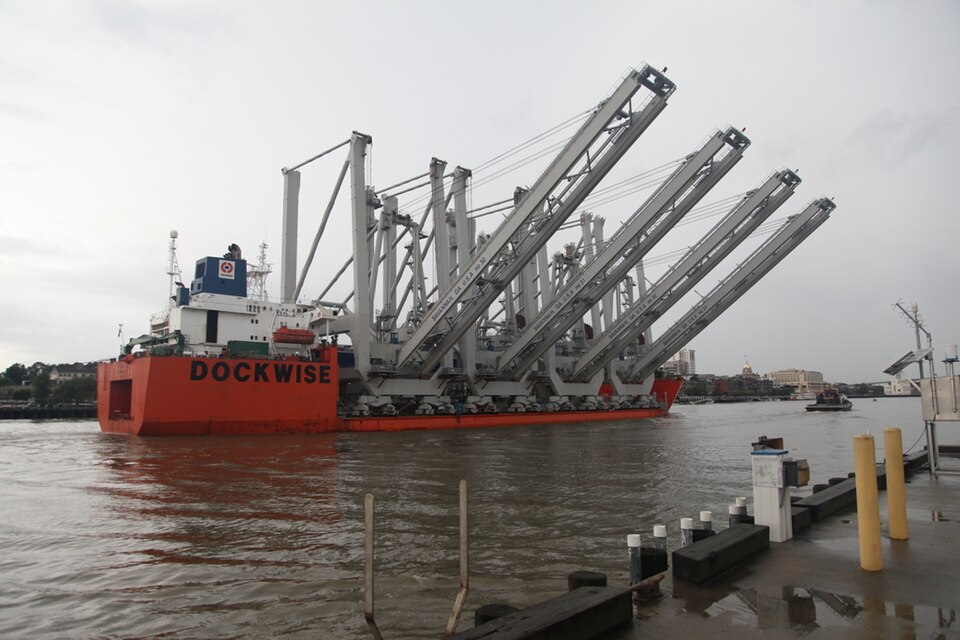
China Sets April Trade Records As Surplus With U.S. Widens
On Saturday, May 9, 2026, China reported that April exports and imports each hit new monthly records, while its trade surplus with the United States widened.[1]
China's overall April trade surplus was $84.8 billion, keeping it on track for a third consecutive year of roughly $1 trillion after a $1.19 trillion surplus in 2025.[1] Exports to the United States rose 11.3 percent in April from a year earlier, while imports from the U.S. rose 9 percent, widening China's U.S. trade surplus by 13 percent.[1] Higher oil and natural gas costs tied to the Iran war and the closure of the Strait of Hormuz helped drive faster growth in China's imports than its exports.[1] The data release comes ahead of a summit in Beijing next week where President Trump is expected to press President Xi to boost purchases of U.S. goods.[1]
On April 2, 2025, the U.S. imposed sweeping tariff hikes known as the Liberation Day tariffs, raising duties on Chinese goods to about 30 percent. Those measures initially cut Chinese shipments to the U.S., and Beijing responded by hiking tariffs on American agricultural exports. Despite the tariffs, China's surplus rose to $1.19 trillion in 2025 as firms rerouted supply chains and moved exports through third countries. In early May, U.S. federal court rulings overturned key Trump-era global tariffs, easing pressure on Chinese exporters just before the trade data. Meanwhile, the 2026 Iran war and Iran's April blockade of the Strait of Hormuz sharply raised global energy prices and inflated China's oil and gas import bills.
Some observers say Beijing is redirecting surplus dollars into gold, commodities and Belt and Road projects, reducing reliance on U.S. Treasuries. Others note exports are shifting toward higher-value capital and intermediate goods, reflecting China's move up the global value chain.
The mainstream summary does not mention the significant geopolitical context surrounding China's trade data, particularly the impact of the ongoing Iran war and the closure of the Strait of Hormuz, which has driven up energy import costs for China. Approximately 45-50 percent of China's crude oil imports transit through this critical chokepoint, highlighting the vulnerability of China's energy supply amidst rising global prices. This context suggests that the trade surplus figures may be influenced more by external pressures than the summary implies, as higher import bills could be masking underlying economic challenges for China.[2]
While the summary frames the upcoming Trump-Xi summit as a straightforward negotiation over trade, analyses indicate a deeper skepticism about the potential for substantial agreements. Critics argue that personal rapport between the leaders should not be mistaken for a strategic shift, as Xi's broader anti-American aims remain unchanged. The expectation that China will make significant concessions, such as increased purchases of U.S. goods, may overlook the historical tendency for such promises to fail in restoring lost market share.[3]
Show source details & analysis (1 source)
📊 Relevant Data
Approximately 45-50 percent of China's crude oil imports transit the Strait of Hormuz.
Implications of the Conflict in the Middle East for China's Energy Security — Center on Global Energy Policy at Columbia University
In February 2026, the U.S. Supreme Court ruled that the International Emergency Economic Powers Act does not authorize the President to impose tariffs, vacating broad tariffs imposed by President Trump.
24-1287 Learning Resources, Inc. v. Trump (02/20/2026) — U.S. Supreme Court
📌 Key Facts
- On Saturday, May 9, 2026, China reported April 2026 exports and imports each reached new monthly records.
- China’s overall April 2026 trade surplus was $84.8 billion, keeping it on track for a third consecutive year of roughly $1 trillion in annual surpluses after a $1.19 trillion surplus in 2025.
- China’s exports to the United States rose 11.3% in April 2026 from a year earlier, while its imports from the U.S. rose 9%, widening its U.S. trade surplus by 13%.
- Higher oil and natural gas costs tied to the Iran war and Strait of Hormuz closure helped drive faster growth in China’s imports than exports.
- The data release precedes a summit in China next week where President Trump is expected to urge President Xi to increase purchases of U.S. goods, even as recent U.S. court rulings have overturned some Trump-era tariffs.
📊 Analysis & Commentary (2)
"A WSJ Opinion segment (Paul Gigot interviewing Gen. Jack Keane) analyzes what President Trump might do in China and argues the administration should press Beijing — using recent record trade data and integrated economic plus security leverage — to extract concrete purchases and concessions, endorsing a firm but calibrated approach rather than purely conciliatory engagement."
"The WSJ editorial comments on the Trump‑Xi summit by warning that personal rapport won't overcome Xi's strategic aims and urging pragmatic, limited gains—e.g., a tariff truce, rare‑earth non‑coercion assurances, and AI‑guardrail talks—rather than expecting major, lasting concessions from Beijing."
📰 Source Timeline (1)
Follow how coverage of this story developed over time