
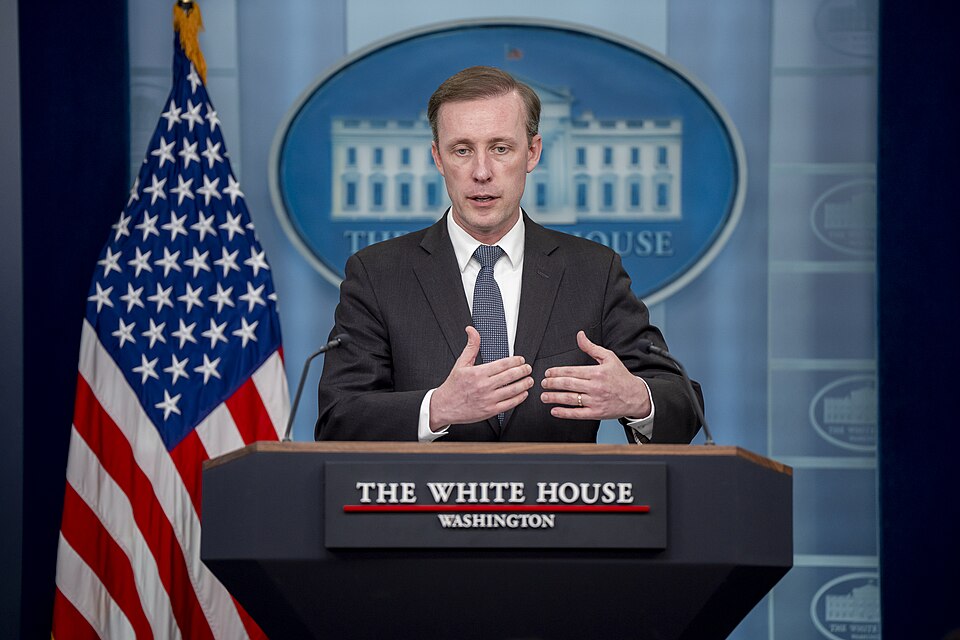
Trump Unveils Counterterror Strategy Targeting Iran, Cartels And Left-Wing Groups
President Donald Trump's administration released a 16-page national counterterrorism strategy on Wednesday, May 6, 2026, that expands U.S. targets to include Iran, Mexican drug cartels and violent left-wing groups. (ms.now)
The plan newly lists "Narcoterrorists and Transnational Gangs" and "Violent Left-Wing Extremists, including Anarchists and Anti-Fascists," as major threats alongside Islamist terrorists. Senior counterterrorism director Sebastian Gorka called Iran the world's "greatest state sponsor of terrorism" and said the administration will target cartels, jihadists and violent left-wing extremists. The document also says counterterrorism powers will not be used against Americans who simply disagree with the administration, language meant to address Democratic concerns about politicization.
The episode traces back to a September 2025 assassination of conservative activist Charlie Kirk by a suspect linked to antifa. That killing prompted Mr. Trump to sign an executive order designating the movement a domestic terrorist organization. Shortly after his inauguration, Mr. Trump issued an executive order designating Mexican drug cartels as foreign terrorist organizations in January 2025, with further designations in February and a military coalition against cartels formed in March 2026. Failed U.S.-Iran negotiations in 2025-2026, Israeli strikes on Iran, and Mr. Trump's April 2026 threats to bomb Iranian infrastructure hardened the administration's focus on Tehran. Left-wing terrorist incidents in the U.S. rose to an average of 4.0 per year between 2016 and 2024, up from 1.3 per year between 2001 and 2010.
Reactions were mixed, with some former officials praising the strategy's emphasis on regional cartels and state sponsors, while critics warned the broadened targets risk political abuse and mislabeling of protest movements. Social posts ranged from support for confronting cartels to ridicule and concern about focusing on transgender people or antifa instead of far-right violence. (ms.now)
The expansion of the counterterrorism strategy to include left-wing groups and Iran reflects a significant shift in the administration's priorities, as highlighted by the Center for Strategic and International Studies. Their analysis indicates that left-wing terrorist incidents in the U.S. rose from an average of 1.3 per year between 2001 and 2010 to 4.0 per year from 2016 to 2024, suggesting a growing concern over domestic political violence. This rise is attributed to increased partisan extremism and anti-government sentiments, exacerbated by political polarization and misperceptions among partisan groups.
Social media reactions reveal a divide in public perception, with some users, like former Congressman @Scotttaylorva, supporting the focus on violent extremists rather than parents involved in school protests, while others, such as @AlternatReal, express skepticism about the inclusion of Antifa and transgender issues as significant threats. This polarization underscores the complexities of the current political landscape, where counterterrorism policies may be viewed through the lens of partisan interests, raising concerns about potential politicization and mislabeling of dissenting movements.
Show source details & analysis (1 source)
📊 Relevant Data
Left-wing terrorist incidents in the US increased from an average of 1.3 per year between 2001 and 2010 to 4.0 per year between 2016 and 2024. ([Center for Strategic and International Studies (CSIS)](https://www.csis.org/analysis/left-wing-terrorism-and-political-violence-united-states-what-data-tells-us)) ([Center for Strategic and International Studies (CSIS)](https://www.csis.org/analysis/left-wing-terrorism-and-political-violence-united-states-what-data-tells-us)) ([Center for Strategic and International Studies (CSIS)](https://www.csis.org/analysis/left-wing-terrorism-and-political-violence-united-states-what-data-tells-us))
Left-Wing Terrorism and Political Violence in the United States: What the Data Tells Us — Center for Strategic and International Studies (CSIS)
As of January 20, 2025, 1,575 people were charged in connection with the January 6 United States Capitol attack. ([Wikipedia](https://en.wikipedia.org/wiki/List_of_cases_of_the_January_6_United_States_Capitol_attack)) ([Wikipedia](https://en.wikipedia.org/wiki/List_of_cases_of_the_January_6_United_States_Capitol_attack)) ([Wikipedia](https://en.wikipedia.org/wiki/List_of_cases_of_the_January_6_United_States_Capitol_attack))
List of cases of the January 6 United States Capitol attack — Wikipedia
📌 Key Facts
- On Wednesday, May 6, 2026, the Trump administration released a 16-page national counterterrorism strategy for the president’s second term.
- The strategy newly designates “Narcoterrorists and Transnational Gangs” and “Violent Left-Wing Extremists, including Anarchists and Anti-Fascists” as major threats alongside Islamist terrorists.
- Senior counterterrorism director Sebastian Gorka, in a call with reporters, called Iran the world’s “greatest state sponsor of terrorism” and pledged to target cartels, jihadists, and violent left-wing extremists.
- The document states that counterterrorism powers will not be used against Americans who simply disagree with the administration, amid Democratic concerns about politicization.
📰 Source Timeline (1)
Follow how coverage of this story developed over time